Phonics practice Normal Grade 2 Reading Worksheets
3 filtered results
Difficulty Level
Grade
Age
-
From - To
Subject
Activity
Standards
Boost your second grader’s reading skills with our engaging Phonics Practice worksheets! Specifically designed for grade 2 learners, these fun and interactive sheets help students master essential phonics concepts, like vowel sounds, consonant blends, and word decoding. Each worksheet is crafted to reinforce phonemic awareness and reading fluency, ensuring your child builds a solid foundation in literacy. With colorful images and simple instructions, our printables make learning enjoyable and effective. Perfect for classroom use or extra practice at home. Start enhancing your child’s reading abilities today with our Grade 2 Phonics Practice Worksheets!
Favorites
With answer key
Interactive
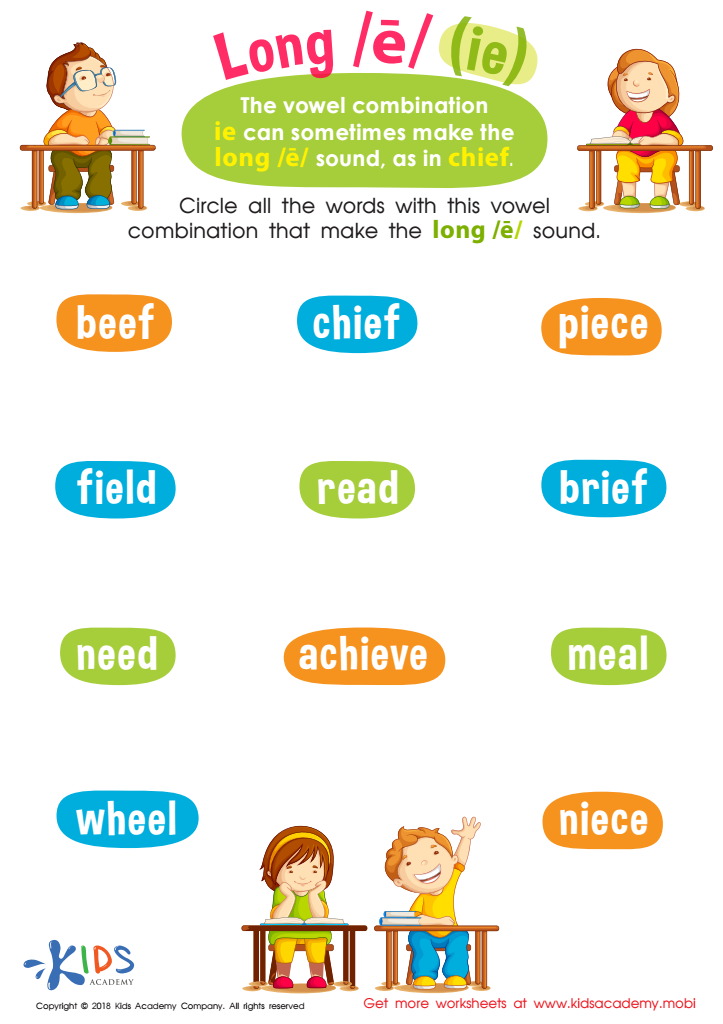
Reading: Long E and IE Worksheet
Ask your child to name some words with the long /e/ sound they hear every day. Then, read aloud all the words in the worksheet with them. Ask them to circle the words containing ie that make this sound.
 Assign to My Students
Reading: Long E and IE Worksheet
Worksheet
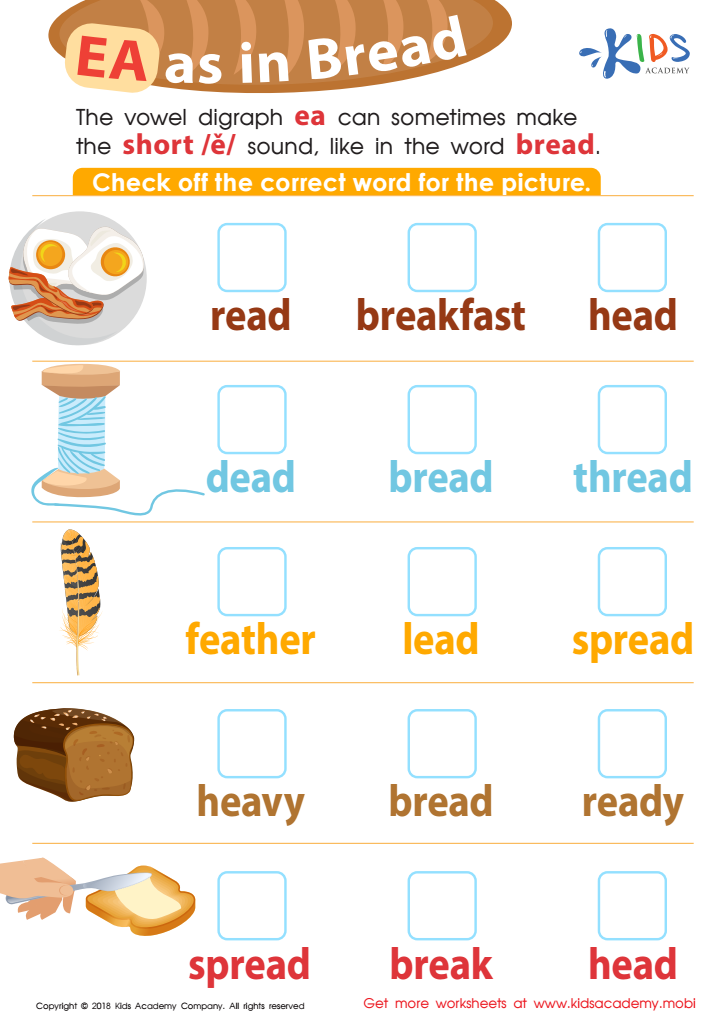
Reading: EA as in Bread Worksheet
The vowel digraph ea can be read in two ways. Examples of the long sound are "read" and "lead"; examples of the short sound are "bread" and "head". Ask your kids to give you more examples and then have them check off the correct word for the pictures on this worksheet. This will help them understand the ea sound.
Reading: EA as in Bread Worksheet
Worksheet
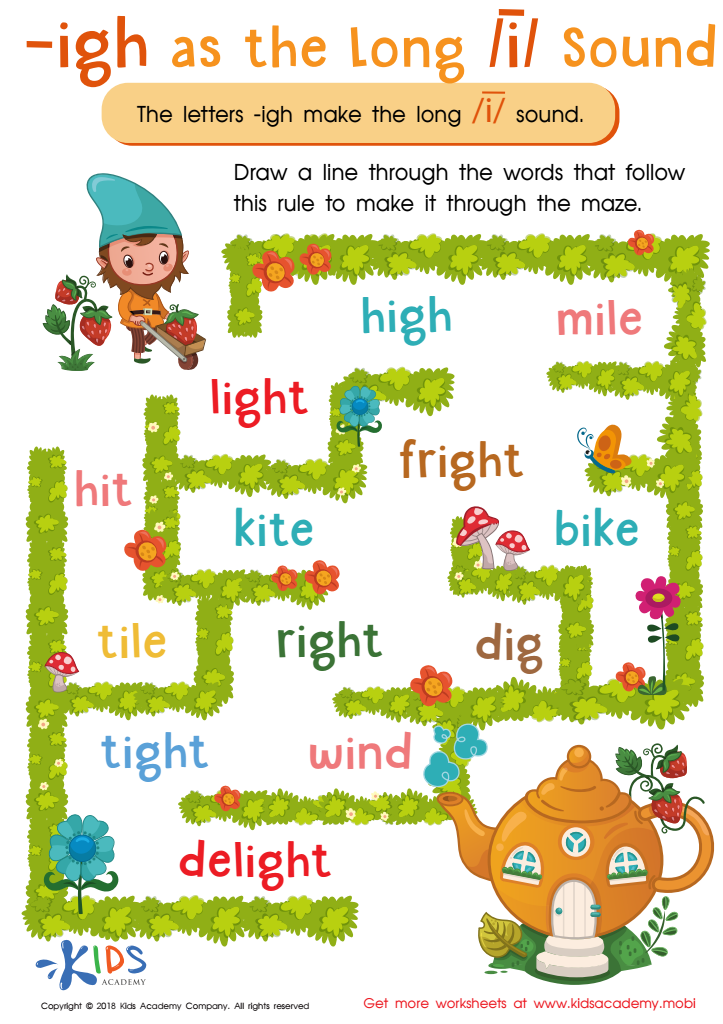
Reading: IGH as Long I Worksheet
Kids can have fun and learn with this maze! They'll look for and read words with the 'long I' sound spelled 'igh'. Most words ending with 'T' have this spelling. Decode words while learning about long vowel sounds and their spellings.
Reading: IGH as Long I Worksheet
Worksheet
Join Kids Academy for Free
Who is primarily going to use this learning content?







Phonics practice is crucial for Grade 2 reading proficiency, laying the foundation for lifelong literacy. In the crucial early elementary years, understanding the relationships between letters and sounds equips young learners with the tools needed for fluent reading. When children grasp these basic phonetic principles, they can decode new words confidently, enhancing their reading comprehension and allowing them to engage fully with the text.
For parents and teachers, supporting phonics practice goes beyond improving reading skills—it also boosts a child's overall academic success and self-esteem. Consistent phonics instruction helps prevent future reading difficulties, which are hard to remediate once they become ingrained. Additionally, a strong phonics foundation paves the way for better spelling and writing capabilities, seamlessly integrating literacy skills into a child's daily activities.
Furthermore, phonics instruction often involves engaging, multisensory activities that make learning fun and interactive. It encourages students to actively participate and collaborate, fostering a positive attitude toward learning and school.
Ultimately, prioritizing phonics practice in Grade 2 creates a domino effect: better reading skills lead to improved comprehension, an expansive vocabulary, greater academic achievement, and lifelong learning enthusiasm. Caring about phonics at this critical stage sets children up for reading success and beyond.