Phonics Skills Normal Grade 2 Reading Worksheets
5 filtered results
-
From - To
Unlock reading success for your child with our "Phonics Skills Normal Grade 2 Reading Worksheets." These expertly designed resources focus on essential phonics skills, helping second graders strengthen their reading foundation. Each worksheet offers engaging activities that enhance letter-sound recognition, word families, blending, and decoding skills. Perfect for classroom or at-home learning, our printables support educators and parents in building confident, fluent readers. Encourage a love for reading as your child masters crucial phonics concepts with these thoughtfully crafted worksheets, tailored to meet Grade 2 learning standards. Help your child excel in reading with targeted, enjoyable practice!
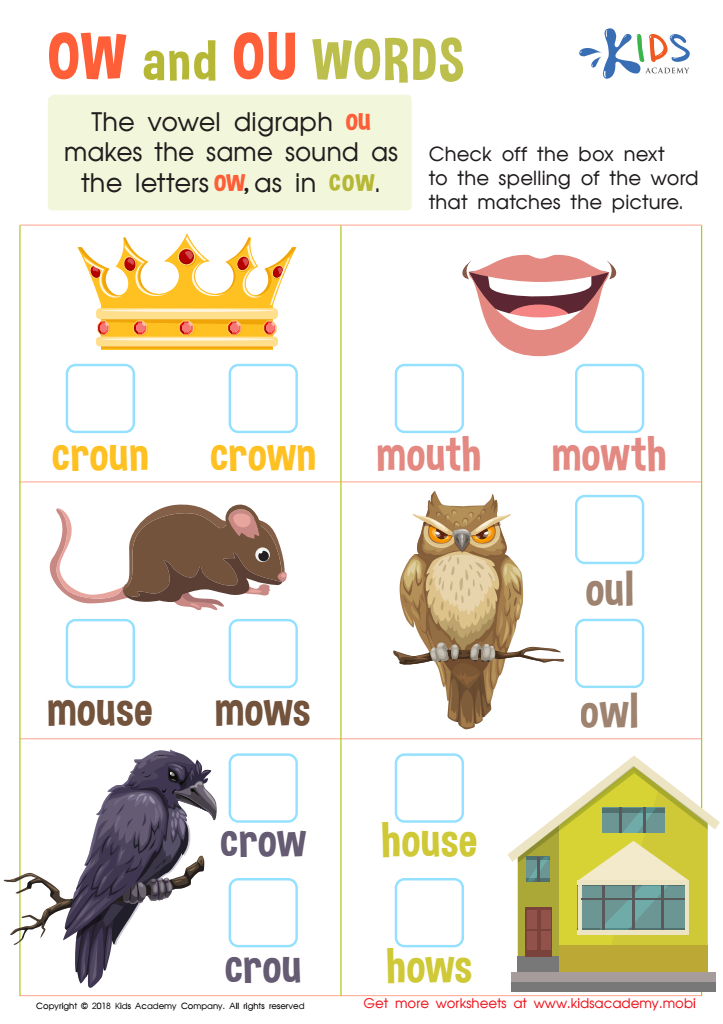
Reading: OW and OU Words Worksheet
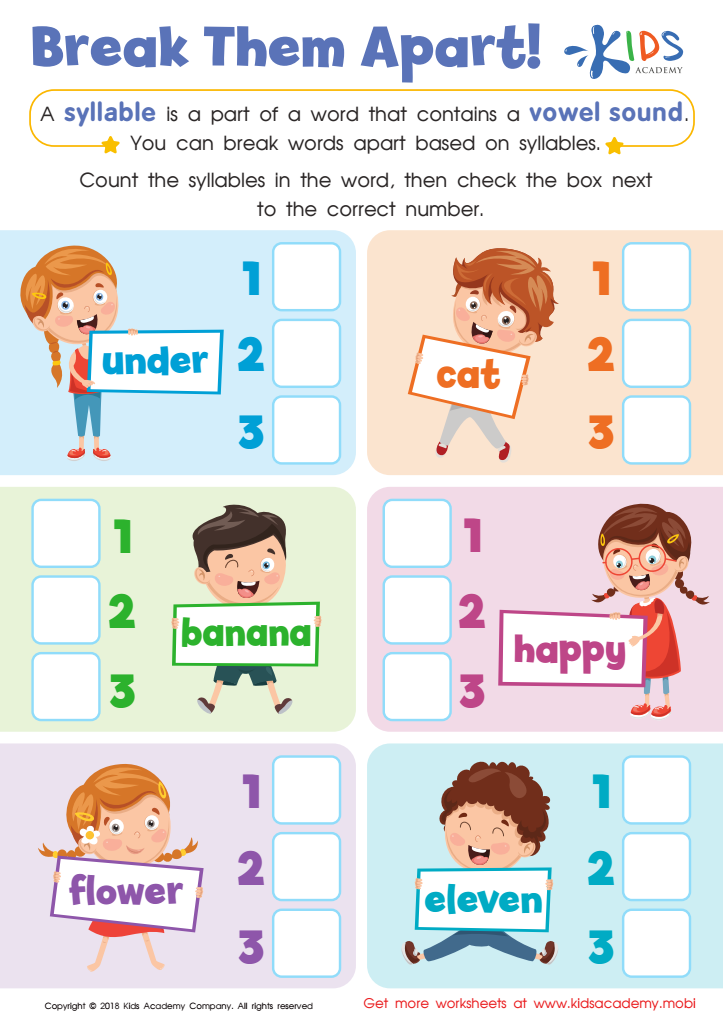
Reading: Break Them Apart Worksheet
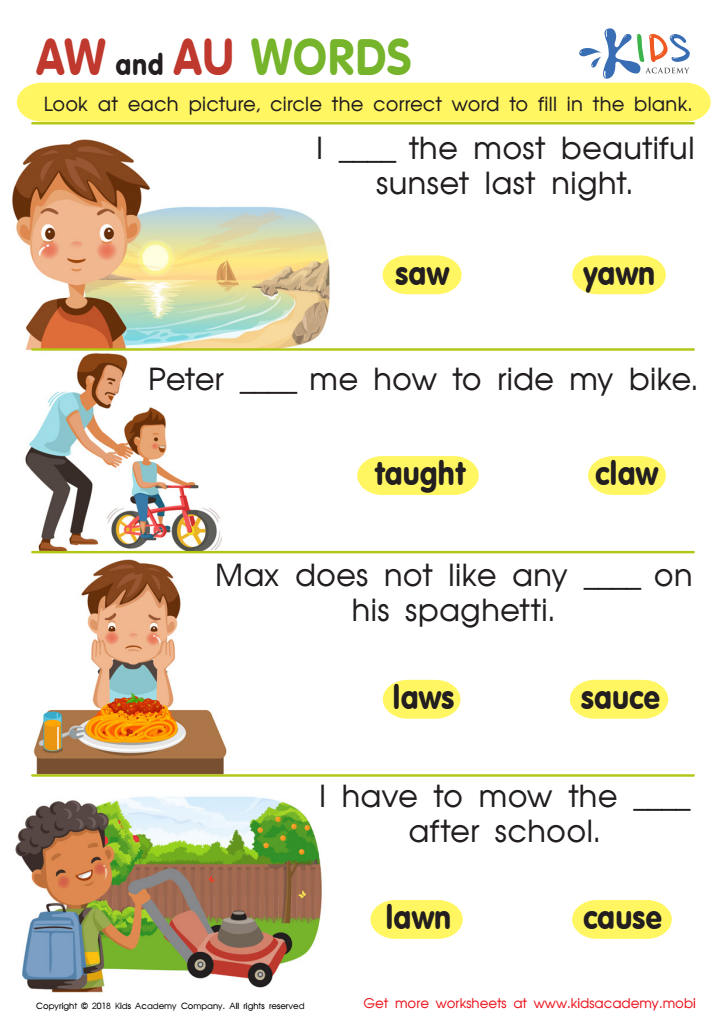
Reading: AW and AU Words Worksheet
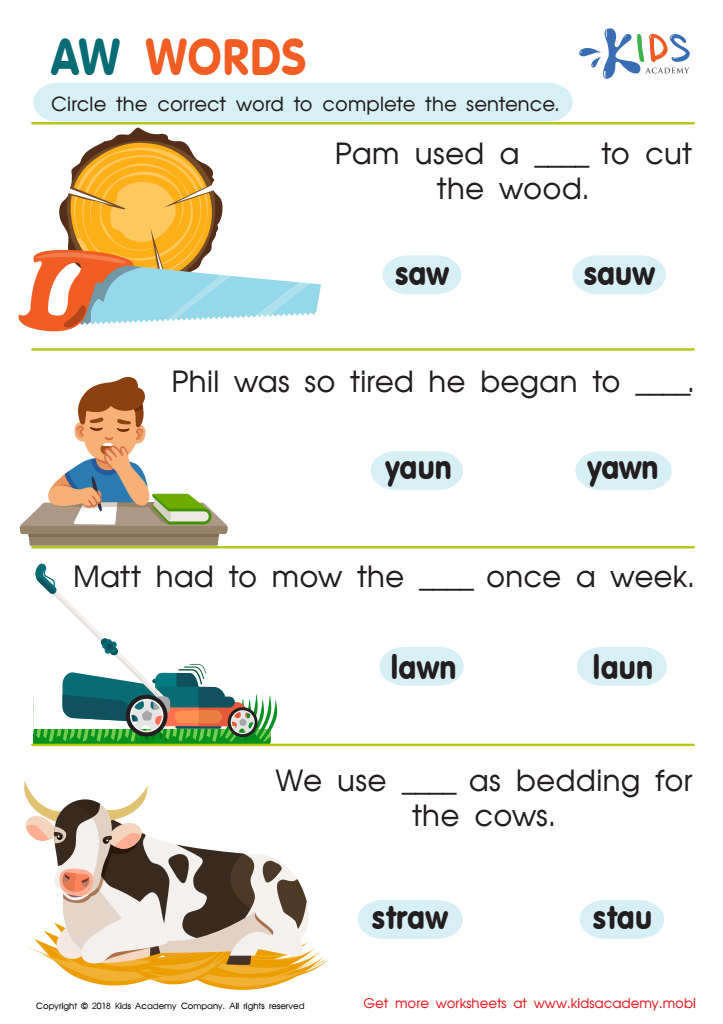
Reading: AW Words Worksheet
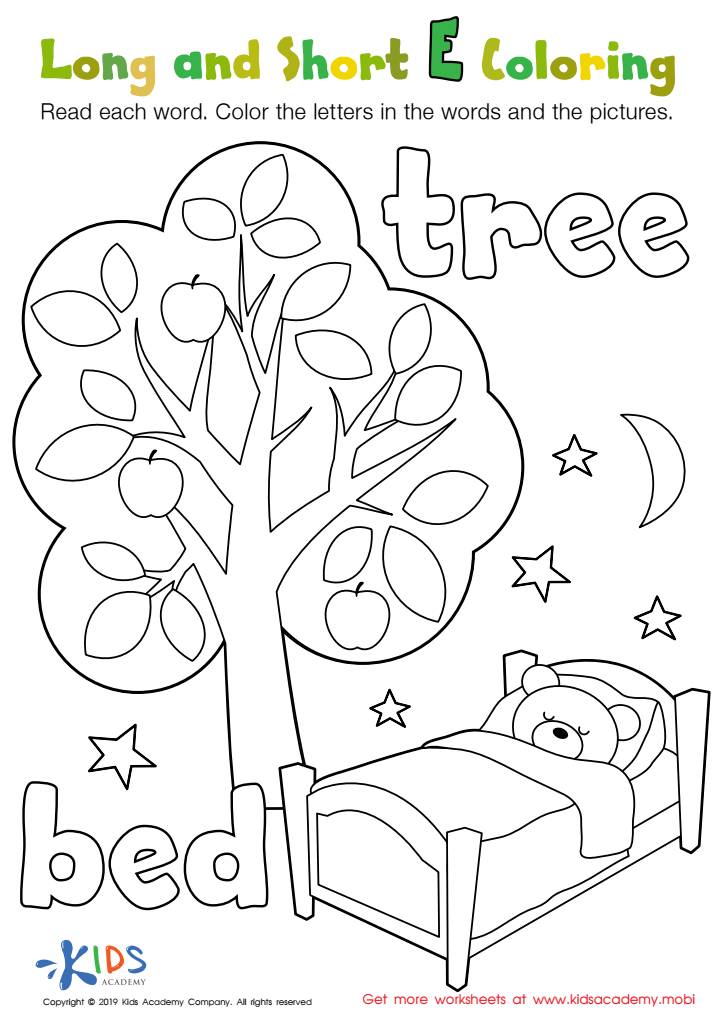
Long and Short E Worksheet
 Assign to My Students







Phonics skills are foundational to reading proficiency, especially for Grade 2 students who are at a crucial stage in their educational journey. At this age, children transition from learning to read to reading to learn. Phonics instruction helps them understand that letters and combinations of letters constitute sounds. This understanding enables them to decode new words independently. Without strong phonics skills, students may struggle with reading fluency, which in turn can impair their comprehension abilities.
For parents, caring about their child's phonics skills means ensuring they are set up for long-term academic success. Early struggles with reading can lead to frustration and a lack of interest in learning, potentially impacting their confidence and academic trajectory in other subjects as well. Similarly, for teachers, focusing on phonics instruction ensures that they are equipping their students with essential tools for literacy, which will support all aspects of their education.
Moreover, literacy is critical beyond academics; it empowers children to navigate their daily lives, make informed decisions, and engage with the world around them. By prioritizing phonics skills in Grade 2, parents and teachers act as pivotal partners in each child’s educational journey, fostering strong readers and lifelong learners.