Enhance your second graders' reading skills with our engaging Critical Thinking Normal Grade 2 Reading Fiction Worksheets! Designed to encourage thoughtful analysis and comprehension, these worksheets help young learners dive deeper into fictional texts. Students will practice essential skills like summarizing, making inferences, and identifying themes, fostering their ability to think critically about stories. Each worksheet is tailored to suit varying learning styles, ensuring an interactive and enjoyable experience. Perfect for classroom or home use, these resources not only support literacy development but also cultivate a love for reading. Start transforming your child's understanding of fiction today with our engaging materials!

Check out this FREE Grade 2 Trial Lesson on Reading Fiction!

Lessons in Fables and Folktales

Favorites
With answer key
Interactive
  • Grade 2
  • Critical Thinking
  • Reading Fiction
  • Normal
The Crow and the Pitcher Worksheet

The Crow and the Pitcher Worksheet

Introduce your child to reading comprehension with this fascinating worksheet from Kids Academy! Featuring Aesop's fable of a thirsty crow, your child will enjoy reading and determining the central theme of the passage. This worksheet is a great way to give your child a purpose for reading while helping to build their comprehension skills.
The Crow and the Pitcher Worksheet
Worksheet
Sequence: Jack and The Beanstalk Worksheet
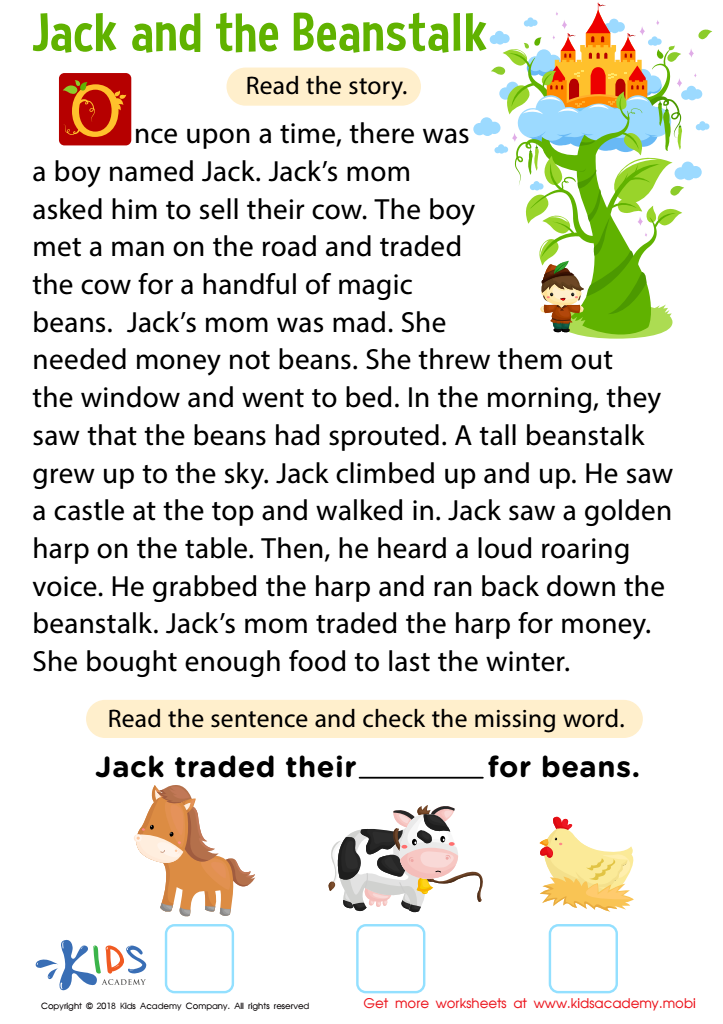

Sequence: Jack and The Beanstalk Worksheet

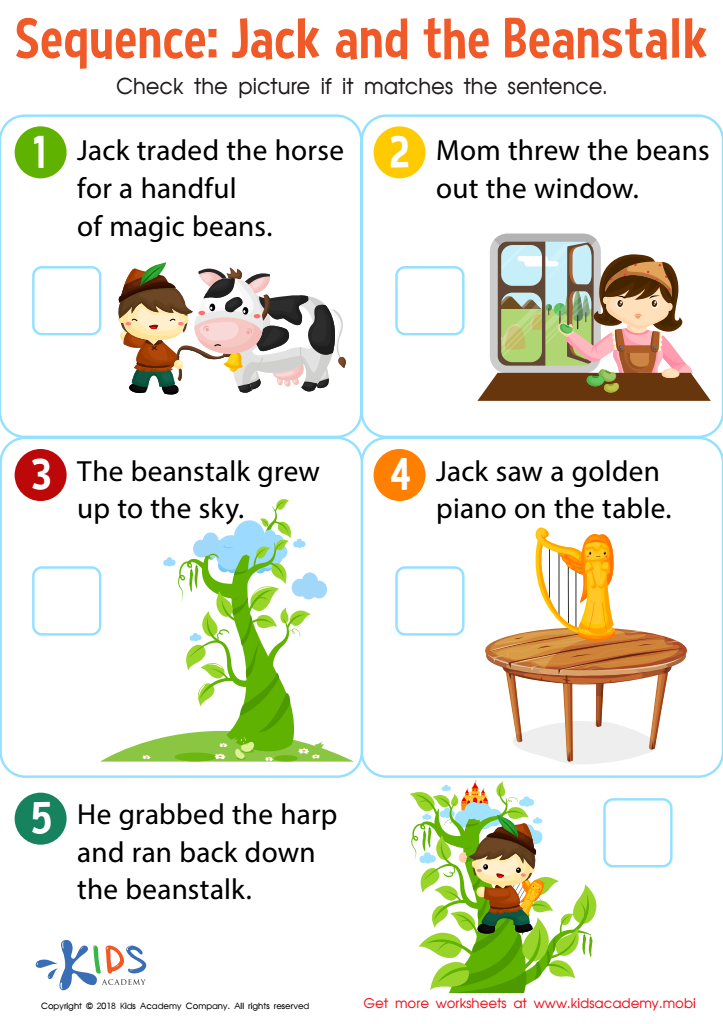
Ensure your kids are familiar with Jack and the Beanstalk before starting this worksheet. If not, read them the story. In the pdf, there are five pictures with sentences. Read the sentences, ask your kid if it matches the picture, then help them check if it does.
Sequence: Jack and The Beanstalk Worksheet
Worksheet
Jack and Beanstalk Worksheet

Jack and Beanstalk Worksheet

Story time can be a fun and educational experience for your kids. Read them the classic Jack and the Beanstalk - and even read it twice to help them pay attention. Afterwards, help them fill in the blank on the worksheet to expand their vocabulary and learn more from the story.
Jack and Beanstalk Worksheet
Worksheet
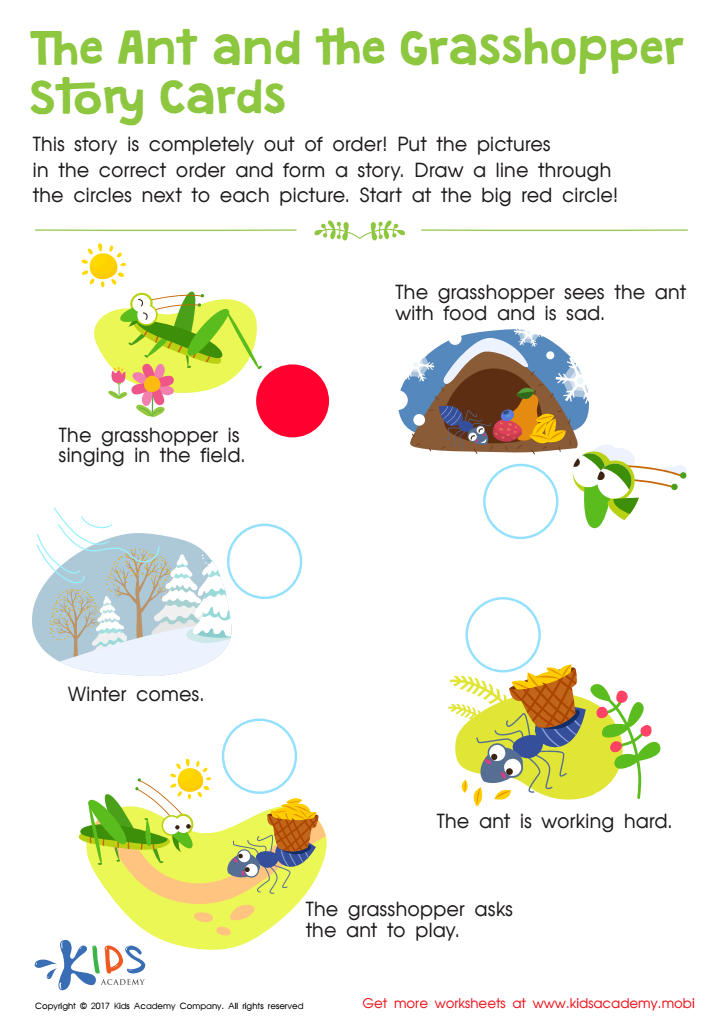
The Ant and the Grasshopper worksheet PDF

The Ant and The Grasshopper Worksheet
This worksheet uses the beloved childhood fable "The Ant and the Grasshopper" to teach your child about plot and order of events. Your child must read the events and put them in the right order. Once completed, review the story with your child to ensure its accuracy.
The Ant and The Grasshopper Worksheet
Worksheet
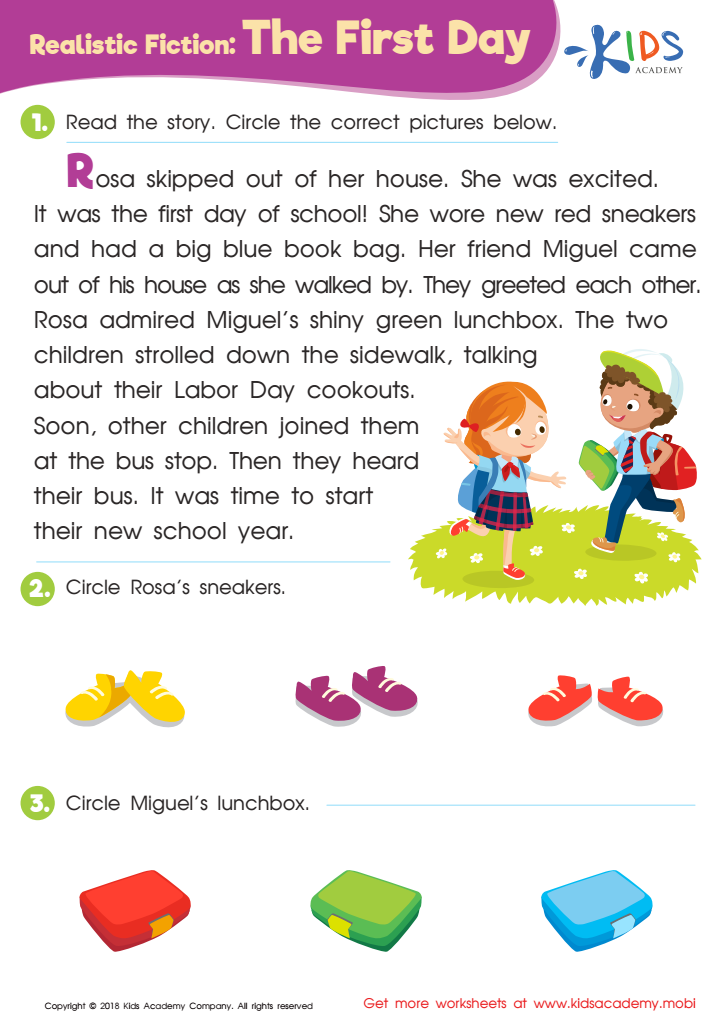
Realistic Fiction: The First Day Worksheet

Realistic Fiction: The First Day Worksheet

Fiction is made-up events, so story-writing is fiction writing. In this worksheet, there's a short story about Rosa, her friend Miguel, and their first day back at school. Read the story aloud to your kids and help them circle the right pictures to the questions. Repeat if needed.
Realistic Fiction: The First Day Worksheet
Worksheet
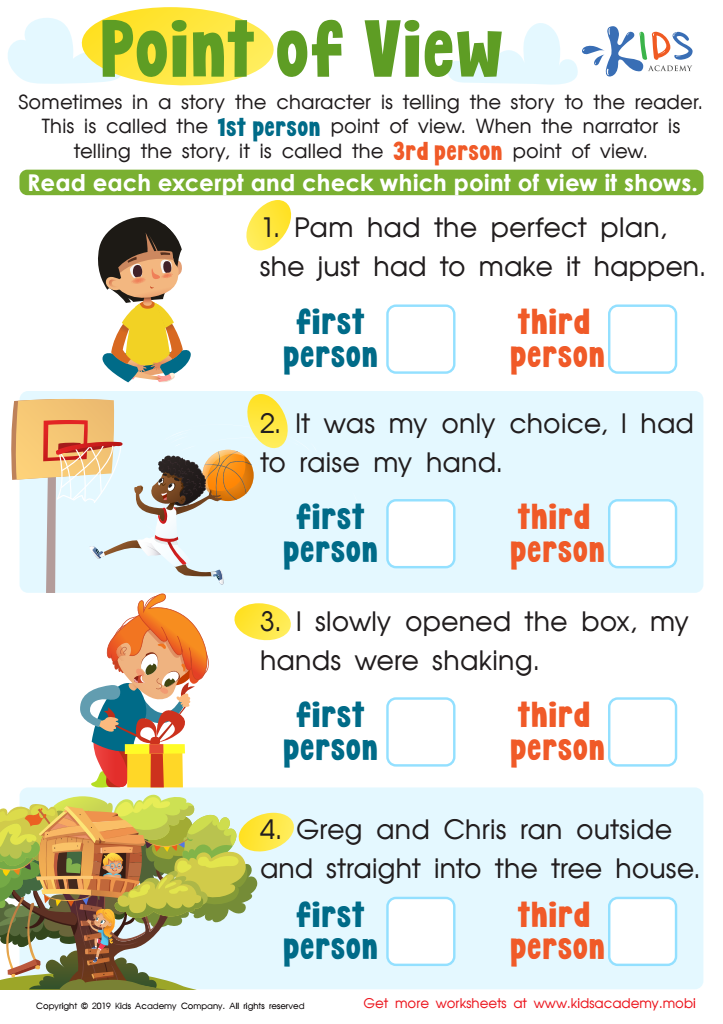
Point of View Printable


Point of View Printable

Teach your kids about points of view with this worksheet! In a story, characters can tell the story in first person or it can come from a narrator in third person. Read the excerpt in the worksheet and ask your kids to identify which point of view it is.
Point of View Printable
Worksheet


Parents and teachers should prioritize critical thinking in second-grade reading for several compelling reasons. At this developmental stage, children are transitioning from learning to read to reading to learn, making it an ideal time to nurture analytical skills. Engaging with fiction not only enhances comprehension but also encourages students to ask questions, make inferences, and draw connections to their own experiences, fostering a love for stories and learning.

Critical thinking in reading helps students interpret characters' motivations, identify themes, and assess the story’s resolution. These skills cultivate a deeper understanding of the text, promoting empathy as children evaluate different perspectives within the story. Furthermore, by discussing plot elements and predicting outcomes, young readers develop problem-solving strategies that can be applied beyond the classroom.

Encouraging critical thinking in fiction also sets the foundation for future academic success. It prepares students to tackle more complex texts as they progress in school. Ultimately, when parents and teachers emphasize these skills, they empower second graders to become active and thoughtful participants in their education, setting them on a path to lifelong learning and responsible citizenship.