Geography knowledge Normal Grade 2 Science Worksheets
3 filtered results
Difficulty Level
Grade
Age
-
From - To
Subject
Activity
Standards
Boost your child's understanding of the world with our Geography Knowledge Normal Grade 2 Science Worksheets. Specifically tailored for 2nd graders, these engaging worksheets introduce young learners to key geographic concepts such as continents, oceans, maps, and landmarks. Each activity is designed to be both educational and fun, helping children grasp essential global awareness in an interactive way. Perfect for classroom use or home learning, our worksheets foster curiosity in young minds, laying the foundation for a lifetime of exploration and discovery. Enhance your second grader’s geography skills and make learning an adventure with Kids Academy’s expertly crafted resources.
Favorites
With answer key
Interactive
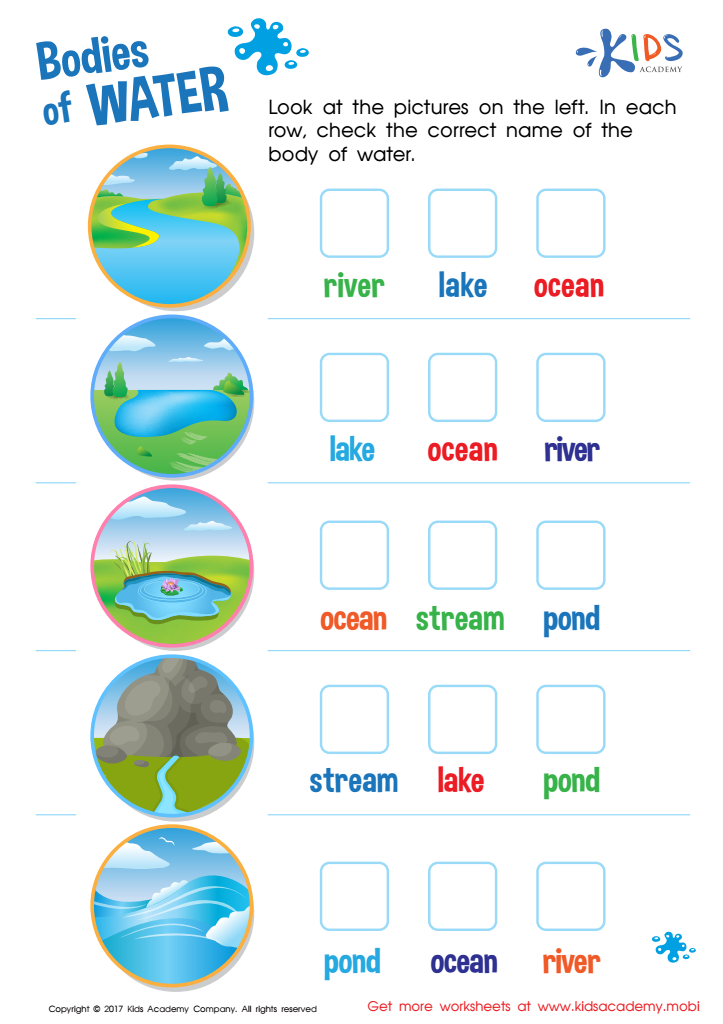
Bodies of Water Worksheet
From oceans to streams, our planet is filled with different types of waterways. Show your child how to recognize them using this bodies of water worksheet PDF. It has vivid illustrations to help your kid learn without leaving home.
 Assign to My Students
Bodies of Water Worksheet
Worksheet
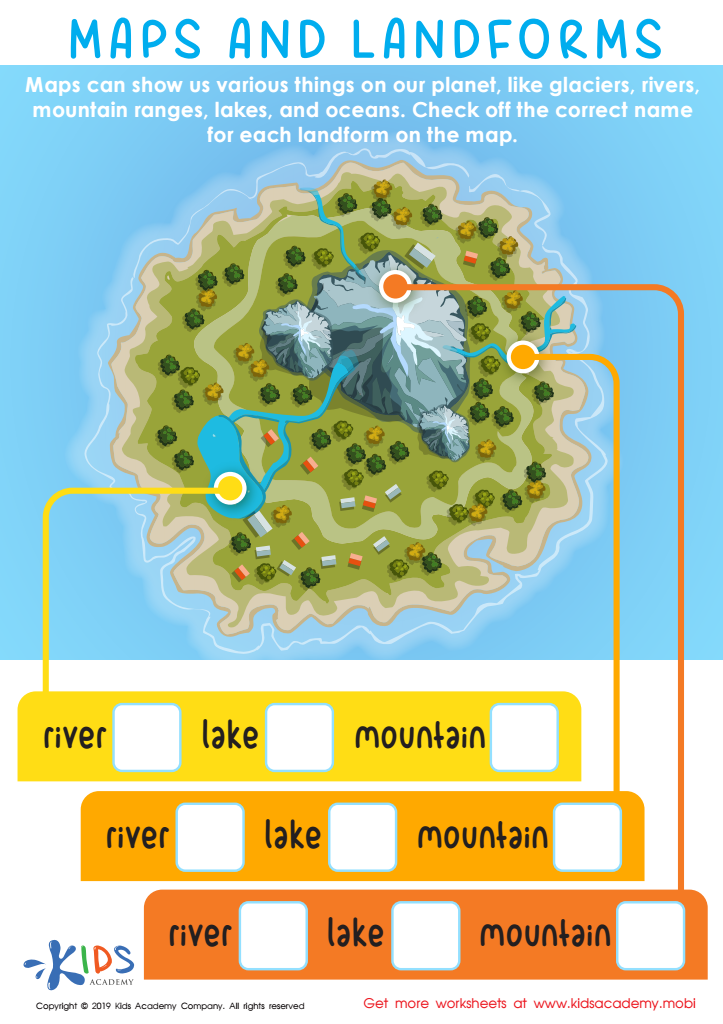
Maps and Landforms Worksheet
We can educate our kids on the world and its landforms by showing them a map. Point out mountains, rivers, and oceans, and help them identify each correctly. With this knowledge, they will better understand our planet.
Maps and Landforms Worksheet
Worksheet
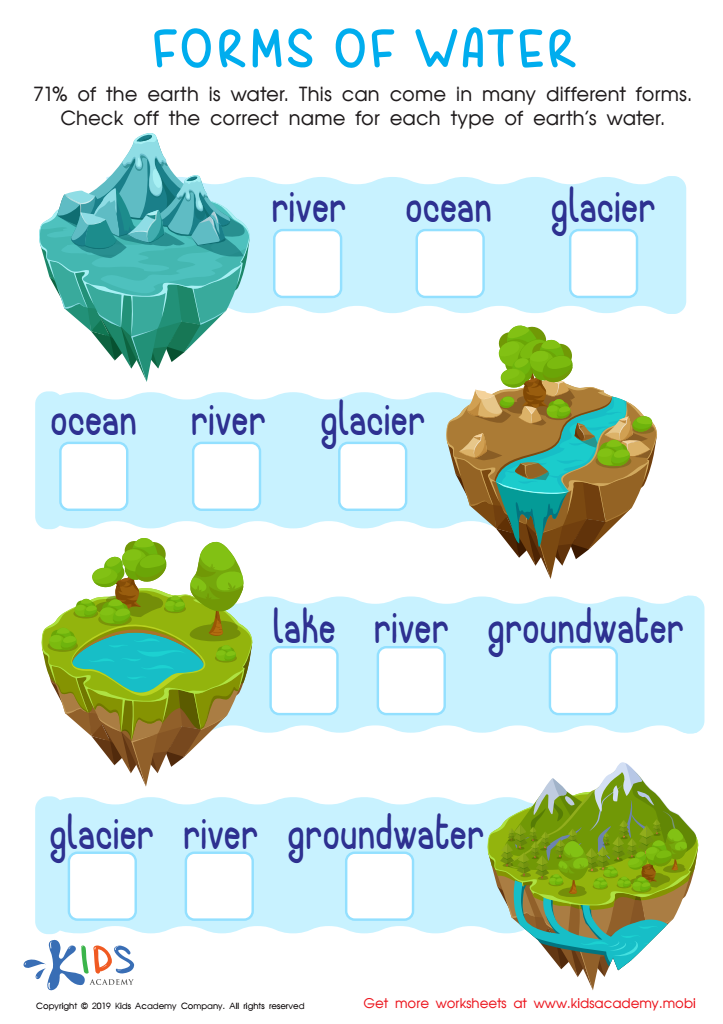
Forms of Water Worksheet
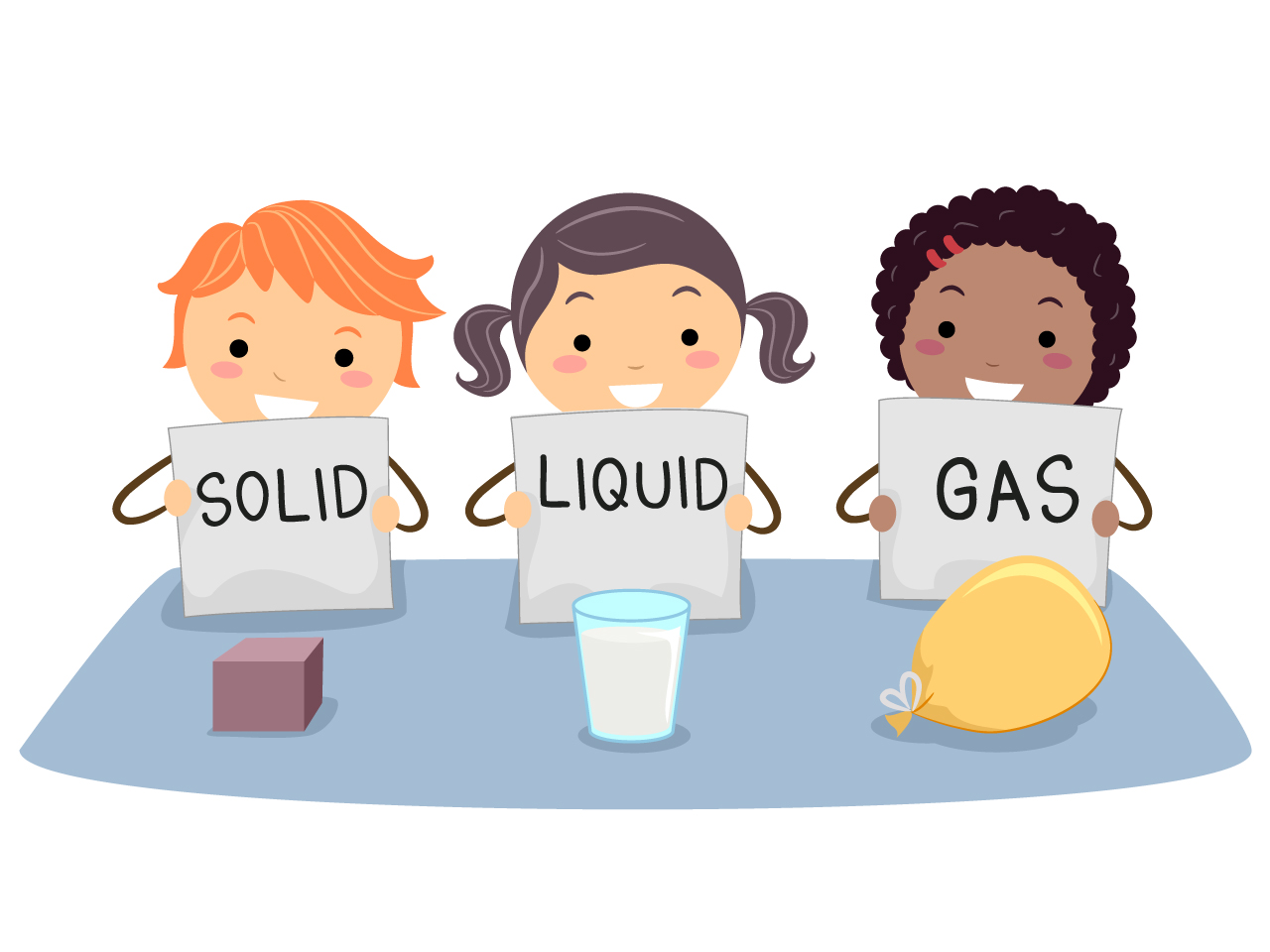
Life on Earth needs water to survive. Luckily, water makes up 75% of the Earth's surface and comes in various forms such as rivers, oceans and lakes. Ask your kids to name other forms and use this worksheet to help them identify each type.
Forms of Water Worksheet
Worksheet
Join Kids Academy for Free
Who is primarily going to use this learning content?





Understanding geography is essential for Grade 2 students as it greatly contributes to their overall development in several key areas. Firstly, geography helps children make sense of the world around them. It fosters an early appreciation for different cultures, environments, and the diverse ways people live. By learning about various regions, climates, and landscapes, students develop a broader perspective and empathy towards others.
Secondly, geographic knowledge equips students with practical skills. They learn to read and interpret maps, which enhances their spatial thinking and navigational abilities. These skills are crucial for everyday tasks such as understanding directions and planning travel routes.
Thirdly, geography is foundational for various subjects, including history and science. For instance, understanding physical geography (mountains, rivers, climate) helps students grasp natural phenomena and environmental science concepts, such as weather patterns and ecosystems, which are fundamental elements of the Grade 2 Science curriculum.
Finally, integrating geography in early education stimulates curiosity and critical thinking. Children begin to ask questions about the world, encouraging them to become more inquisitive and engaged learners. This holistic development, combining knowledge, skills, and curiosity, underscores the importance of including geography in the curriculum, ensuring students gain a well-rounded and meaningful education from an early age.