Map reading Normal Social Studies Worksheets
3 filtered results
-
From - To
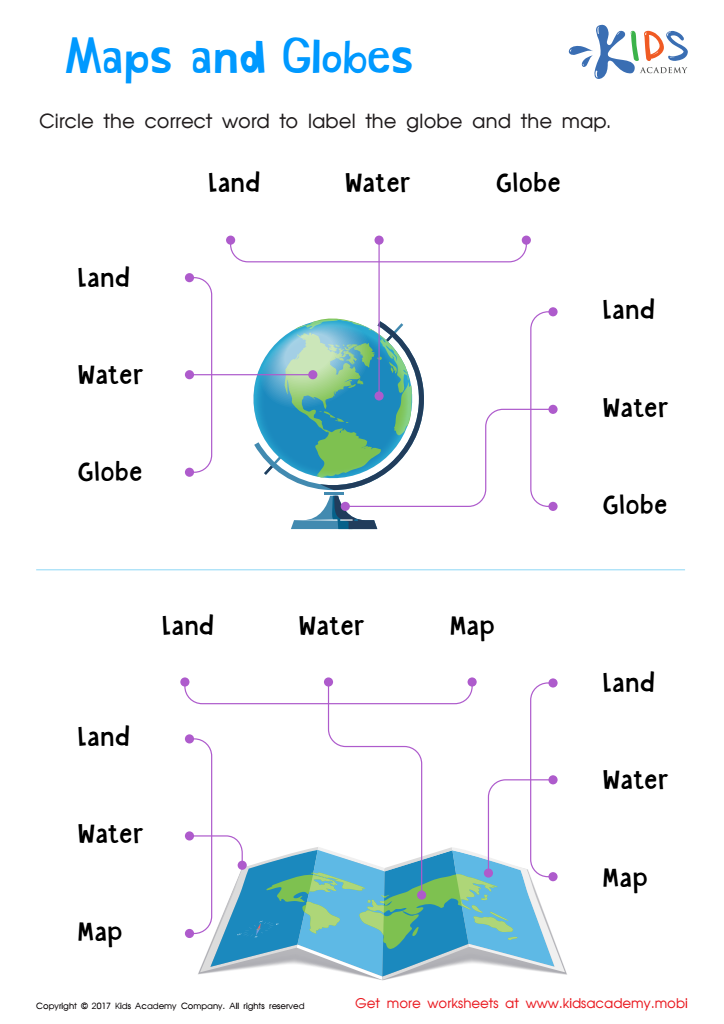
Explore the vibrant world of geography with our Map Reading Normal Social Studies Worksheets. Tailored for young learners, these engaging worksheets help develop essential map-reading skills. Kids will learn to understand directions, symbols, and scales—key array elements necessary for navigating maps and understanding our world. Perfect for classroom or home use, each activity is designed to be age-appropriate, balancing educational content with fun, hands-on practices. Download our high-quality, printable worksheets today to enhance your child's spatial thinking and map literacy. Açtivate their curiosity and set them on a journey of discovery with Kids Academy.
 Assign to My Students
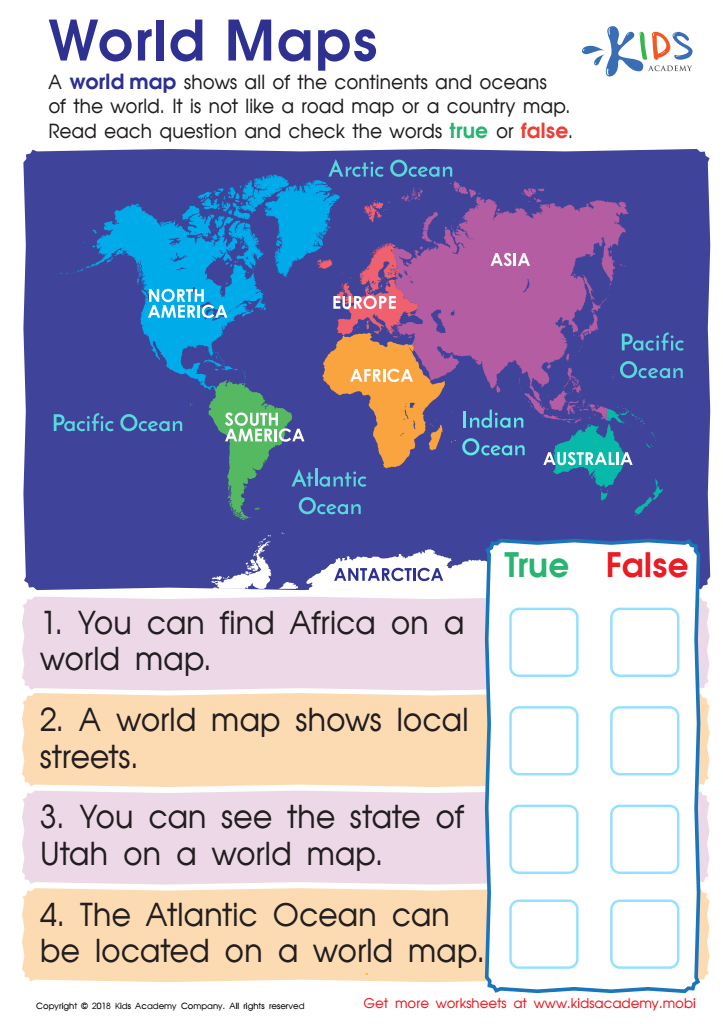
World Maps Worksheet
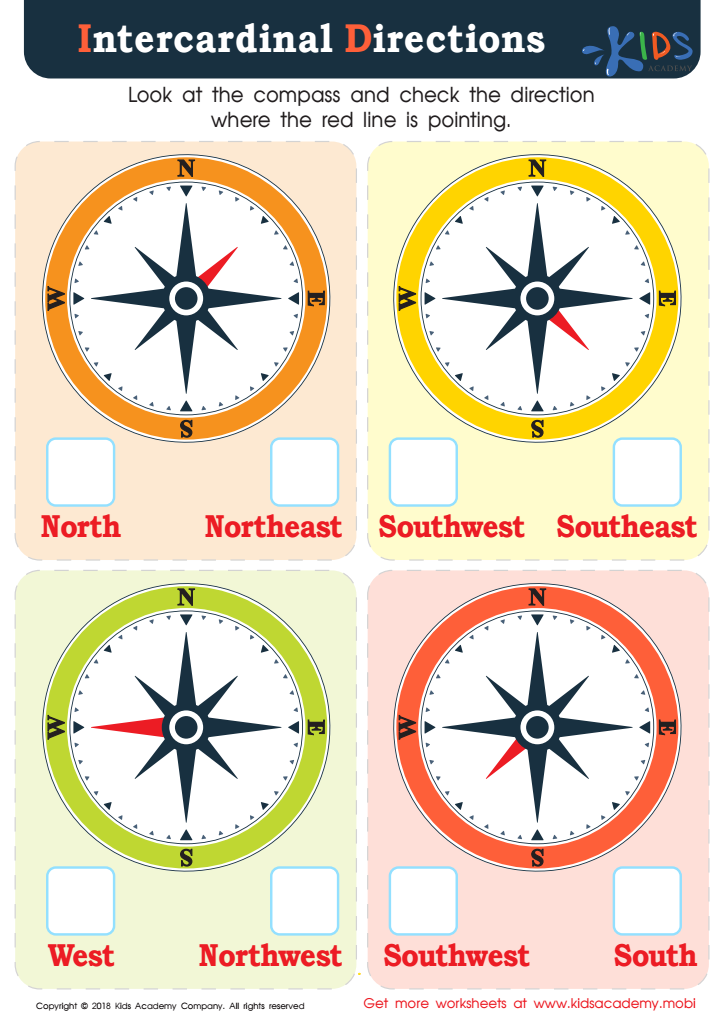
Intercardinal Directions Worksheet





.jpg)


Parents and teachers should prioritize map reading in social studies for early grade students because it cultivates essential life skills and fosters an understanding of the world. Map reading enhances spatial thinking, which is foundational for learning geometry, science, and even navigating daily life. It helps children grasp concepts of distance, scale, direction, and time—critical for developing problem-solving abilities and logical reasoning.
Moreover, understanding maps deepens students' cultural and global awareness. It connects them to different cultures, environments, and geopolitical contexts, fostering empathy and appreciation for diversity. This broad perspective supports informed citizenship and encourages thoughtful participation in an increasingly interconnected world.
Incorporating map reading in normal social studies also aligns with interdisciplinary learning. It integrates geography, history, and environmental studies, making lessons more engaging and interconnected. Active engagement through hands-on map activities can also make learning more enjoyable, encouraging curiosity and enthusiasm for the subject matter.
Ultimately, teaching map reading equips students with tools to interpret and interact with their surroundings confidently, laying the groundwork for successful navigation in their academic journey and life. Parents and teachers, therefore, play a pivotal role in shaping well-rounded, informed, and capable individuals by emphasizing this critical skill.