Matching skills Normal Social Studies Worksheets
3 filtered results
Difficulty Level
Grade
Age
-
From - To
Subject
Activity
Standards
Discover our comprehensive collection of "Matching Skills Normal Social Studies Worksheets" designed to enhance students' learning experiences! These engaging worksheets focus on developing essential matching skills, helping young learners connect concepts in social studies effectively. From matching cultural symbols to their corresponding meanings, to identifying community helpers and their roles, our worksheets are crafted to promote comprehension and retention in a fun way. Perfect for classrooms, homeschooling, or extra practice at home, these printable resources make learning interactive and enjoyable. Equip your students with the tools they need to succeed in social studies while honing their critical-thinking skills with our matching activities!
Favorites
With answer key
Interactive
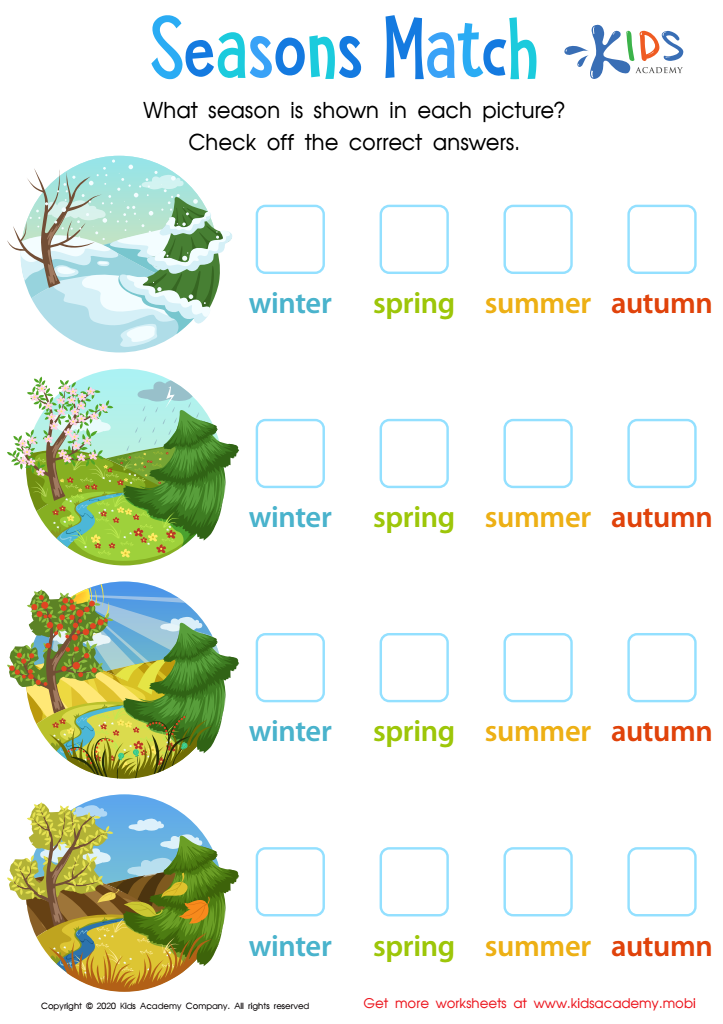
Seasons Match Worksheet
Preschoolers should begin learning about seasons and weather early. Most can tell what season it is by upcoming holidays or school activities. Test their knowledge with a printable PDF worksheet. It asks them to match each image with its corresponding season!
Seasons Match Worksheet
Worksheet
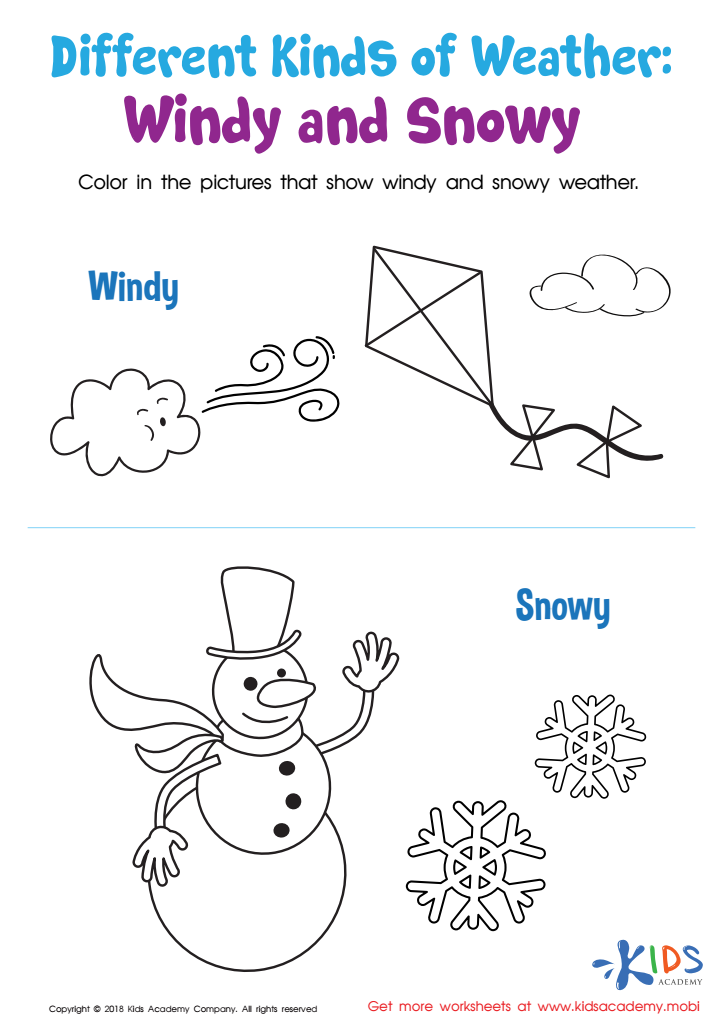
Different Kinds of Weather: Windy and Snowy Worksheet
Invite your little learner to practice their fine motor skills and learn about nature with this fun and charming PDF worksheet! Reinforce weather patterns and examine their environment as they color, giving them a foundation for understanding how weather affects them. No matter the weather, your learner will have a blast!
Download (PDF)
 Assign to My Students
Assign to My Students
Different Kinds of Weather: Windy and Snowy Worksheet
Worksheet
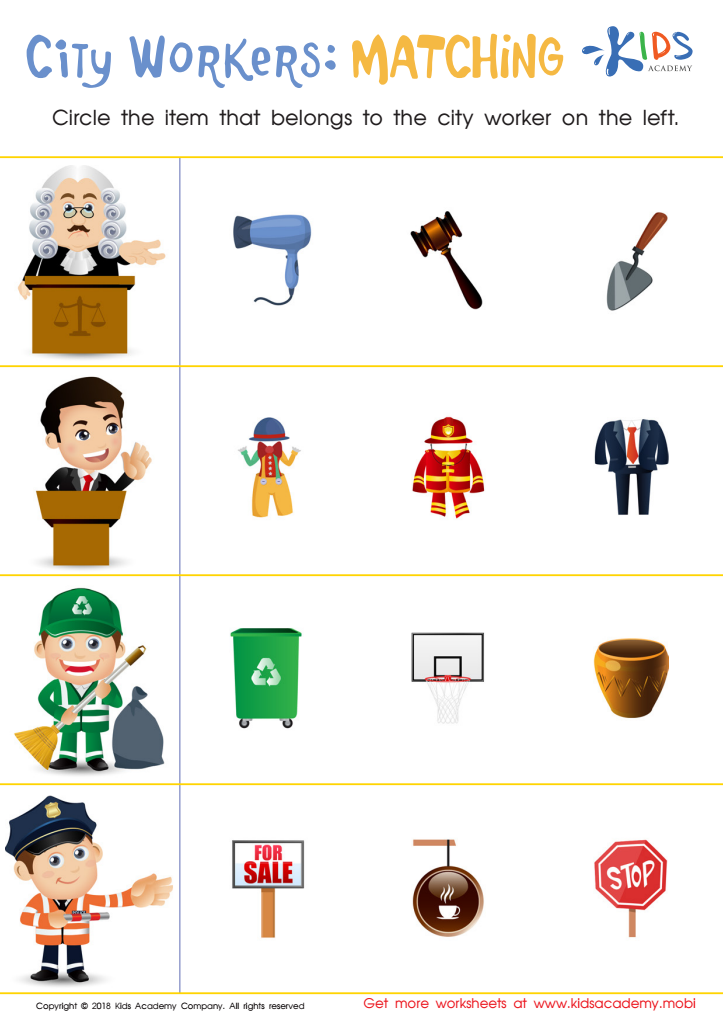
City Workers: Matching Worksheet
Examine the worksheet with your kid. Identify the individuals on the left and their jobs. Have your child circle the correct items on the right that pertain to the city workers. Help your child learn about city workers with this activity.
City Workers: Matching Worksheet
Worksheet
Join Kids Academy for Free
Who is primarily going to use this learning content?





Parents and teachers should prioritize matching skills in social studies because these skills play a fundamental role in young students’ cognitive development and social understanding. Matching activities help children learn to identify and associate similar concepts, objects, or events, which is critical for grasping historical timelines, geography, or cultural elements. This foundational skill fosters critical thinking and enhances memory recall, making complex topics much simpler to comprehend.
Furthermore, mastering matching skills encourages collaboration and communication among peers. When participating in matching games or activities, students are prompted to discuss their thoughts, work together, and share knowledge, all of which help in building social skills and confidence.
In addition, establishing a strong grasp of matching skills aids in the development of empathy and cultural awareness. As students learn to recognize similarities and differences between groups, they begin to appreciate diverse perspectives, which is vital in today’s interconnected world.
In summary, nurturing matching skills through social studies not only supports academic success but also cultivates essential life skills, making it crucial for parents and teachers to engage actively in this aspect of education. By doing so, they contribute to the overall growth and development of the all-rounded individual.