Division practice Normal Grade 3 Worksheets
9 filtered results
Difficulty Level
Grade
Age
-
From - To
Subject
Activity
Standards
Enhance your third grader's math skills with our Division Practice Worksheets designed for Normal Grade 3 learners! Tailored to foster a strong understanding of division concepts, these worksheets offer a variety of engaging exercises that help children grasp division as sharing and grouping. Our printable resources feature simple problems that gradually increase in complexity, ensuring that students build confidence and proficiency at their own pace. With colorful designs and interactive problems, these worksheets make learning division enjoyable and effective. Visit our site to explore a wealth of exercises that will transform your child's division skills and set them up for success in math!
Favorites
With answer key
Interactive
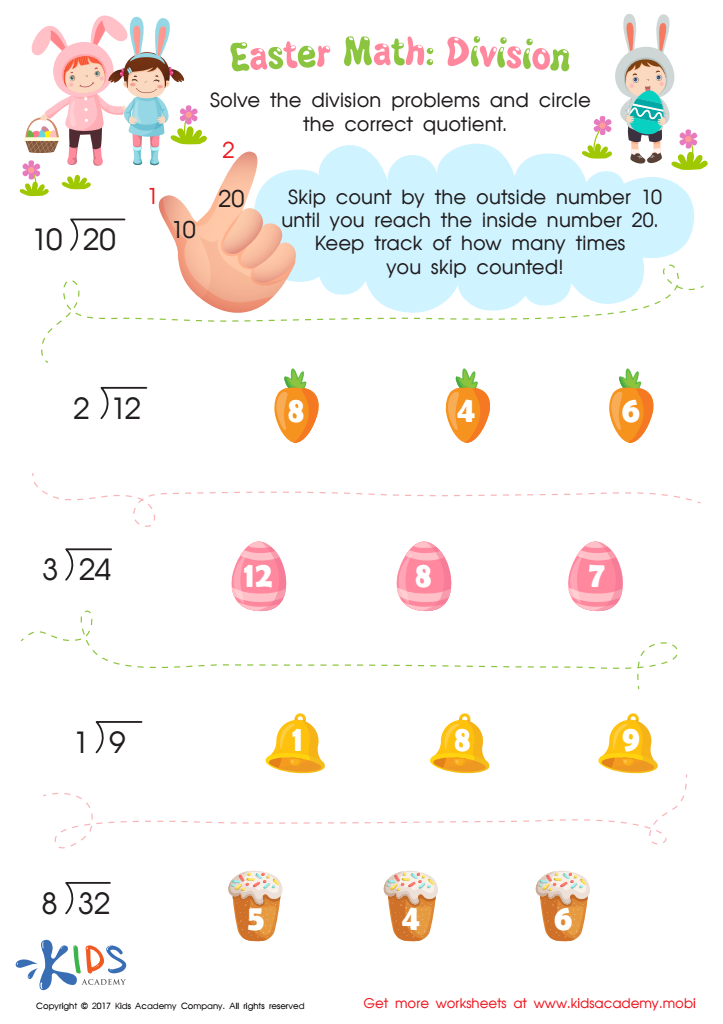
Division Worksheet
Try this Easter-themed PDF worksheet for grade 3: perfect for teaching division with a fun, new trick! It's full of bright, colorful pictures your child will love, and it's as easy as skip counting to solve the problems.
 Assign to My Students
Division Worksheet
Worksheet
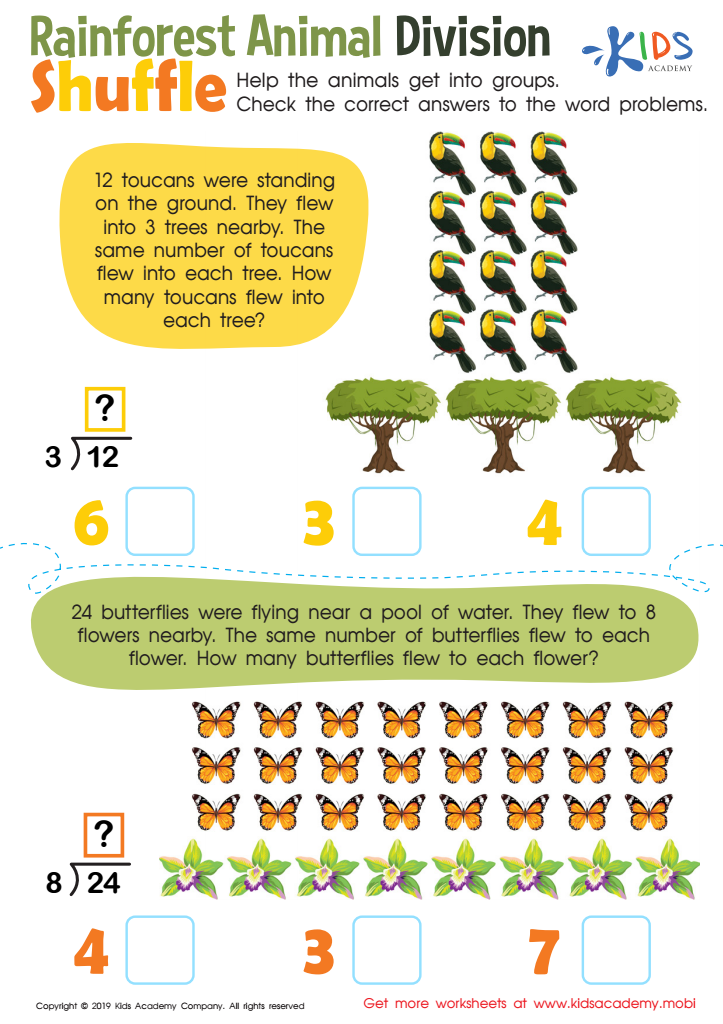
Rainforest Animal Division Worksheet
Children can save the rainforest and learn about division with this worksheet! It helps kids understand that division involves creating equal groups of specific numbers, and with its visual representation, they can grasp the concept more easily. They'll have fun learning about their place in the world and their role in protecting the environment.
Rainforest Animal Division Worksheet
Worksheet
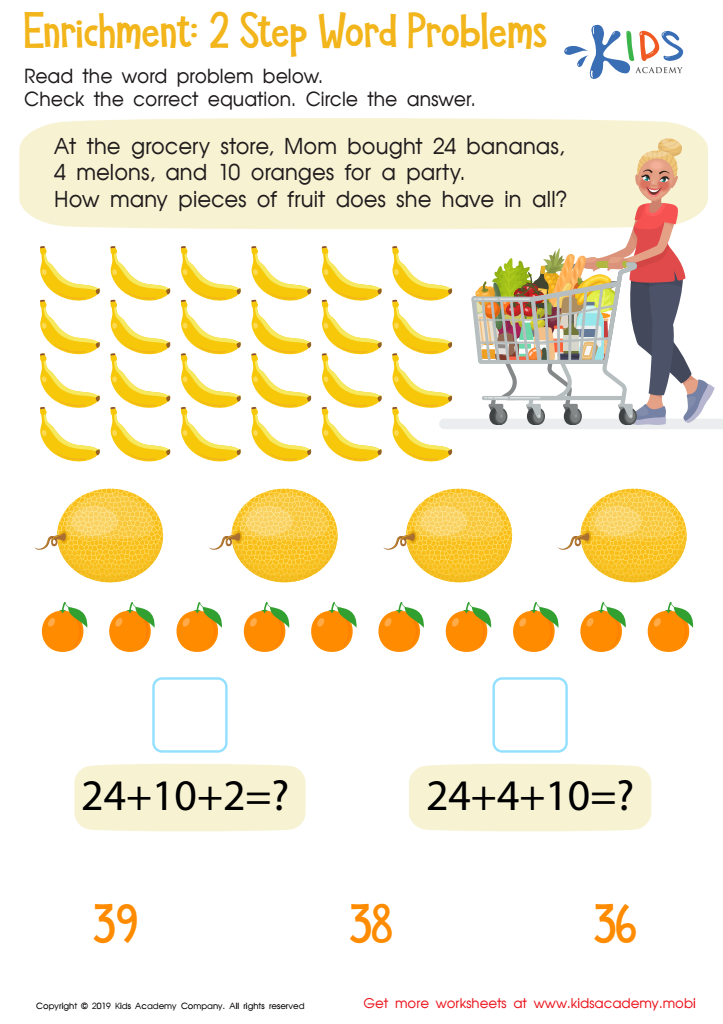
Enrichment -2 Step Word Problems Worksheet
Help your students learn math easier and faster with this colorful worksheet. Read the word problem and then guide them in checking the correct equation and finding the answer. Your students will benefit from the extra help, as they work through new concepts each day.
Enrichment -2 Step Word Problems Worksheet
Worksheet
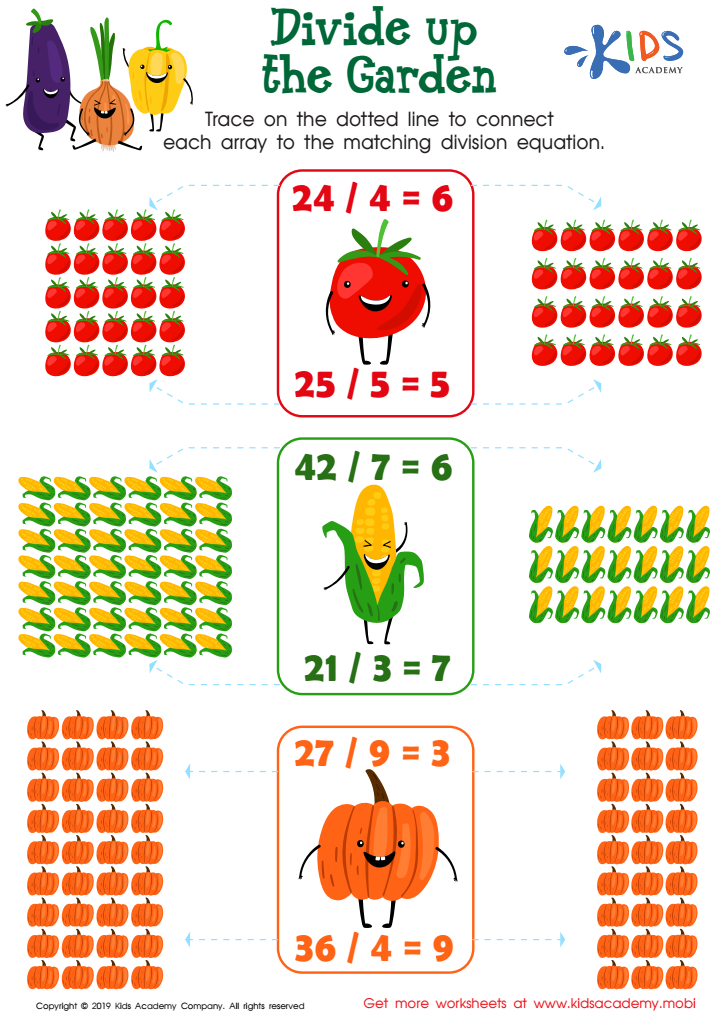
Divide up the Garden Worksheet
Dividing is simply grouping items into equal sets. This worksheet helps kids see division problems in array form. They'll match each equation with a picture group, using the lines provided. It's a great way for beginners to understand division more concretely.
Divide up the Garden Worksheet
Worksheet
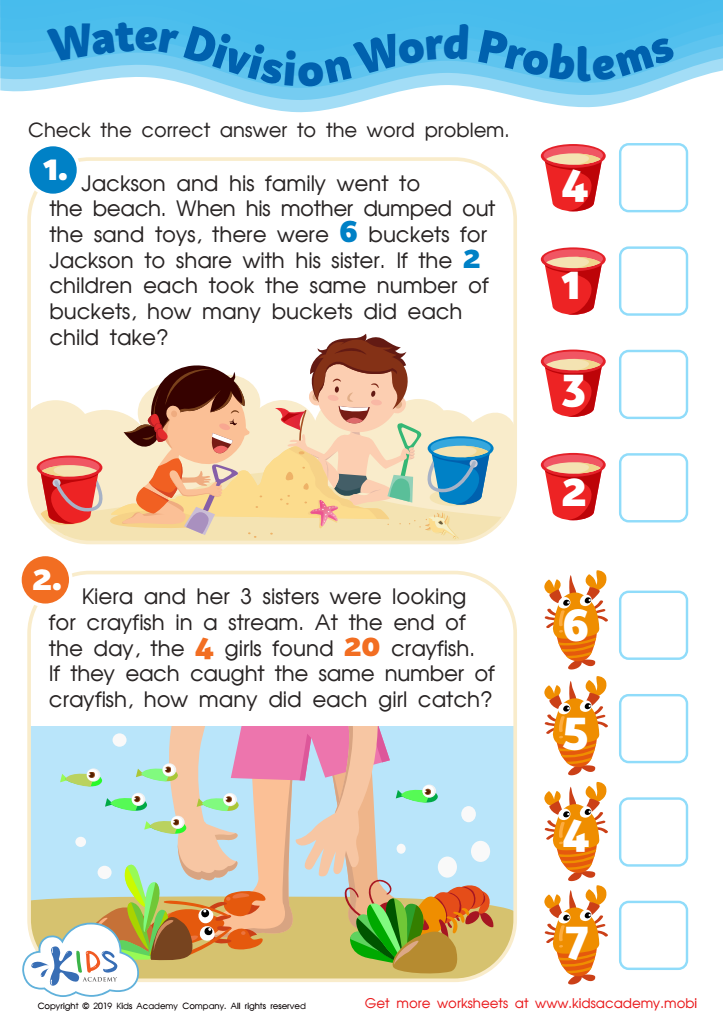
Water Division Word Problems Worksheet
Kids can sharpen their math skills with this fun PDF! They'll see pictures of friends at the beach, plus bold numbers and colorful pictures. All they need to do is read and understand the problem to find the answer - without even realizing they're doing division. A great way to make math enjoyable!
Water Division Word Problems Worksheet
Worksheet
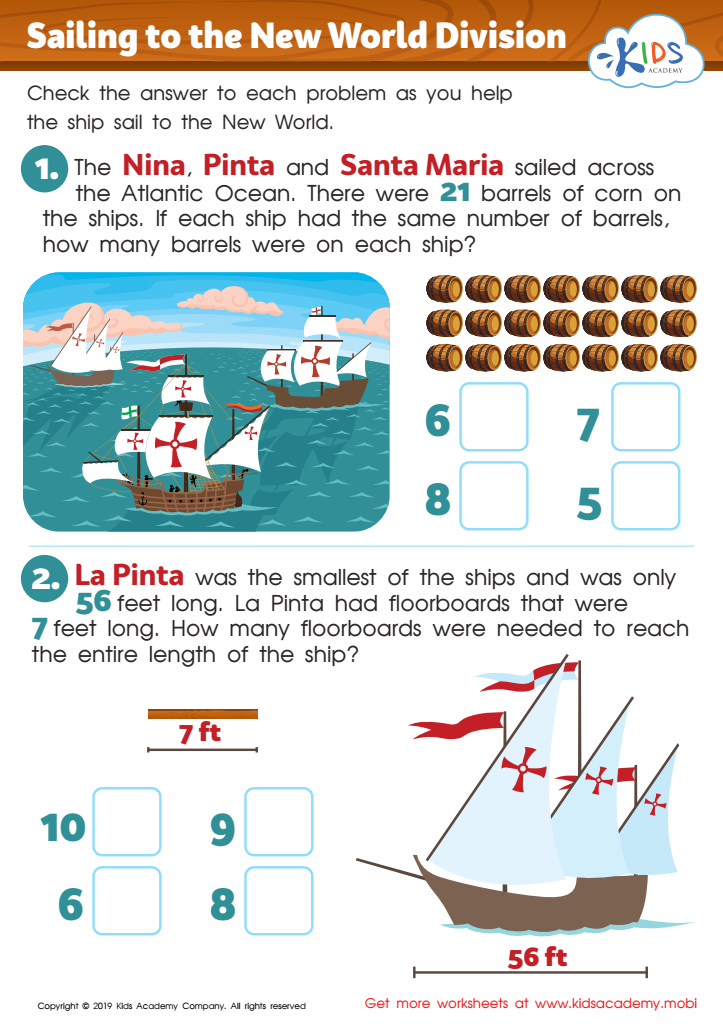
Sailing to the New World Division Worksheet
This worksheet combines history and math, helping kids make sense of problem-solving. Christopher Columbus sailing the ocean blue is combined with picture representations of division word problems in bold colors and highlighted numbers. Kids can learn while having fun figuring out the problems, regardless of whether it's math or history.
Sailing to the New World Division Worksheet
Worksheet
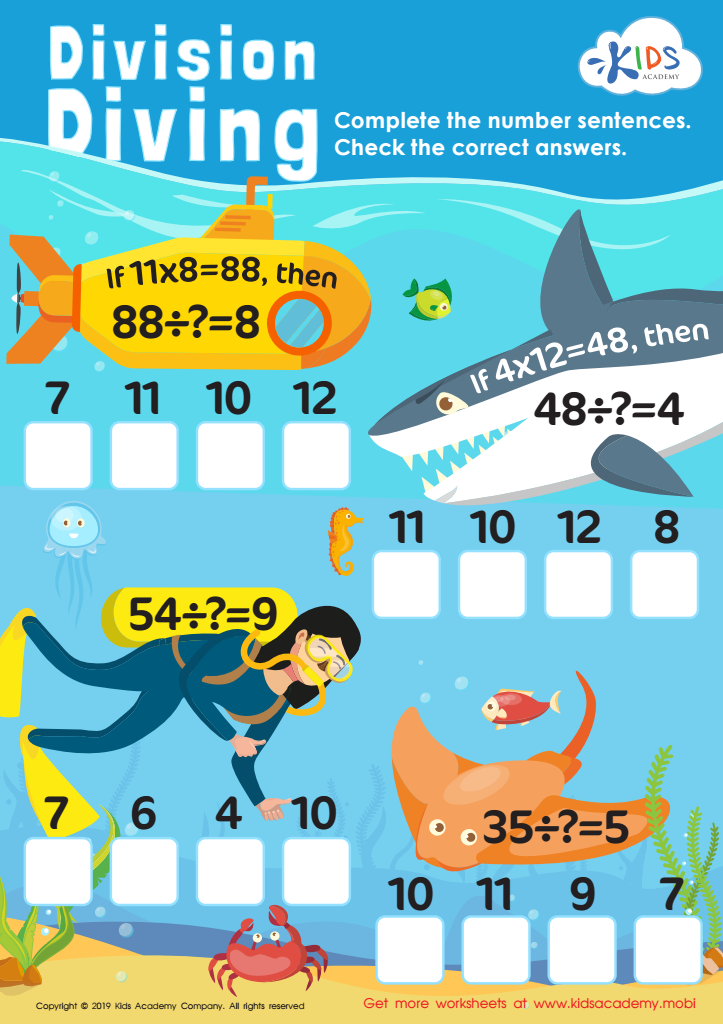
Division Diving Worksheet
Kids love exploring water and this free PDF worksheet is a great way to bring the fun and math together! Kids can help the underwater friends with number sentences, and use their fact family knowledge to solve for the missing number, then choose the correct answer. This worksheet is an enjoyable way for them to practice division!
Division Diving Worksheet
Worksheet
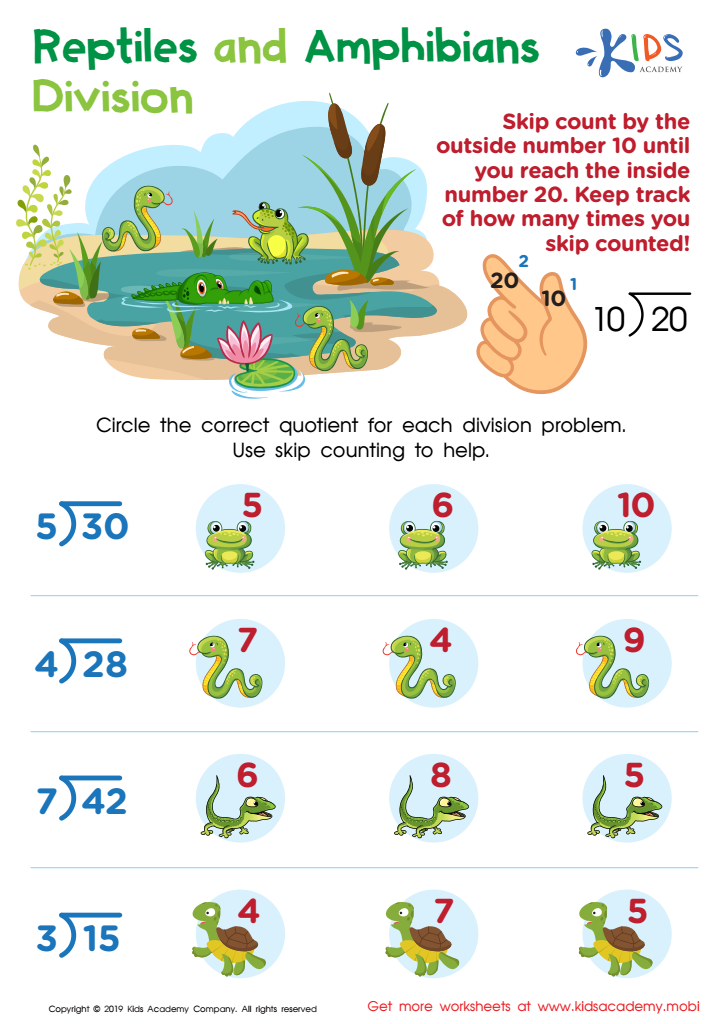
Reptile and Amphibians Division Worksheet
Skip counting is key in division. This PDF worksheet helps children practice this skill with fun reptile and amphibian friends. They must circle the right quotient among the choices given to reinforce their pattern recognition. Perfect for mastering division!
Reptile and Amphibians Division Worksheet
Worksheet
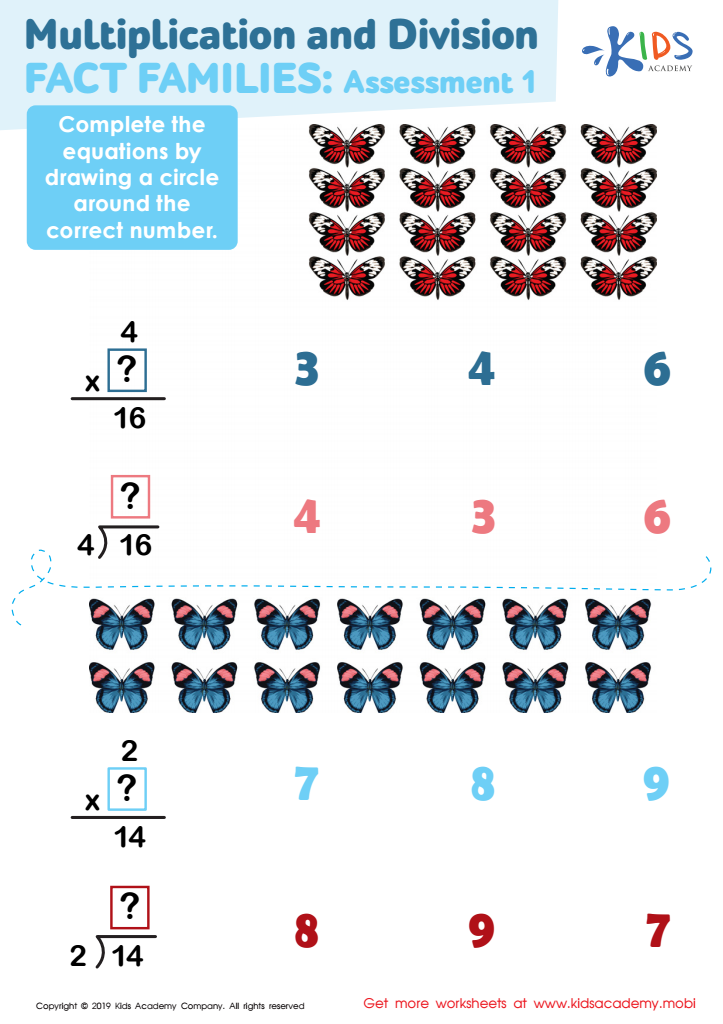
Multiplication and Division Fact Families Assessment 1 Worksheet
When it comes to multiplication and division, automaticity and efficiency are key. Test your child's understanding of fact families with this free butterfly worksheet. They'll practice equations, picture concepts and fact families to arrive at the correct number. Repetition will help them develop strong skills and confidence.
Multiplication and Division Fact Families Assessment 1 Worksheet
Worksheet
Join Kids Academy for Free
Who is primarily going to use this learning content?



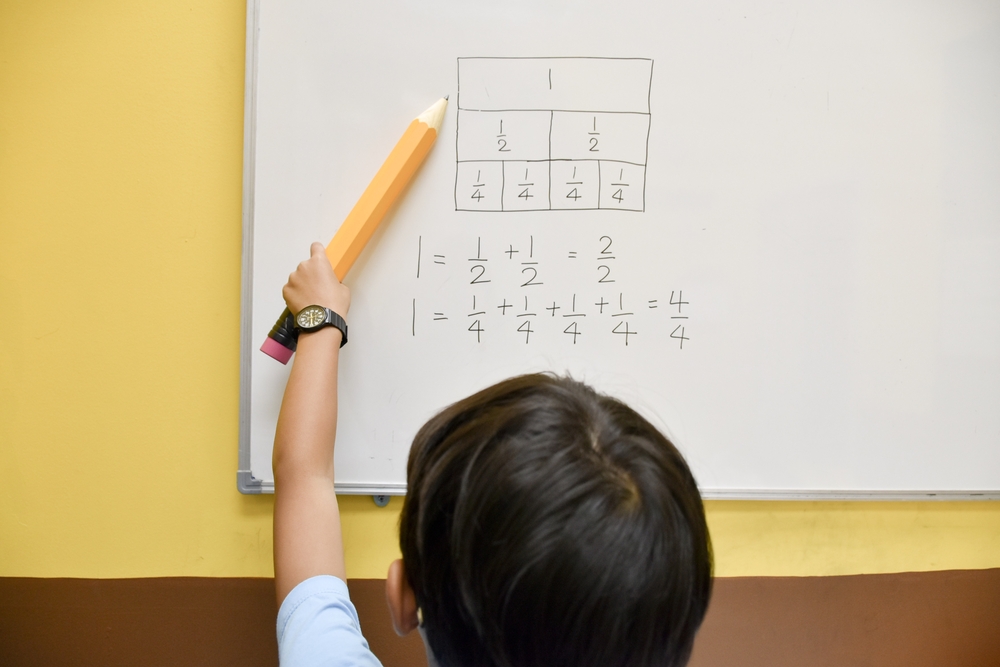



Division practice is crucial for Grade 3 students as it lays a strong mathematical foundation essential for their academic growth. At this stage, children begin to understand the concept of grouping and sharing, which are vital for their number sense. Learning division helps them grasp the relationship between multiplication and division, fostering a deeper comprehension of mathematics as a whole.
By practicing division, students develop critical problem-solving skills that are applicable in real-life situations. Understanding how to divide helps them handle tasks such as sharing equally among friends or splitting items to ensure fairness.
For teachers and parents, supporting division practice creates opportunities for collaboration and engagement. It allows adults to introduce practical examples, reinforcing skills through everyday activities. Moreover, mastering division bolsters students’ confidence in math, reducing anxiety and fostering a positive attitude towards learning.
Additionally, division sets the stage for more advanced mathematical concepts such as fractions and ratios in later grades. By ensuring students are proficient in division, parents and teachers contribute to a better understanding of mathematics, which is essential for future academic success. Investing in Grade 3 division practice ultimately supports lifelong learning and essential cognitive skills.