Understanding economics Normal Grade 3 Worksheets
3 filtered results
-
From - To
Explore our "Understanding Economics" Normal Grade 3 Worksheets, designed to make economics accessible and engaging for young learners. These worksheets cover essential concepts such as needs and wants, goods and services, and the role of individuals in an economy. Incorporating fun activities, real-life scenarios, and thought-provoking questions, our resources help students develop critical thinking and decision-making skills. Suitable for classroom or home use, these worksheets encourage children to understand economic principles in a way that resonates with their everyday experiences. Empower your third graders with the knowledge they need to navigate the economic world around them through interactive learning!
 Assign to My Students
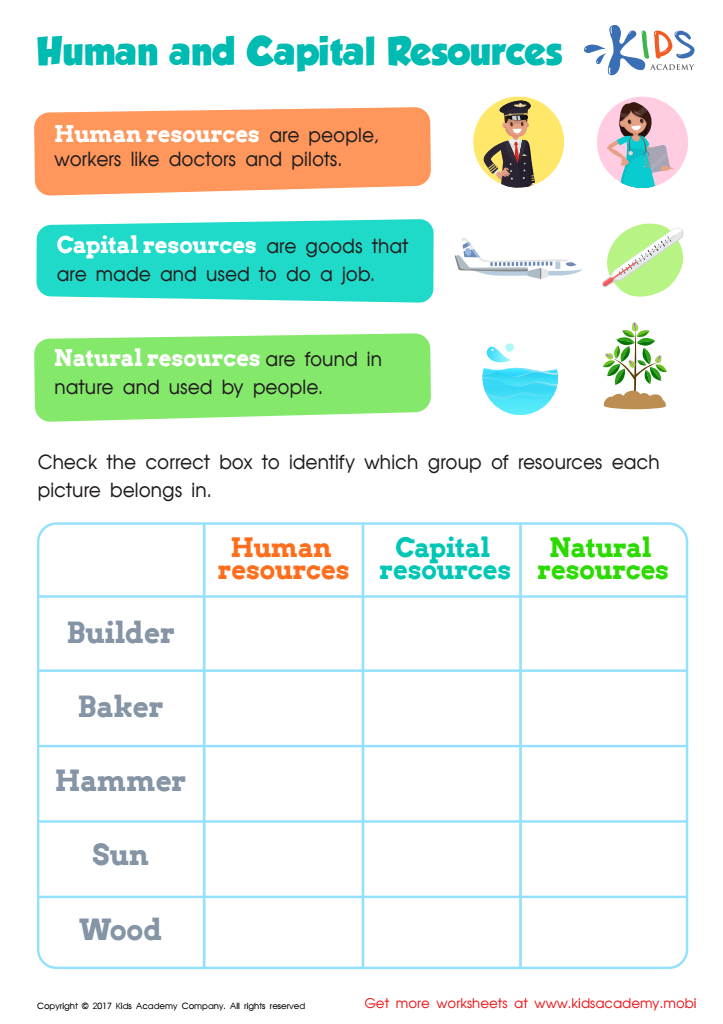
Human and Capital Resources Worksheet
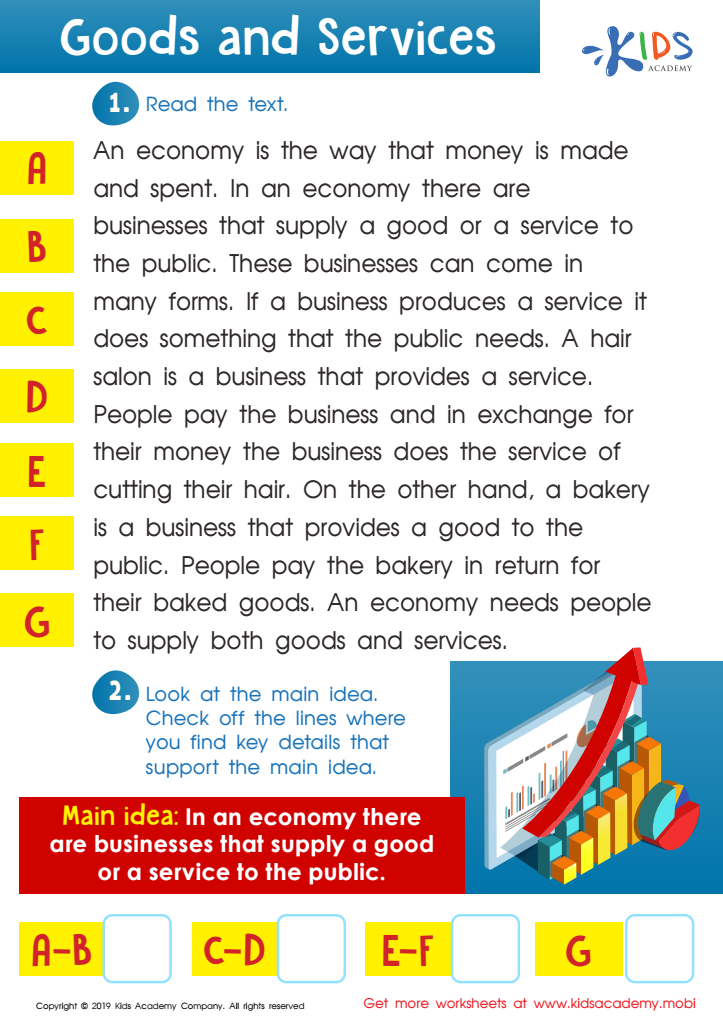
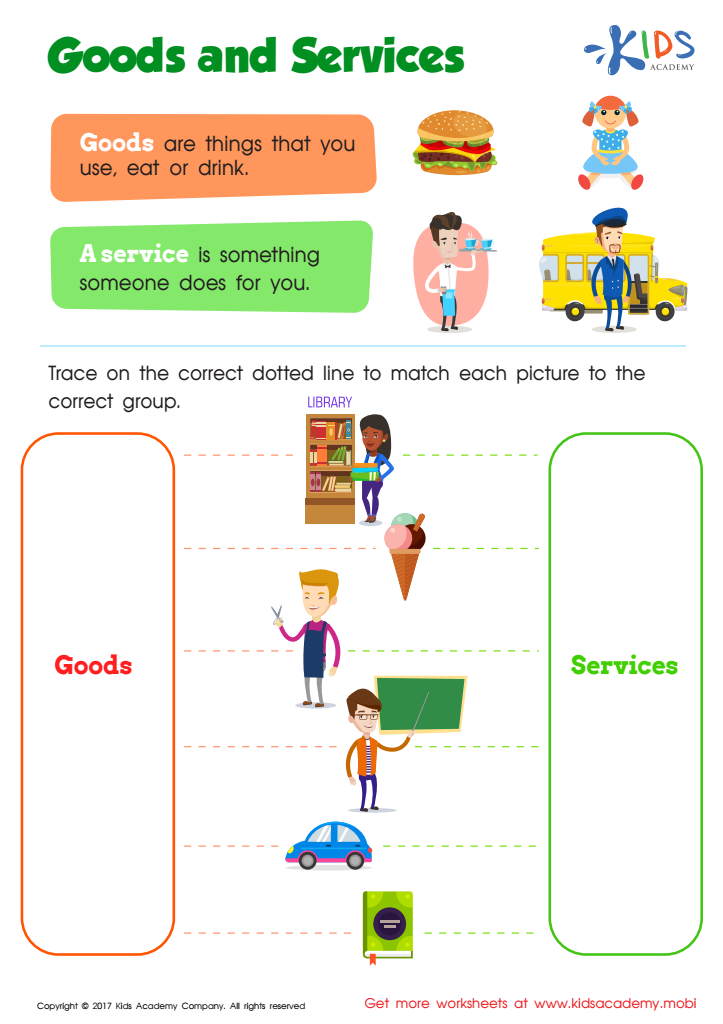
Goods and Services Worksheet






Understanding economics is essential for parents and teachers, especially at the Grade 3 level, as it lays a foundational awareness that helps children navigate the world around them. At this age, children are beginning to grasp concepts of money, trade, and value. Introducing basic economic principles equips them with skills to make informed decisions about spending, saving, and the use of resources.
Economics teaches children about the consequences of choices. For instance, in a simple classroom activity where they choose between buying a treat or saving for something bigger, they learn about trade-offs. This understanding fosters critical thinking, teaching them to weigh options before making decisions.
Furthermore, awareness of economics helps children develop social skills as they learn about working together, sharing resources, and understanding the importance of teamwork in achieving common goals.
For parents and teachers, nurturing a children's understanding of economics can promote responsibility and citizenship. As they grow, these lessons can transcend into adulthood, influencing responsible behavior in personal and community financial matters. By incorporating economics into learning, we can empower children to become thoughtful, informed individuals capable of contributing positively to society.