Word identification Normal Grade 3 Worksheets
4 filtered results
Difficulty Level
Grade
Age
-
From - To
Subject
Activity
Standards
Enhance your Grade 3 students' reading skills with our comprehensive Word Identification Worksheets. Designed to support young learners, these worksheets focus on bolstering vocabulary and comprehension through engaging exercises. With a variety of activities, students will practice identifying words in context, recognizing sight words, and exploring new vocabulary. Perfect for classroom use or at-home practice, our resources align with curriculum standards and cater to diverse learning styles. Watch your students become confident readers as they complete interactive tasks that make learning fun and effective. Access our printable worksheets today and empower your students on their literacy journey!
Favorites
With answer key
Interactive
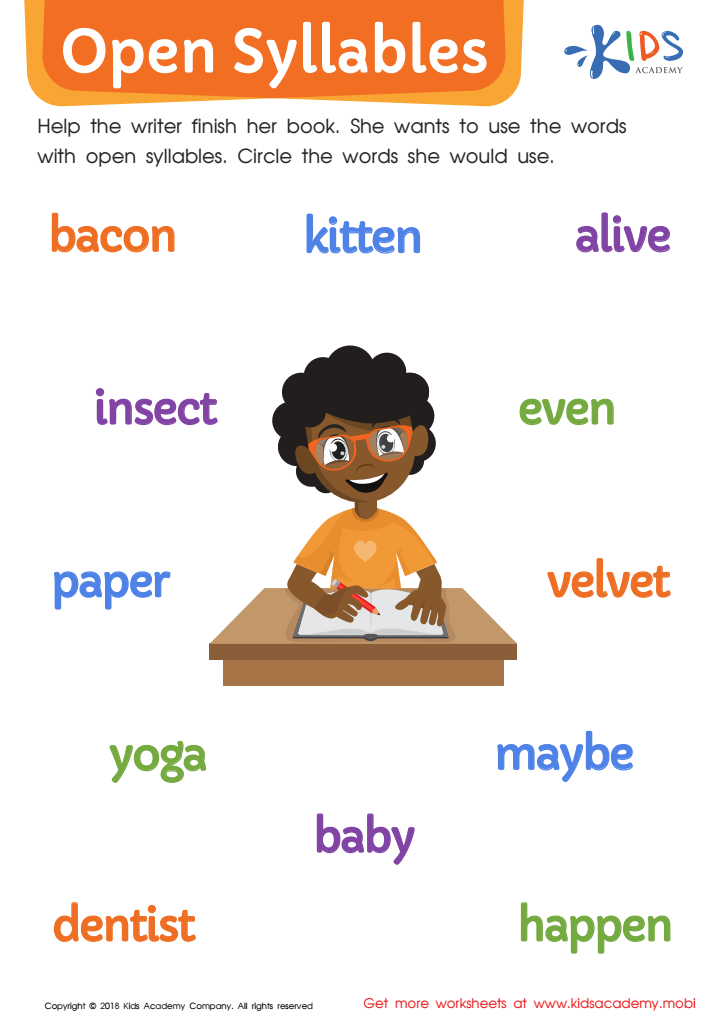
Open Syllables Worksheet
Before beginning this worksheet, make sure your child knows what open syllables are. If not, take time to teach them with examples. Then, help the writer finish her book by circling words with open syllables. She needs your child's help!
Open Syllables Worksheet
Worksheet
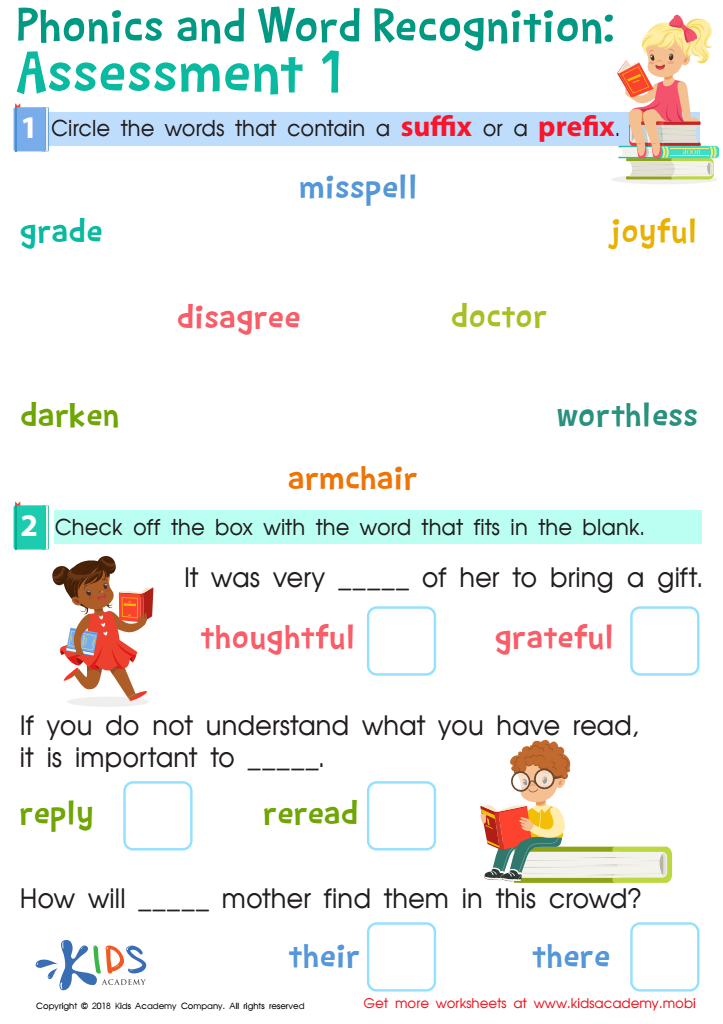
Phonics and Word Recognition: Assessment 1 Worksheet
Explain prefixes (words added to start of another word to give it a new meaning) and suffixes (added to end of word to change its meaning) to your kids with examples like 'unhappy' (prefix) and 'forgetful' (suffix). Now, help your child complete this worksheet, including circling words and checking boxes.
Phonics and Word Recognition: Assessment 1 Worksheet
Worksheet
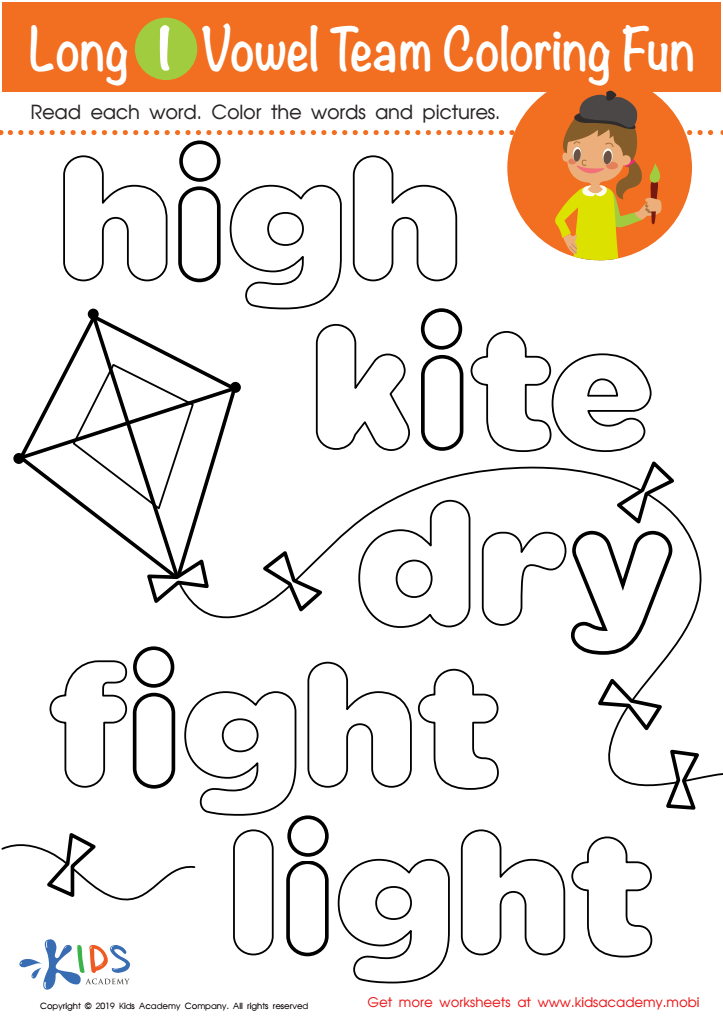
Long I Vowel Team Coloring Worksheet
This worksheet provides practice with letter combinations that make the long "i" sound while enhancing creativity and motor skills with a fun coloring activity. Unknowingly, new readers learn key phonics skills while having fun!
Download (PDF)
 Assign to My Students
Assign to My Students
Long I Vowel Team Coloring Worksheet
Worksheet
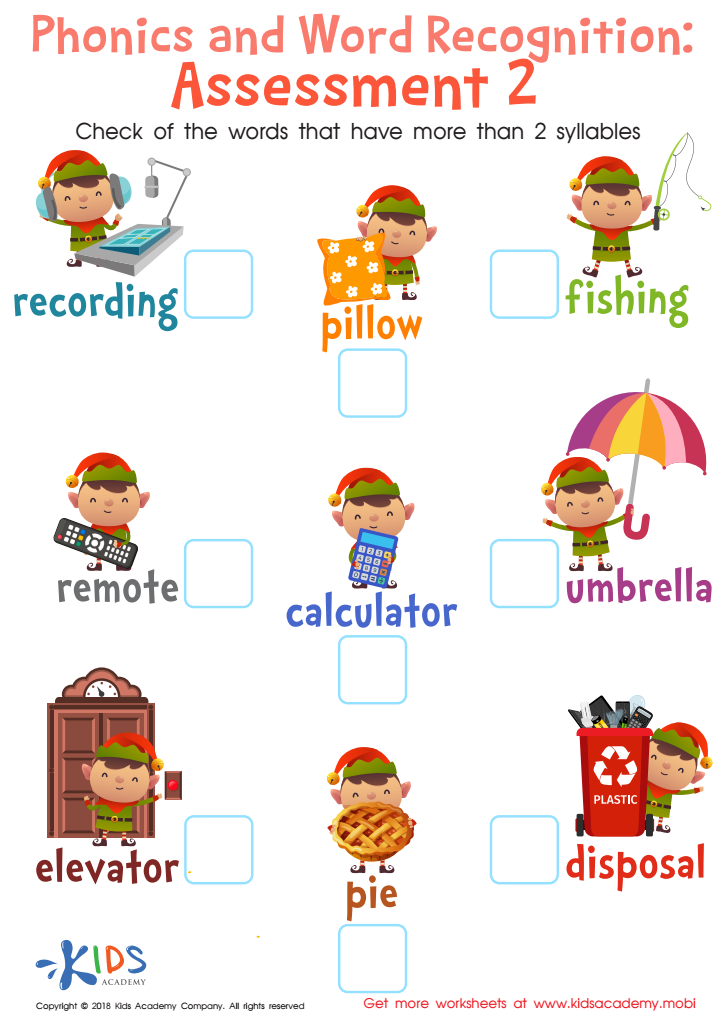
Phonics and Word Recognition: Assessment 2 Worksheet
Help your kids learn proper pronunciation by counting syllables. Most words they'll encounter have 1-3 syllables, making them simple to say. Have them repeat the words in your worksheet after you. Focus on longer words with more than two syllables.
Phonics and Word Recognition: Assessment 2 Worksheet
Worksheet
Join Kids Academy for Free
Who is primarily going to use this learning content?






Word identification is a crucial skill for grade 3 students as it forms the foundation for reading fluency and comprehension. At this stage, children are transitioning from learning to read to reading to learn. Proficient word identification allows students to decode unfamiliar words, enabling them to gain confidence and become independent readers. Without this skill, students may struggle with grade-level texts, limiting their ability to engage with more complex content across subjects.
Parents and teachers should prioritize word identification because it directly impacts a child’s overall academic success. When children can quickly and accurately identify words, they are more likely to focus on understanding and enjoying the material, rather than getting bogged down by decoding challenges. Moreover, proficient word identification enhances vocabulary development, which is essential for effective communication and literacy skills.
Involving parents in this process fosters positive relationships and learning at home. This cooperative approach can enhance a child's motivation. Together, they can practice strategies such as phonics, sight words, and reading regularly. Ultimately, focusing on word identification in grade 3 lays the groundwork for continued literacy development, essential for lifelong learning and success. Thus, both parents and teachers play a vital role in this critical aspect of a child’s education.