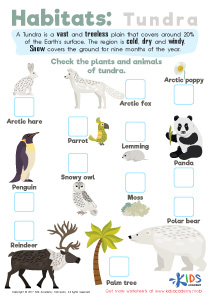
Critical thinking skills Normal Grade 3 Science Worksheets
4 filtered results
Difficulty Level
Grade
Age
-
From - To
Subject
Activity
Standards
Enhance your third grader's science knowledge and critical thinking abilities with our engaging and interactive worksheets. Our "Critical Thinking Skills Normal Grade 3 Science Worksheets" are designed to challenge young minds, encouraging them to analyze, evaluate, and synthesize information. Each worksheet is aligned with key scientific concepts, promoting inquiry-based learning and problem-solving. Students will explore topics through fun exercises that refine their reasoning skills while reinforcing scientific principles. Whether used in the classroom or at home, these worksheets provide an excellent resource for cultivating a deeper understanding of science and fostering a lifelong love of learning. Explore our collection today!
Favorites
With answer key
Interactive

Protecting Our Homes Worksheet
Teach kids about severe weather with this free worksheet. It helps them learn how to protect their home from excessive rain, as well as what not to do. Check the given actions to make the damage from weather events less devastating.
 Assign to My Students
Protecting Our Homes Worksheet
Worksheet
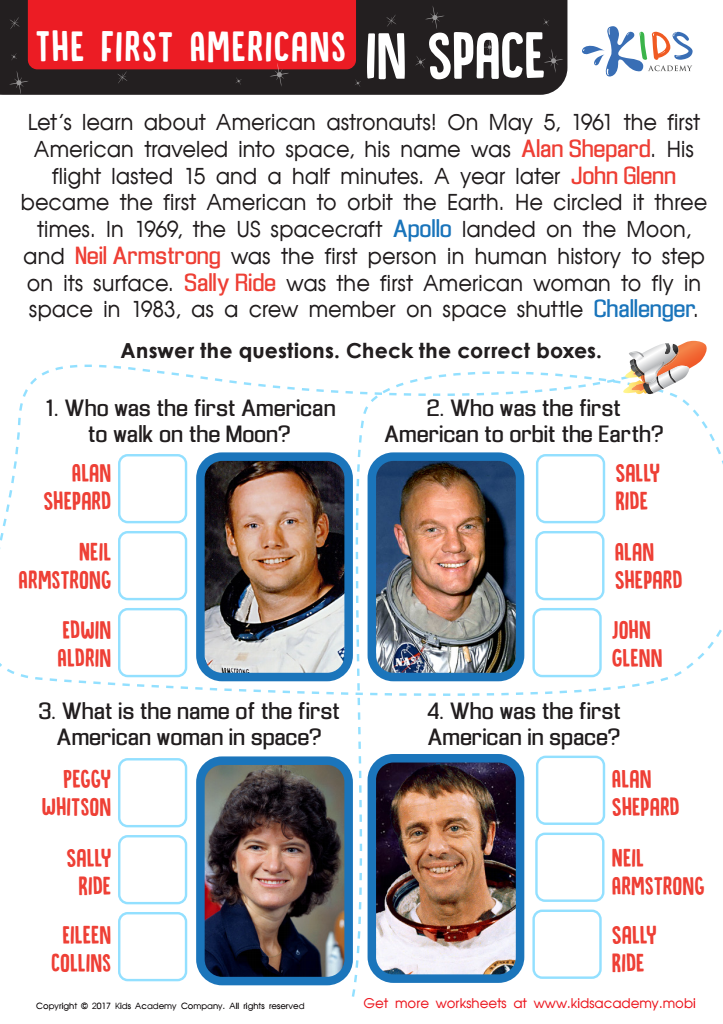
First Americans in Space Worksheet
Delve into space history with your child! Learn about the first astronauts and their impact on U.S. space exploration. Our captivating worksheet features real photos and facts about these famous individuals. Spark your kid’s interest in space today!
First Americans in Space Worksheet
Worksheet
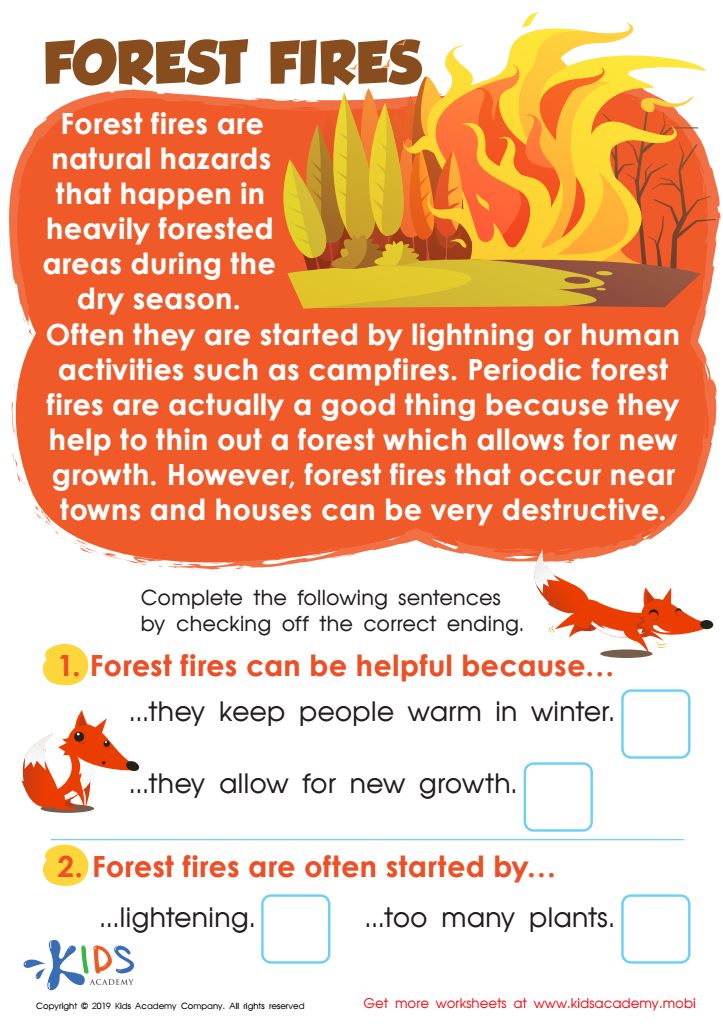
Forest Fires Worksheet
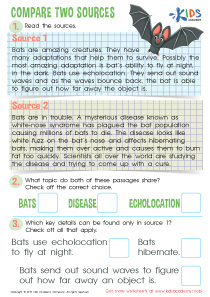
This free worksheet helps kids learn about forest fires. It encourages critical thinking by allowing them to answer multiple-choice questions. It is an important opportunity for children to develop reading skills, as understanding text is essential for further academic success. Download the PDF to give them the chance to practice comprehension and strengthen their knowledge.
Forest Fires Worksheet
Worksheet
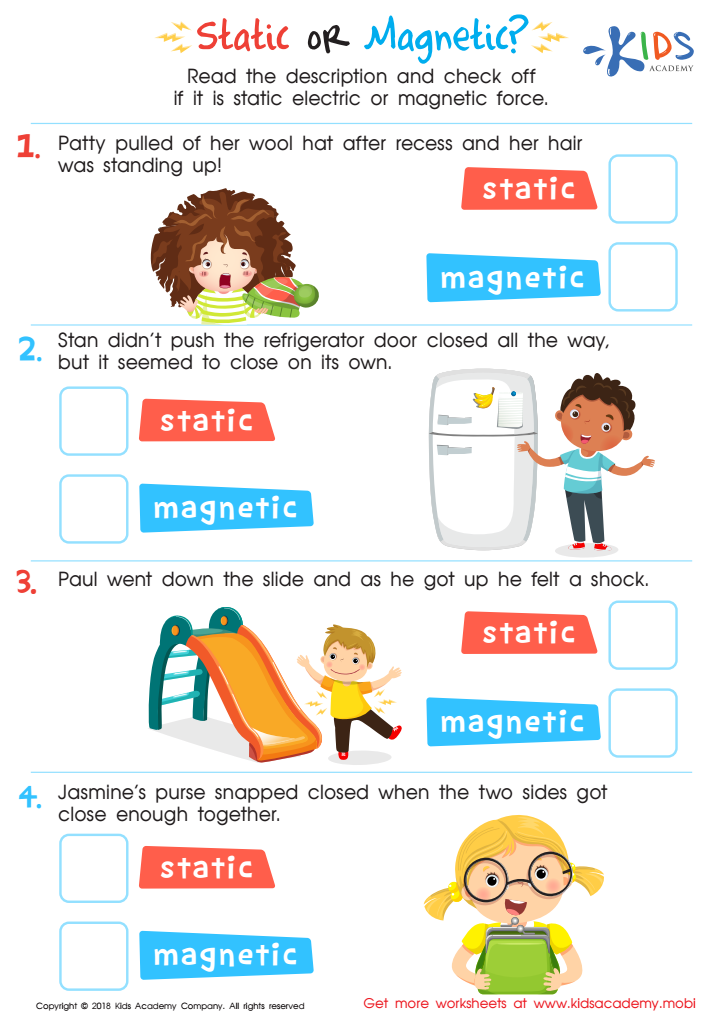
Static or Magnetic Printable Worksheet
Ever wondered if a situation involved static or magnetic force? This printable worksheet has the answer! Read the scenarios and check out the illustrations to decide which force is in play for each. Learn about these two amazing forces with this fun activity!
Static or Magnetic Printable Worksheet
Worksheet
Join Kids Academy for Free
Who is primarily going to use this learning content?




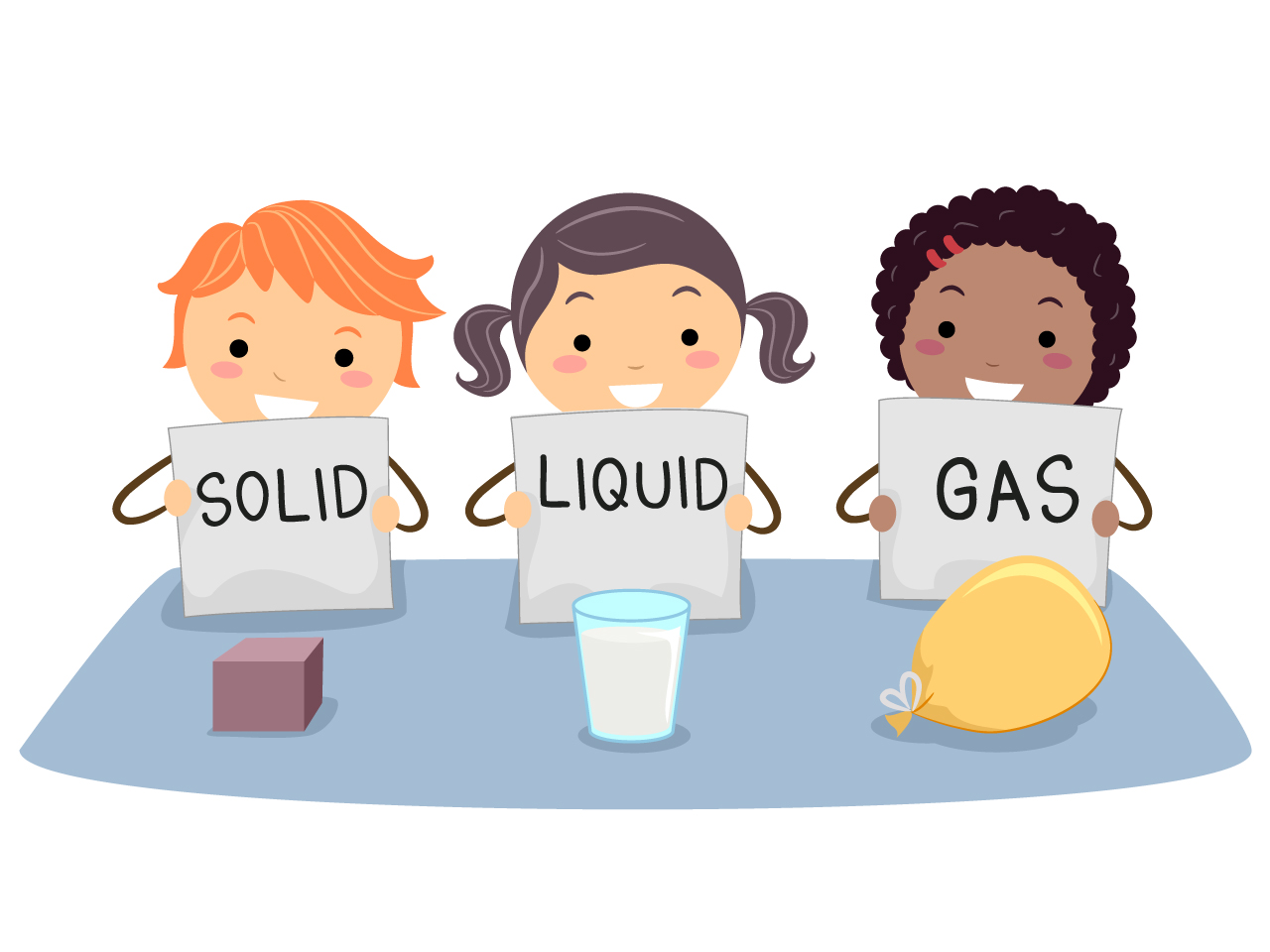



Critical thinking skills are essential for third-grade students as they begin to formulate their understanding of the world around them, particularly in subjects like science. At this stage, children are curious and eager to explore. By cultivating critical thinking skills, parents and teachers can help students learn to analyze information, ask questions, and seek evidence, which are foundational elements of scientific inquiry.
Teaching critical thinking in science encourages students to not just memorize facts but engage with concepts deeply. For instance, when conducting a simple experiment, students learn to make hypotheses, gather data, and draw conclusions. This process fosters creativity and curiosity, which can lead to a lifelong love of learning.
Moreover, critical thinking equips children with the skills to evaluate information critically, helping them discern between credible sources and misinformation. In today’s digital age, where information is abundant and often misleading, teaching children how to think critically is paramount.
Ultimately, instilling these skills benefits students academically and prepares them for future challenges. They become problem solvers and independent thinkers, better prepared for higher education and responsible citizenship. Therefore, the engagement of parents and teachers in this developmental process is crucial for nurturing well-rounded, insightful learners.