Hand-eye Coordination Normal Writing Worksheets
3 filtered results
-
From - To
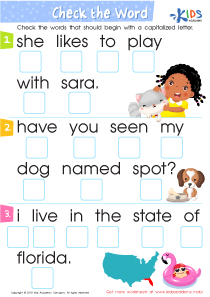
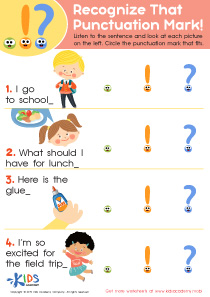
Discover our "Hand-eye Coordination Normal Writing Worksheets" designed to help young learners improve their essential hand-eye coordination skills while practicing writing. Ideal for early grade students, these engaging worksheets feature fun, educational exercises that blend tracing, drawing, and writing activities. They are crafted to enhance dexterity and precision, ensuring children develop the fine motor skills necessary for effective handwriting. Our carefully curated sheets make learning an enjoyable experience, guiding kids through each step in an encouraging and interactive way. Download now from Kids Academy to support your child's journey toward mastering writing and hand-eye coordination effortlessly.
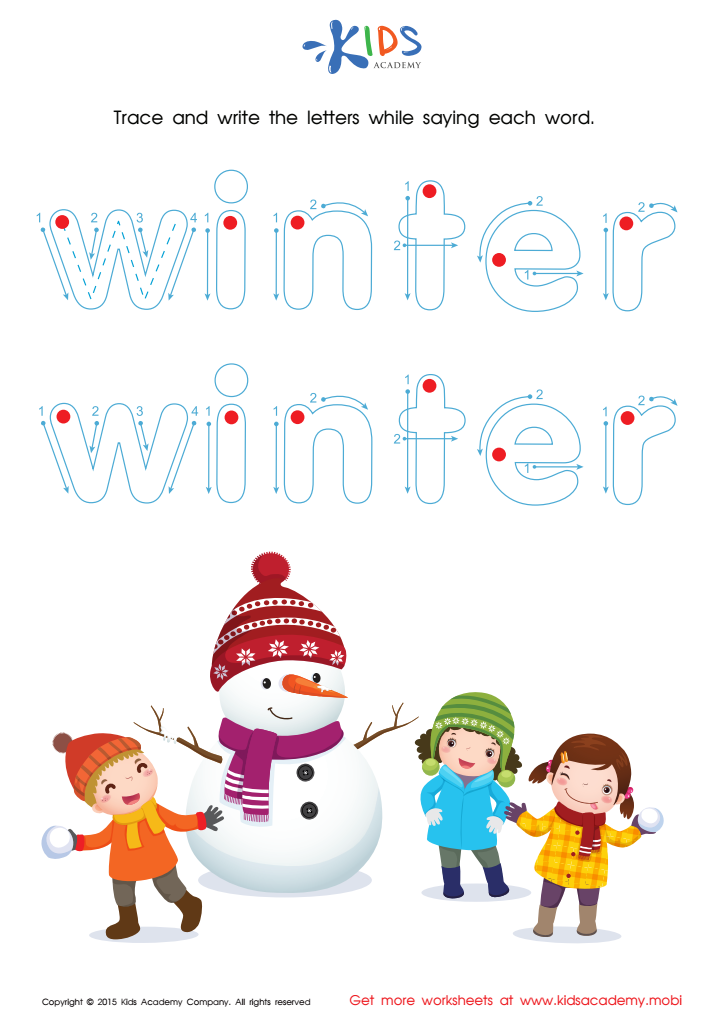
Snowman Tracing Winter Words Worksheet
 Assign to My Students
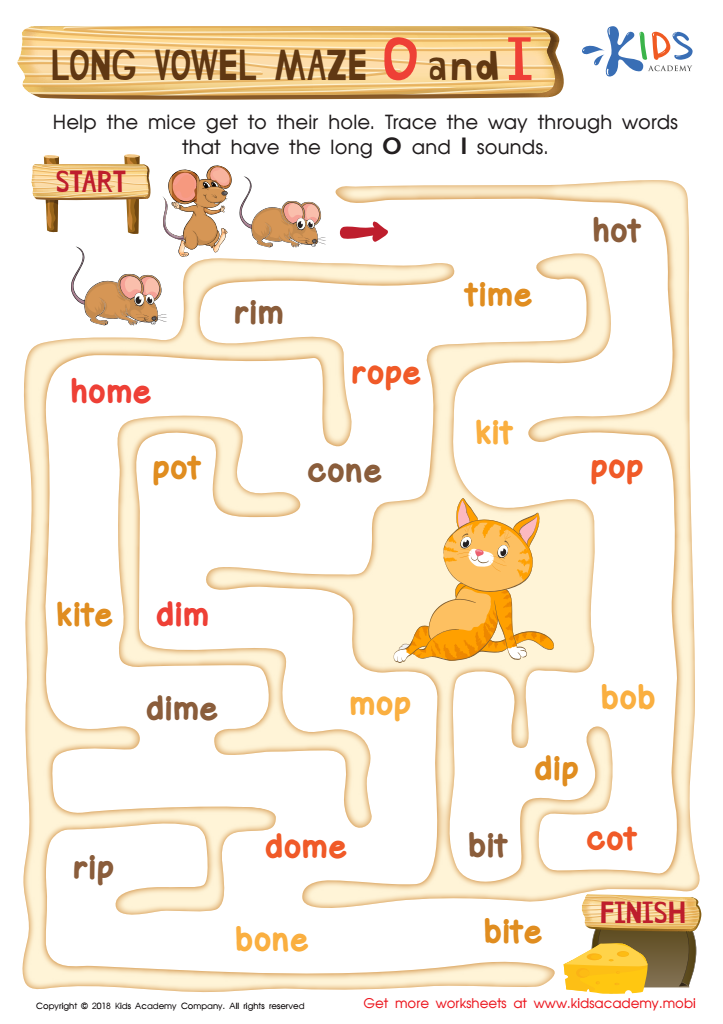
Long Vowel Maze /o/ and /i/ Worksheet
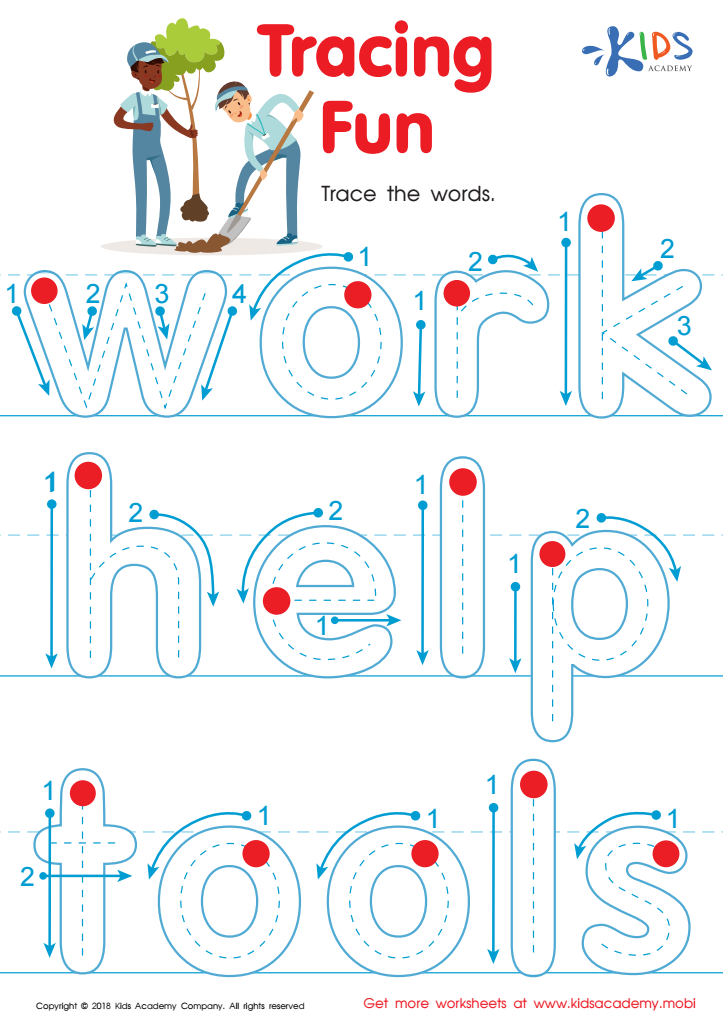
Tracing Fun Worksheet


.jpg)
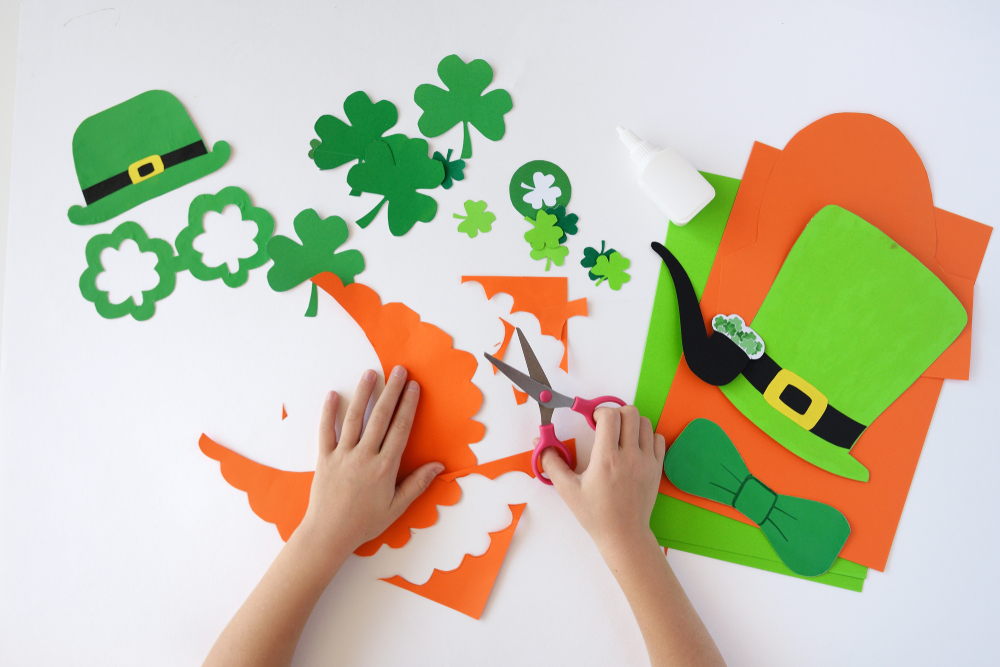




Hand-eye coordination is essential for children's overall development because it is the foundation for many daily and academic activities. When it comes to normal writing, particularly in early grades, efficient hand-eye coordination is crucial. This ability allows children to synchronize their hands and eyes to carry out tasks accurately, such as forming letters, spacing words correctly, and using the proper grip on writing instruments.
Strong hand-eye coordination helps with fine motor skills, which are necessary not only for writing but also for other classroom tasks like cutting with scissors, drawing, and even using technology devices. Moreover, when hand-eye coordination is robust, children are more likely to write legibly and efficiently, thus reducing frustration and boosting their confidence. This sense of accomplishment can positively impact their willingness to participate in writing activities, contributing to better learning outcomes.
Additionally, good hand-eye coordination is linked to other areas of development such as reading, where tracking words and sentences requires similar synchrony between eye movement and hand control. Given these far-reaching impacts, parents and teachers should prioritize activities that enhance hand-eye coordination, such as playing with building blocks, puzzles, or sports, to support children’s developmental needs effectively and holistically.