Counting worksheets activities for Ages 3-5
2 filtered results
-
From - To
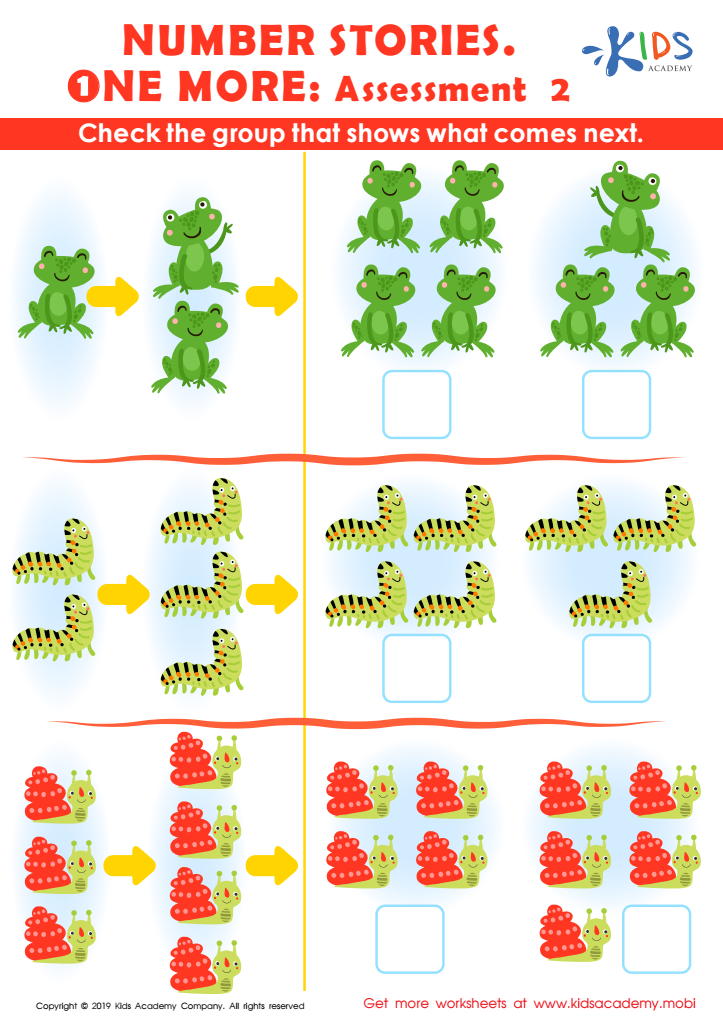
Number Stories One More – Assessment 2 Worksheet
 Assign to My Students
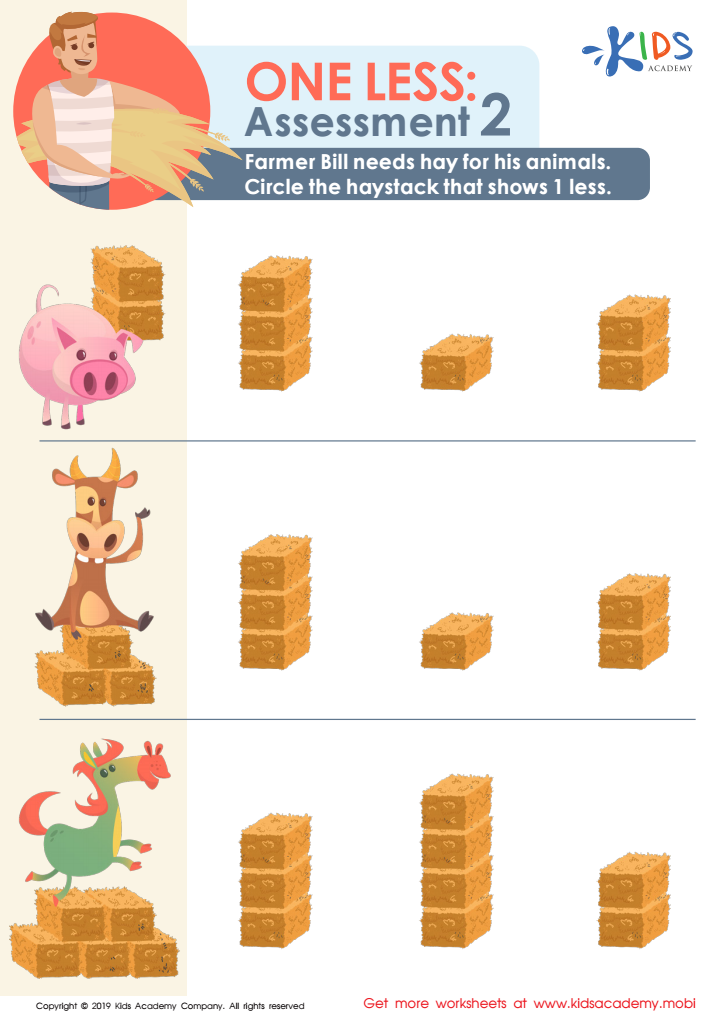
One Less: Assessment 2 Worksheet








Counting worksheets activities stand as an invaluable resource in the educational journey of young learners. These meticulously designed tools not only introduce children to the fundamental concept of numbers but also pave the way for a deeper understanding of mathematics as a whole. The utility of counting worksheets activities extends far beyond mere number recognition, embedding within students essential skills that are crucial for their academic and everyday life.
First and foremost, counting worksheets activities foster accuracy and precision. As children engage with these activities, they learn to count objects, numbers, and eventually, perform basic arithmetic operations with greater confidence and fewer errors. This hands-on approach ensures that students are not just passively learning but are actively applying what they know in a variety of contexts, thereby reinforcing their learning.
Moreover, these activities are designed to improve concentration and attention to detail. Counting requires focus, and as children navigate through different worksheets, they inherently train their minds to be more attentive. This skill, cultivated early on, benefits learners across all subjects, not just mathematics.
Counting worksheets activities also encourage independent learning. With clear instructions and incremental challenges, children are able to work through problems at their own pace, fostering a sense of autonomy and confidence in their abilities. This independence in learning cultivates a positive attitude towards education and instills a love for numbers that many carry with them throughout their academic careers and beyond.
Additionally, these worksheets are incredibly versatile, catering to a wide range of learning styles and abilities. Whether it’s visual learners who benefit from counting objects or kinesthetic learners who enjoy cutting and pasting numbers, there’s something for everyone. This inclusivity ensures that no child is left behind, making mathematics accessible and enjoyable for all.
In conclusion, counting worksheets activities are more than just exercises on paper; they are building blocks for a stronger mathematical foundation. By enhancing accuracy, concentration, independence, and catering to diverse learning needs, these activities equip students with skills that are crucial for their academic success and everyday life.








