Filters

132 filtered results

Clear all filters
Favorites
With answer key
Interactive

132 filtered results

Difficulty Level

Grade


Check out this FREE Knowledge Check Trial Lesson for age 4-7!

Short and Long Vowel Sort

Favorites
With answer key
Interactive
  • Knowledge Check
  • 4-7
  • Interactive
Matter: Assessment 1 Worksheet

Matter: Assessment 1 Worksheet

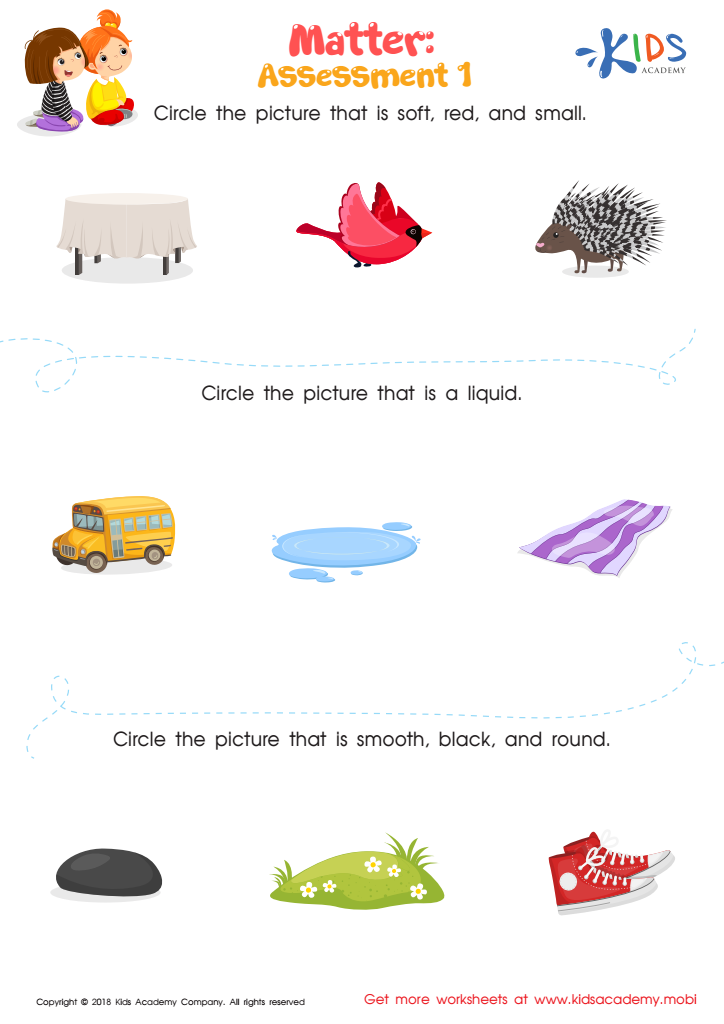
Have your children learn that anything that has weight and takes up space is matter. Examples include buses, tables, people, animals, and more. Use this worksheet to help them identify the objects and circle the soft, red, and small one; the liquid; and the smooth, black, and round one.
Matter: Assessment 1 Worksheet
Worksheet
Let's Check Long Vowels: Assessment Worksheet

Let's Check Long Vowels: Assessment Worksheet

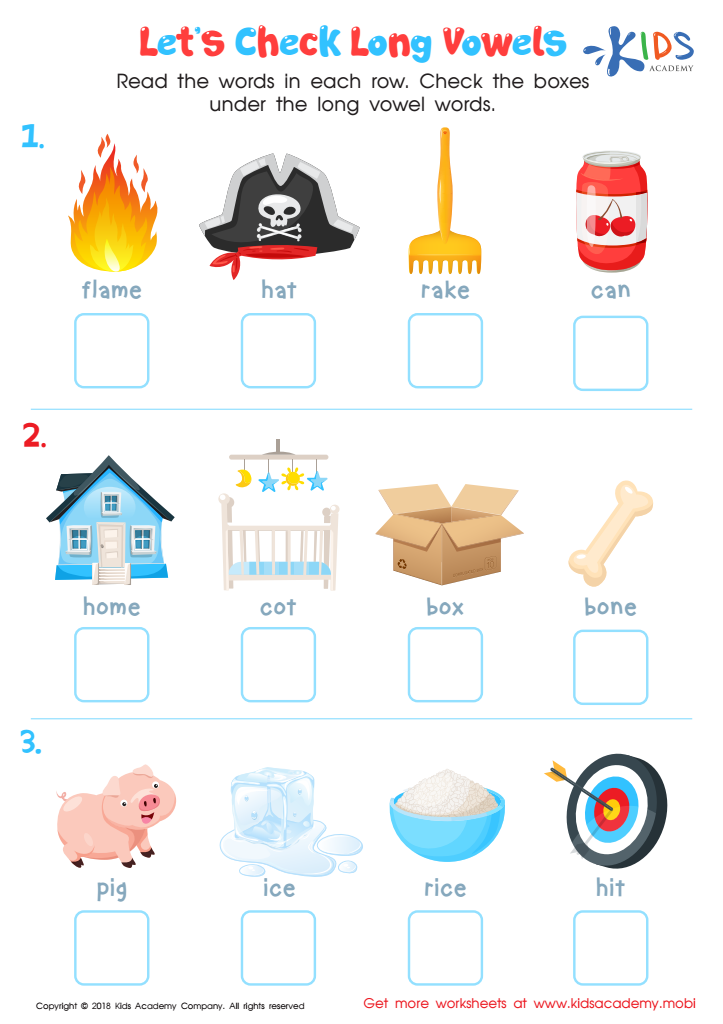
This worksheet helps your child identify objects and learn long vowel sounds. Ask them to say the names of the four objects in each row. Then, help them check the boxes to confirm they know the long vowel sounds. This will help them develop their reading skills.
Let's Check Long Vowels: Assessment Worksheet
Worksheet
Let's Look! Assessment Worksheet

Let's Look! Assessment Worksheet

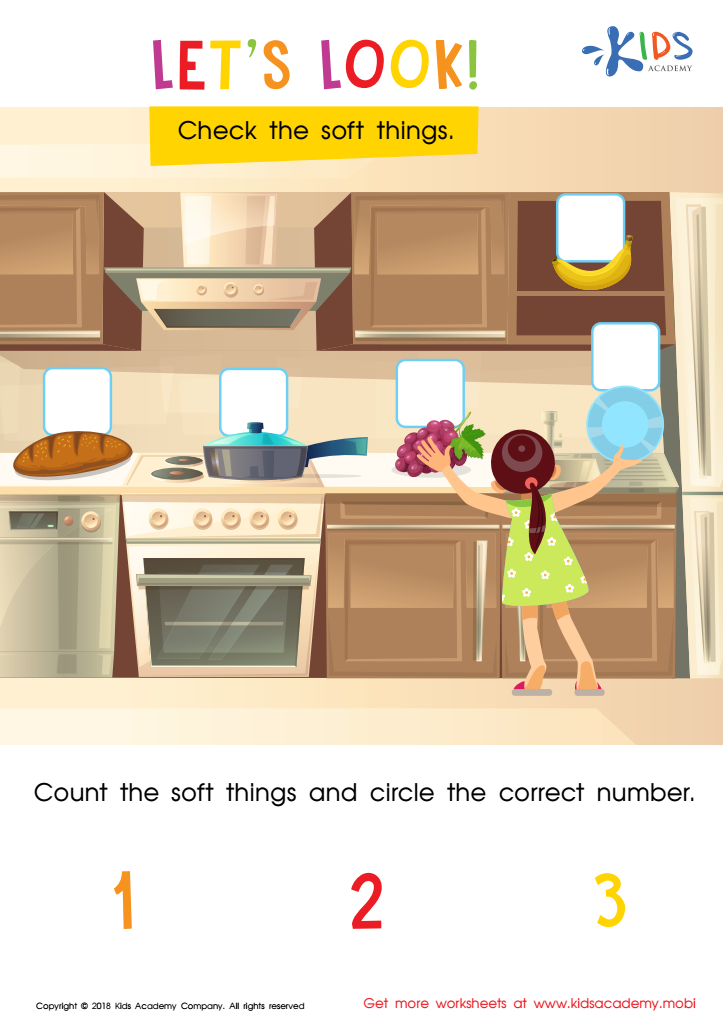
Have your child look at the picture in the printout and name the objects. Ask which ones are soft and hard and have them count the soft objects and circle the number. This worksheet will engage your child's thinking and teach them about texture.
Let's Look! Assessment Worksheet
Worksheet
Let's Check! Assessment Worksheet

Let's Check! Assessment Worksheet

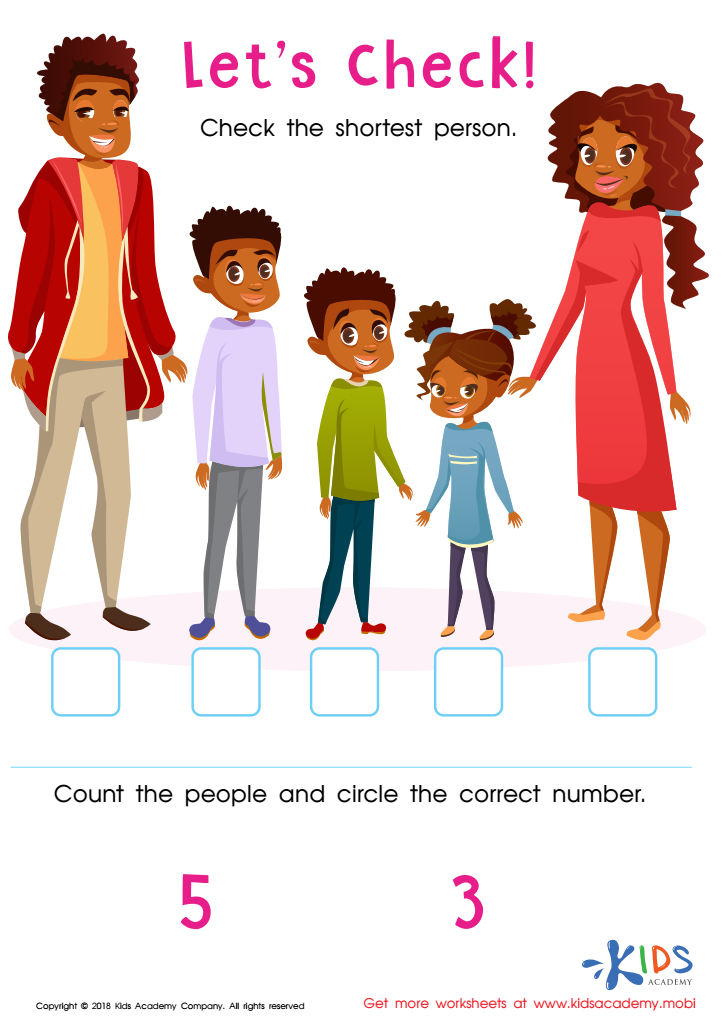
Check your child's understanding of height with this worksheet. Ask them to sort the objects in order of size and identify the tallest and shortest member of the family in the picture. See if they can correctly arrange the items from tallest to shortest.
Let's Check! Assessment Worksheet
Worksheet
Force and Interactions: Assessment 2 Worksheet

Force and Interactions: Assessment 2 Worksheet

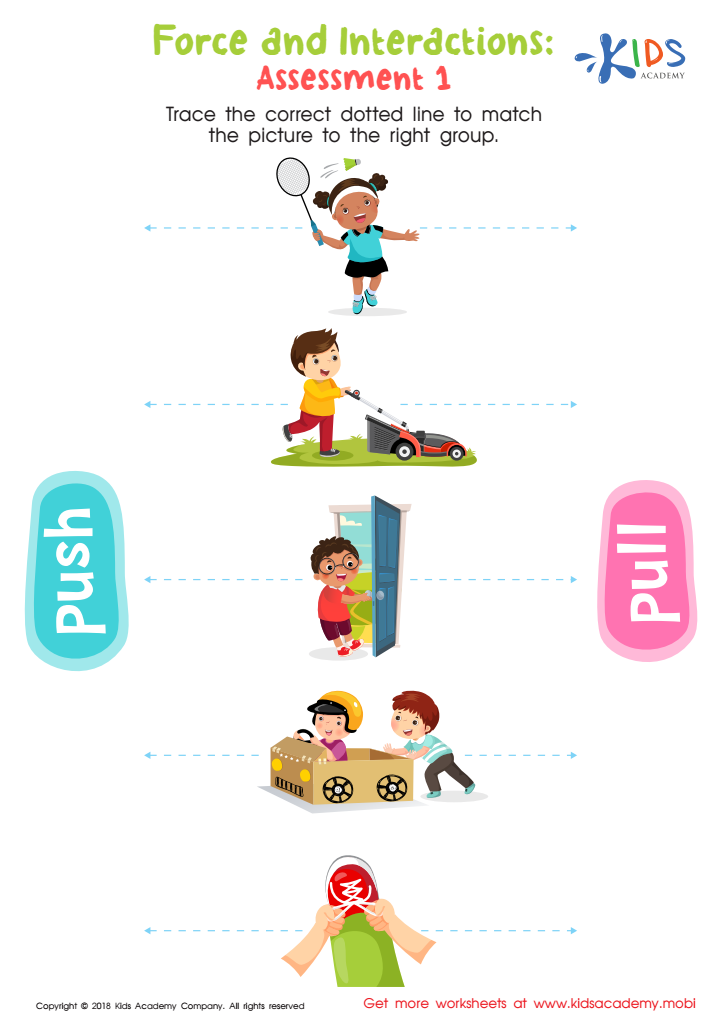
Help your child see the difference between push and pull with this fun worksheet. Ask them to match each picture to the right group. The "push" is on the left and the "pull" is on the right. Assist them in tracing the activities and explain what it is the people are doing.
Force and Interactions: Assessment 2 Worksheet
Worksheet
Force and Interactions: Assessment 1 Worksheet

Force and Interactions: Assessment 1 Worksheet

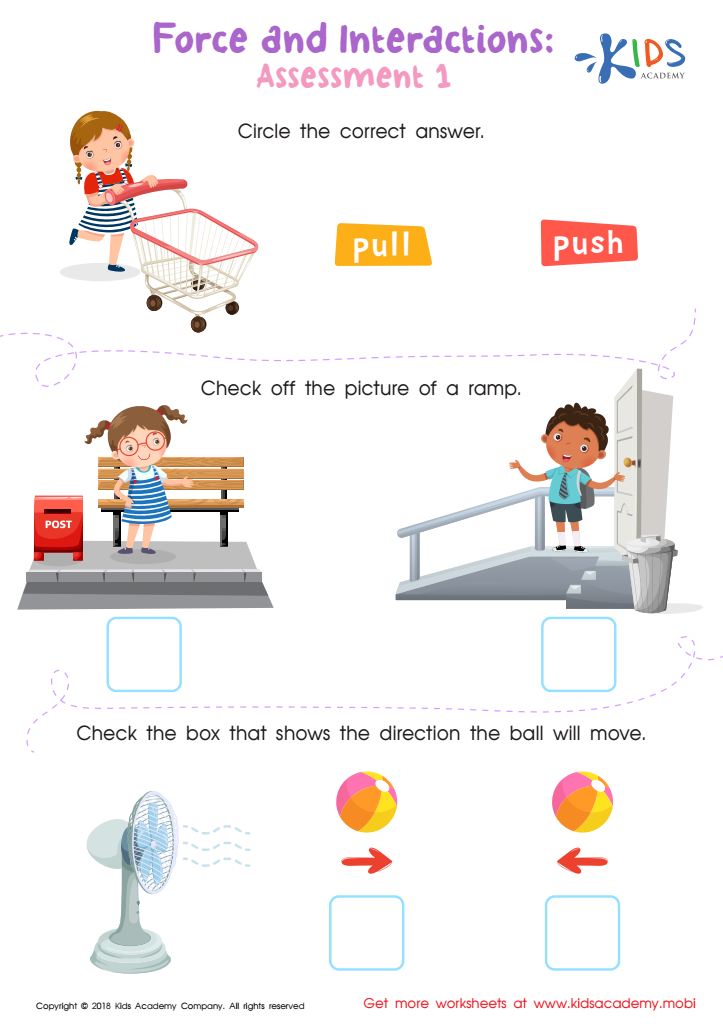
Test your students' knowledge of pushing, pulling, ramps and wind with this worksheet. The first task requires them to identify push or pull pictures. The second asks them to identify a ramp and the third to explain which direction a ball will move when exposed to wind.
Force and Interactions: Assessment 1 Worksheet
Worksheet
Place Value: Chapter 1 Worksheet

Place Value: Chapter 1 Worksheet

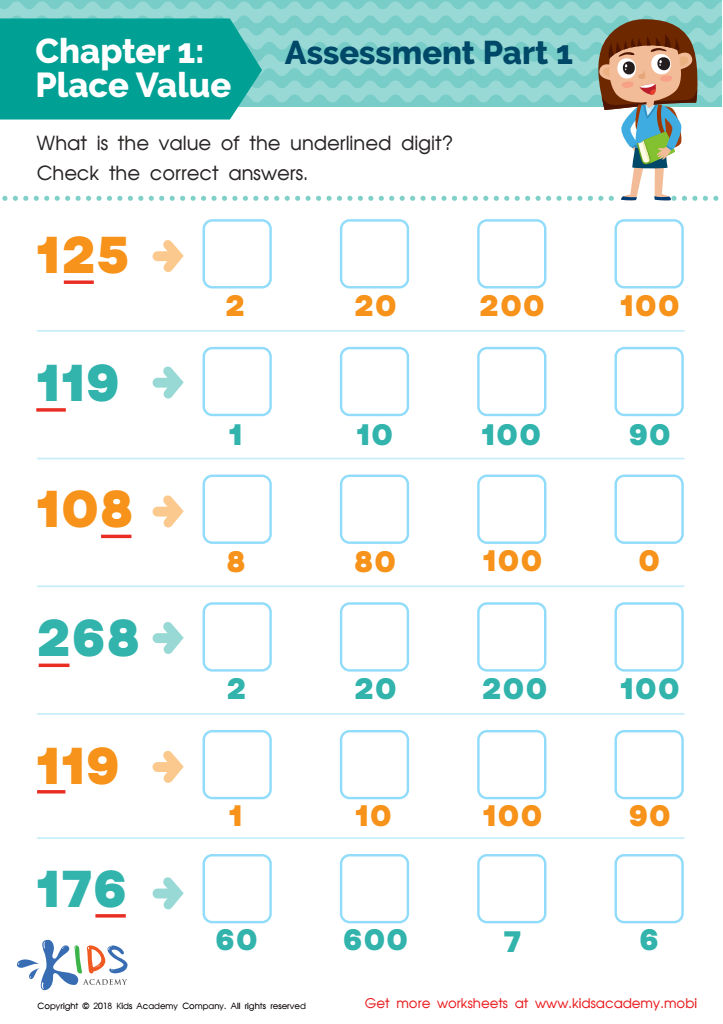
Check your kid's place value understanding with this assessment worksheet. It features 6 questions with one digit underlined for your child to determine the correct value of. Get the download and see if they can correctly choose the answer from the options given. It's a great way to test progress and keep their minds sharp!
Place Value: Chapter 1 Worksheet
Worksheet
Counting: Assessment 5 Worksheet

Counting: Assessment 5 Worksheet

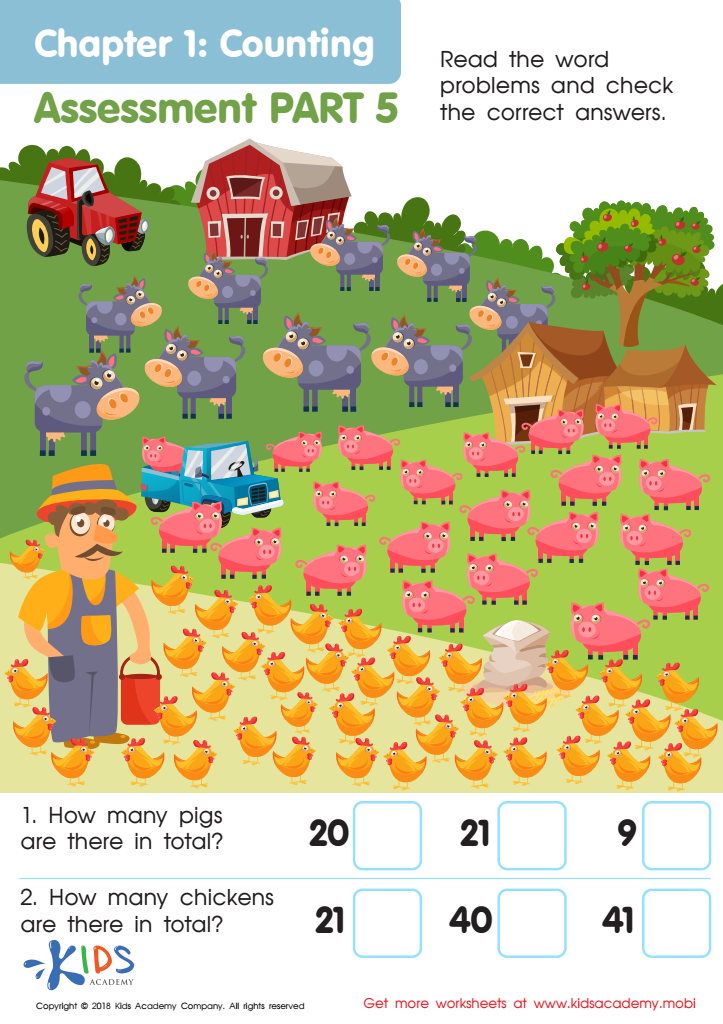
Let your kids have fun counting farm animals on this worksheet! Help the farmer count the animals and have your child check the answers to assess their counting skills. Read the word problem at the bottom of the page and count the animals together. It's an entertaining way to practice counting and have a great time!
Counting: Assessment 5 Worksheet
Worksheet
Counting: Assessment 4 Worksheet

Counting: Assessment 4 Worksheet

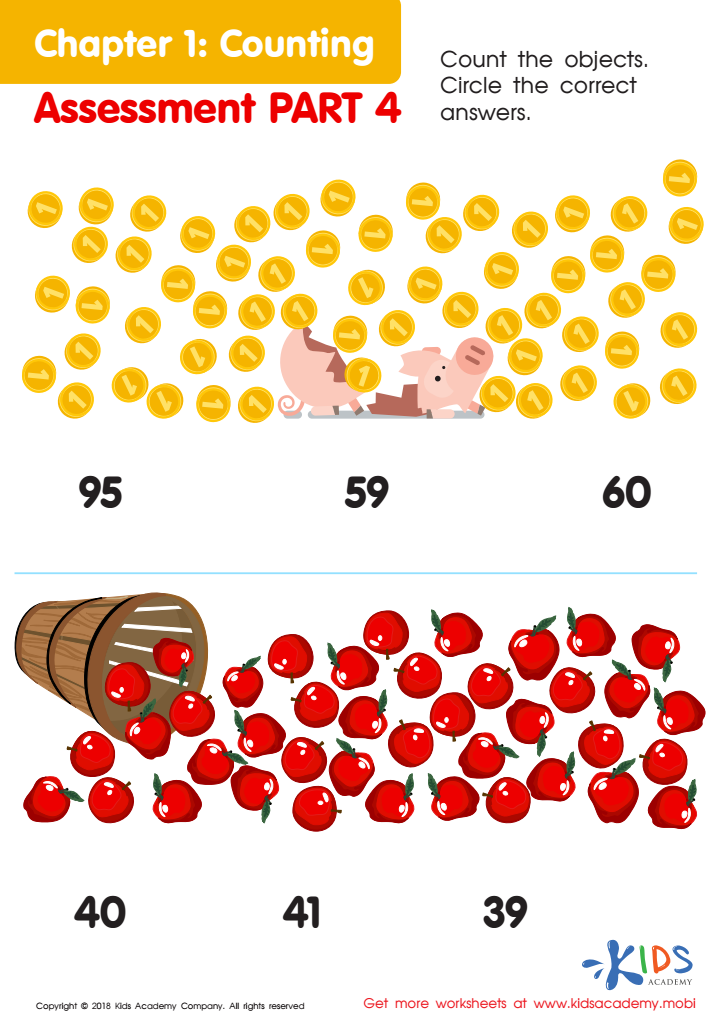
Encourage your students to count objects in this colorful worksheet. Ask them to circle the correct answers from the options given. See how much their counting skills have improved with your guidance. Have fun!
Counting: Assessment 4 Worksheet
Worksheet
Counting: Assessment 3 Worksheet

Counting: Assessment 3 Worksheet

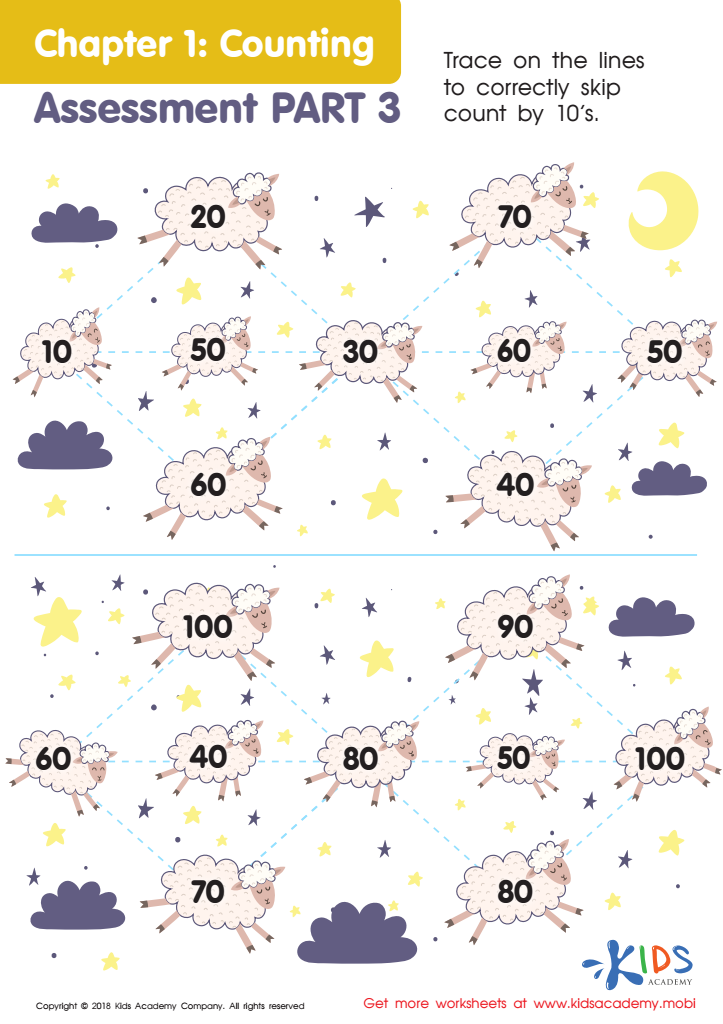
This worksheet is great for assessing your child's counting skills. It's a bit more challenging than the usual 'count to fifty' exercises. Have them trace the lines and skip count by 10's to help them learn counting in tens.
Counting: Assessment 3 Worksheet
Worksheet
Counting: Assessment 2 Worksheet

Counting: Assessment 2 Worksheet

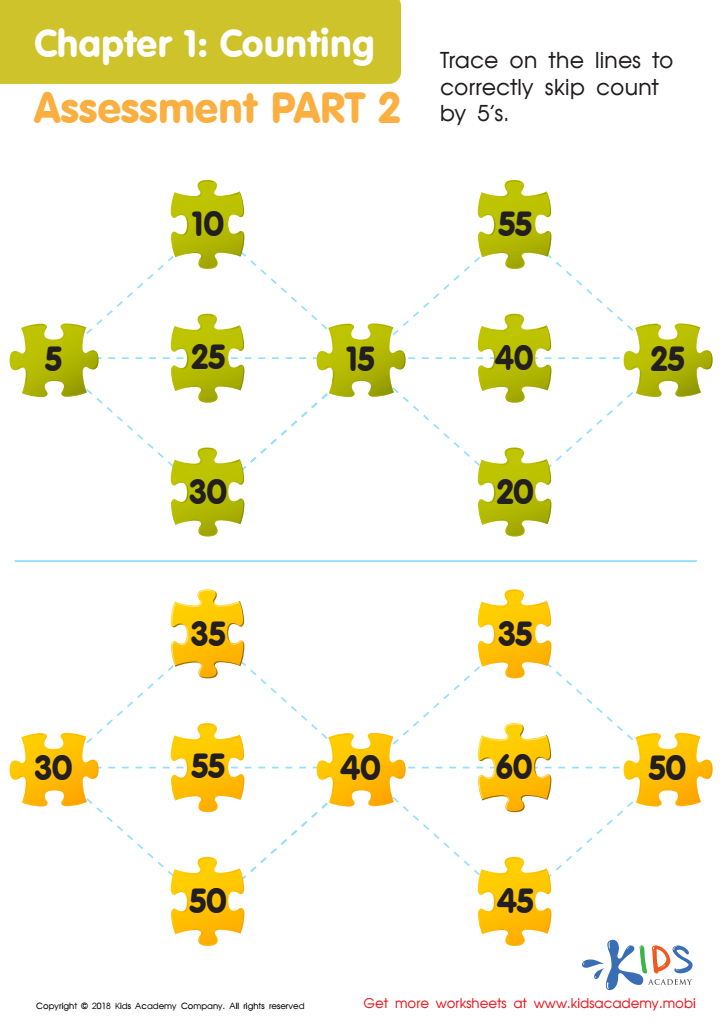
By now, your child should be able to count up to the hundreds. If they're still learning the tens, that's okay - as long as they're going at their own pace. This worksheet will be easy if they can count to ten. Ask them to trace the lines and skip count by 5's.
Counting: Assessment 2 Worksheet
Worksheet
Counting Past 1: Assessment 1 Worksheet


Counting Past 1: Assessment 1 Worksheet

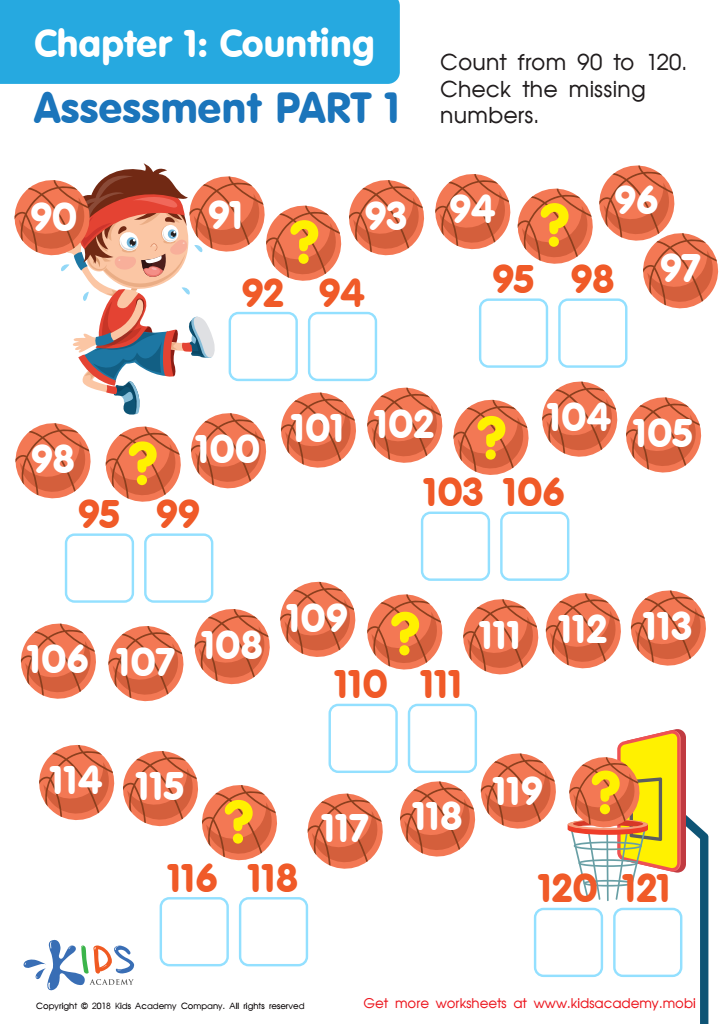
Test your children's counting skills with this worksheet. Have them count from 90 to 120, checking for missing numbers. You'll be able to see how well they do and how far they have progressed. See how high they can count with little or no mistakes!
Counting Past 1: Assessment 1 Worksheet

Worksheet


... 5 6

Knowledge Check activities for children ages 4-7 are essential for both parents and teachers, as they provide crucial insights into a child’s understanding and retention of fundamental concepts. At this formative stage, young learners are developing crucial cognitive, social, and emotional skills. Implementing Knowledge Check activities can help assess a child’s progress in literacy, numeracy, and critical thinking. These activities allow for early identification of learning gaps, enabling timely intervention.

Moreover, Knowledge Check activities motivate children to engage actively with the material in a fun and interactive way. They foster a growth mindset, encouraging learners to see challenges as opportunities to improve and learn. Engaging in these activities nurtures a child's confidence and sense of accomplishment, which can have lasting effects on their academic journey.

For parents, being involved in Knowledge Check activities allows them to understand their child’s developmental needs better and to support their learning at home. For teachers, these assessments are crucial for tailoring instruction and ensuring that every student receives the support they need. Ultimately, by prioritizing Knowledge Check activities, both parents and teachers can play a pivotal role in shaping well-rounded, confident learners.