Mazes worksheets activities for Ages 4-9 - Page 4
74 filtered results
-
From - To
 Assign to My Students
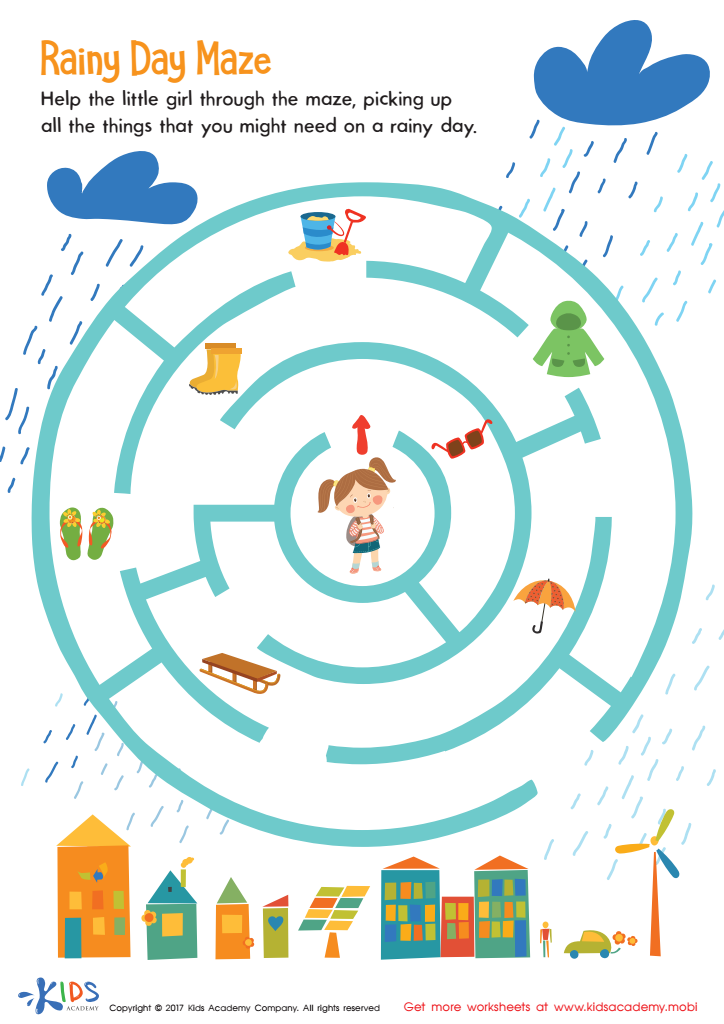
Rainy Day Maze Worksheet






Mazes are more than just a fun activity; they play a crucial role in the developmental milestones of children aged 4-9. Engaging in maze activities enhances critical cognitive skills, such as problem-solving, spatial awareness, and logical reasoning. As kids navigate pathways and make decisions at each turn, they practice their abilities to think ahead and strategize, which is foundational for their academic growth.
Moreover, mazes improve fine motor skills as children use pencils or their fingers to trace paths. This practice is vital for developing coordination, which translates into better handwriting and overall motor control. Additionally, maze activities promote patience and persistence. Children learn to cope with frustration when faced with challenging designs, fostering resilience and encouraging them not to give up.
Socially, mazes can be turned into collaborative games, teaching young learners about teamwork and communication as they help each other navigate through the twists and turns. With these multifaceted benefits, it’s clear that parents and teachers should value maze activities as essential tools for holistic learning, combining fun with critical skills necessary for lifelong success.








