Addition & Subtraction worksheets activities for Ages 6-8 - Page 2
26 filtered results
-
From - To
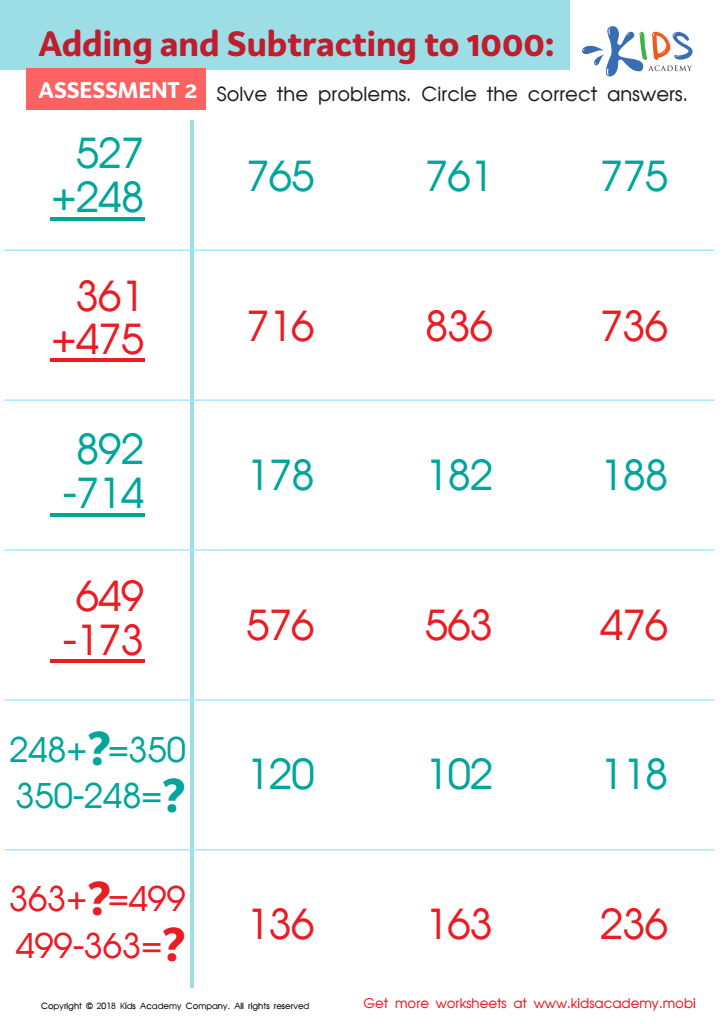
Adding and Subtracting to 1 Worksheet: Assessment 2
 Assign to My Students
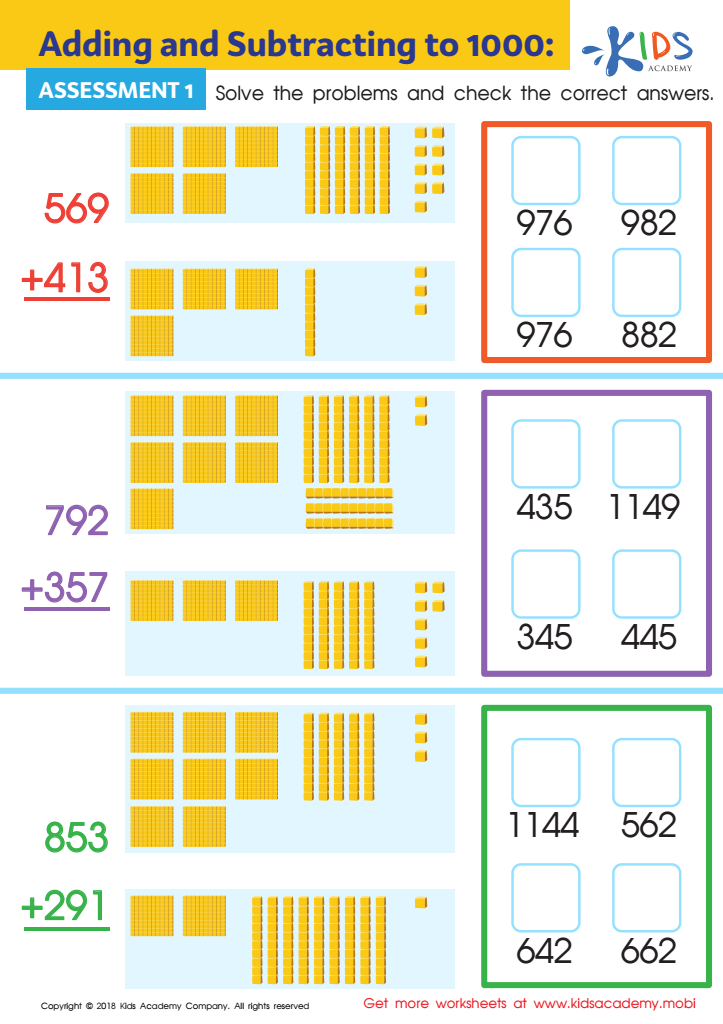
Adding and Subtracting to 1 Worksheet: Assessment 1



.jpg)
.jpg)



Parents and teachers should prioritize addition and subtraction activities for children aged 6-8, as these foundational skills are crucial for future mathematical understanding. During this stage of development, children are transitioning from learning basic concepts to applying them in various contexts. Engaging in addition and subtraction activities not only helps solidify these essential skills but also builds confidence in problem-solving.
Moreover, these activities foster critical thinking and logic. Children learn to recognize patterns and relationships within numbers, which are pivotal for grasping more complex operations later on, such as multiplication and division. This early numeracy lays the groundwork for future academic success and supports overall cognitive development.
Incorporating hands-on, interactive activities enhances engagement, making math fun and relatable. By using everyday situations—like shopping, cooking, or playing games—children can see the practical applications of addition and subtraction, which encourages a positive attitude towards math.
Additionally, collaborative activities promote social skills as children learn to work together to solve problems. By prioritizing these math skills during this formative stage, parents and teachers play a key role in building a solid mathematical foundation that will benefit children long into their academic journey.








