Filters

10 filtered results

Clear all filters
Favorites
With answer key
Interactive

10 filtered results

Difficulty Level

Grade


Explore our engaging "Poems Worksheets Activities for Ages 6-9"! Designed to foster a love for poetry, these worksheets combine fun, creativity, and learning. Children will enjoy a variety of interactive activities, including reading comprehension exercises, rhyming challenges, and creative writing prompts. Each worksheet encourages young learners to express their thoughts and feelings through poetry while enhancing critical thinking and literacy skills. Ideal for classroom or home use, these resources provide a fantastic way to introduce kids to the world of poetry. Let your child’s imagination soar as they discover the joy of words through our thoughtfully crafted activities!

Check out this FREE Poems Trial Lesson for age 6-9!

Recognize Common Types of Texts

Favorites
With answer key
Interactive
  • Poems
  • 6-9
  • Interactive
Poem or Story Book? Worksheet

Poem or Story Book? Worksheet

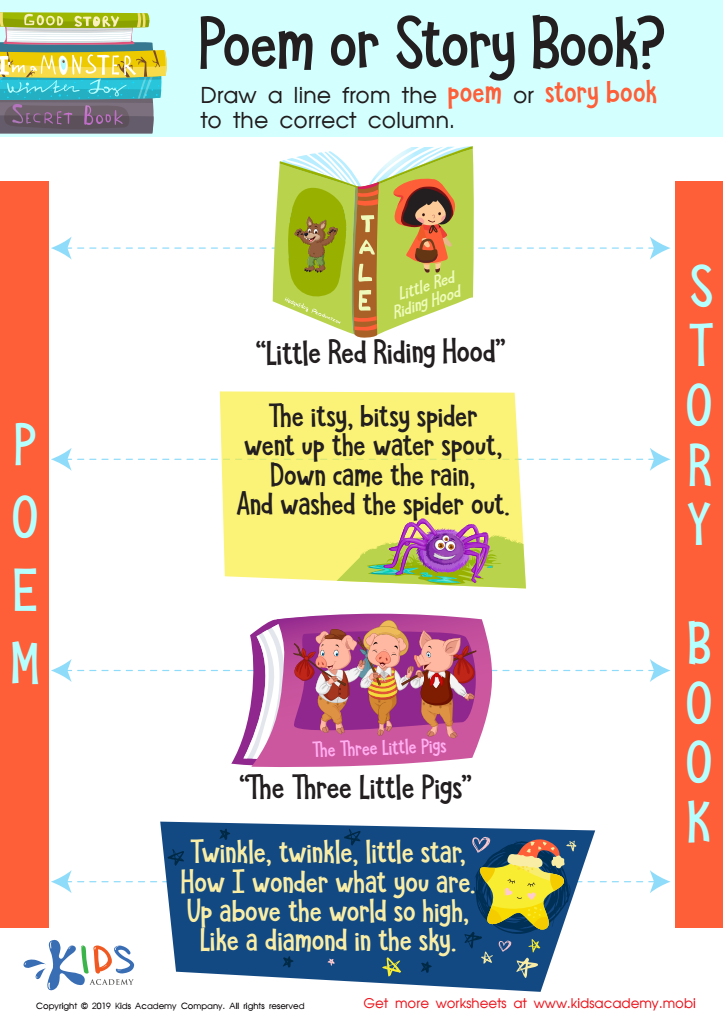
Help your little readers comprehend different genres with this free worksheet! Colorful images and familiar themes help them distinguish between poems and story books. They'll identify which is which, then connect the picture to the right column with traceable lines. A fun way to expand their understanding!
Poem or Story Book? Worksheet
Worksheet
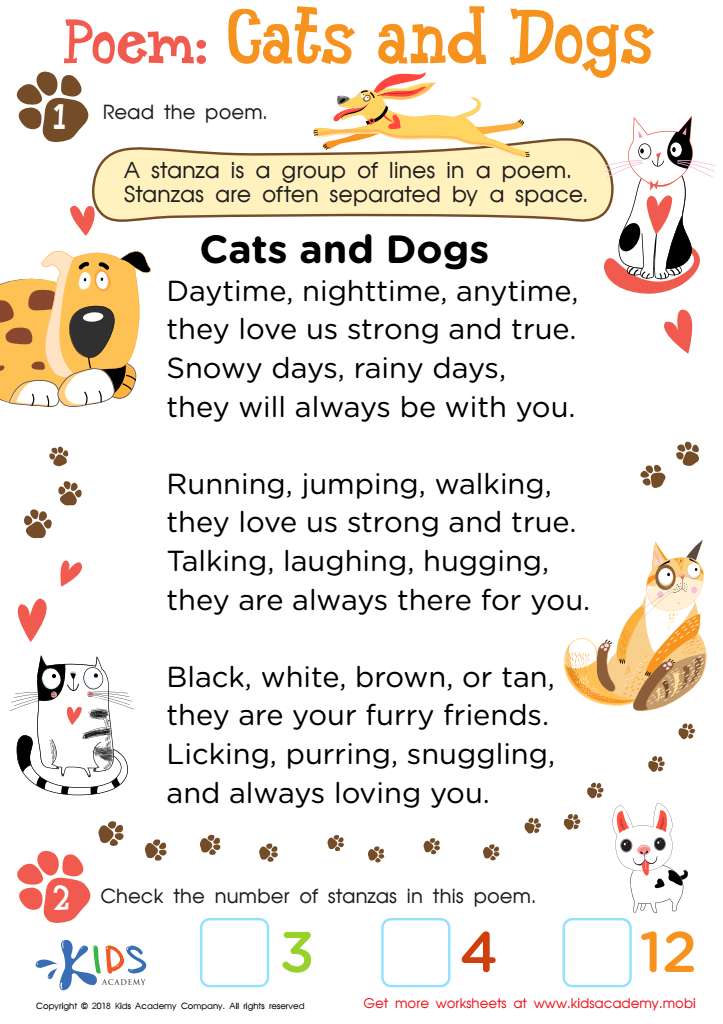
Poem: Cats and Dogs Worksheet

Poem: Cats and Dogs Worksheet

Read the poem to your child and point out where each stanza ends. Ask if they know what a stanza is (if not, explain it's a group of lines in a poem). Help them answer the question at the bottom of the printout. This simple, sweet poem about cats is easy for your child to relate to.
Poem: Cats and Dogs Worksheet
Worksheet
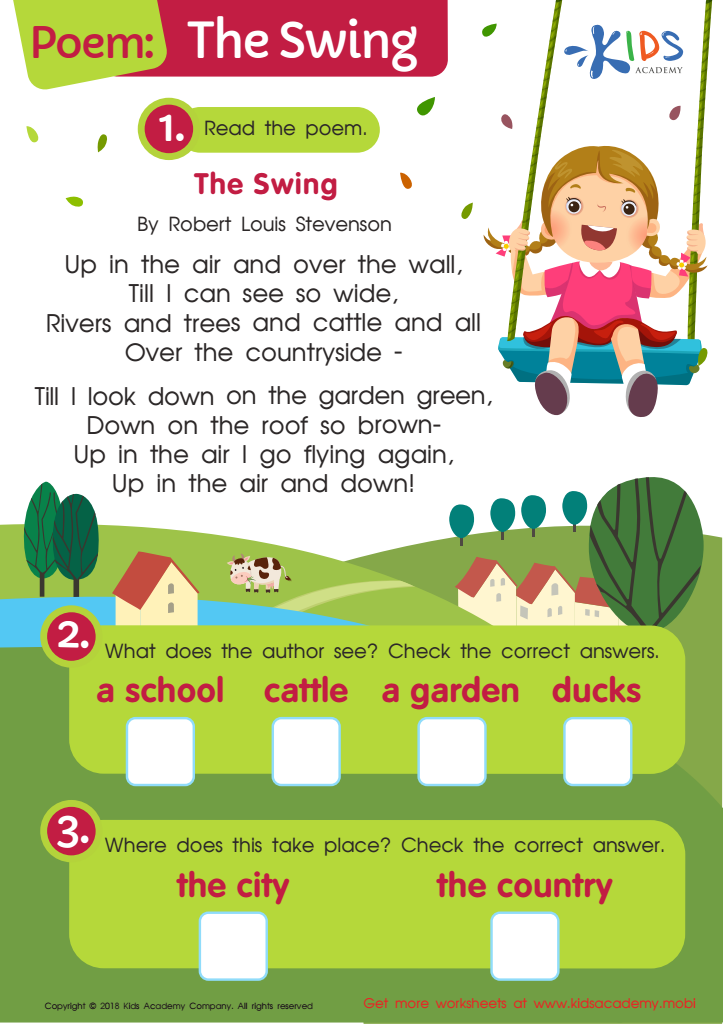
Poem: The Swing Worksheet

Poem: The Swing Worksheet

Encourage your child's love of writing by displaying their poems on the fridge or walls. This worksheet focuses on a swing, something your child enjoys, and contains questions to help your child think more deeply about the poem. Read it together, then answer the questions and watch as your child's creativity and writing skills blossom!
Poem: The Swing Worksheet
Worksheet
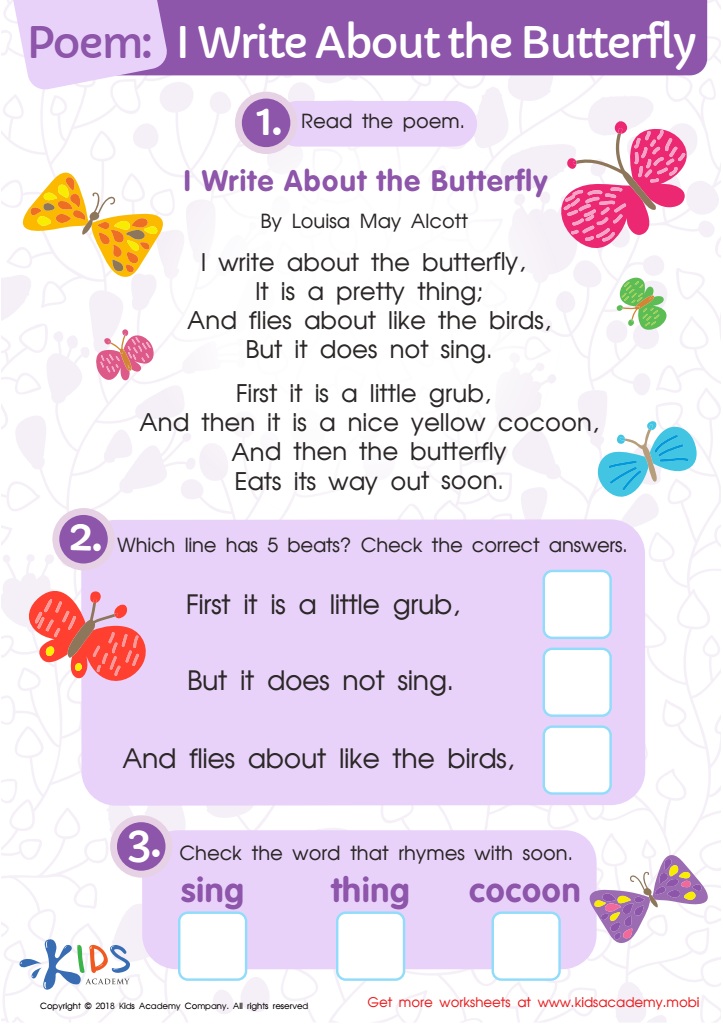
Poem: I Write About The Butterfly Worksheet

Poem: I Write About The Butterfly Worksheet

Do your kids like poetry? Encourage them to explore and connect with their poetic side! Read the butterfly poem from this worksheet aloud, then help them answer the questions. It's a great way to grow their appreciation of poetry and of the natural world.
Poem: I Write About The Butterfly Worksheet
Worksheet
Rhymes in Poems Worksheet

Rhymes in Poems Worksheet

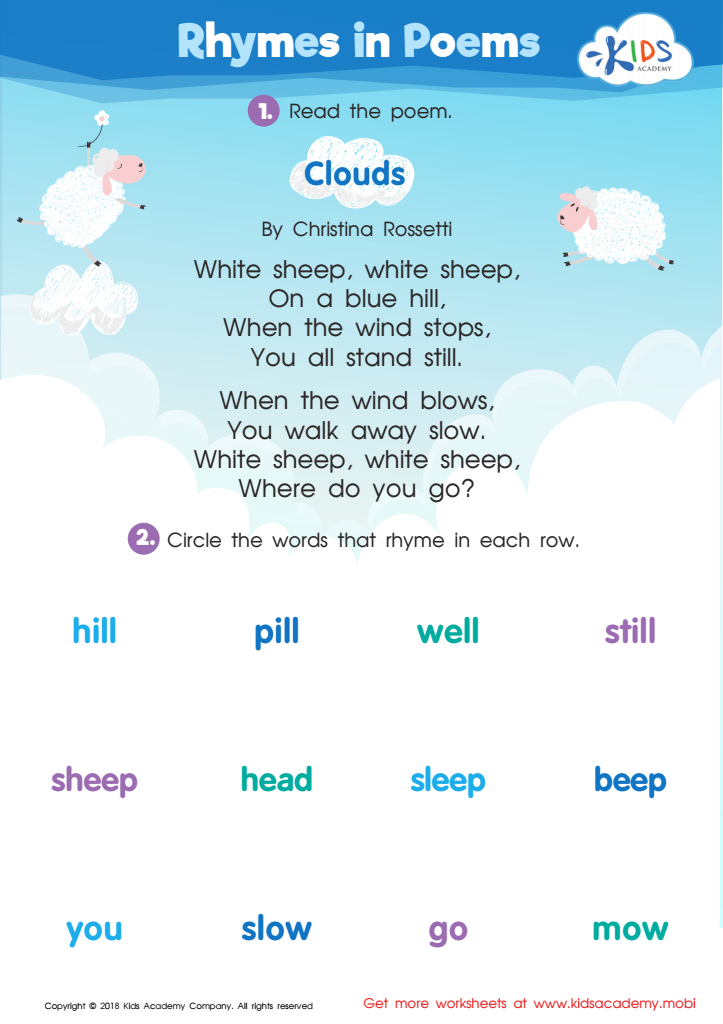
Poems are lovely works of literature; some with rhymes, and some without. This poem for kids is full of rhymes and tells the tale of a sheep. Read it aloud to your kids, then help them circle the rhyming words.
Rhymes in Poems Worksheet
Worksheet
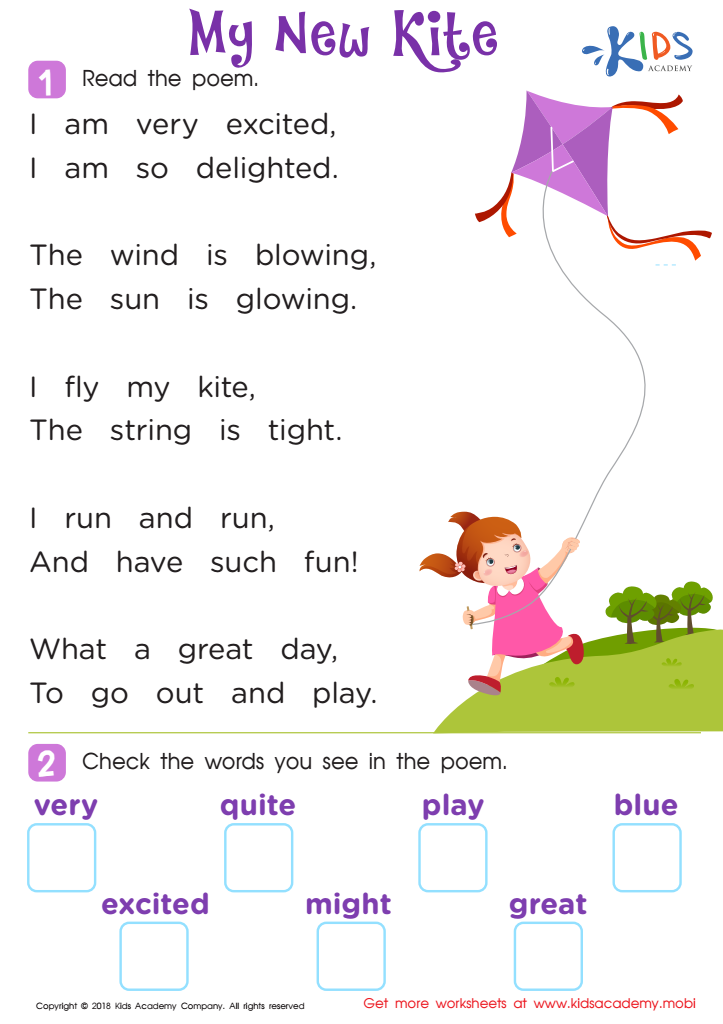
Poem: My New Kite Worksheet

Poem: My New Kite Worksheet

Read a cheerful poem with your child and have them check the boxes next to the words that appear. Then, ask them to identify rhyming words, noting that these won't appear at the bottom of the page. This is a delightful reading activity to help your child remember what they read.
Poem: My New Kite Worksheet
Worksheet
Кhyme in poetry worksheet

Rhyme In Poetry Worksheet

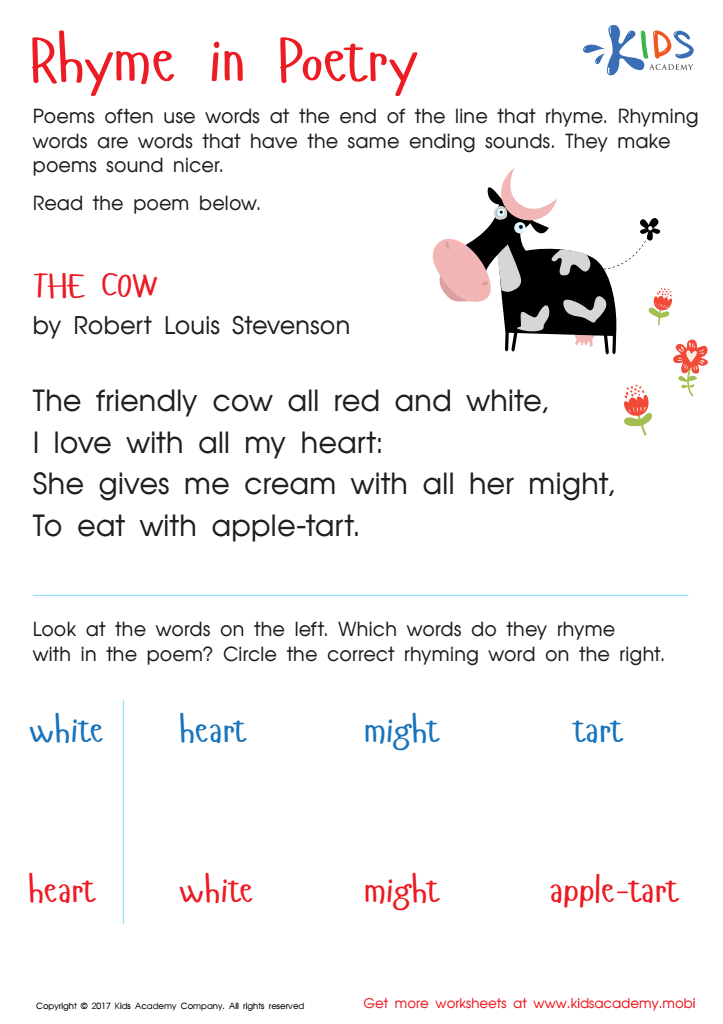
Introduce your child to poetic devices and help build their ear for poetry with Robert Louis Stevenson's adorable poem about a cow! Through this rhyming worksheet, your child will gain an appreciation for poetry and language.
Rhyme In Poetry Worksheet
Worksheet
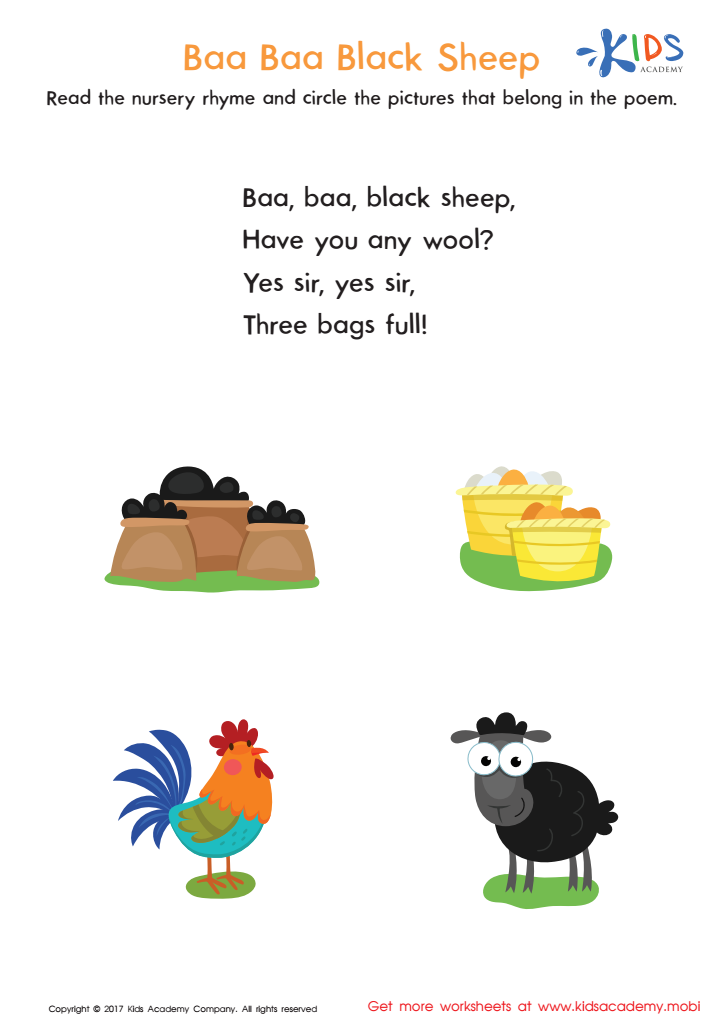
Baa Baa Black Sheep printable worksheet

Baa Baa Black Sheep Printable
Jumpstart your child's reading skills with this printable Baa Baa Black Sheep worksheet! Recite the lines with them, then have them select the pictures associated with the poem to test comprehension. Fun and educational!
Baa Baa Black Sheep Printable
Worksheet
Printable nursery rhyme: Rub a Dub Dub

Rub a Dub Dub Printable

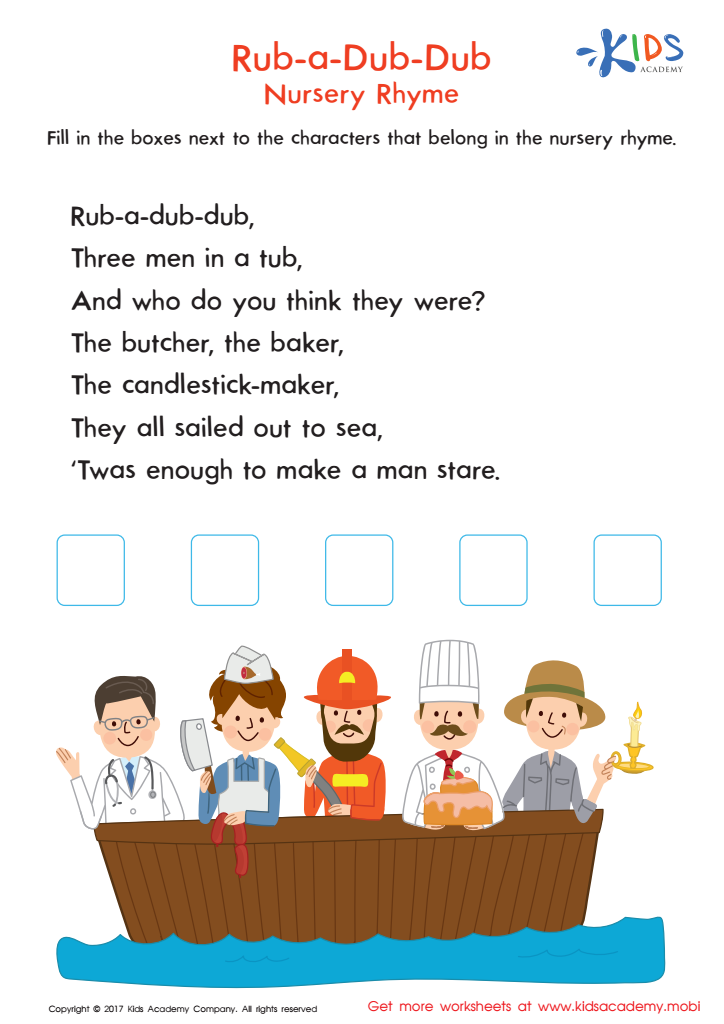
Delight your child and foster early reading skills with this printable nursery rhyme, Rub a Dub Dub! Let your little reader select the three men in the tub and practice important reading comprehension skills.
Rub a Dub Dub Printable
Worksheet
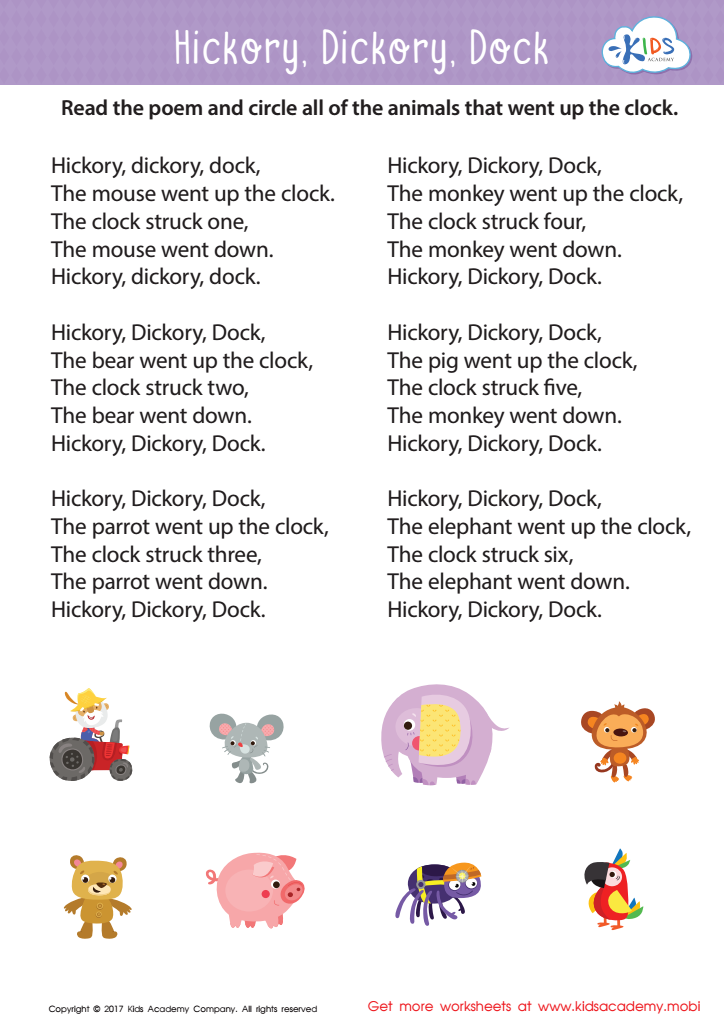
Hickory dickory dock sequencing worksheet

Hickory Dickory Dock Sequencing Worksheet

Help your child boost their reading skills with this fun Hickory Dickory Dock sequencing worksheet! They'll read and identify the animals in the right order, strengthening their story sequencing and comprehension skills.
Hickory Dickory Dock Sequencing Worksheet

Worksheet


Poem activities for ages 6-9 are invaluable for both parents and teachers as they foster critical emotional, cognitive, and linguistic development in young children. At this age, children are naturally curious and apply their imaginative abilities eagerly; engaging with poetry helps them process their emotions and express themselves creatively. When children participate in poem activities, they learn how to articulate their feelings and experiences, enhancing their emotional intelligence.

Moreover, poetry introduces children to unique vocabulary, rhythm, and sound patterns, promoting language development. By exploring rhymes and playful language, children develop phonemic awareness, a crucial skill for reading and writing proficiency. These activities also support literacy skills—children learn to appreciate narrative structure and explore diverse themes.

Moreover, poetry encourages collaborative learning. When children read or recite poems together, they build social skills, learn to share interpretations, and practice public speaking—all essential skills for academic success and personal growth. In summary, engaging with poetry nurtures emotional expression, language development, and social interaction, making it a meaningful investment for parents and teachers in supporting holistic child development during the formative years from ages 6 to 9.