Phonics worksheets activities for 7-Year-Olds
4 filtered results
-
From - To
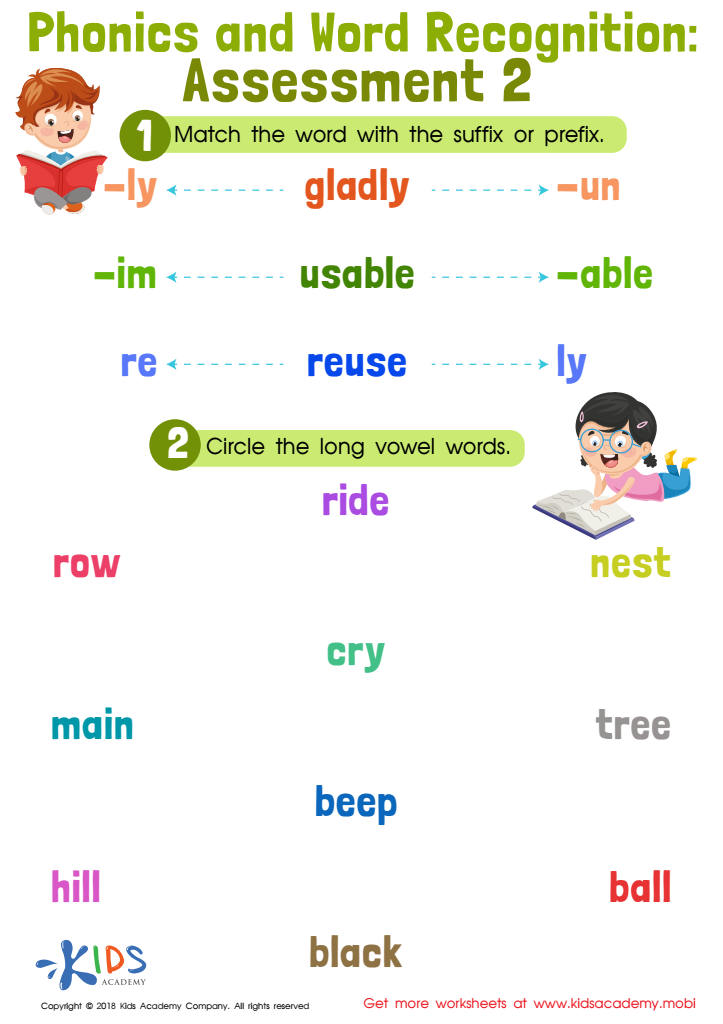
Phonics and Word Recognition: Assessment 2
 Assign to My Students
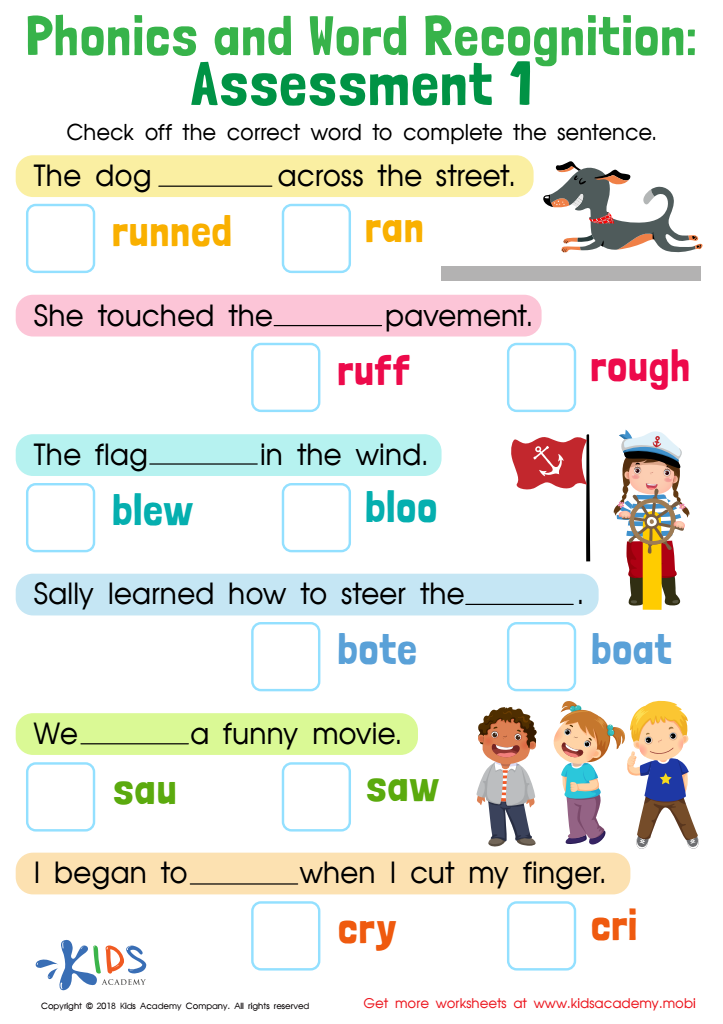
Phonics and Word Recognition: Assessment 1 Worksheet
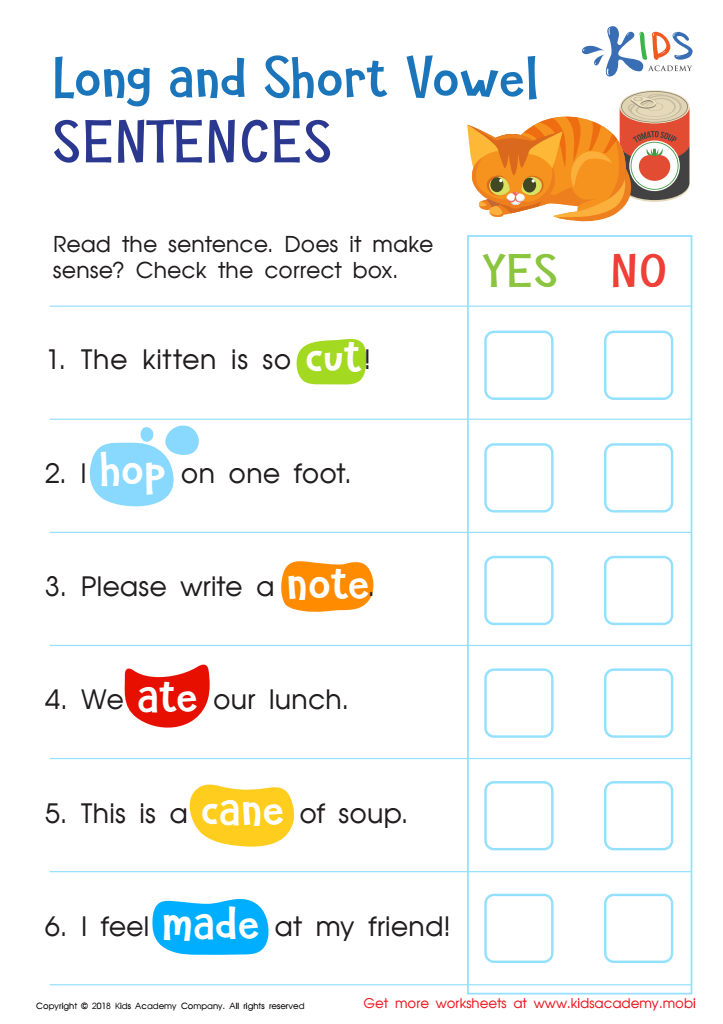
Long and Short Vowel Sentences: Assessment Worksheet
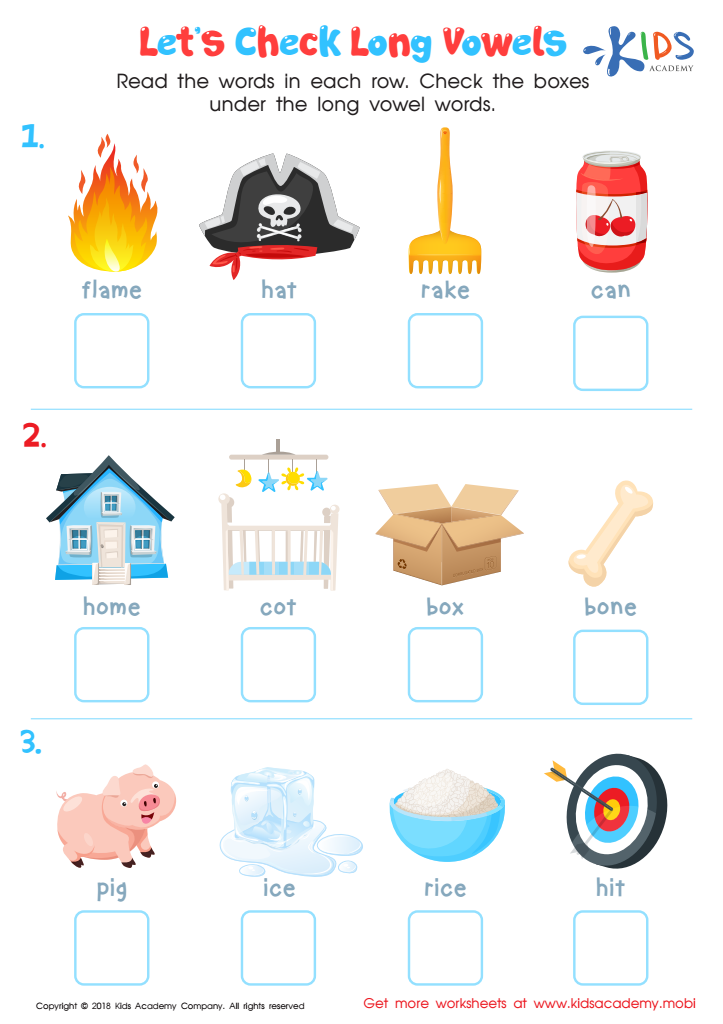
Let's Check Long Vowels: Assessment Worksheet







Phonics worksheets activities are an essential tool in the journey of learning to read and write effectively. These interactive and engaging activities serve multiple purposes in enhancing a child's literacy skills from an early age. Let's delve into the reasons why phonics worksheets activities are incredibly useful.
Firstly, phonics worksheets activities are designed to reinforce the connection between letters and their corresponding sounds. This foundational aspect of reading is crucial, as it enables children to decode new words independently. By practicing with worksheets, learners can solidify their understanding of phonics rules, making reading a more accessible and enjoyable task.
Moreover, phonics worksheets activities cater to various learning styles. Whether a child is a visual, auditory, or kinesthetic learner, worksheets can be tailored to suit their unique preferences. For visual learners, colorful pictures accompanying words can enhance memory of phonetic patterns. Auditory learners might benefit from worksheets that encourage vocalizing sounds, while kinesthetic learners can engage in cutting and pasting letters or words, making the learning experience more dynamic and hands-on.
Another advantage of phonics worksheets activities is the opportunity for repeated practice. Mastery in phonics requires consistent practice, and worksheets offer a structured way for children to revisit and reinforce their skills. This repetition ensures that phonetic principles are solidly embedded, paving the way for more advanced reading and spelling abilities.
Furthermore, these activities promote individualized learning. Each child progresses at their own pace, and phonics worksheets can be easily adjusted to match each learner's current level. This personalized approach reduces frustration and boosts confidence, as children can experience success at every step of their learning journey.
In conclusion, phonics worksheets activities are a versatile and effective tool in developing early literacy skills. By focusing on the foundational elements of reading through engaging and repetitive practice, these activities not only make learning fun but also set children up for long-term success in their academic endeavors.








