Alphabet worksheets activities for Ages 8-9
5 filtered results
-
From - To
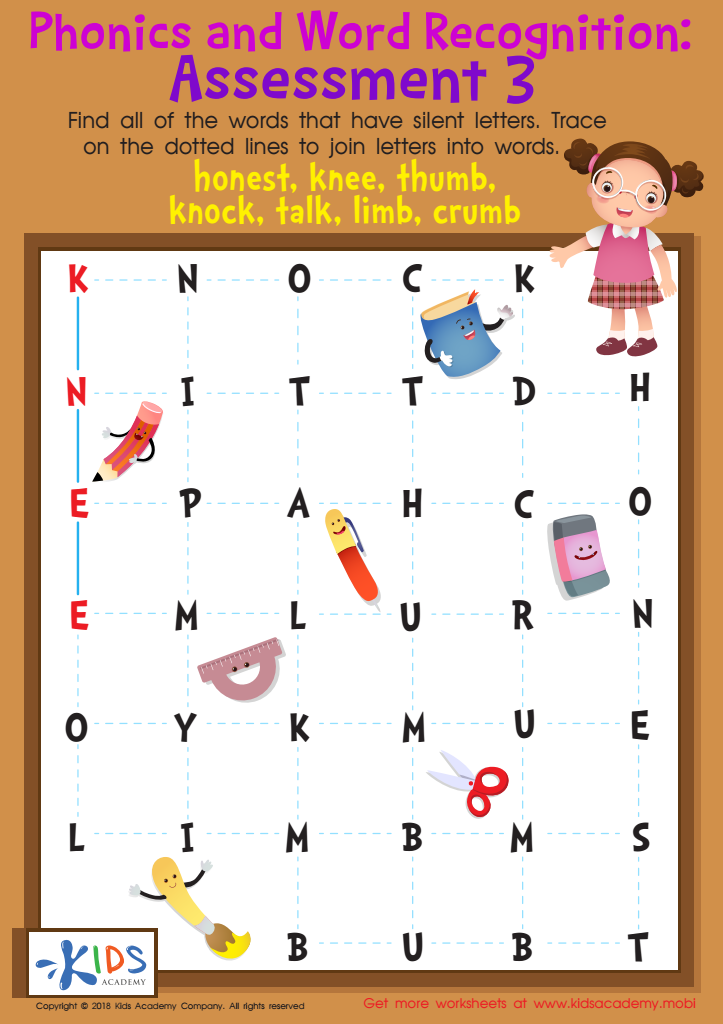
Phonics and Word Recognition: Assessment 3 Worksheet
 Assign to My Students
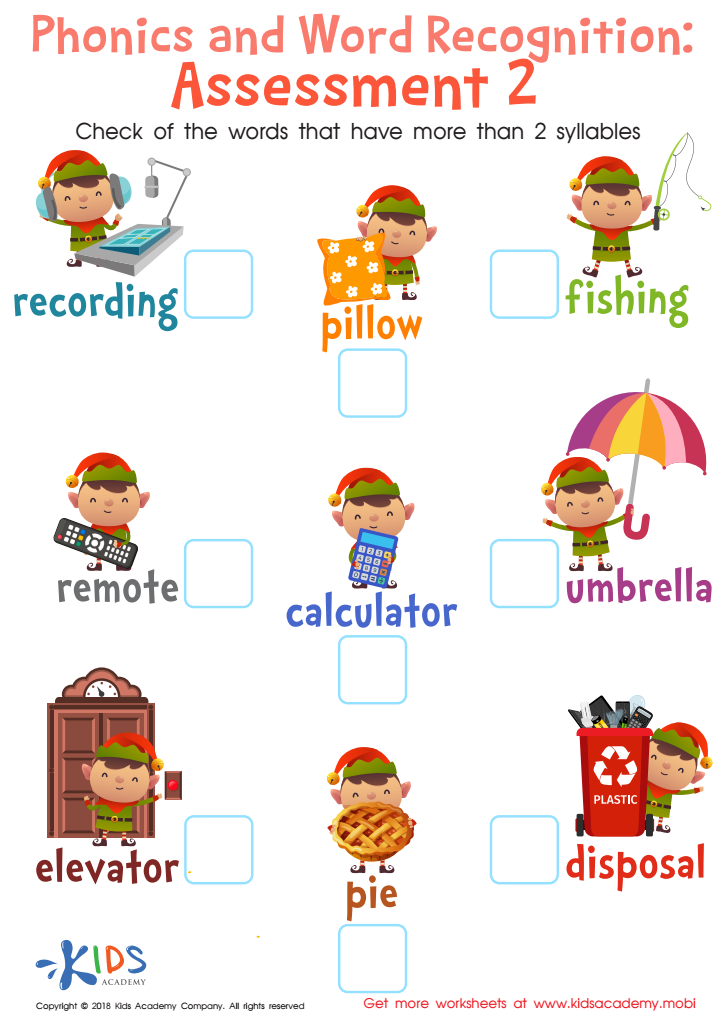
Phonics and Word Recognition: Assessment 2 Worksheet
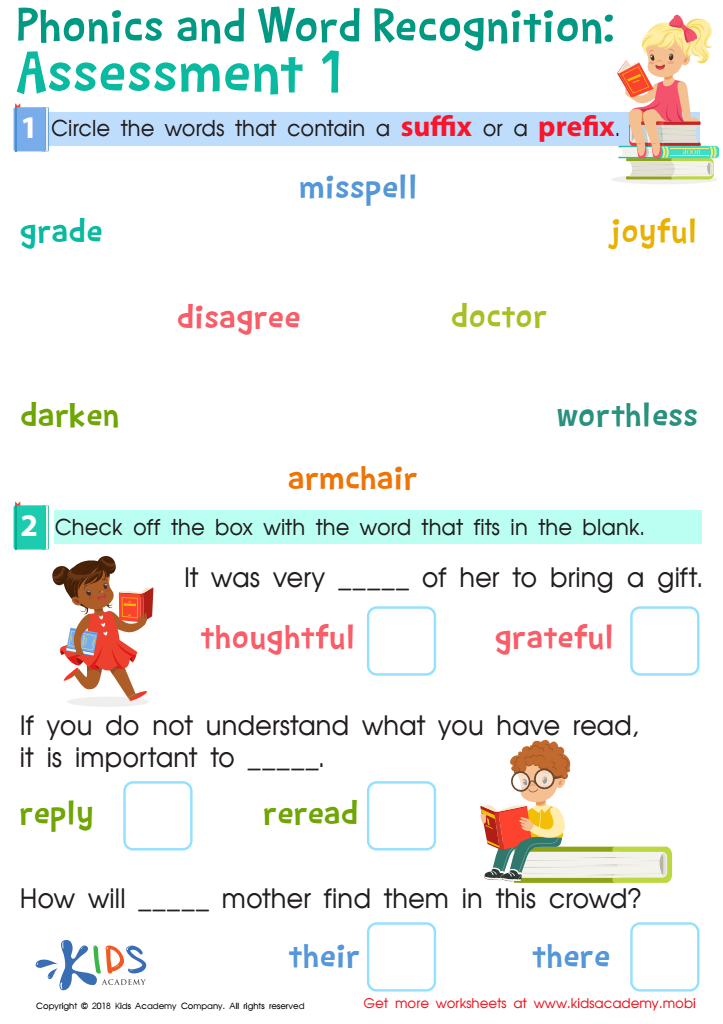
Phonics and Word Recognition: Assessment 1 Worksheet
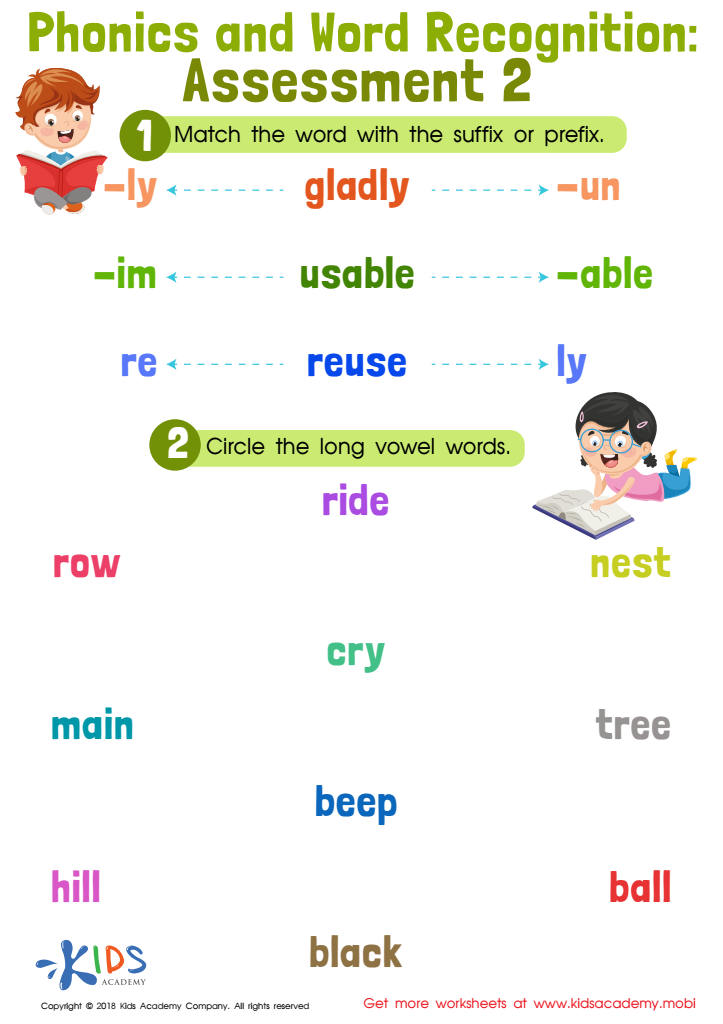
Phonics and Word Recognition: Assessment 2
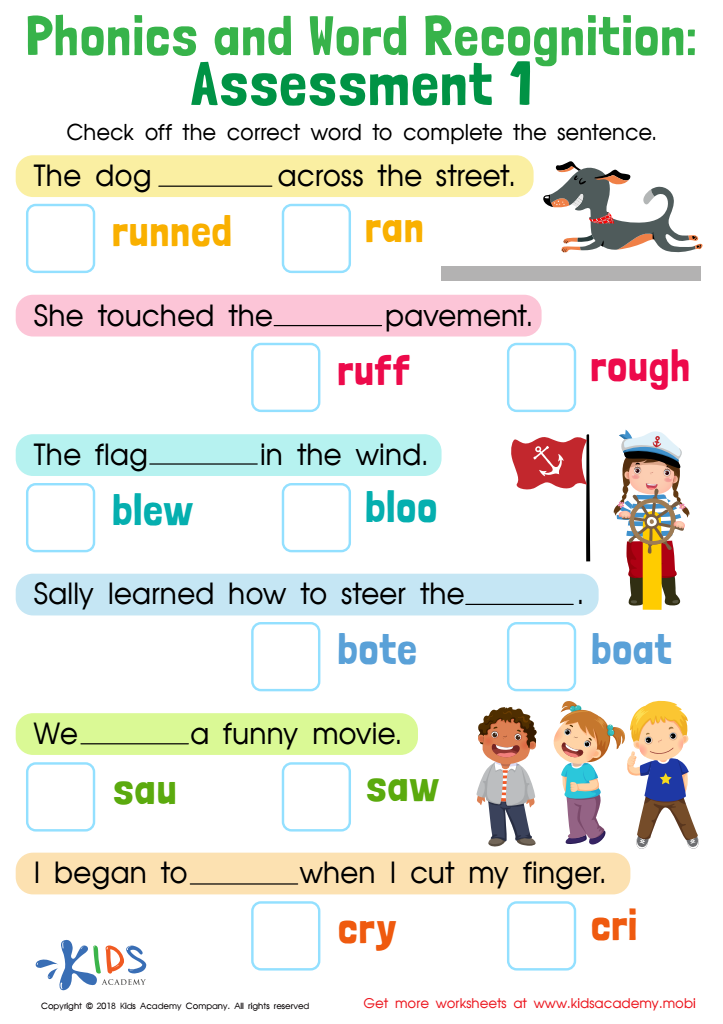
Phonics and Word Recognition: Assessment 1 Worksheet








Alphabet worksheets activities are a fundamental part of early education, serving as a bridge between the abstract world of letters and the tangible understanding needed by young learners. These activities are not just about memorizing A to Z; they are about laying the groundwork for literacy, phonetic awareness, and a love for reading that will benefit children throughout their lives.
At their core, alphabet worksheets activities are designed to make learning engaging and fun. Through a variety of exercises such as coloring letters, matching them with pictures, tracing, and even simple word formation, children develop fine motor skills alongside their alphabetic knowledge. This hands-on approach ensures that learners are not passively receiving information but are actively involved in their educational journey, which significantly boosts retention and understanding.
Moreover, alphabet worksheets activities introduce children to the concept of sequencing, which is essential not just in literacy but in understanding order and organization in wider contexts. By recognizing the order of letters, children begin to grasp the structure that underpins not only language but mathematical concepts and the organization of information in general.
These worksheets are also incredibly versatile, catering to a wide range of learning styles. Whether a child is a visual learner, prefers auditory learning, or learns best through kinesthetic experiences, alphabet worksheets can be adapted to meet their needs. This adaptability ensures that no child is left behind in the crucial early stages of education.
Importantly, alphabet worksheets activities lay the foundation for spelling and reading skills. By familiarizing themselves with the shapes and sounds of letters, children are taking their first steps towards fluency in reading and writing. These skills are not only pivotal in academic success but are essential for everyday communication and understanding.
In conclusion, alphabet worksheets activities are a cornerstone of early literacy education. They offer a multifaceted approach to learning that is engaging, adaptable, and foundational to future academic and personal success. Through these activities, children develop not just an understanding of letters but a set of skills and a love for learning that will serve them for years to come.








