Alphabet worksheets activities for Ages 7-9
7 filtered results
-
From - To
Discover engaging alphabet worksheets and activities designed for children ages 7-9 at Kids Academy! Our comprehensive resources help young learners enhance their reading and writing skills through fun and interactive exercises. With a variety of worksheets, including letter recognition, phonics practice, and creative writing prompts, students can solidify their understanding of the alphabet while enjoying hands-on learning. These activities foster vocabulary expansion and boost confidence in literacy. Perfect for classroom use or at-home practice, our alphabet worksheets make learning enjoyable and effective. Dive into a world of educational fun today and watch your child's literacy skills flourish!
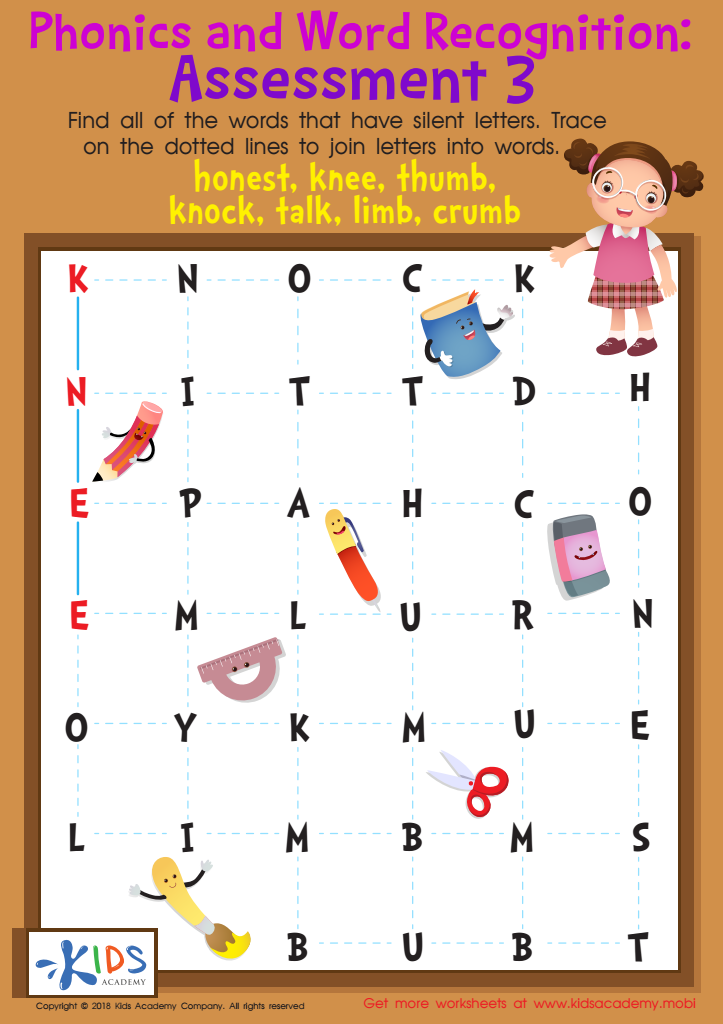
Phonics and Word Recognition: Assessment 3 Worksheet
 Assign to My Students
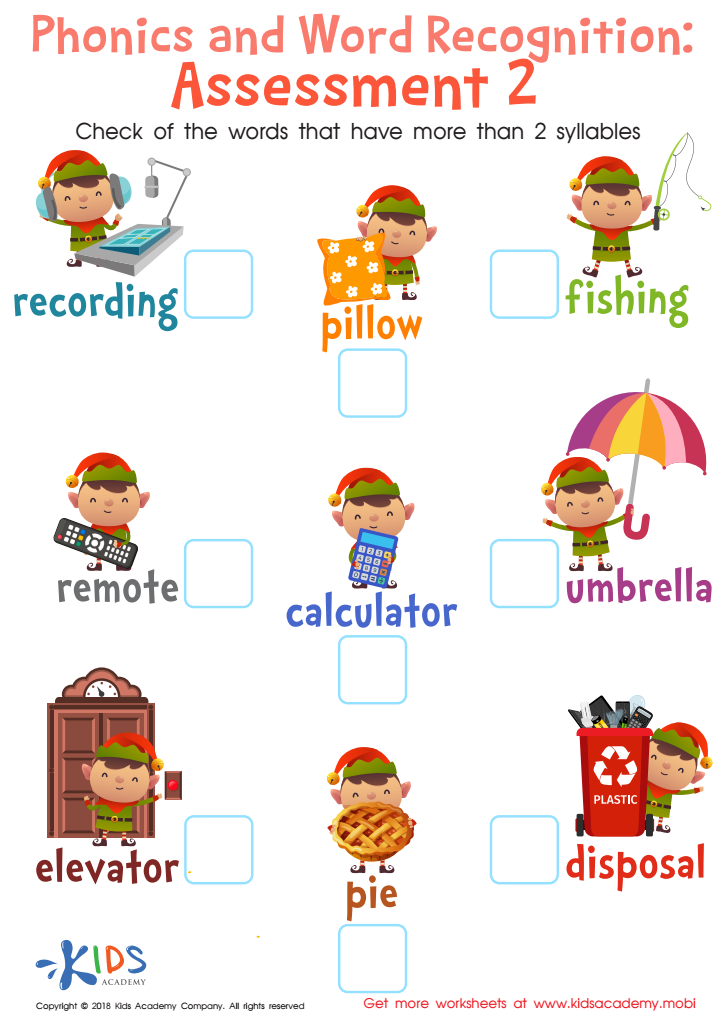
Phonics and Word Recognition: Assessment 2 Worksheet
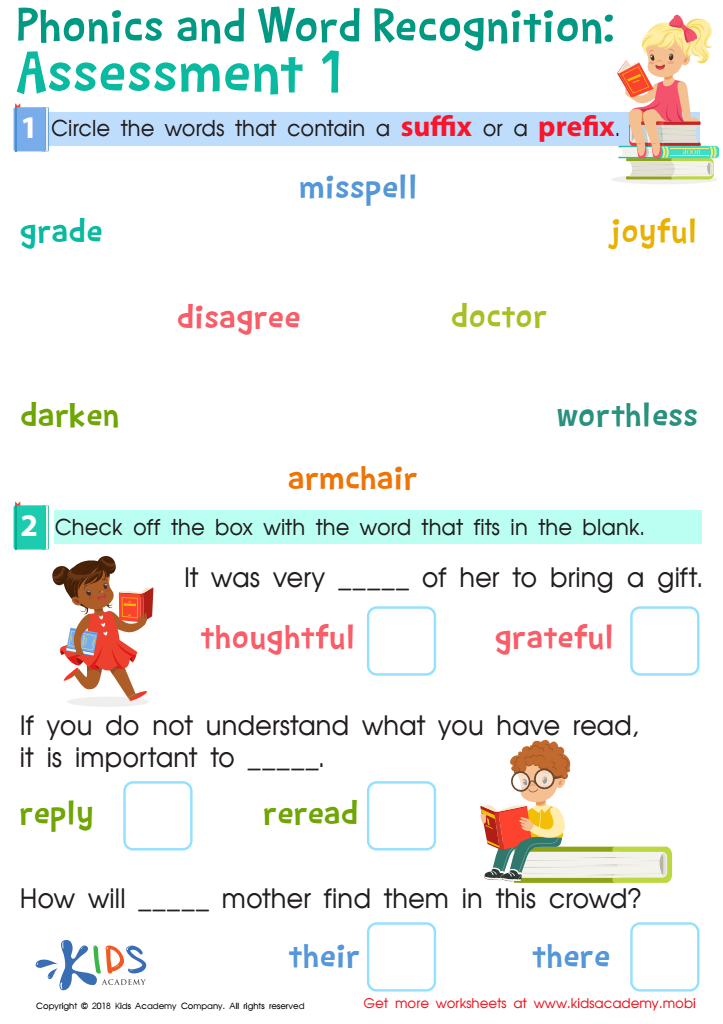
Phonics and Word Recognition: Assessment 1 Worksheet
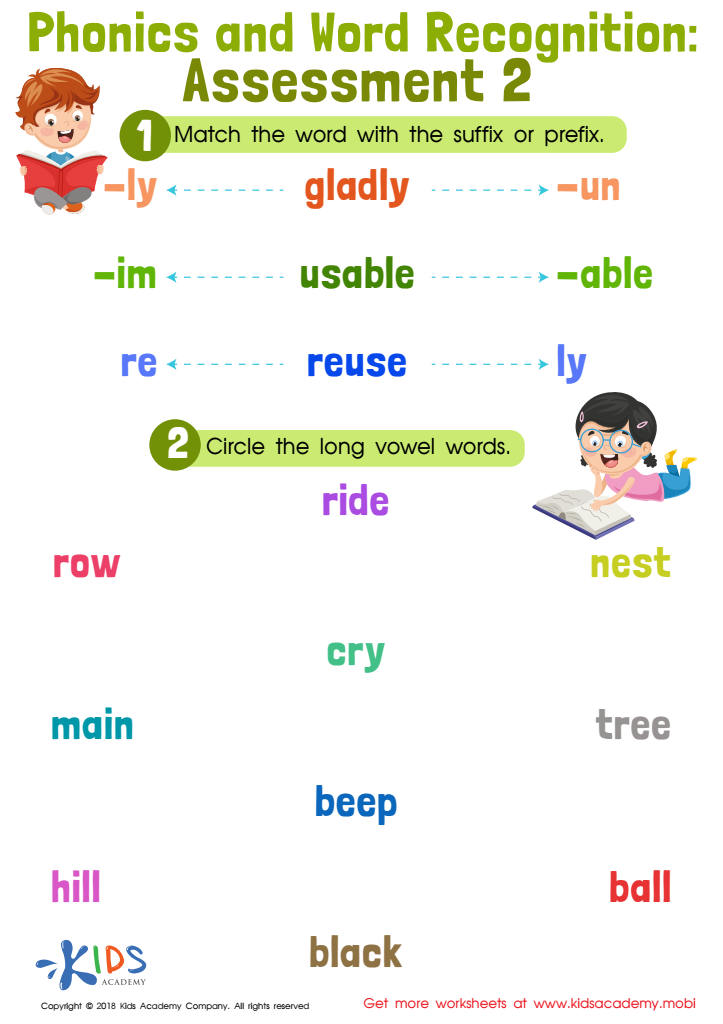
Phonics and Word Recognition: Assessment 2
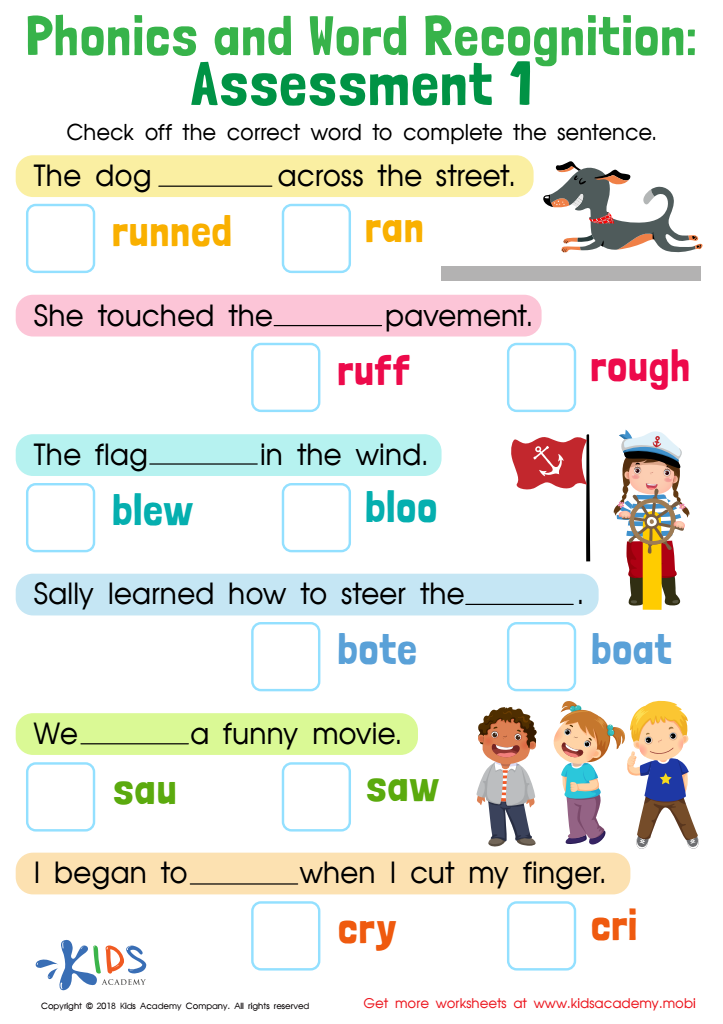
Phonics and Word Recognition: Assessment 1 Worksheet
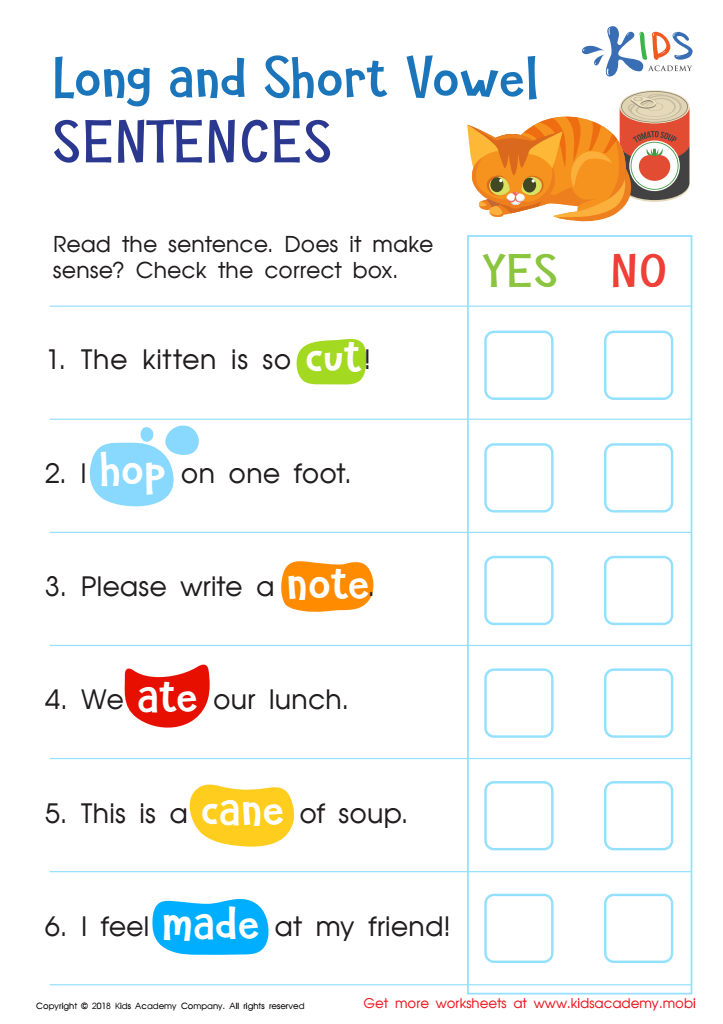
Long and Short Vowel Sentences: Assessment Worksheet
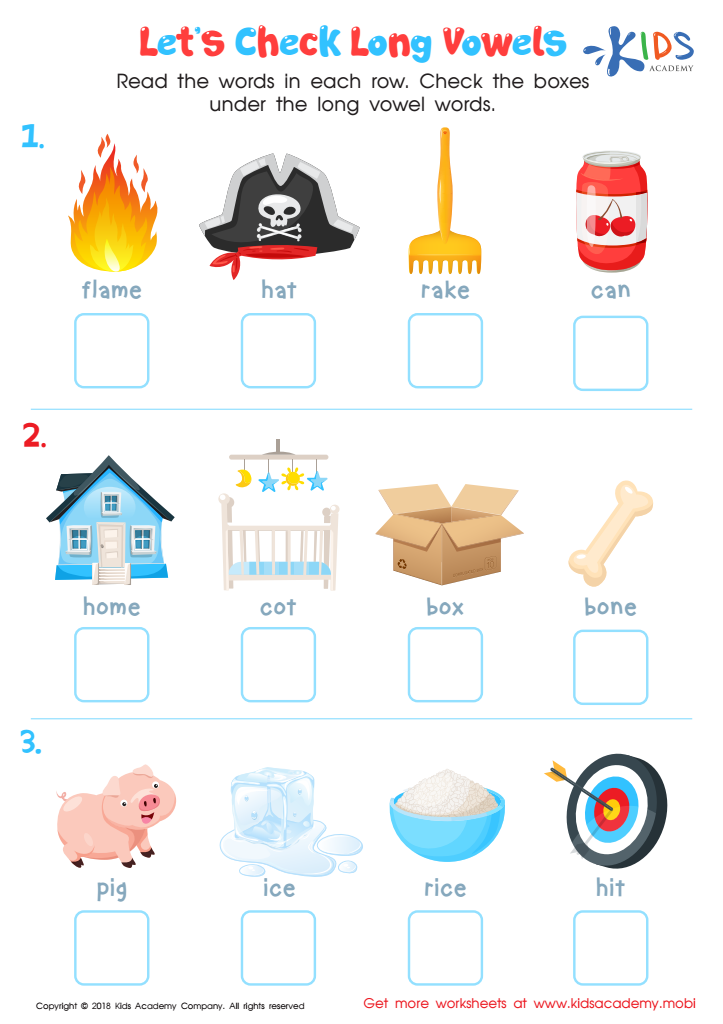
Let's Check Long Vowels: Assessment Worksheet






Alphabet activities are essential for children aged 7-9 as they build foundational literacy skills that are integral to academic success. At this stage, students are transitioning from learning the basics of letters and sounds to applying their knowledge in reading and writing. Engaging in alphabet activities helps reinforce phonemic awareness, spelling, and vocabulary development, which significantly impacts their overall comprehension and communication abilities.
Moreover, these activities can foster a love for reading and learning. When parents and teachers incorporate fun and interactive alphabet exercises—such as games, crafts, and storytelling—it makes the learning process enjoyable. This enjoyment can boost motivation and increases the likelihood of continued interest in literacy beyond this age group.
Additionally, good literacy skills are vital for success across all subjects, including math and science, where understanding word problems and directions is crucial. Therefore, supporting alphabet activities aids not only in reading proficiency but in enriching overall academic involvement. Furthermore, promoting strong communication abilities during these formative years will empower children to express themselves confidently, setting the stage for lifelong learning and achievement. Ultimately, parents and teachers play an important role in fostering these skills, ensuring children have a strong literacy foundation for future success.








