Filters

7 filtered results

Clear all filters
Favorites
With answer key
Interactive

7 filtered results

Difficulty Level

Grade


Ignite a love for poetry in your students with our captivating Poems Worksheets Activities! Perfect for learners of all ages, this collection is designed to explore the rhythmic beauty and expressive power of poems through engaging, thought-provoking exercises. Each worksheet is meticulously crafted to enhance comprehension, encourage creative expression, and develop analytical skills. From understanding poetic devices to creating their own verses, students will embark on a literary journey that enriches their language skills and sparks their imagination. Dive into our Poems Worksheets Activities today and watch your students' appreciation for poetry flourish!

Check out this FREE Poems Trial Lesson for age 8-9!

Poetry

Favorites
With answer key
Interactive
  • Poems
  • 8-9
  • Interactive
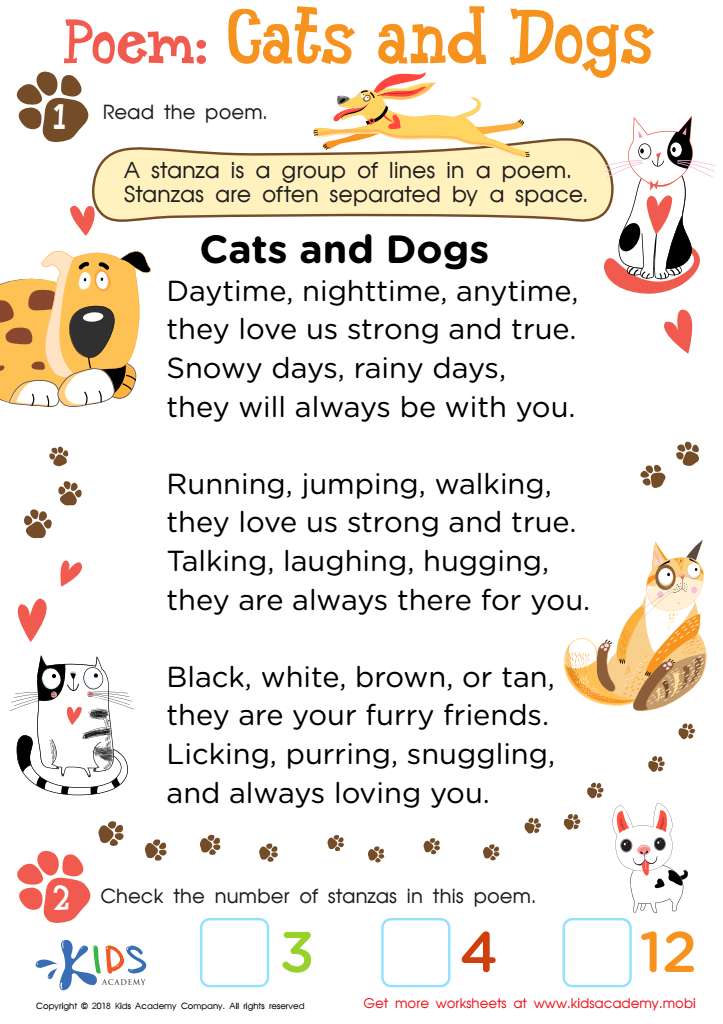
Poem: Cats and Dogs Worksheet

Poem: Cats and Dogs Worksheet

Read the poem to your child and point out where each stanza ends. Ask if they know what a stanza is (if not, explain it's a group of lines in a poem). Help them answer the question at the bottom of the printout. This simple, sweet poem about cats is easy for your child to relate to.
Poem: Cats and Dogs Worksheet
Worksheet
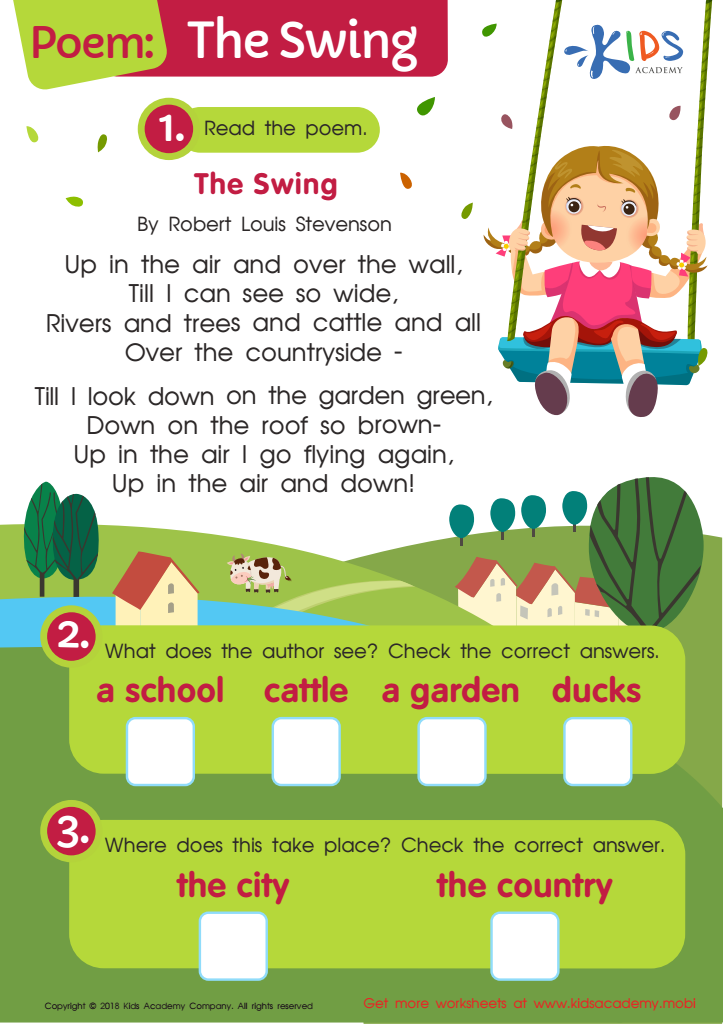
Poem: The Swing Worksheet

Poem: The Swing Worksheet

Encourage your child's love of writing by displaying their poems on the fridge or walls. This worksheet focuses on a swing, something your child enjoys, and contains questions to help your child think more deeply about the poem. Read it together, then answer the questions and watch as your child's creativity and writing skills blossom!
Poem: The Swing Worksheet
Worksheet
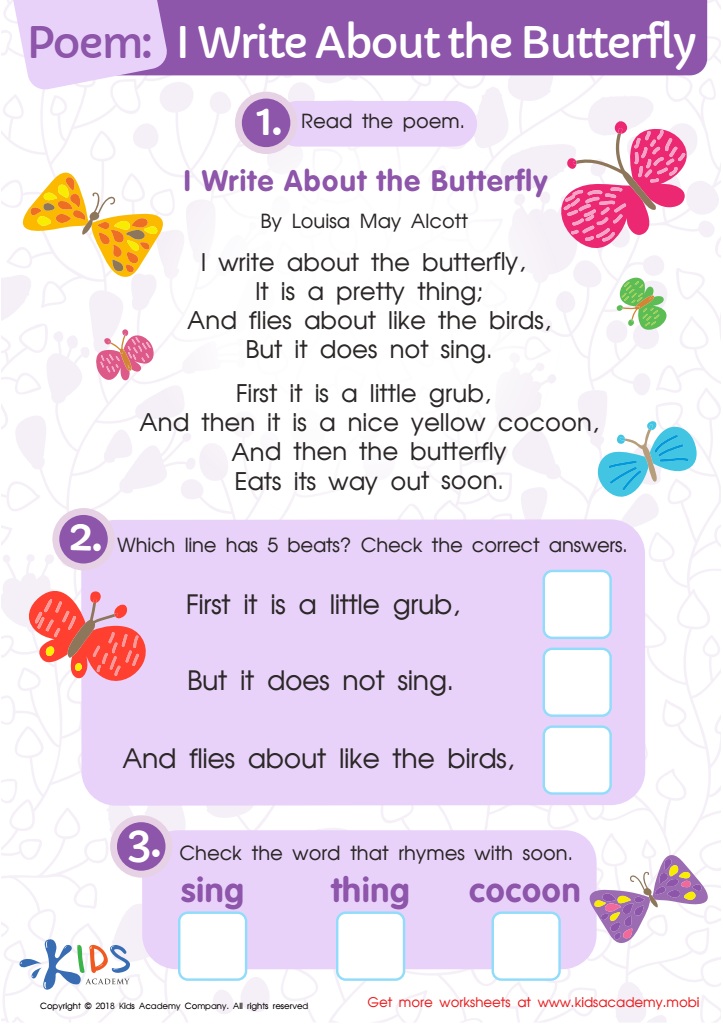
Poem: I Write About The Butterfly Worksheet

Poem: I Write About The Butterfly Worksheet

Do your kids like poetry? Encourage them to explore and connect with their poetic side! Read the butterfly poem from this worksheet aloud, then help them answer the questions. It's a great way to grow their appreciation of poetry and of the natural world.
Poem: I Write About The Butterfly Worksheet
Worksheet
Rhymes in Poems Worksheet

Rhymes in Poems Worksheet

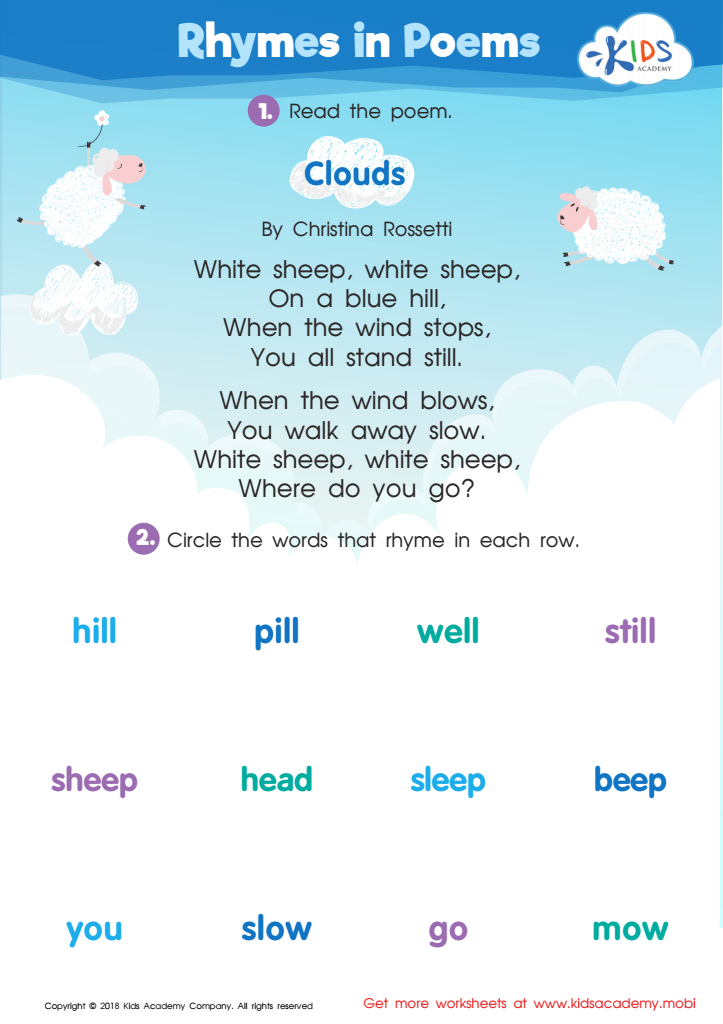
Poems are lovely works of literature; some with rhymes, and some without. This poem for kids is full of rhymes and tells the tale of a sheep. Read it aloud to your kids, then help them circle the rhyming words.
Rhymes in Poems Worksheet
Worksheet
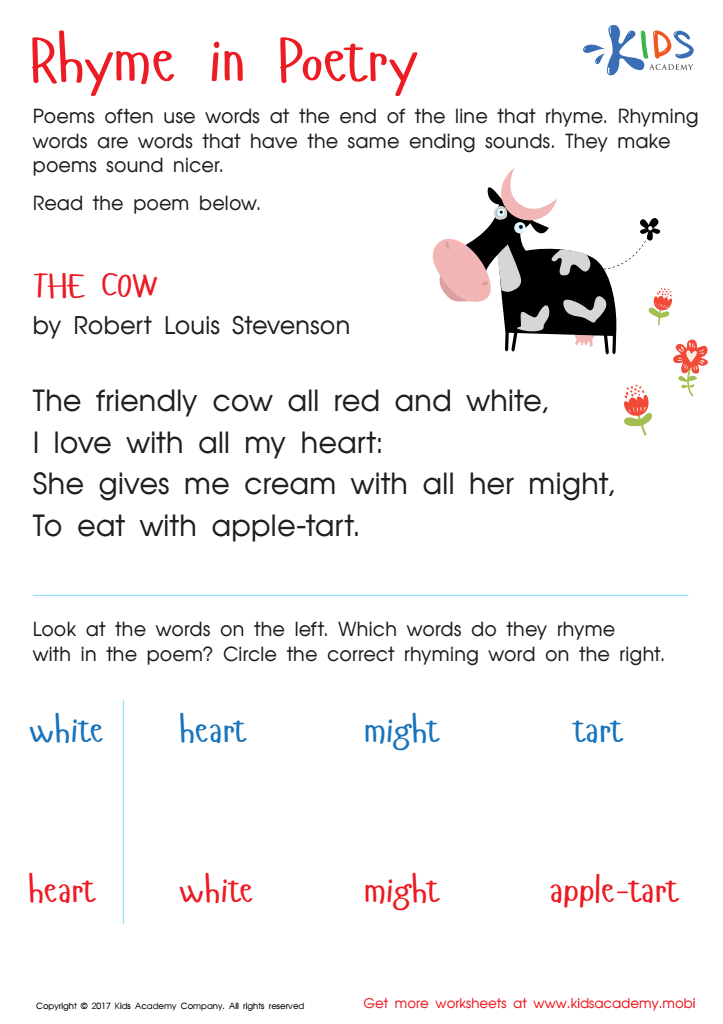
Кhyme in poetry worksheet

Rhyme In Poetry Worksheet

Introduce your child to poetic devices and help build their ear for poetry with Robert Louis Stevenson's adorable poem about a cow! Through this rhyming worksheet, your child will gain an appreciation for poetry and language.
Rhyme In Poetry Worksheet
Worksheet
Baa Baa Black Sheep printable worksheet

Baa Baa Black Sheep Printable
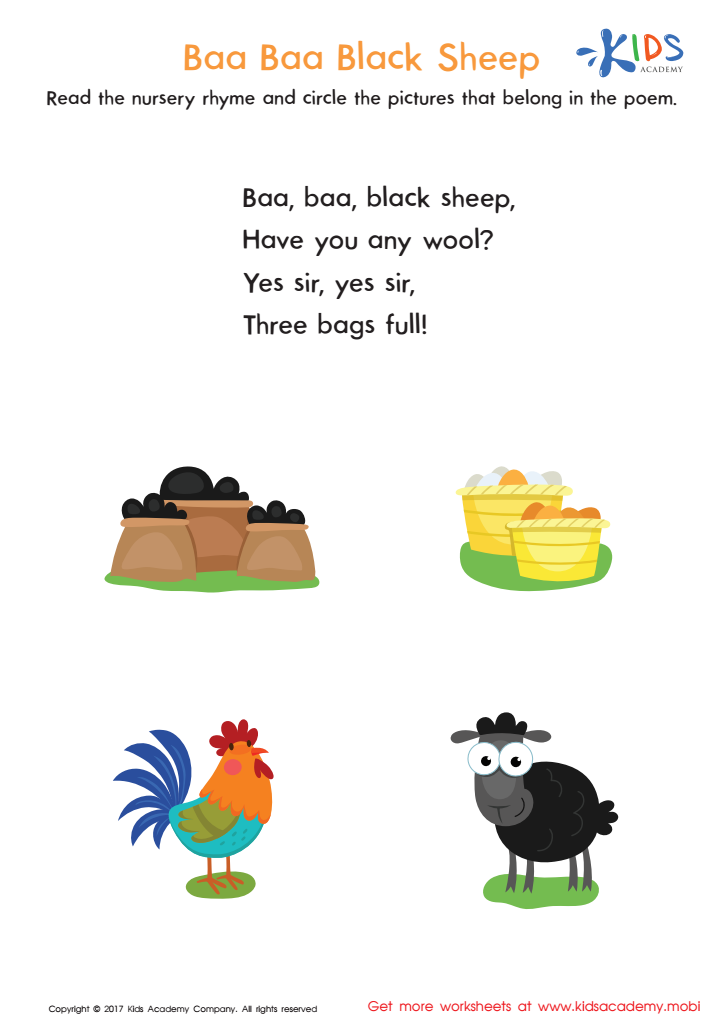
Jumpstart your child's reading skills with this printable Baa Baa Black Sheep worksheet! Recite the lines with them, then have them select the pictures associated with the poem to test comprehension. Fun and educational!
Baa Baa Black Sheep Printable
Worksheet
Hickory dickory dock sequencing worksheet

Hickory Dickory Dock Sequencing Worksheet

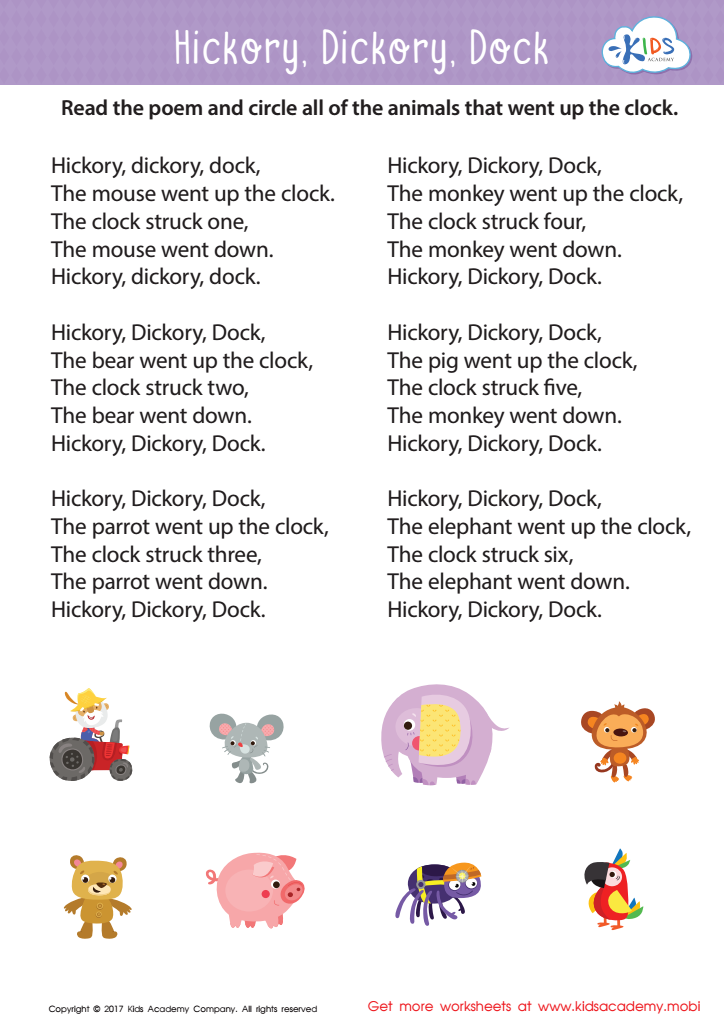
Help your child boost their reading skills with this fun Hickory Dickory Dock sequencing worksheet! They'll read and identify the animals in the right order, strengthening their story sequencing and comprehension skills.
Hickory Dickory Dock Sequencing Worksheet

Worksheet


Poems worksheets activities are an invaluable tool in the educational landscape, offering a unique blend of creative exploration and structured learning. These activities serve as a bridge connecting the abstract beauty of poetry to the tangible goals of literacy and critical thinking skills. By engaging with poems through worksheets, students can embark on a journey that enhances their understanding and appreciation of literature, while simultaneously developing essential skills.

One of the core benefits of using poems worksheets activities is the cultivation of interpretative skills. Poetry, with its rich use of language, symbols, and metaphors, provides a fertile ground for teaching students how to derive meaning beyond the literal. Through structured activities, learners are encouraged to delve into the layers of a poem, fostering a deeper engagement with the text. This process not only aids in the comprehension of poetic devices but also sharpens analytical thinking skills, which are applicable across various forms of literature and contexts.

Moreover, poems worksheets activities facilitate the development of empathy and emotional intelligence. Poetry often encapsulates the breadth of human experience, offering insights into emotions and situations that might be different from one's own. By engaging with these themes through guided activities, students learn to connect with diverse perspectives, fostering a sense of empathy and understanding that transcends the classroom.

In addition to interpretative and emotional development, poems worksheets activities also support linguistic skills. Poetry's rhythmic patterns, rhymes, and unique structure are excellent tools for teaching language arts. Through these activities, students not only expand their vocabulary but also improve their understanding of syntax and the nuances of language, enhancing both their writing and speaking abilities.

Finally, poems worksheets activities offer a versatile and accessible means of integrating cultural education into the curriculum. Poetry from different times and places provides a window into various cultures, allowing students to explore the world from their classroom. This exposure broadens their cultural awareness and appreciation, making poetry worksheets a powerful tool for promoting cultural literacy.

In summary, poems worksheets activities are a multifaceted resource in education. They not only enrich students’ literary understanding and critical thinking but also nurture empathy, linguistic skills, and cultural awareness, making them an indispensable tool in the holistic development of learners.