Easy Reading Fiction worksheets activities for Ages 5-6
3 filtered results
-
From - To
Welcome to our collection of Easy Reading Fiction Worksheets, designed specifically for ages 5-6! These engaging activities help young learners develop their reading skills through fun, interactive stories and comprehension exercises. Each worksheet promotes language development, critical thinking, and creativity, making reading enjoyable and informative. Explore a variety of characters, settings, and plots that inspire a love for storytelling. With colorful illustrations and age-appropriate content, these worksheets are perfect for both classroom settings and home learning. Support your child's reading journey with these accessible resources that make learning effortless and exciting! Dive into the magical world of fiction today!
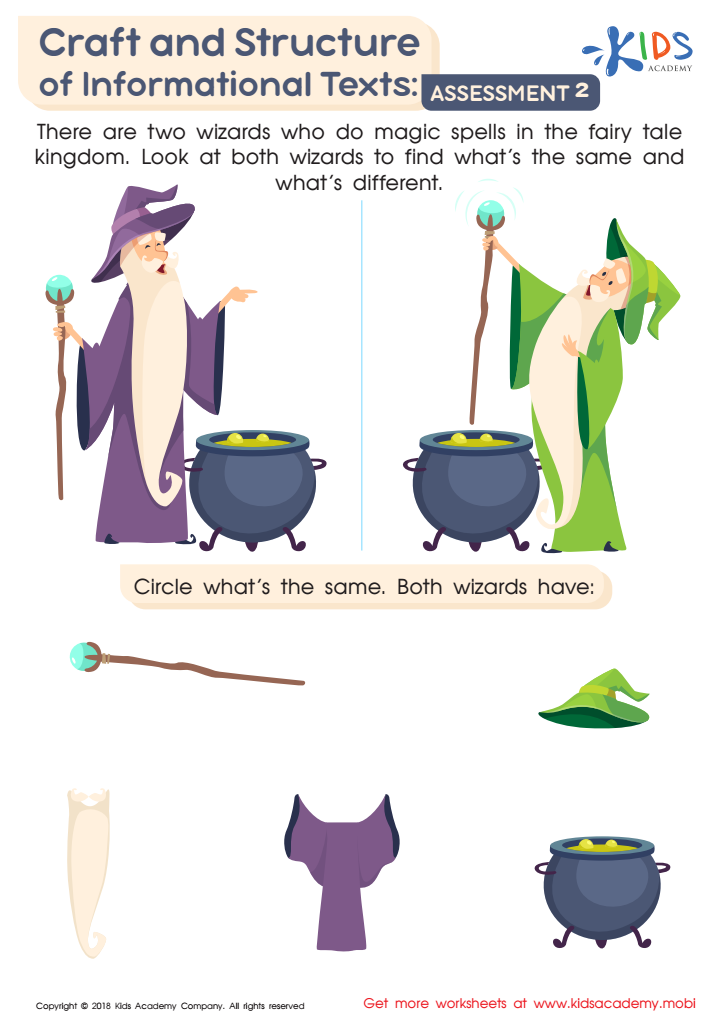
Craft and Structure of Informational Texts: Assessment 2 Worksheet
 Assign to My Students
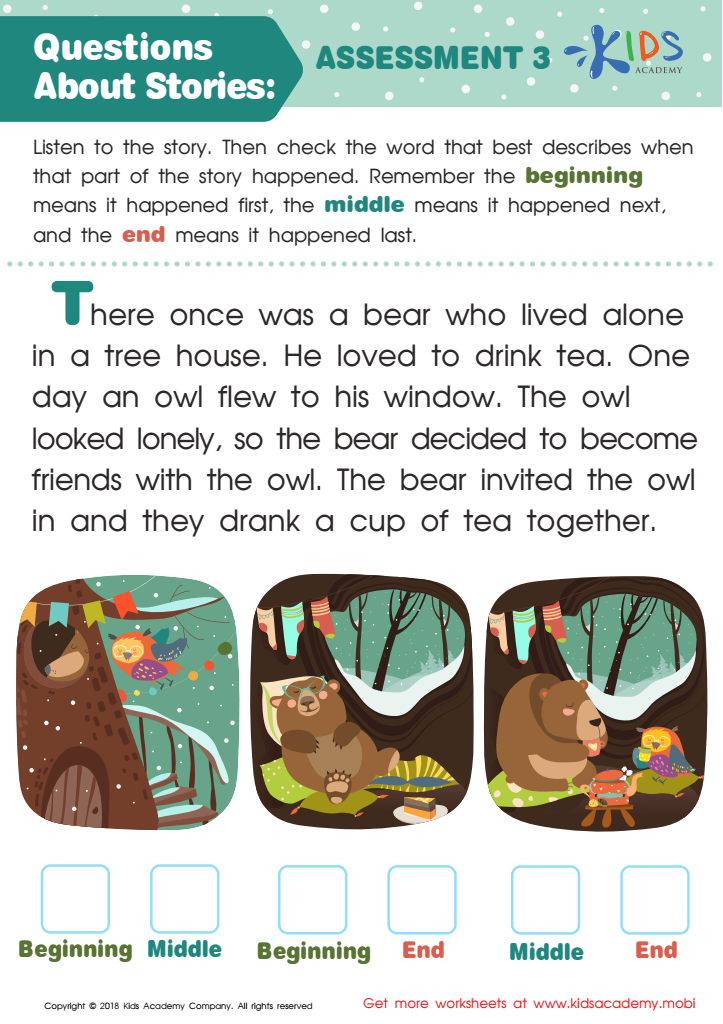
Questions About Stories: Assessment 3 Worksheet
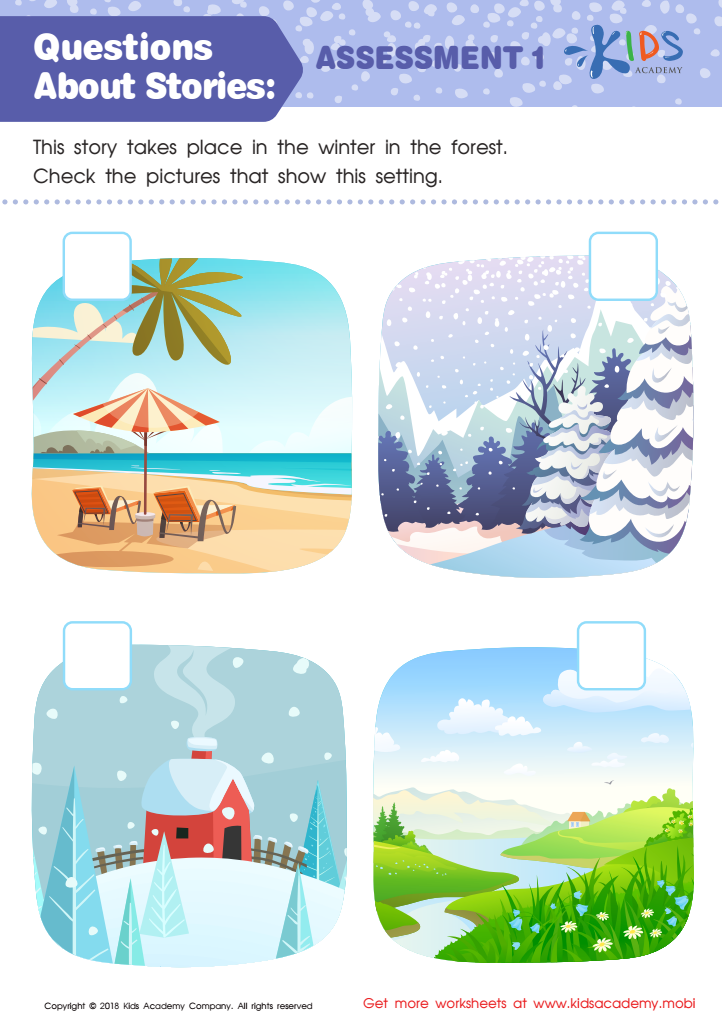
Questions About Stories: Assessment 1 Worksheet








Easy Reading Fiction activities for ages 5-6 are crucial in fostering a foundational love for reading and enhancing literacy skills among young learners. At this age, children's cognitive and social abilities are developing rapidly, making it an ideal time to engage them with simple, relatable stories that capture their imaginations. These activities not only teach children the mechanics of reading, such as phonics, word recognition, and comprehension, but they also promote critical thinking and empathy through storytelling.
Moreover, Easy Reading Fiction activities provide a wonderful avenue for bonding between parents, teachers, and children. Shared reading time can inspire conversations about feelings, characters, and real-life issues, thereby enhancing emotional intelligence. When parents or teachers participate in these activities, they also model positive reading behaviors, showing children that reading is enjoyable.
Incorporating easy reading fiction into daily routines can create a rich literacy environment, leading to increased vocabulary and language skills. Strong early literacy skills have long-term benefits, connecting to academic success in later years. Ultimately, investing time in Easy Reading Fiction encourages a lifelong love for reading, setting the foundation for a child's ongoing educational journey. Therefore, it is vital that parents and teachers prioritize these enriching activities.








