Extra Challenge Tracing Numbers worksheets activities for Ages 6-7
2 filtered results
-
From - To
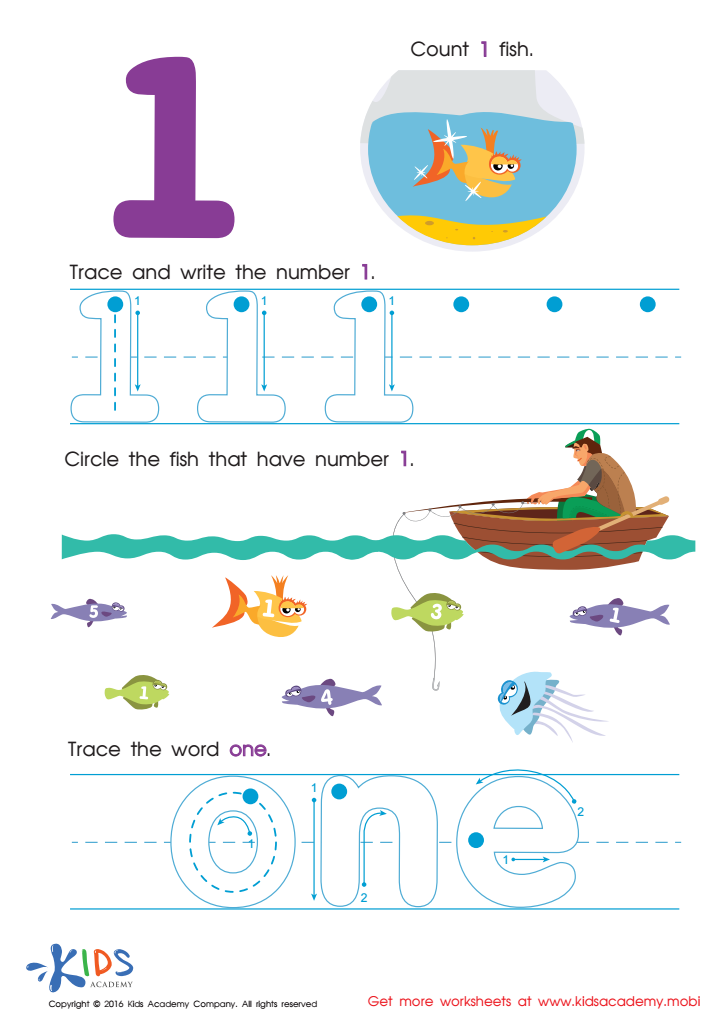
Learning to Write 1 Worksheet
 Assign to My Students
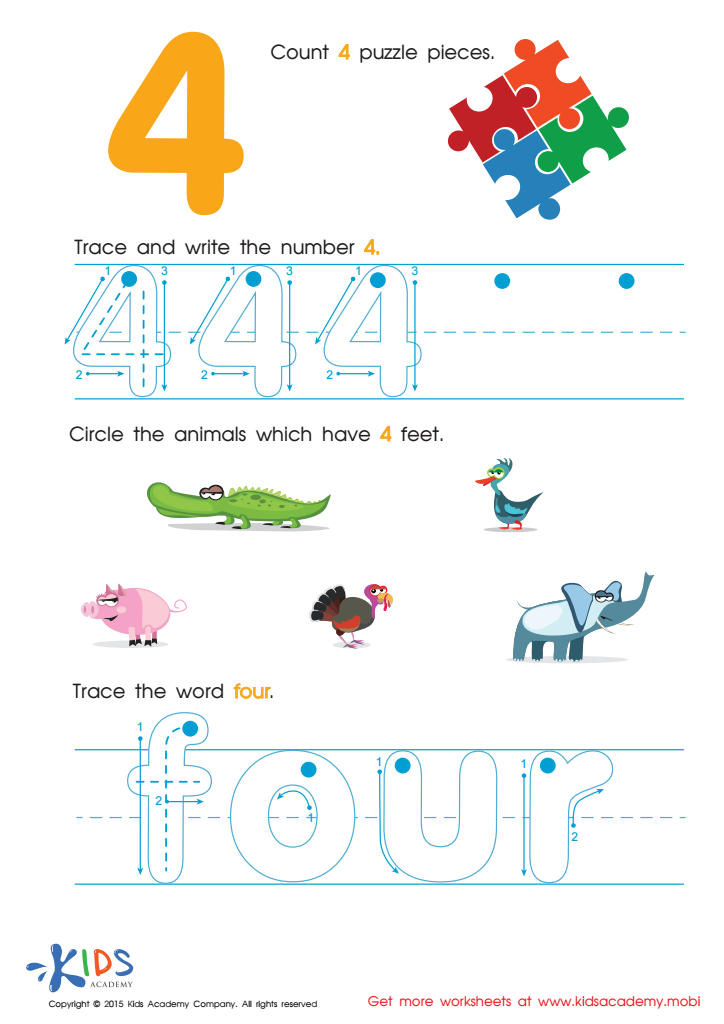
Teaching Children to Write Number 4 Worksheet





.jpg)


Extra Challenge Tracing Numbers worksheets activities are an invaluable tool in the educational journey of young learners. These meticulously designed activities go beyond the ordinary scope of early education by providing an enhanced learning experience that significantly benefits children's numerical literacy and fine motor skill development.
First and foremost, Extra Challenge Tracing Numbers worksheets activities offer a structured yet engaging way for children to familiarize themselves with the shapes and forms of numbers. This foundational skill is crucial as it paves the way for more advanced mathematical understanding. By tracing numbers, children not only learn to recognize and distinguish between different numerals but also build a visual and muscle memory that aids in their ability to recall and utilize these numbers in future learning scenarios.
Moreover, these activities are crafted to present an extra challenge, which is vital for encouraging young minds to develop perseverance and problem-solving skills. Unlike basic tracing exercises, Extra Challenge Tracing Numbers worksheets activities push children slightly out of their comfort zones, prompting them to apply focus and effort. This aspect of the worksheets is instrumental in fostering a growth mindset from an early age, teaching children that overcoming challenges is part of the learning process.
Another significant benefit of these worksheets is their role in enhancing fine motor skills. The act of tracing numbers requires precision, control, and coordination, all of which contribute to the development of handwriting skills. As children practice and improve through these activities, they gain confidence in their ability to write, which is an essential skill for academic success across all subjects.
In summary, Extra Challenge Tracing Numbers worksheets activities are a multifaceted educational tool. They not only introduce and reinforce numerical concepts but also cultivate critical thinking, perseverance, and fine motor skills. By integrating these activities into the learning routine, educators and parents can provide children with a solid foundation for future academic achievements.








