Normal Tracing worksheets activities for Ages 3-6 - Page 5
97 filtered results
-
From - To
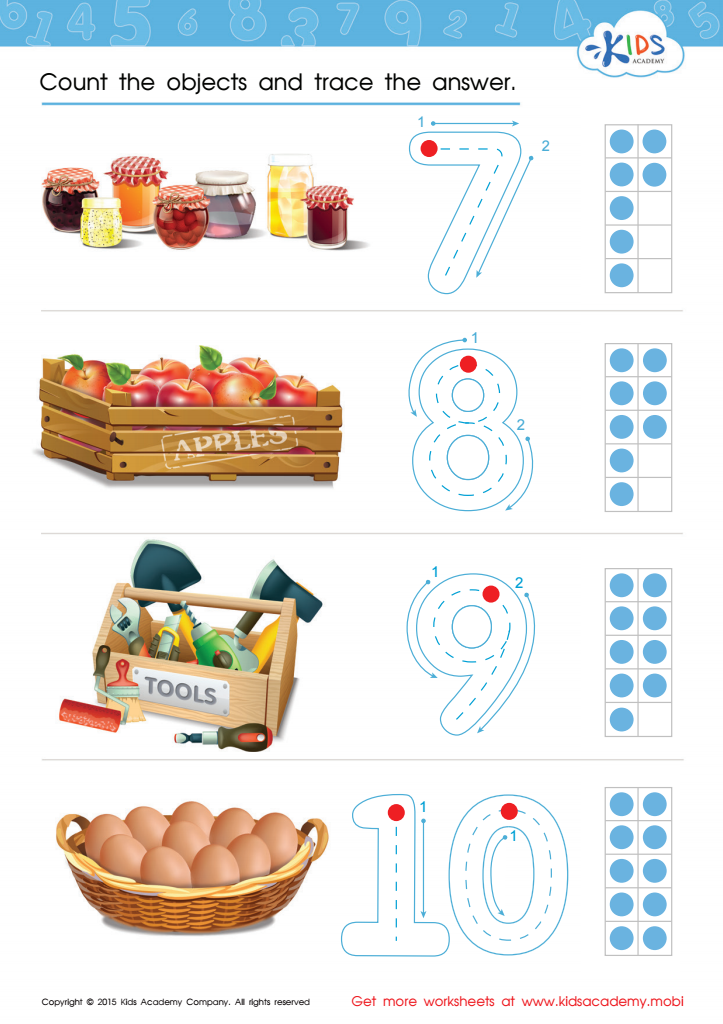
Count and Trace 7 – 10 Worksheet
 Assign to My Students







Normal tracing activities for children aged 3-6 are essential for several reasons. Firstly, they enhance fine motor skills, essential for tasks such as writing, drawing, and self-care. As young children engage in tracing, they practice hand-eye coordination, finger control, and grip strength, forming the building blocks needed for more complex tasks later on.
Secondly, tracing activities support cognitive development. These activities help children recognize shapes, letters, and numbers, laying a foundational understanding of literacy and numeracy. By connecting movement with visual stimuli, tracing fosters memory retention and pattern recognition.
Moreover, tracing offers a beneficial blend of structure and creativity. While guiding children in following lines, it also invites them to express themselves artistically. This blend nurtures confidence and encourages exploration.
Additionally, participating in these activities can foster a sense of routine and discipline, helping kids understand the importance of focus and perseverance.
Finally, tracing activities can create opportunities for bonding between parents and children or teachers and students. They provide a platform for interaction that is both educational and enjoyable, making learning a collaborative effort.
In conclusion, normal tracing activities are a fun, engaging way to support motor skills, cognitive development, and social bonding in early childhood education.








