
Normal Phonics worksheets activities for 7-Year-Olds
2 filtered results
Difficulty Level
Grade
Age
-
From - To
Subject
Activity
Standards
Introducing our exceptional range of Normal Phonics Worksheets Activities, meticulously designed to provide an enriching learning experience for children. These engaging worksheets are tailored to enhance phonemic awareness, blending, segmenting, and decoding skills essential for reading fluency. Our Normal Phonics Worksheets Activities are perfect for classroom use or at-home practice, offering a variety of exercises that cater to different learning styles. Dive into our comprehensive collection and discover the joy of learning phonics through activities that spark curiosity and foster a love for reading. Ideal for educators and parents aiming to bolster early literacy skills, our worksheets are your go-to resource for effective phonics instruction.
Favorites
With answer key
Interactive
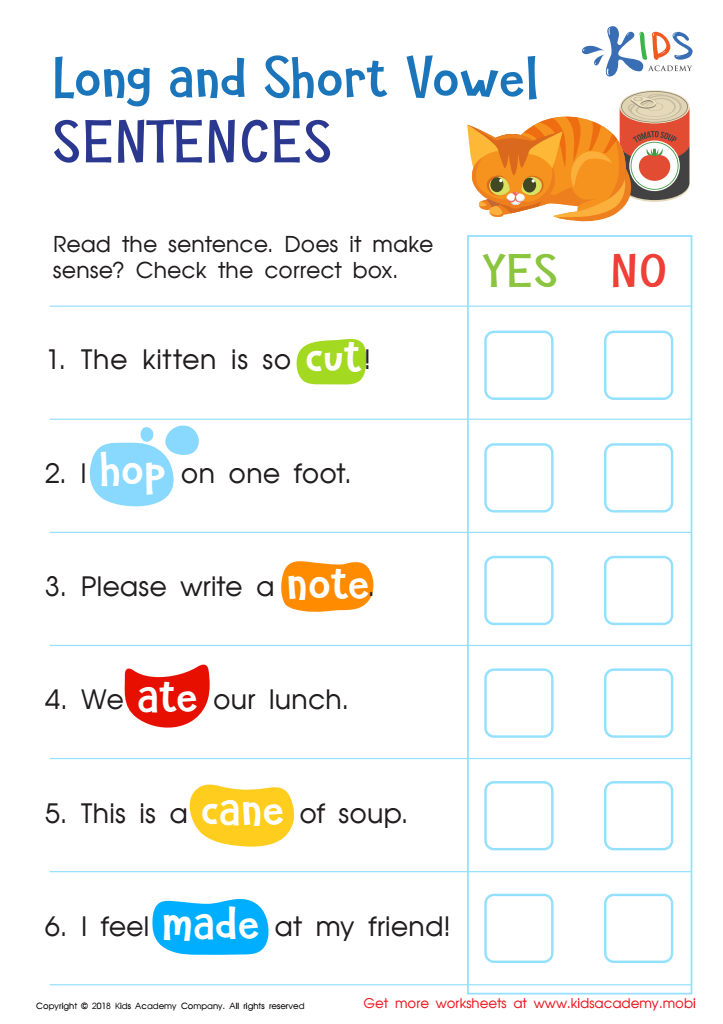
Long and Short Vowel Sentences: Assessment Worksheet
This printable worksheet helps kids practice differentiating between short and long vowel sounds. They'll use context clues to figure out which words make sense in simple sentences. A great way to build reading and writing skills!
 Assign to My Students
Long and Short Vowel Sentences: Assessment Worksheet
Worksheet
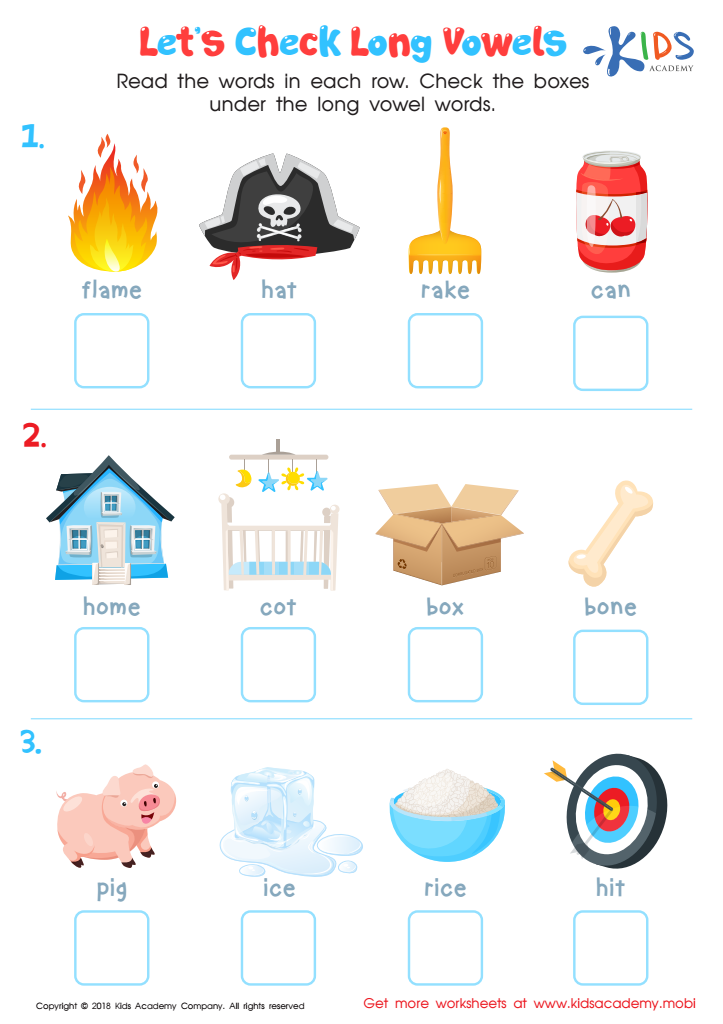
Let's Check Long Vowels: Assessment Worksheet
This worksheet helps your child identify objects and learn long vowel sounds. Ask them to say the names of the four objects in each row. Then, help them check the boxes to confirm they know the long vowel sounds. This will help them develop their reading skills.
Let's Check Long Vowels: Assessment Worksheet
Worksheet
Join Kids Academy for Free
Who is primarily going to use this learning content?








Normal Phonics worksheets activities play a crucial role in the foundational stages of a child's reading journey. These structured exercises are not just sheets of paper filled with letters and sounds; they are gateways to unlocking the complex code of the English language. These activities are meticulously designed to engage children in the exploration of phonemes, graphemes, and blending skills, which are essential components of reading proficiency and literacy.
First and foremost, Normal Phonics worksheets activities provide a systematic approach to learning. They introduce sounds and letters in a sequenced manner, allowing children to build upon their knowledge incrementally. This systematic exposure is crucial for the mastery of phonics rules, enabling learners to decode words more efficiently and confidently. As children progress through these activities, they develop a solid foundation that supports not only reading but also spelling.
Another significant advantage of these worksheets is the reinforcement and practice they offer. Repetition is a key element in the learning process, especially when it comes to phonics. Normal Phonics worksheets activities allow children to repeatedly practice sound-letter correspondences, blending, and segmenting, which enhances their ability to read fluently. Practice through these worksheets helps in cementing the learned concepts in young minds, making reading a more automatic and less laborious process.
Moreover, Normal Phonics worksheets activities are designed to cater to diverse learning styles. Whether a child is a visual, auditory, or kinesthetic learner, these activities often incorporate elements that appeal to various preferences, making learning more accessible and engaging. For instance, they may include colorful illustrations, opportunities for verbal repetition, or tasks that require physical manipulation of letters, thus ensuring that all children find an entry point into the world of reading.
In conclusion, Normal Phonics worksheets activities are invaluable tools in the journey toward literacy. They offer a structured, systematic, and engaging approach to learning phonics, making them indispensable for educators and learners alike. Through these activities, children not only learn to read but also develop a love for reading, setting them on the path to becoming confident and proficient readers.








