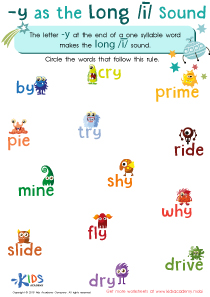
Silent Vowels Worksheets for Ages 3-7
4 filtered results
-
From - To
Discover our engaging "Silent Vowels Worksheets for Ages 3-7," designed to enhance your child's phonics skills through fun and interactive activities. These worksheets focus on familiarizing young learners with silent vowels, helping them recognize tricky words and improve their reading fluency. Each worksheet features colorful illustrations, bite-sized exercises, and compelling exercises that make learning enjoyable. Perfect for preschoolers and early elementary students, these printable resources encourage independent exploration while reinforcing phonetic knowledge. Support your child’s literacy development and boost their confidence with these delightful worksheets, making learning both effective and fun! Start your journey into the world of silent vowels today!
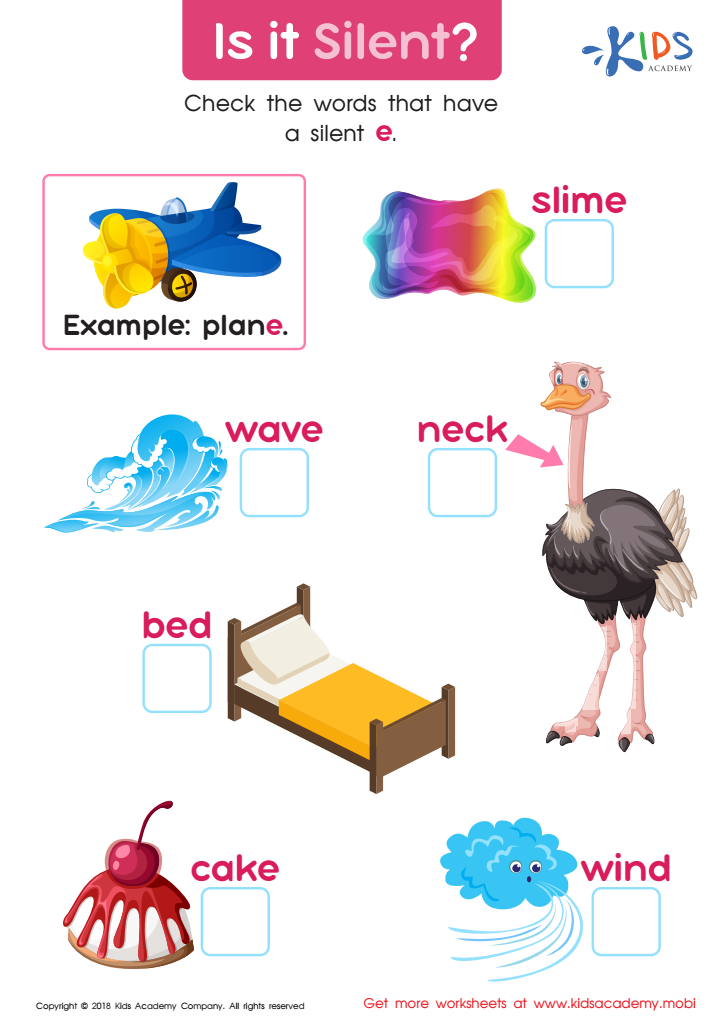
Is It Silent? Worksheet
 Assign to My Students
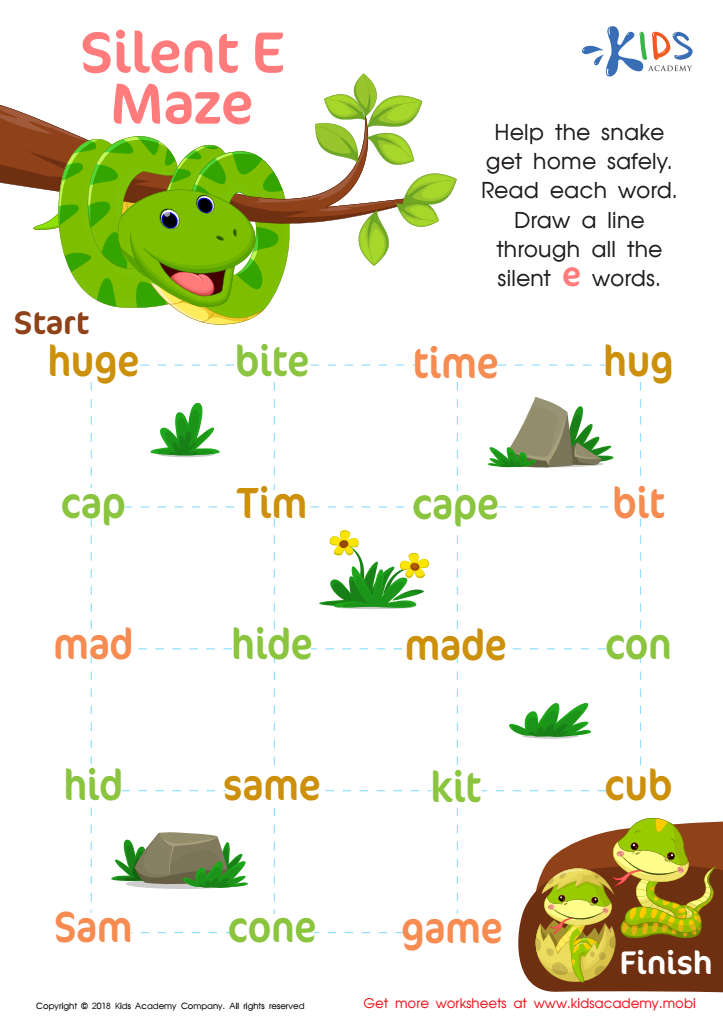
Silent E Maze Worksheet
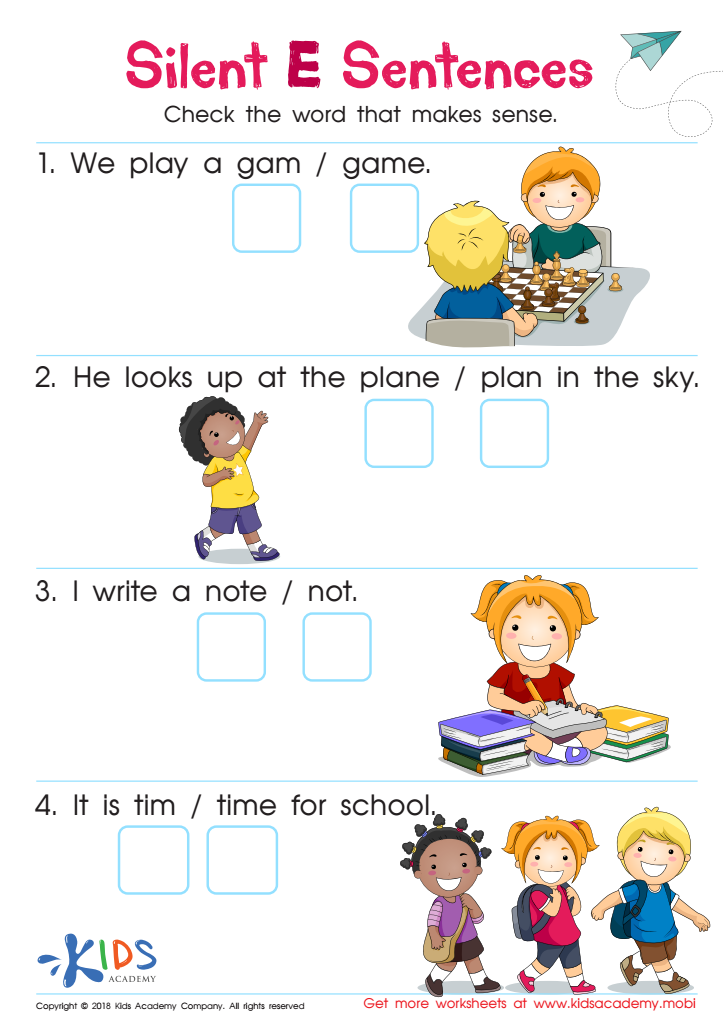
Silent E Sentences Worksheet
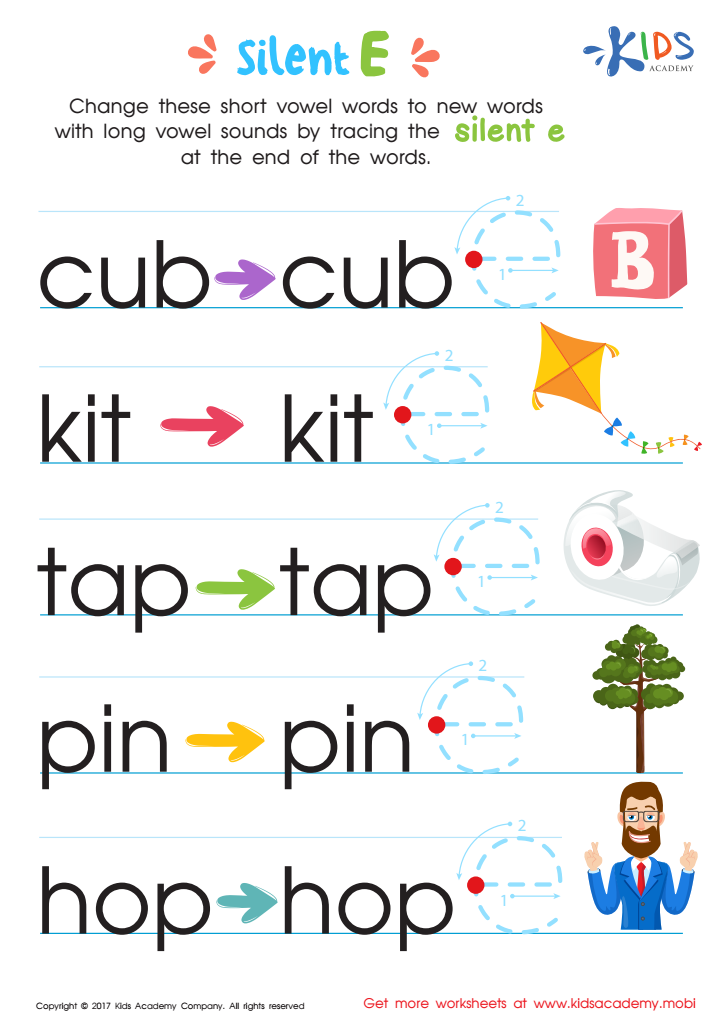
Silent E Words Worksheet


Silent vowels play a crucial role in early literacy for children aged 3-7, making it essential for parents and teachers to emphasize their understanding. Silent vowels, often found in words such as "cake," "time," and "like," impact pronunciation, spelling, and reading fluency. Recognizing these nuances helps young learners develop strong phonetic skills and enhances their overall language comprehension.
First, understanding silent vowels aids in phonemic awareness, a key literacy skill that enables children to manipulate sounds in words. This awareness lays the foundation for reading and spelling accuracy. When children decode words with silent vowels, they become more confident readers, able to tackle more complex texts as they progress.
Additionally, knowledge of silent vowels fosters a love for reading and writing. When children grasp the intricacies of language, they gain the tools to express themselves creatively, transforming their written and oral communication skills.
Finally, engaging with silent vowels provides opportunities for interactive learning. Activities such as games, storytelling, and rhyming can make the learning process enjoyable, ensuring that children remain enthusiastic about language development. By prioritizing silent vowels, parents and teachers support early literacy and set children on a pathway to academic success.