Spelling practice Missing Vowels Worksheets for Ages 3-8
4 filtered results
-
From - To
Enhance your child's spelling skills with our Missing Vowels Worksheets, tailored specifically for ages 3-8. These engaging, printable worksheets focus on identifying and filling in the missing vowels to complete words, helping young learners improve their phonics, vocabulary, and writing abilities. Designed to be fun and educational, the worksheets encourage children to practice spelling in a supportive, age-appropriate way. Perfect for use at home or in the classroom, our Missing Vowels series promotes a love for learning and prepares kids for future reading and writing success. Explore our collection to support your child's literacy journey today!
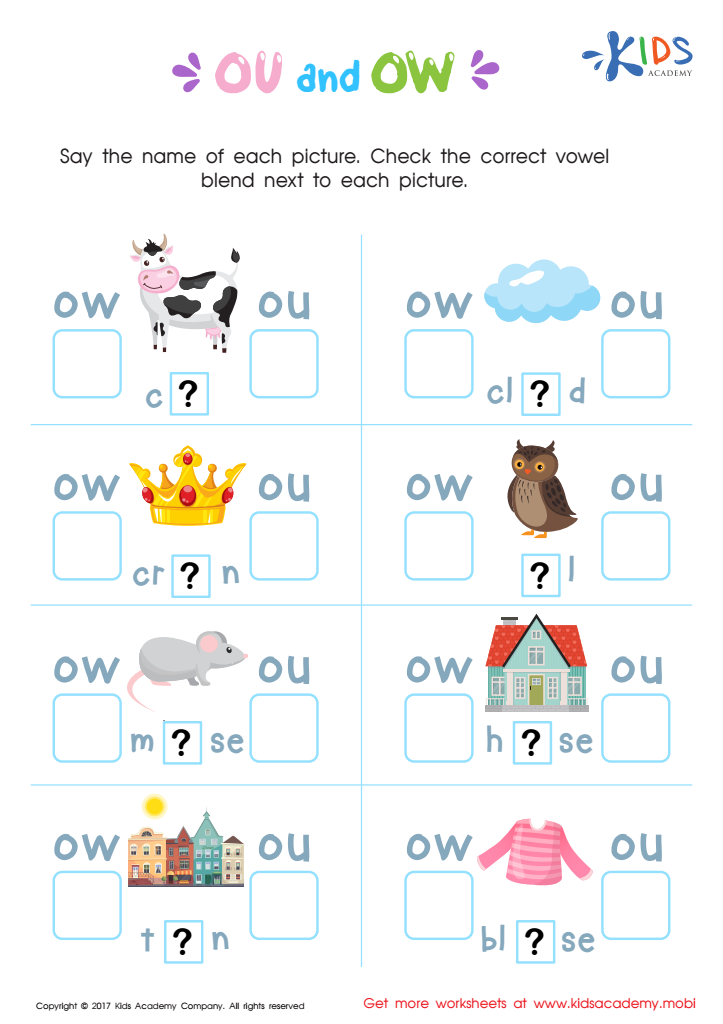
OU and OW Words Worksheet
 Assign to My Students
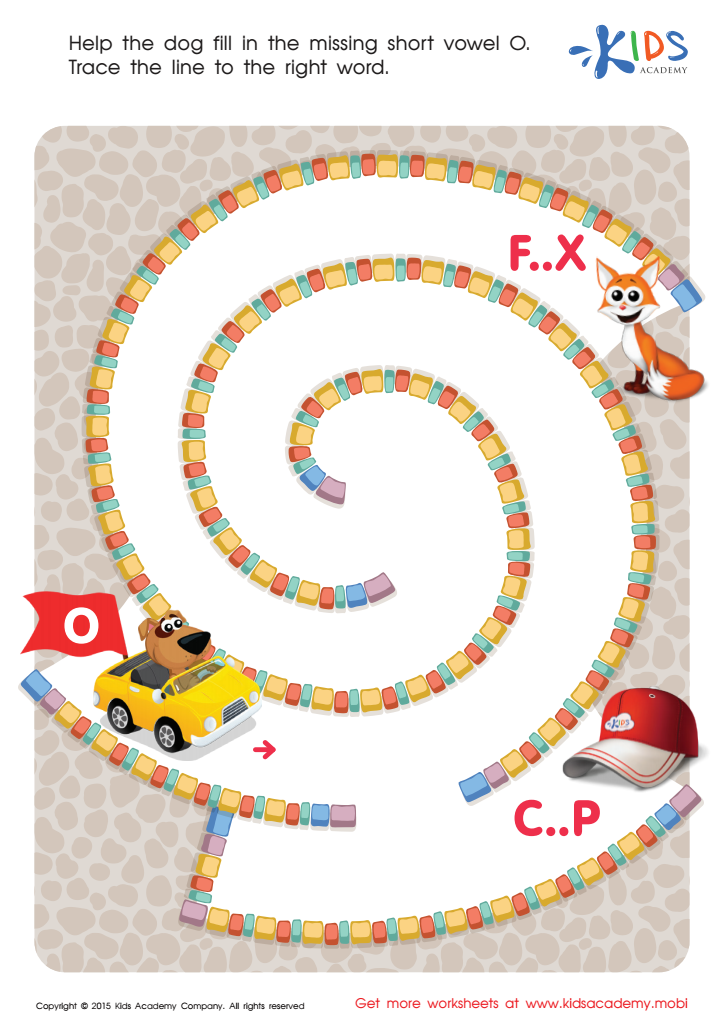
Short Vowel Sound O Worksheet
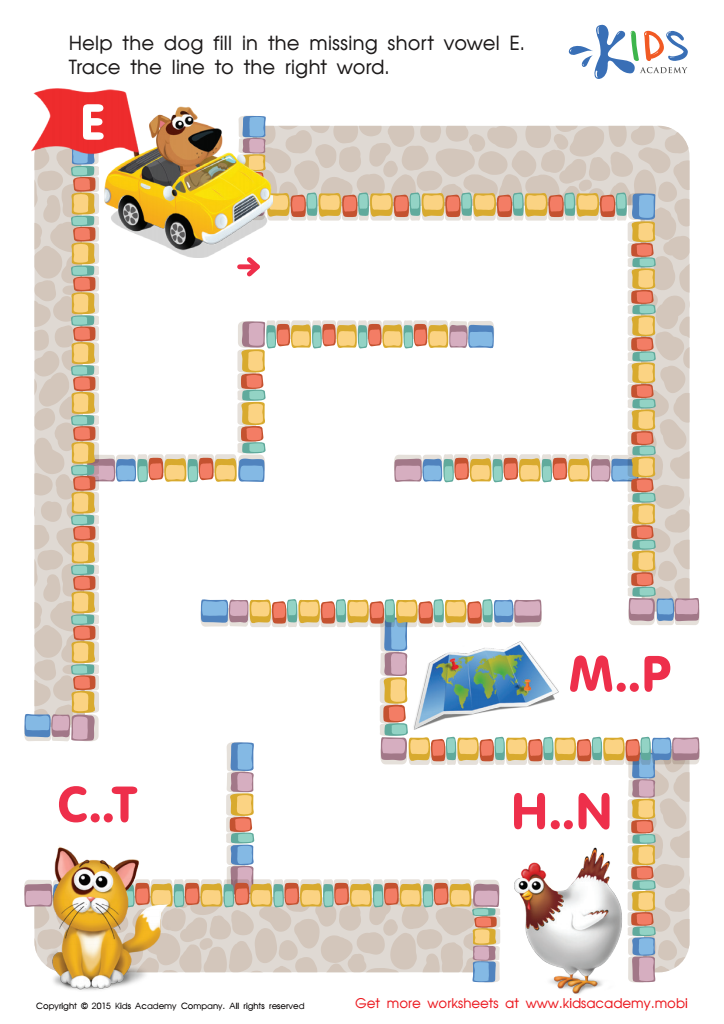
Short Vowel Sound E Worksheet
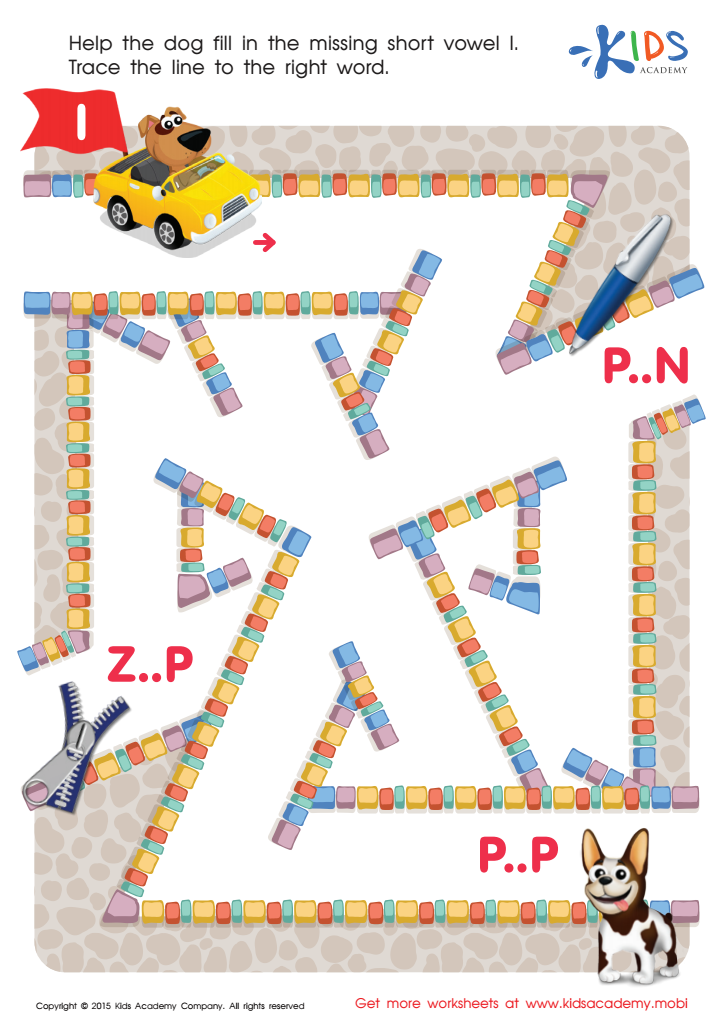
Short Vowel Sound I Worksheet


Spelling practice, particularly with missing vowels, is crucial for children aged 3-8 as it lays the groundwork for essential literacy skills. During these formative years, kids are rapidly developing their language abilities, and understanding how vowels function within words is key to proficient reading and writing.
First, practicing with missing vowels helps children sharpen their phonemic awareness—the ability to hear, identify, and manipulate the individual sounds in words. This awareness is a critical pre-reading skill that supports decoding, spelling, and comprehension. When children identify and fill in the missing vowels, they actively engage with the word structure, reinforcing their comprehension of how vowels influence word sounds and meanings.
Secondly, this practice fosters resilience and problem-solving skills. It requires children to think critically about letters and sounds, and encourages them to experiment and learn from mistakes within a low-stress activity.
Additionally, engaging in vowel-focused tasks can enhance vocabulary. By recognizing patterns in word formation, children gain a deeper understanding of word families and spelling rules which enrich their language toolkit.
Ultimately, regular spelling practice with missing vowels promotes not just immediate spelling proficiency but long-term literacy confidence—a cornerstone of future academic success. Therefore, both parents and teachers should prioritize these activities to support children's holistic language development.








