Filters

184 filtered results

Clear all filters
Favorites
With answer key
Interactive

184 filtered results

Difficulty Level

Grade


Check out this FREE Trial Lesson on Reading for age 4-5!

Let's Go to School!

Favorites
With answer key
Interactive
  • 4-5
  • Interactive
  • Reading
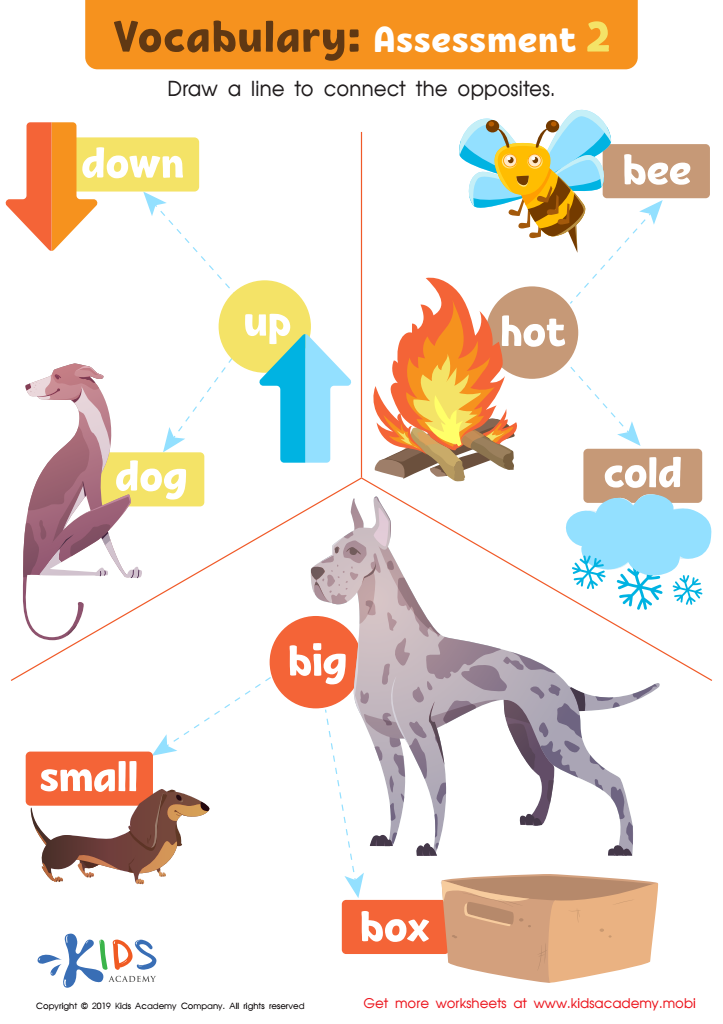
Vocabulary: Assessment 2 Worksheet

Vocabulary: Assessment 2 Worksheet

Opposites attract! Boost your preschooler's vocabulary by reviewing antonyms with this fun worksheet. View the images, read the words, and find the opposites. Guide your learner with the illustrations, then discuss each one before they trace the dotted lines to match. Have fun and reinforce learning!
Vocabulary: Assessment 2 Worksheet
Worksheet
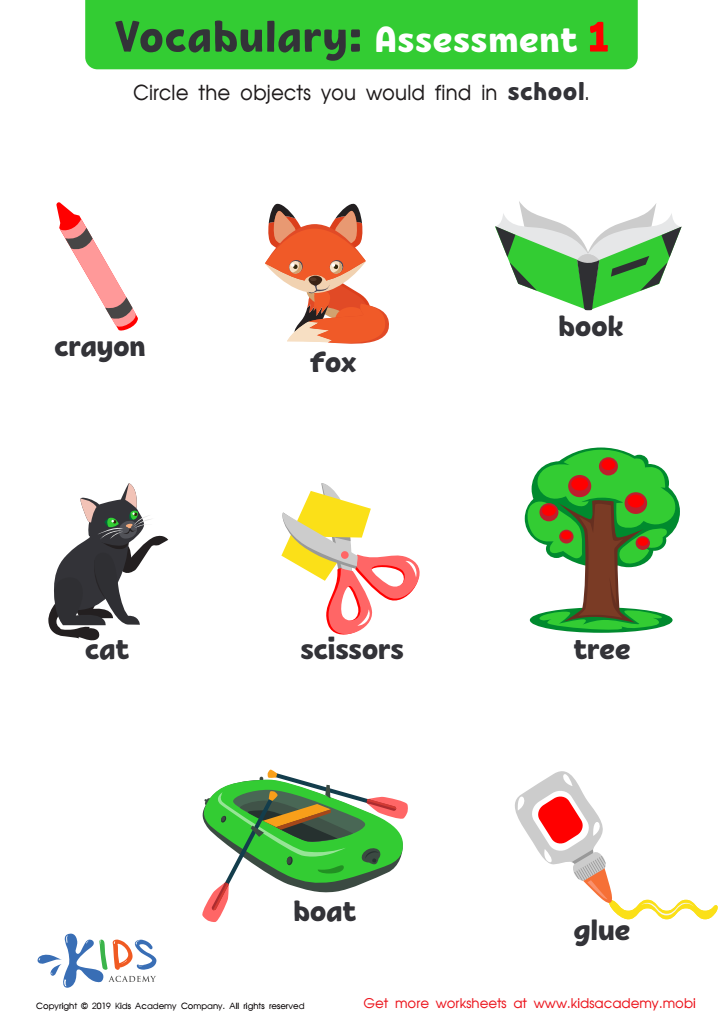
Vocabulary: Assessment 1 Worksheet

Vocabulary: Assessment 1 Worksheet

Want to check your child's vocabulary? This worksheet has kids identify objects from school through picture clues. It reinforces reading and fine motor skills, while providing an assessment of their reading growth and needs.
Vocabulary: Assessment 1 Worksheet
Worksheet
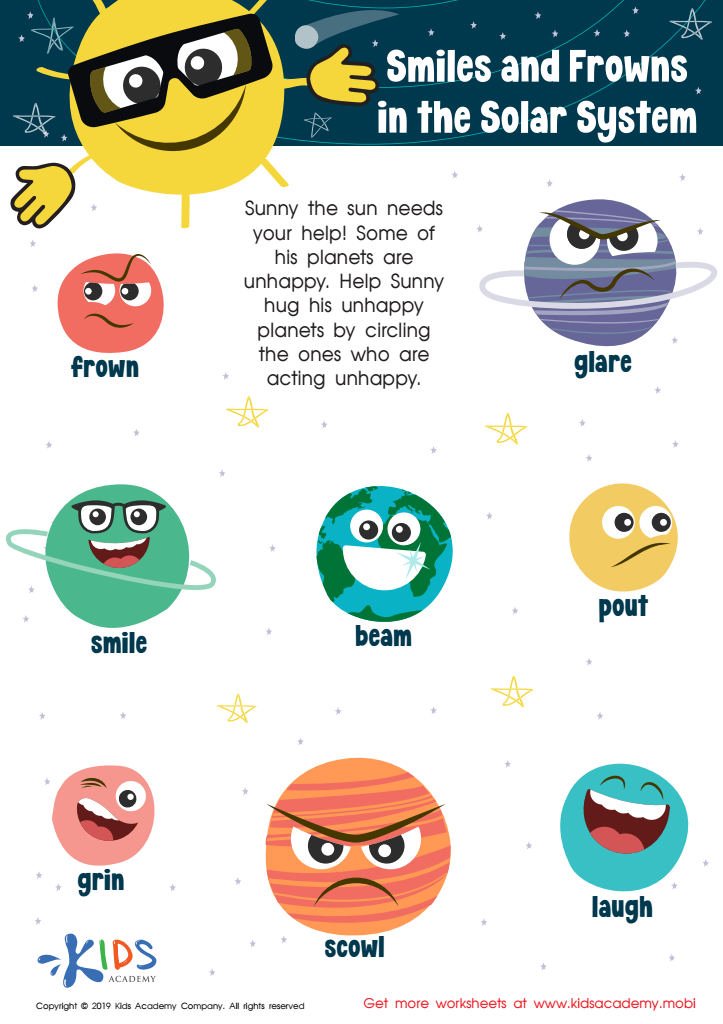
Smile and Frowns in the Solar System Worksheet

Smile and Frowns in the Solar System Worksheet

Help Sunny the sun identify emotions with this free worksheet! Kids will have a blast as they identify planetary friends that are happy and sad, building emotional intelligence and motor skills along the way. They won't even realize they're learning, they'll enjoy the faces so much!
Smile and Frowns in the Solar System Worksheet
Worksheet
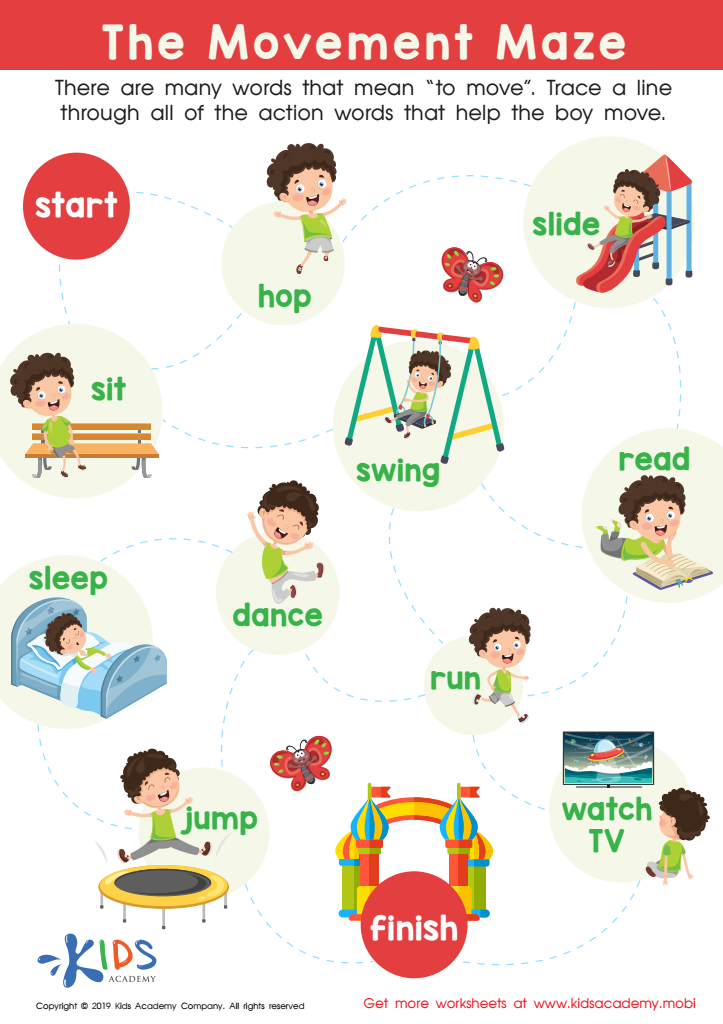
The Movement Maze Worksheet

The Movement Maze Worksheet

Let your child have fun with this interactive PDF download. Kids will learn movement words with cute pictures, plus practice fine motor skills as they trace. A fun way to reinforce vocabulary. Jump, hop and sit – it's all here!
The Movement Maze Worksheet
Worksheet
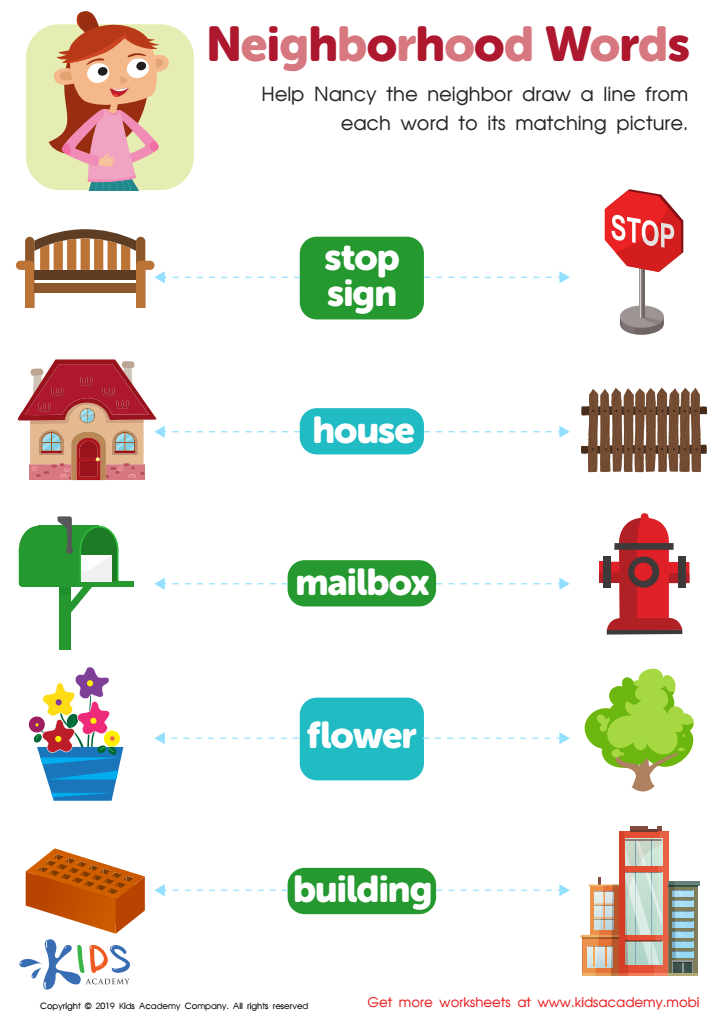
Neighborhood Words Worksheet

Neighborhood Words Worksheet

Help preschoolers develop life skills and familiarize them with words and concepts with this worksheet! It'll also boost their fine motor skills as they trace lines to match pictures with the words. They'll learn new words and feel more confident in their reading.
Neighborhood Words Worksheet
Worksheet
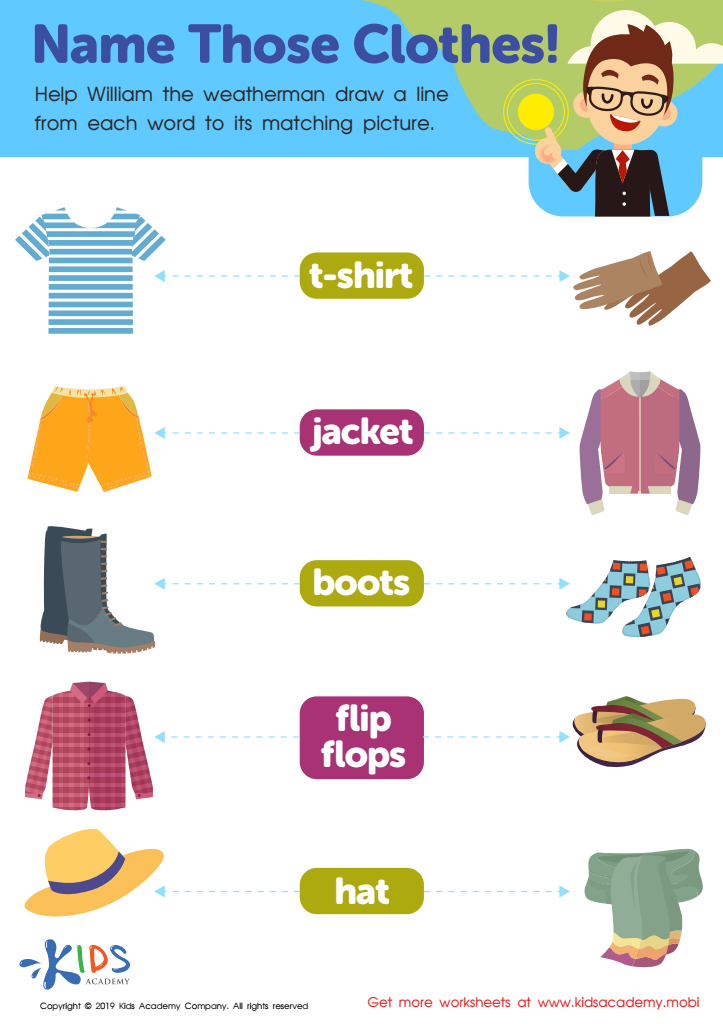
Name Those Clothes Worksheet

Name Those Clothes Worksheet

This worksheet will help your preschooler build their vocabulary, develop life-skills and work on fine motor skills. They'll analyze which clothing goes with the weatherman and match it to the word. It's a fun and interactive way to recognize high-frequency words.
Name Those Clothes Worksheet
Worksheet
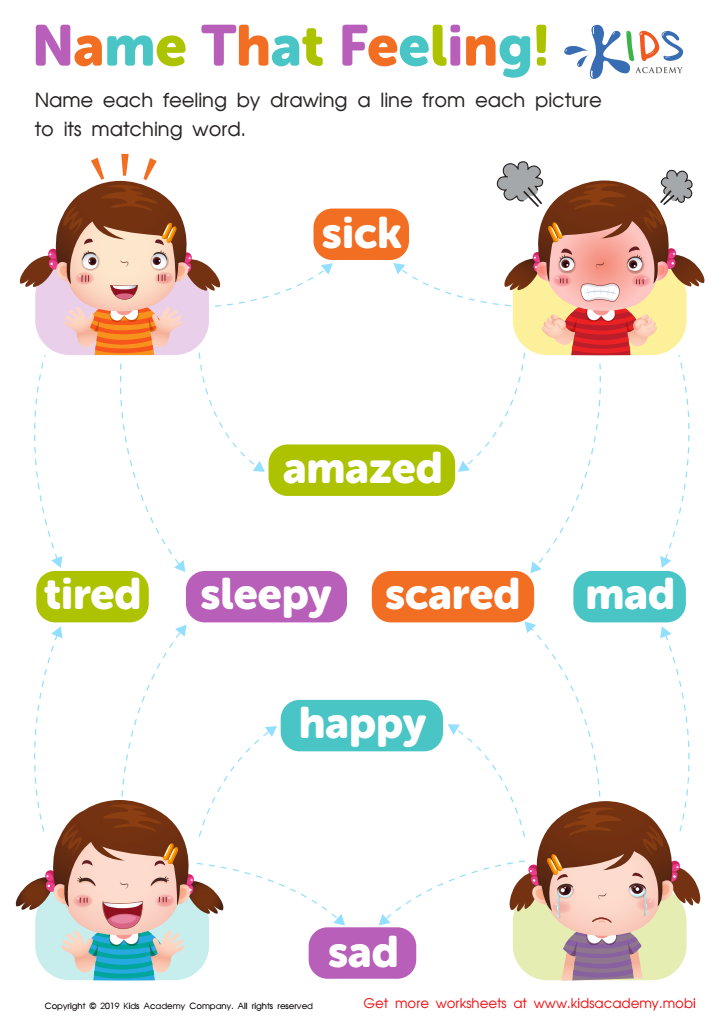
Name that Feeling Worksheet

Name that Feeling Worksheet

Fostering your child's emotional intelligence is essential for their development. This worksheet helps them associate feelings with words, improving their social skills and fine motor coordination. They'll trace pictures and words to learn the feeling vocabulary.
Name that Feeling Worksheet
Worksheet
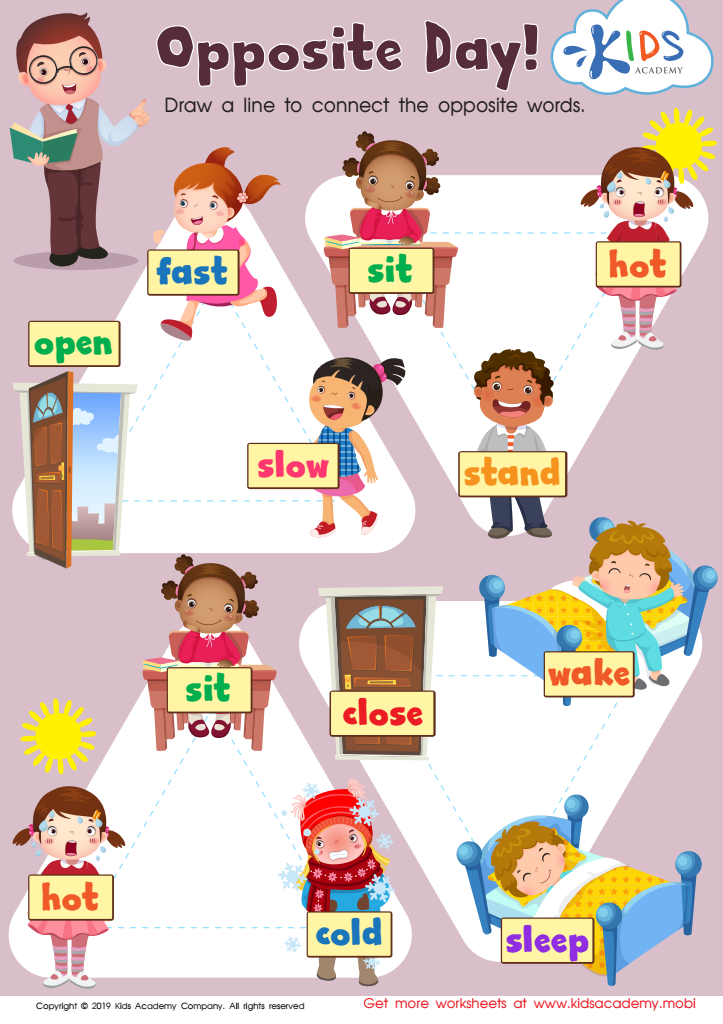
Opposite Day Worksheet

Opposite Day Worksheet

Early learners need to know about opposites to improve their higher-order thinking and critical thinking. This fun worksheet helps them understand the concept, practice opposite words, read high-frequency words and work on fine motor skills. Download the traceable PDF to get started.
Opposite Day Worksheet
Worksheet
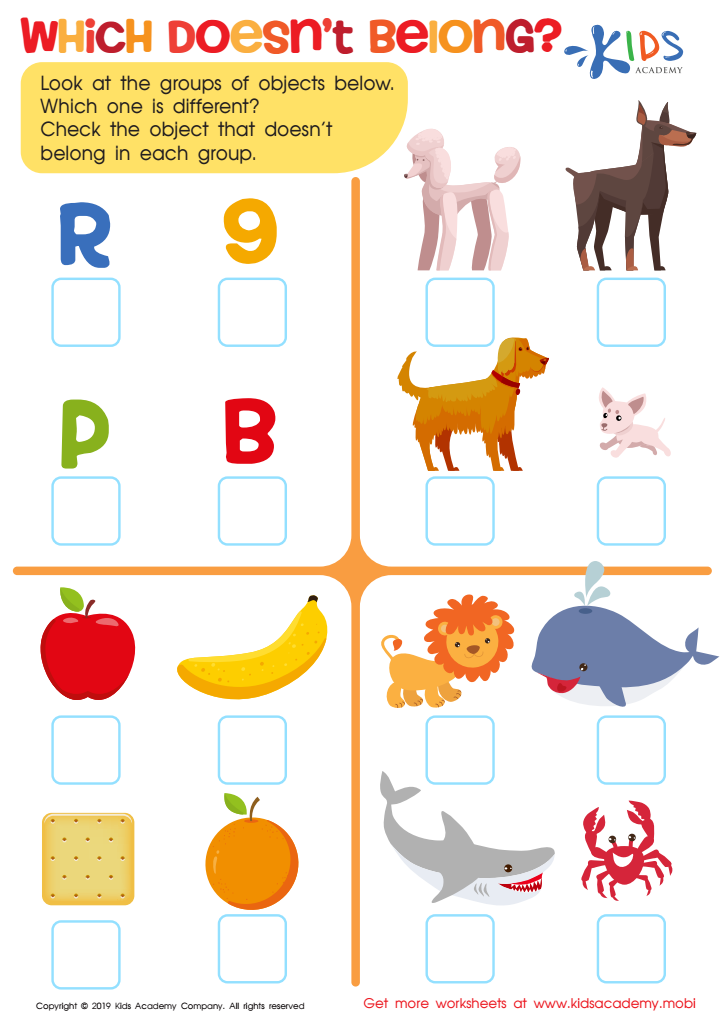
Which Doesn't Belong? Worksheet

Which Doesn't Belong? Worksheet

This engaging worksheet helps preschoolers recognize similar and different attributes of common words, using brightly-colored pictures. They analyze the items in each category and check off what is different. For extra practice, have them explain their reasoning verbally! Sorting and classifying are important skills to learn.
Which Doesn't Belong? Worksheet
Worksheet
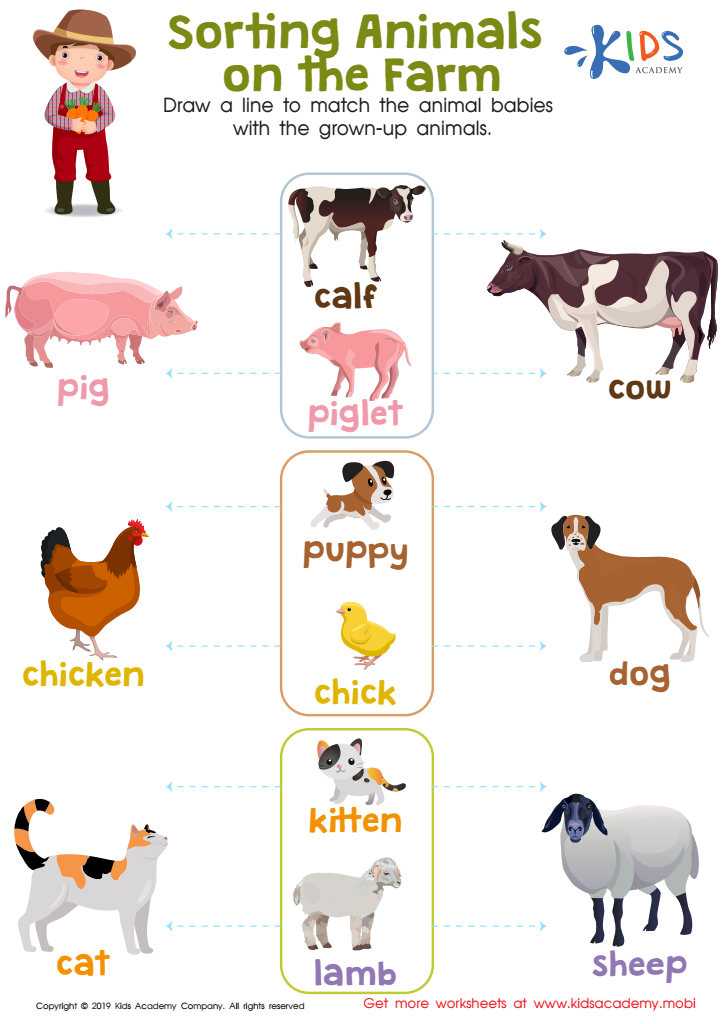
Sorting Animals on the Farm Worksheet

Sorting Animals on the Farm Worksheet

This PDF worksheet engages preschoolers in a fun activity to match Mama farm animals with their babies, strengthening their sorting and patterning skills. They'll learn to recognize rules and relationships, while gaining familiarity with animal-related words.
Sorting Animals on the Farm Worksheet
Worksheet
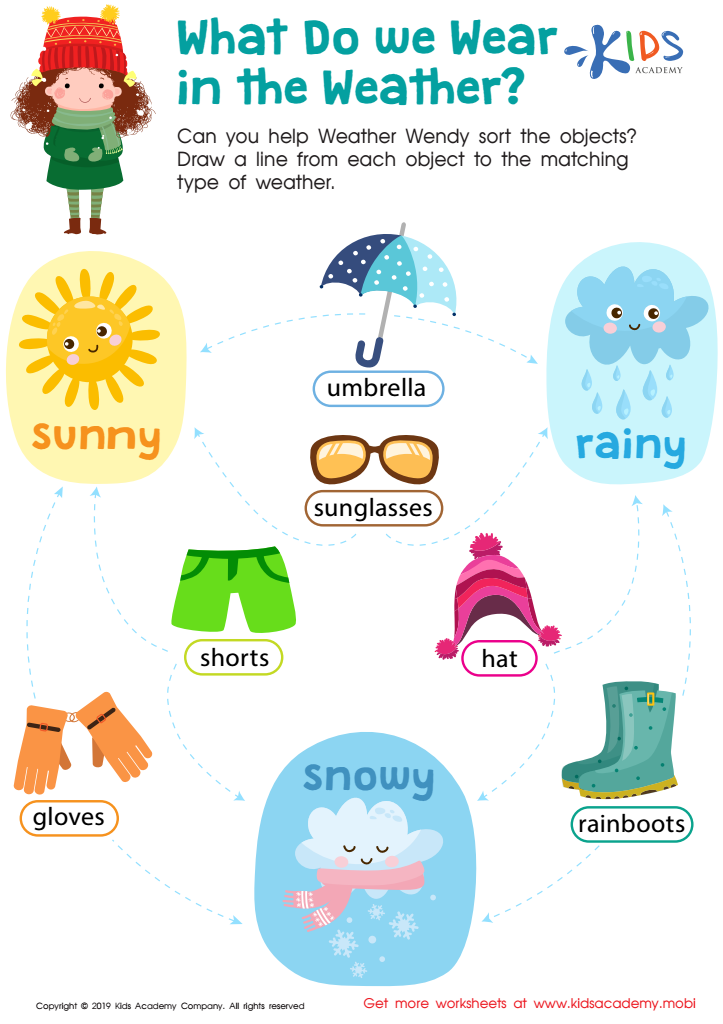
What Do We Wear in the Weather? Worksheet

What Do We Wear in the Weather? Worksheet

This worksheet boosts young learners' everyday vocab with fun high-frequency weather words. They'll see and match familiar pictures to the words they read. Plus, it helps them develop fine motor skills. Perfect for preschoolers.
What Do We Wear in the Weather? Worksheet
Worksheet
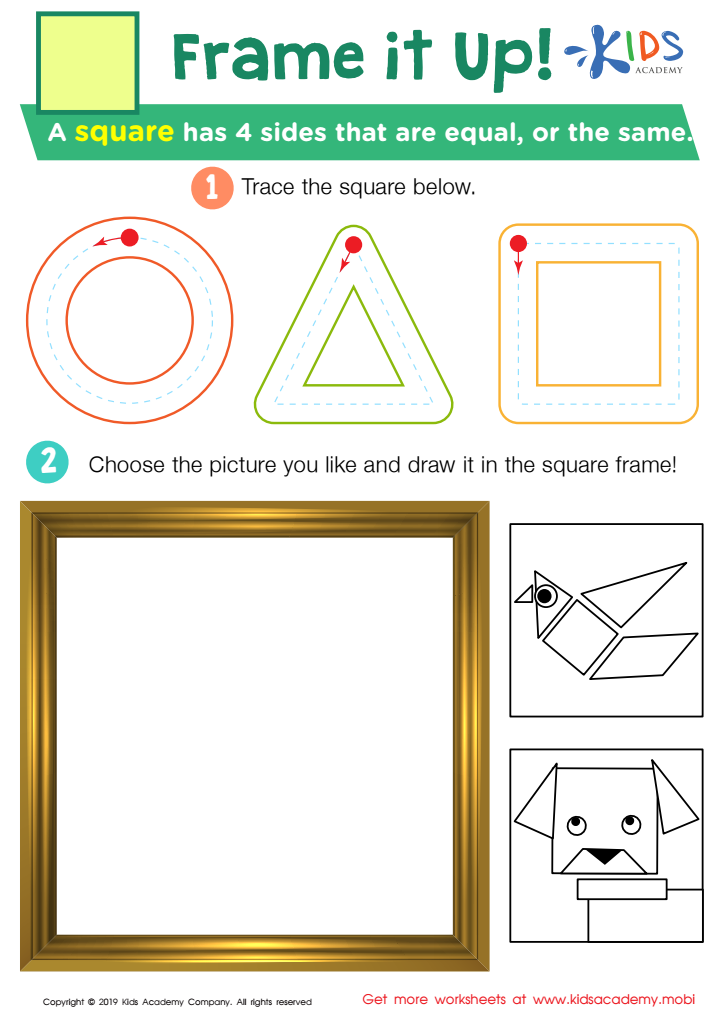
Frame it Up Worksheet

Frame it Up Worksheet

This worksheet helps kids learn the difference between squares and other shapes. It guides them to trace a square and draw a picture inside it. Examples of shapes-based drawings are included. Kids will have fun and clear up any confusion about squares.
Frame it Up Worksheet
Worksheet
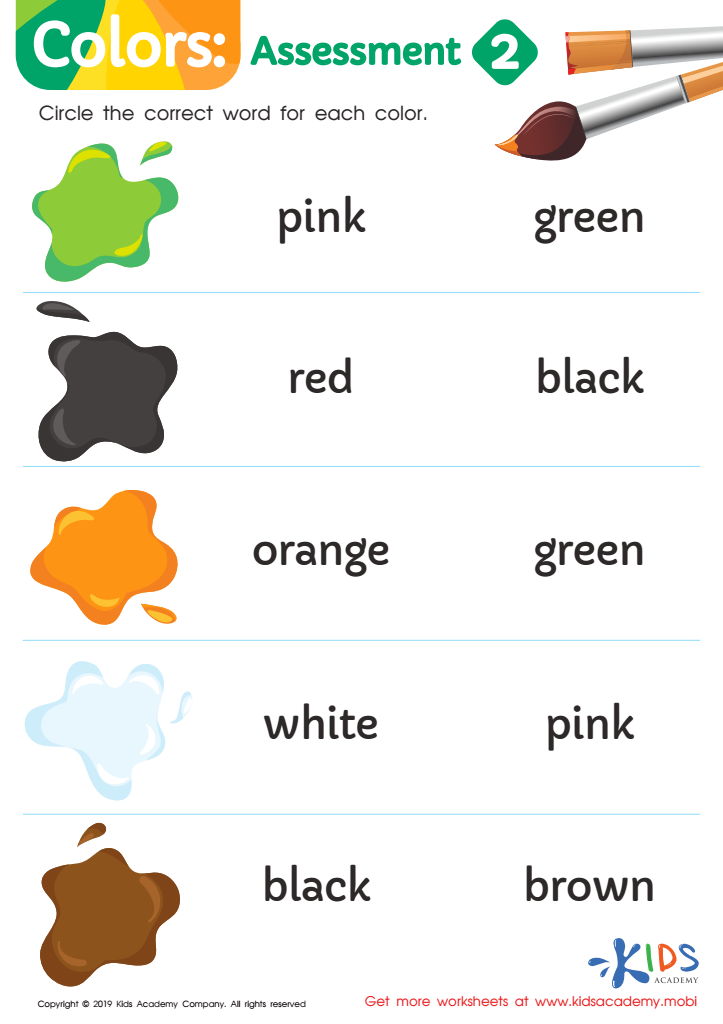
Colors: Assessment 2 Worksheet

Colors: Assessment 2 Worksheet

Teach color words to young students to build fluency and confidence. Check knowledge with an assessment worksheet. Have students look at paint samples and circle the correct color word. This assessment helps parents and teachers measure a child’s accuracy when reading color words.
Colors: Assessment 2 Worksheet
Worksheet
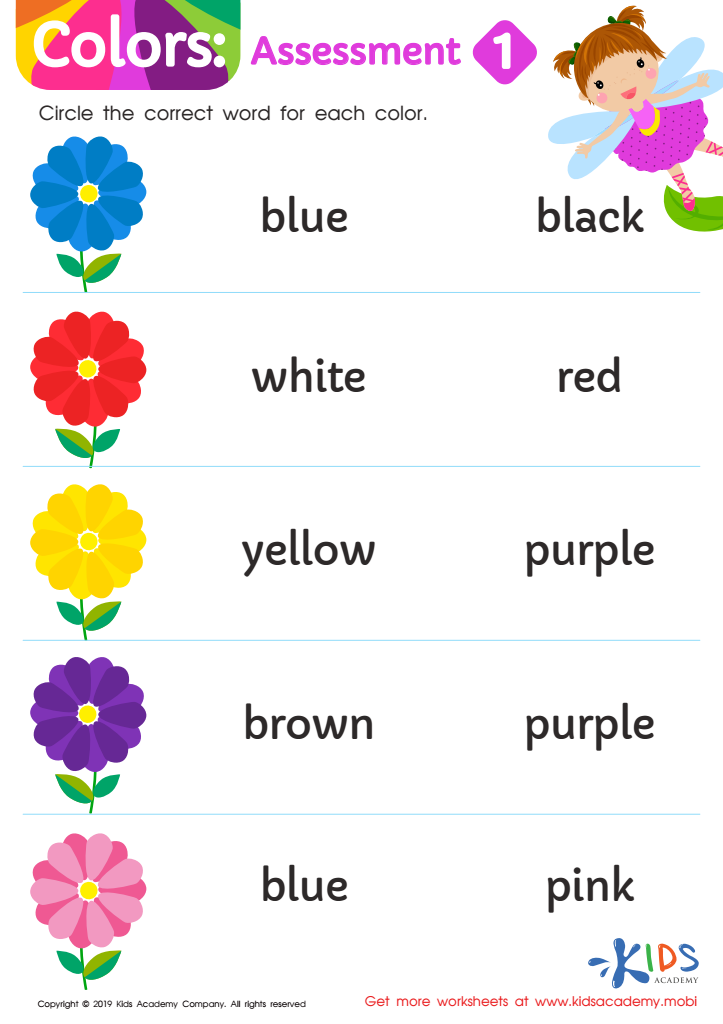
Colors: Assessment 1 Worksheet

Colors: Assessment 1 Worksheet

Children can decode unfamiliar words by sounding them out or by recognizing sight words. Color words are an important part of sight word knowledge, so add them to your child's list! This color word worksheet is an effective assessment tool for teachers to use with preschool and kindergarten students. It checks their knowledge of five color words - they simply look at the flower and circle the appropriate color word!
Colors: Assessment 1 Worksheet
Worksheet
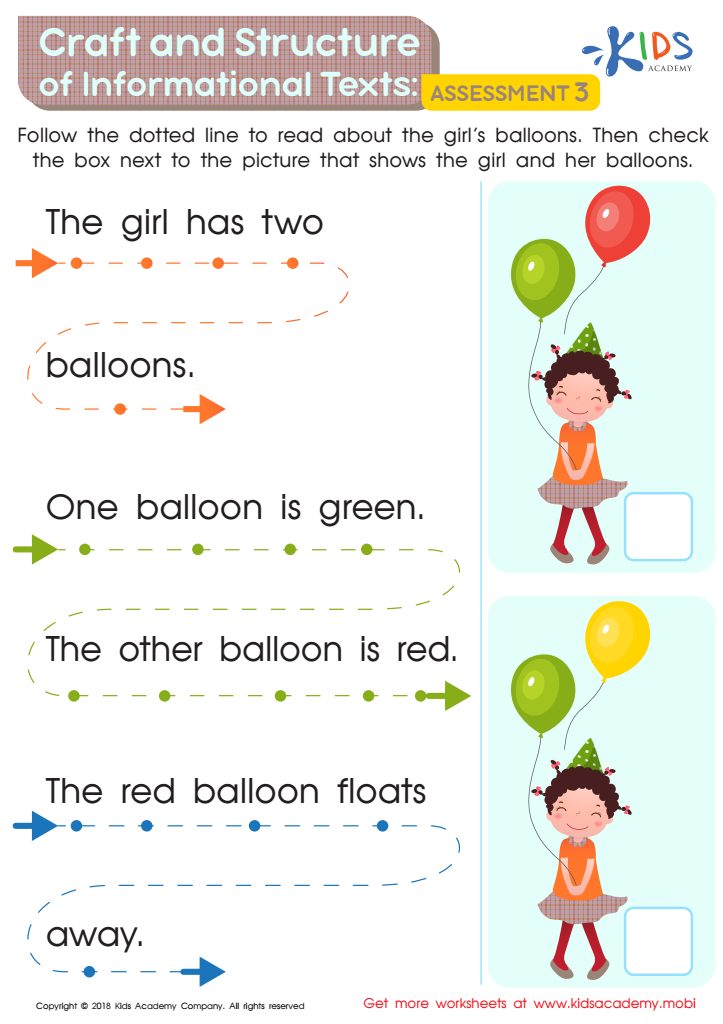
Craft and Structure of Informational Texts: Assessment 3 Worksheet

Craft and Structure of Informational Texts: Assessment 3 Worksheet

Test your beginning reader's understanding of left-to-right directionality and use of details from informational texts with this fun worksheet. Follow the traceable paths to find the right picture for each sentence. This will help your child gain confidence and be successful as a reader.
Craft and Structure of Informational Texts: Assessment 3 Worksheet
Worksheet
Craft and Structure of Informational Texts: Assessment 2 Worksheet

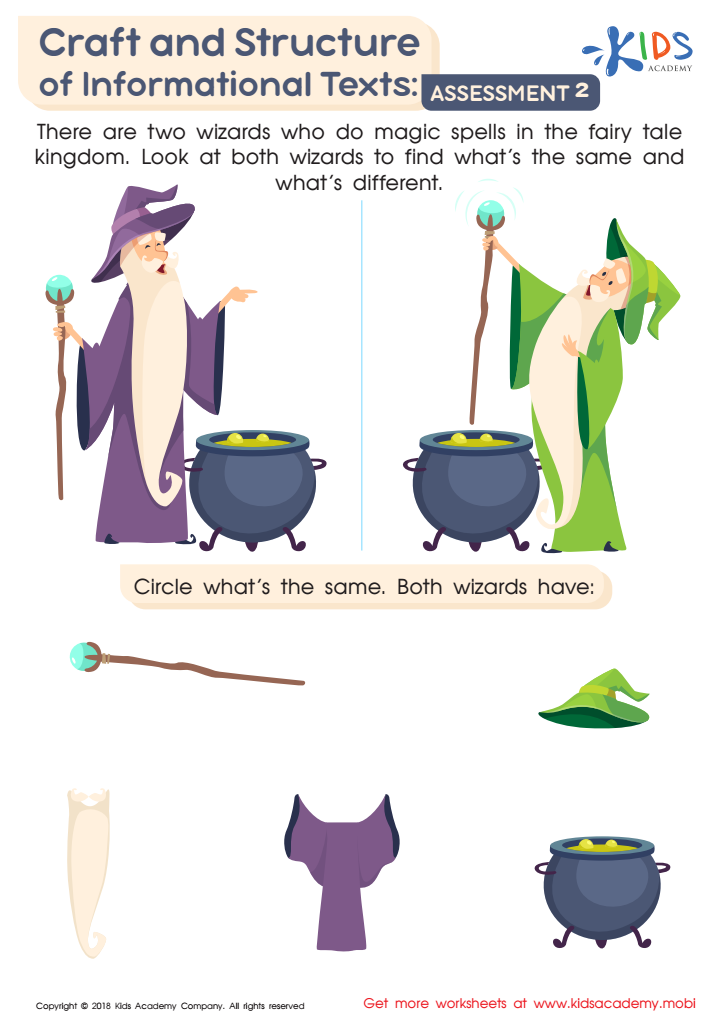
Craft and Structure of Informational Texts: Assessment 2 Worksheet

This assessment has kids looking at two similar fairy tale wizards, focusing on their visuals to find the similarities and differences. Then, they'll circle the things they both have. It's a great way to help children hone their detail-oriented comprehension skills, which is essential when using informational texts.
Craft and Structure of Informational Texts: Assessment 2 Worksheet
Worksheet
Craft and Structure of Informational Texts: Assessment 1 Worksheet

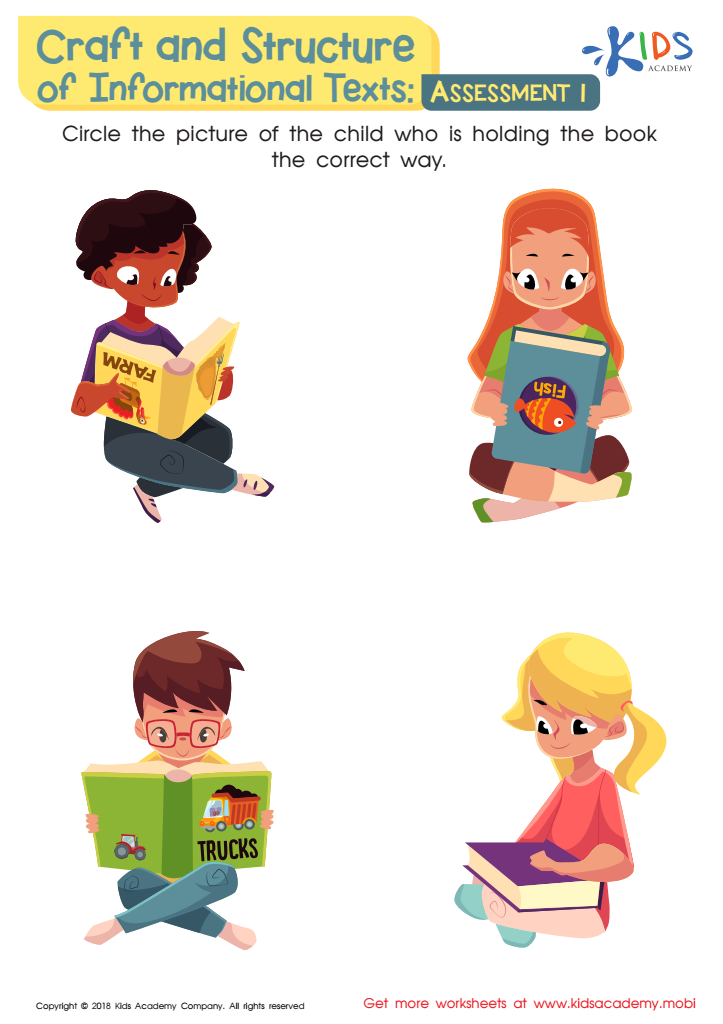
Craft and Structure of Informational Texts: Assessment 1 Worksheet

Young children need to know how to hold books correctly when they start reading. This assessment worksheet helps them show they know what to do. They'll look at the pictures and circle the child who is holding the book correctly. It's a great way to tell they are well on their way to becoming lifetime readers!
Craft and Structure of Informational Texts: Assessment 1 Worksheet
Worksheet
Mary's Room Worksheet

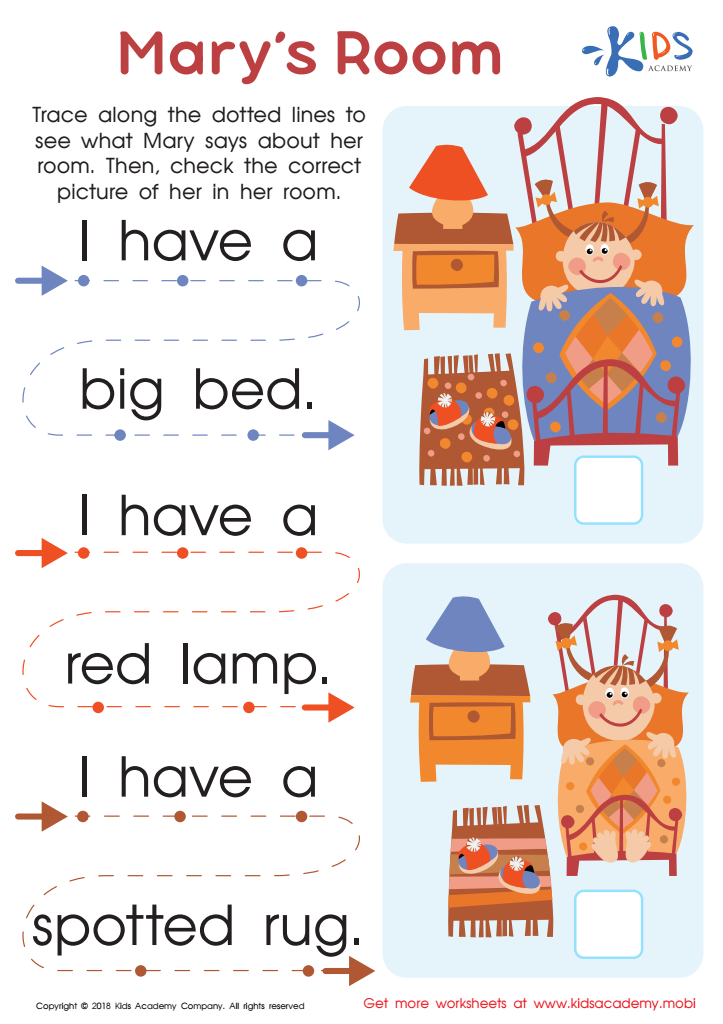
Mary's Room Worksheet

This cute PDF worksheet is a great way to help your young reader build their comprehension and directionality skills in a fun way. They'll use the images and clues to determine which room belongs to Mary. Following the traceable lines can give them a sense of being a detective, and help with directionality and fine motor skills too. Let them have fun and enjoy the activity - their skills will thank you!
Mary's Room Worksheet
Worksheet
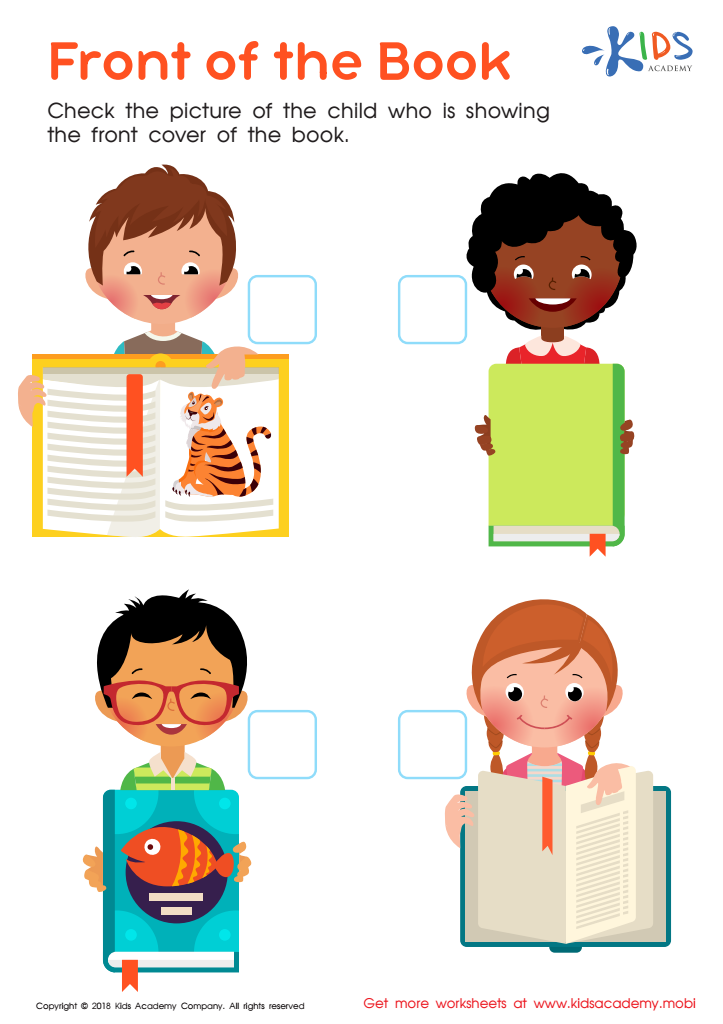
Front of the Book Worksheet

Front of the Book Worksheet

Help your child become a reader with this free worksheet! It's full of fun new friends and is designed to help kids understand concepts about the front of a book. They'll look at each picture and decide which friend is holding the book with the front cover, and check off the correct answer in the given boxes. Get your little one ready to be a reader!
Front of the Book Worksheet
Worksheet
Craft and Structure of Stories: Assessment 2 Worksheet

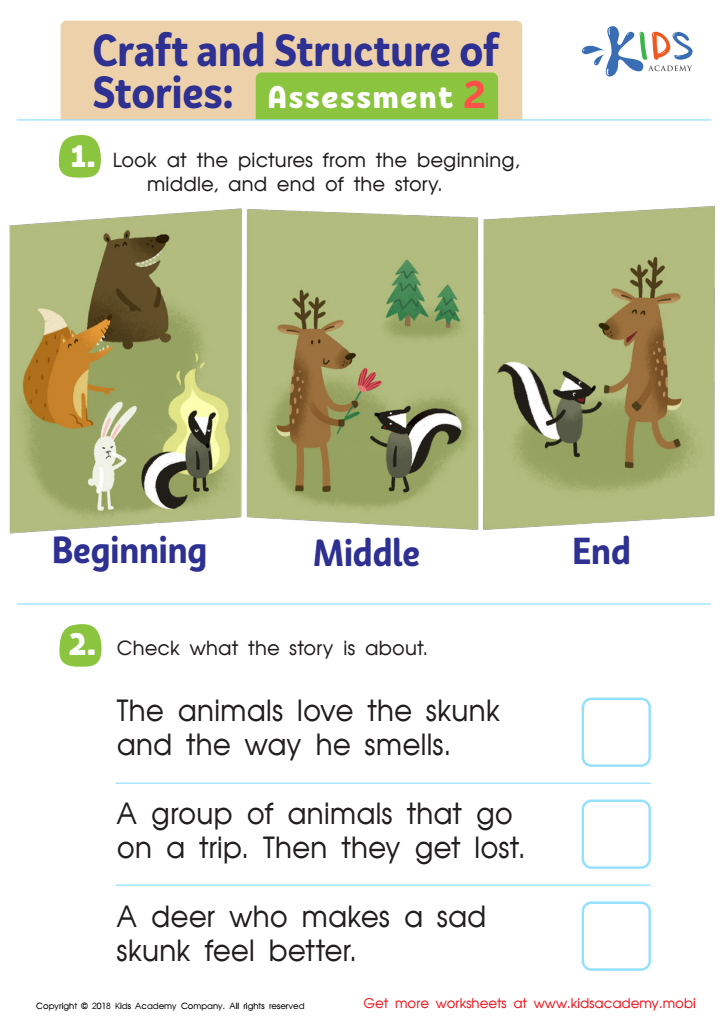
Craft and Structure of Stories: Assessment 2 Worksheet

Help your child assess their story sequencing and reading comprehension skills using this cute worksheet! It encourages them to look at the three pictures on the page, each representing a scene from the beginning, middle and end. Ask them what the story is about, then let them check the box next to the correct answer. This is a great way to ensure they understand the main events of a story.
Craft and Structure of Stories: Assessment 2 Worksheet
Worksheet
Craft and Structure of Stories: Assessment 1 Worksheet

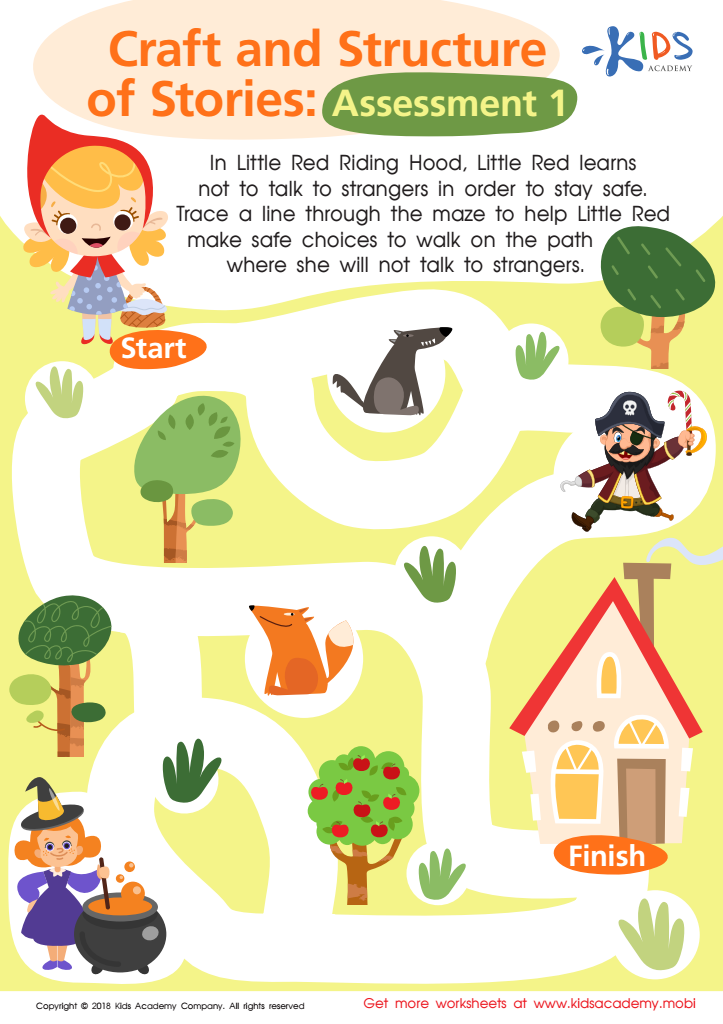
Craft and Structure of Stories: Assessment 1 Worksheet

Turn Little Red Riding Hood into a maze to review author's craft and characterization. Kids must lead her through the woods, avoiding strangers. Give them the main theme of not talking to strangers and watch as they draw a path to her grandmother's house. Fun and educational!
Craft and Structure of Stories: Assessment 1 Worksheet
Worksheet
Questions About Stories: Assessment 3 Worksheet

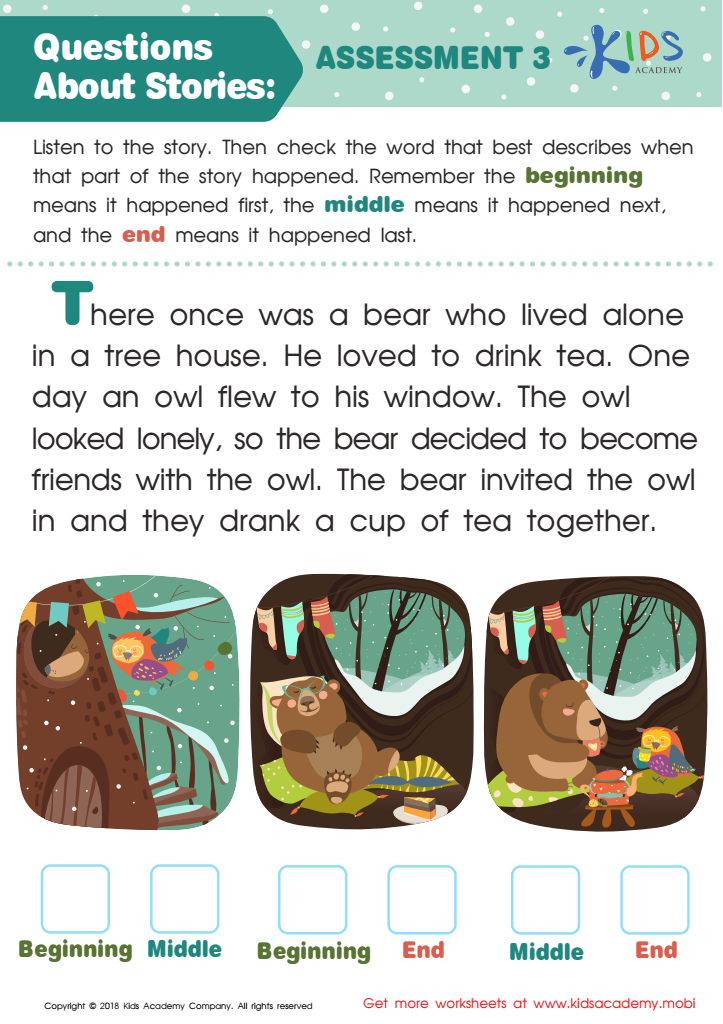
Questions About Stories: Assessment 3 Worksheet

Help kids understand stories by having them listen to a story and check boxes for the beginning, middle, and end. This worksheet makes it fun for even the youngest learners to recall story elements and sequence of events. Let them listen to the story from start to finish, then look at the pictures to check which part of the story they depict.
Questions About Stories: Assessment 3 Worksheet
Worksheet
Questions About Stories: Assessment 2 Worksheet

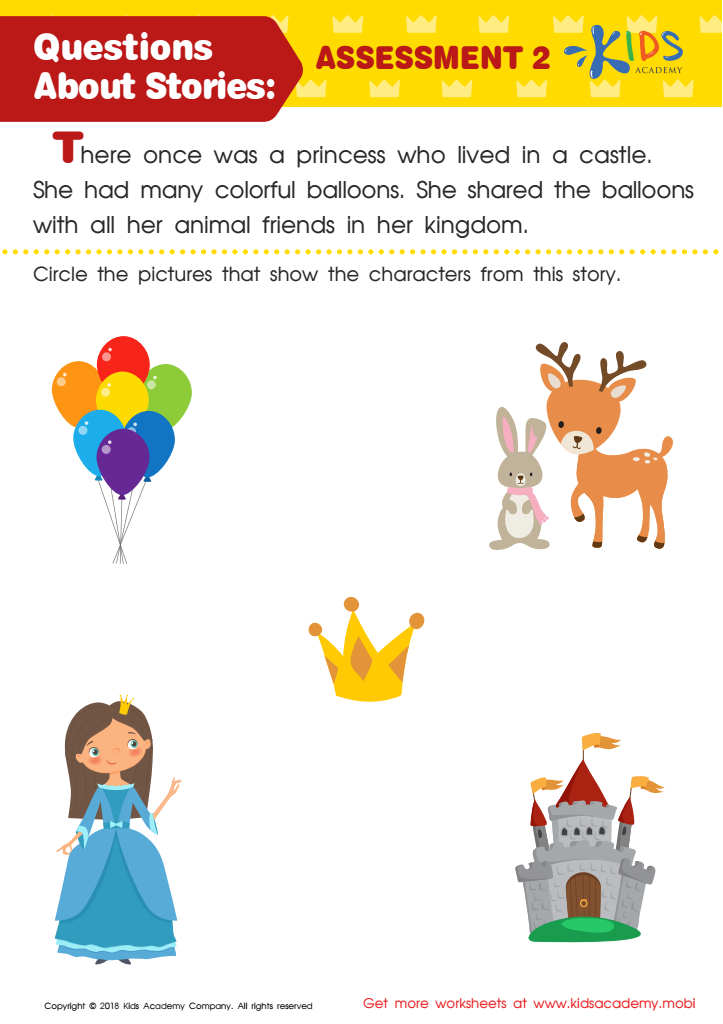
Questions About Stories: Assessment 2 Worksheet

Talk to your child about what a princess is and what activities they associate with that word. Then, read the story to them and help them identify characters in the pictures. Look out for details and ask them questions to ensure they understand.
Questions About Stories: Assessment 2 Worksheet
Worksheet
Questions About Stories: Assessment 1 Worksheet


Questions About Stories: Assessment 1 Worksheet

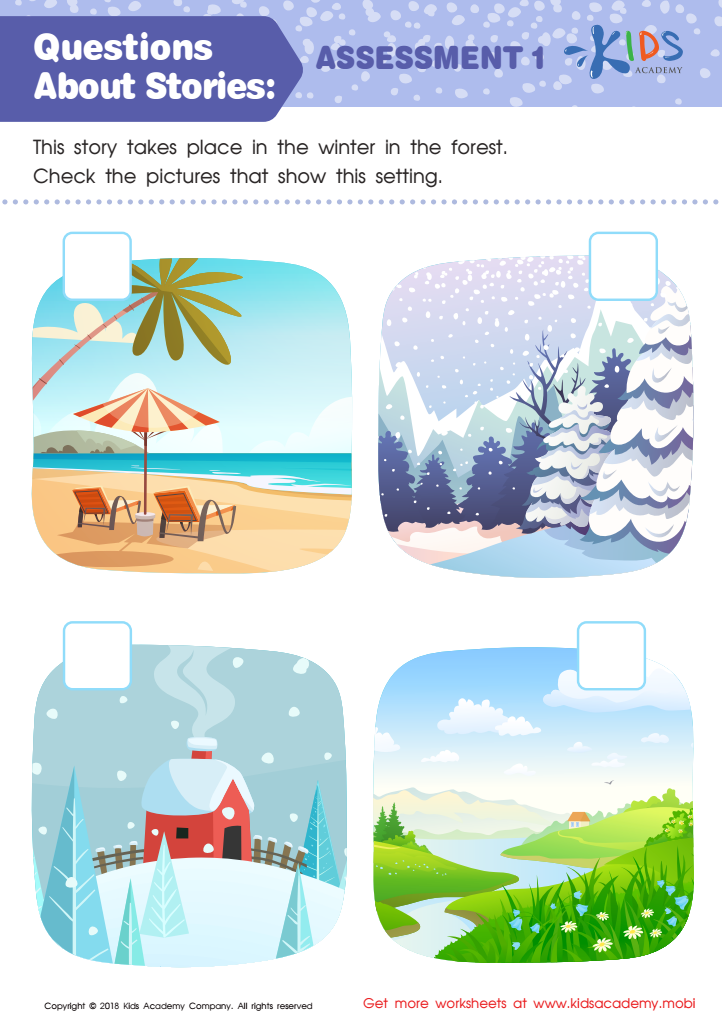
Winter brings snow, cold, short days, and darkness. Schools can even close due to heavy snow. Ask your child what their favourite winter activities are and what color they associate with 'winter'. This worksheet takes place in a winter forest. Look at the 4 pictures with your child, and help them identify which one shows the correct setting.
Questions About Stories: Assessment 1 Worksheet

Worksheet


Reading for Ages 4-5 is a pivotal phase in a child's educational journey, where the foundation for lifelong literacy skills is laid. Worksheets tailored to this age group play a crucial role in facilitating this learning process. These worksheets are designed with young learners in mind, incorporating colorful, engaging content that captures their imagination while subtly boosting their reading abilities.

The usefulness of worksheets in Reading for Ages 4-5 cannot be overstated. Firstly, they introduce children to the basics of reading in a structured yet enjoyable way. Through activities such as matching letters to pictures, identifying beginning sounds, and tracing letters, children develop an understanding of the alphabet, which is the cornerstone of reading.

Moreover, these worksheets enhance vocabulary. Each worksheet is an opportunity to encounter new words, understand their meanings, and see them used in context. This exposure is critical at ages 4-5, as it broadens the child’s linguistic horizon and aids in comprehension skills.

Additionally, worksheets foster an independent learning experience. Children can work on them at their own pace, which builds confidence in their reading abilities. This autonomy encourages a love for reading from an early age, setting the stage for avid readers and successful learners in the future.

In conclusion, Reading for Ages 4-5 worksheets are invaluable tools that enrich a child’s learning path by making the acquisition of reading skills an engaging, fulfilling experience.