Chess Worksheets for Ages 4-6 - Page 4
86 filtered results
-
From - To
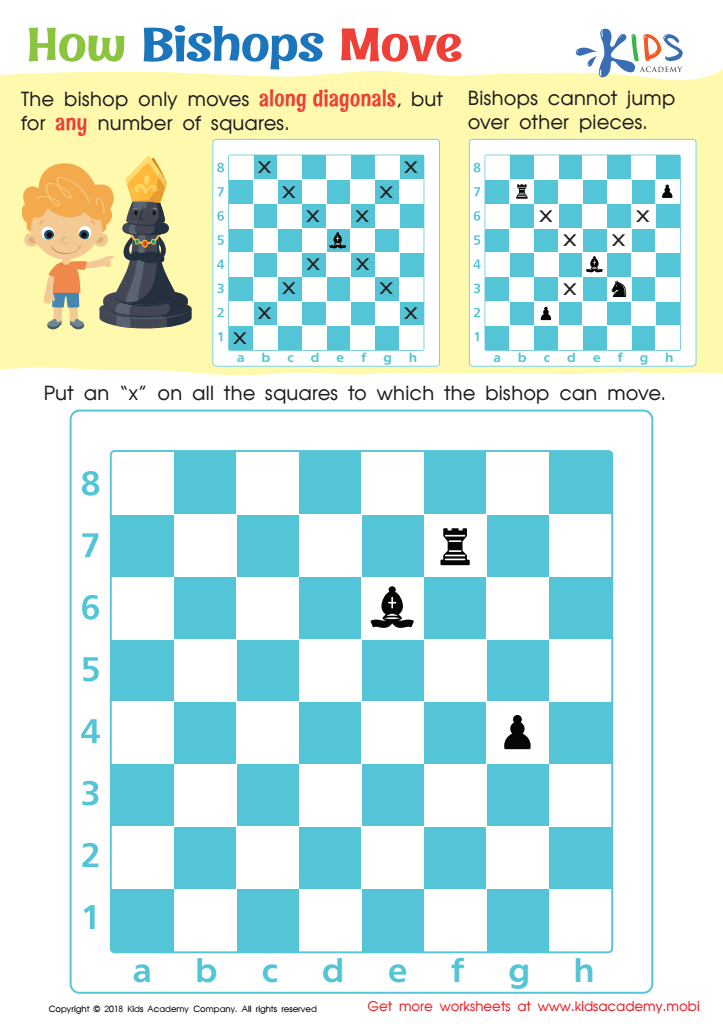
How Bishops Move Worksheet
 Assign to My Students
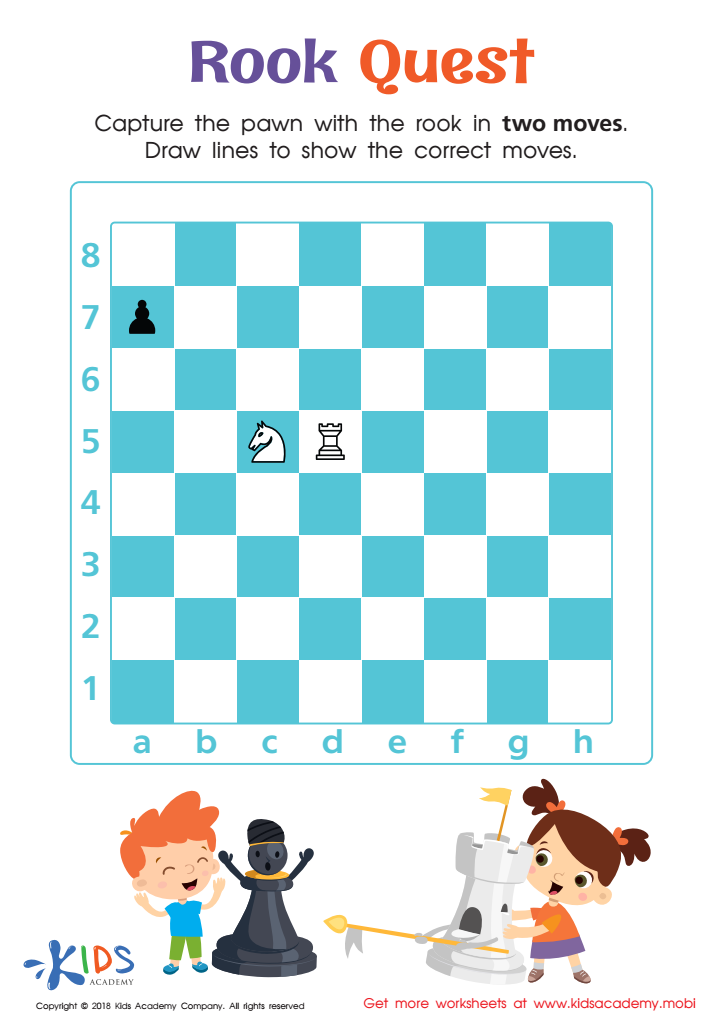
Rook Quest Worksheet
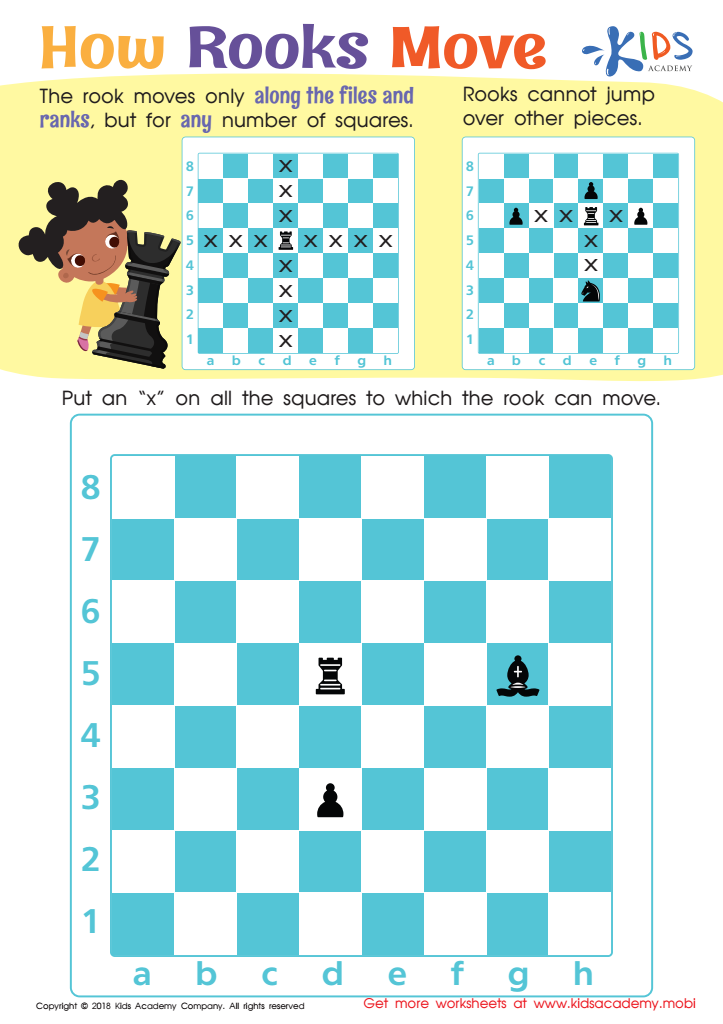
How Rooks Move Worksheet
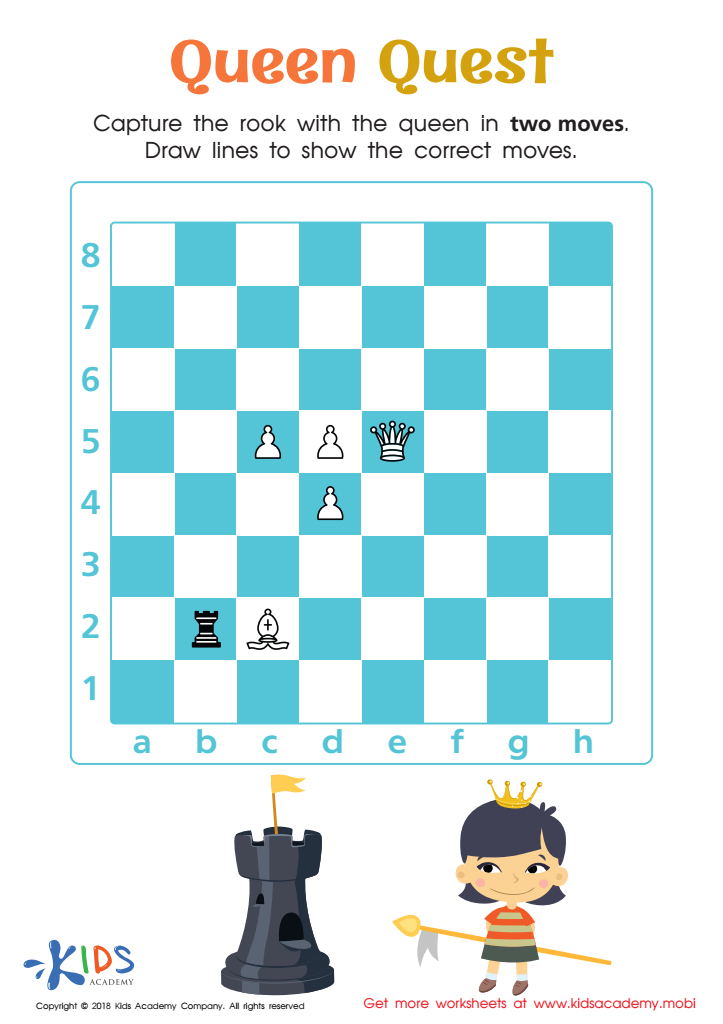
Queen Quest Worksheet
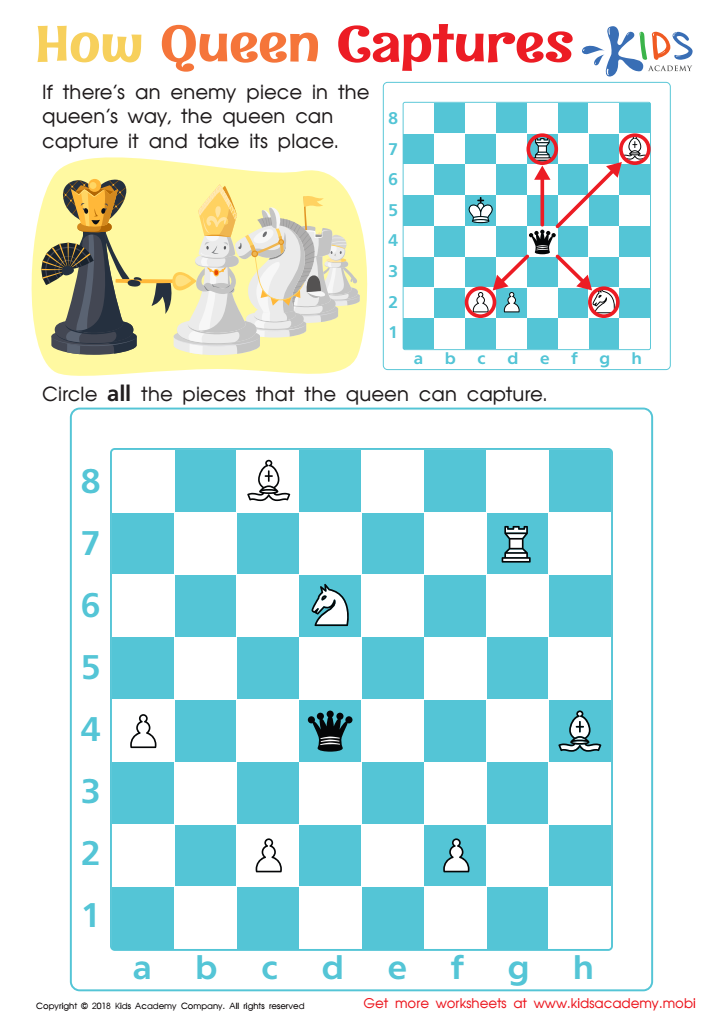
How Queen Captures Worksheet
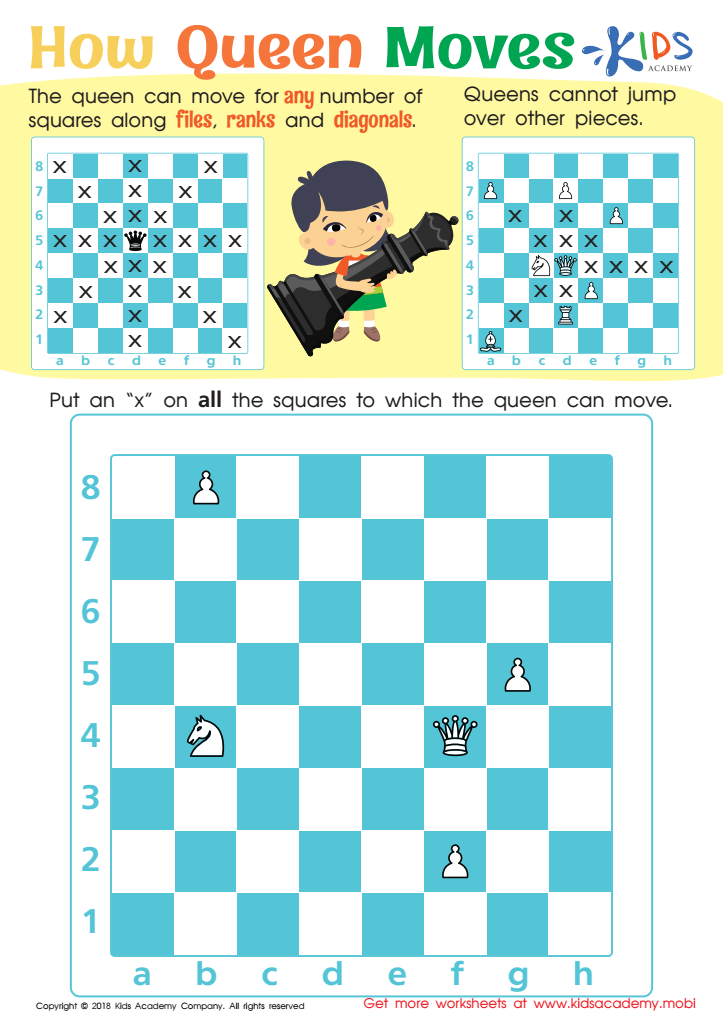
How Queen Moves Worksheet
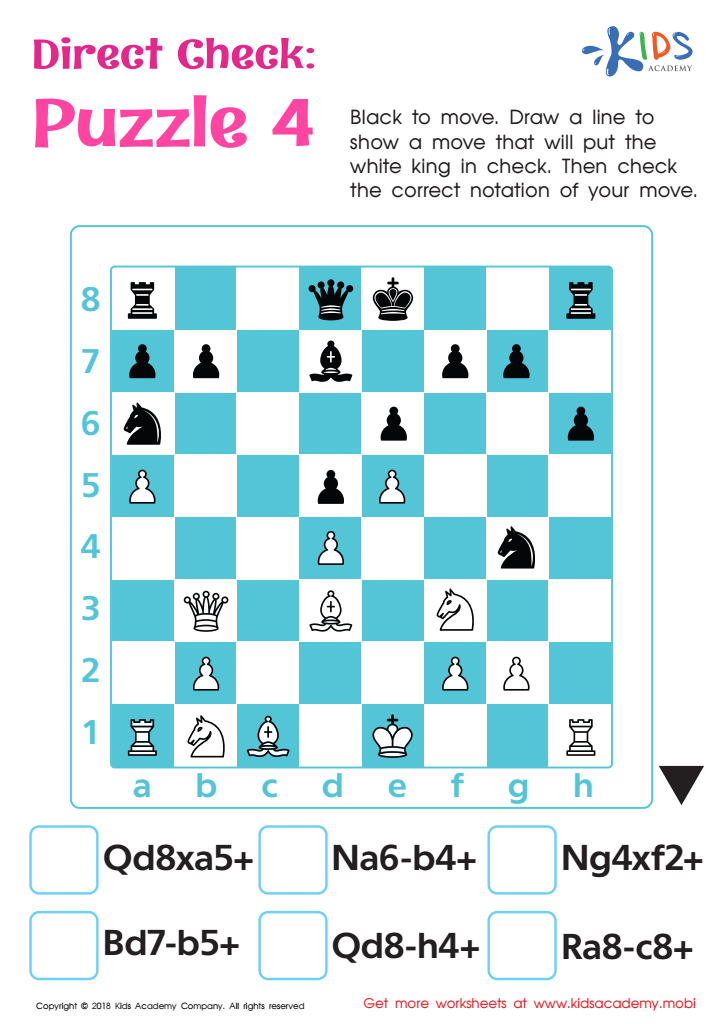
Direct Check: Puzzle 4 Worksheet
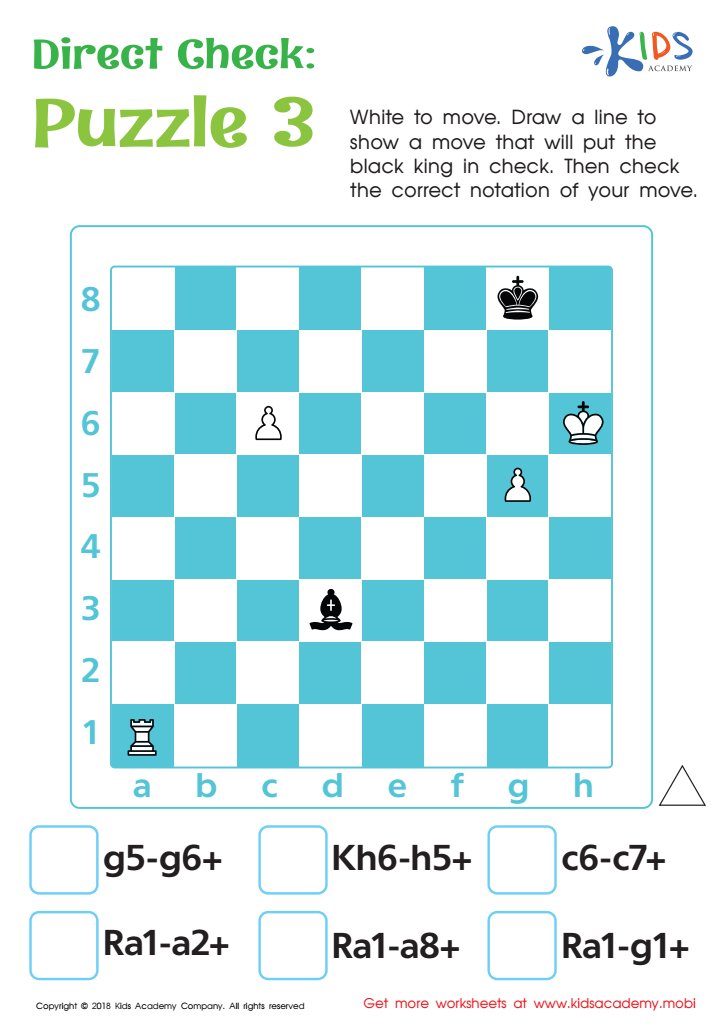
Direct Check: Puzzle 3 Worksheet
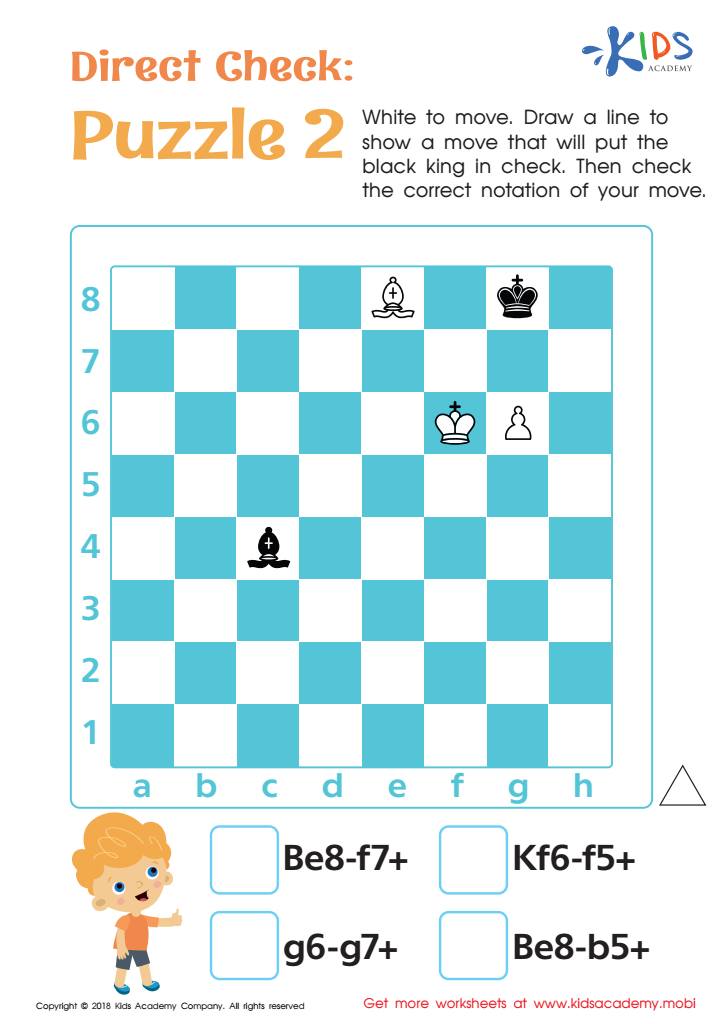
Direct Check: Puzzle 2 Worksheet
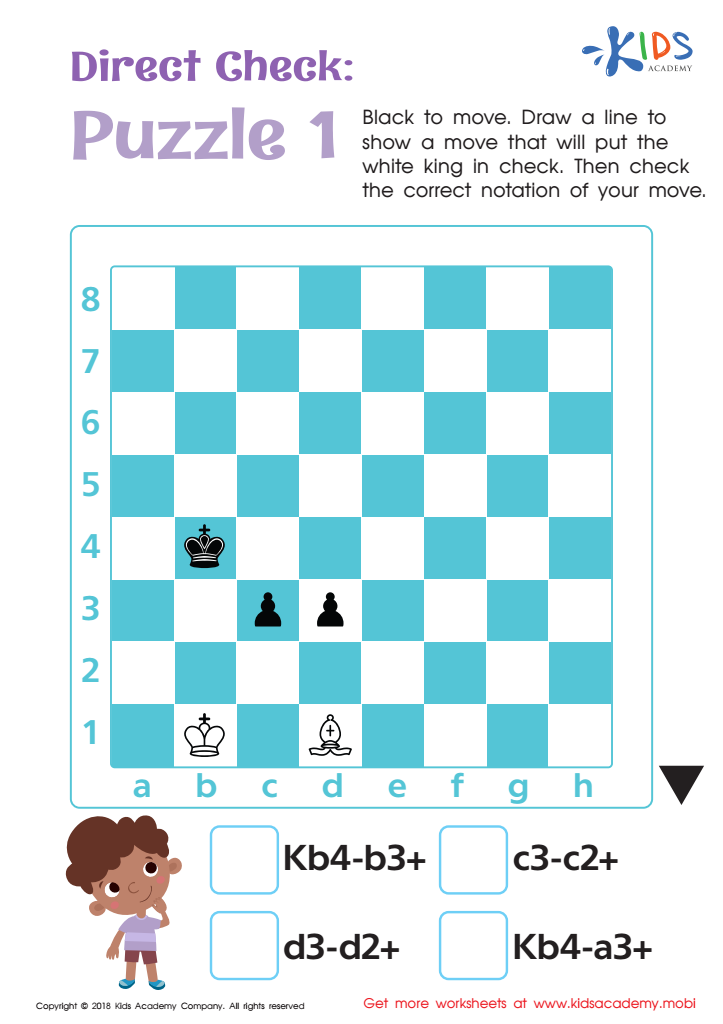
Direct Check: Puzzle 1 Worksheet
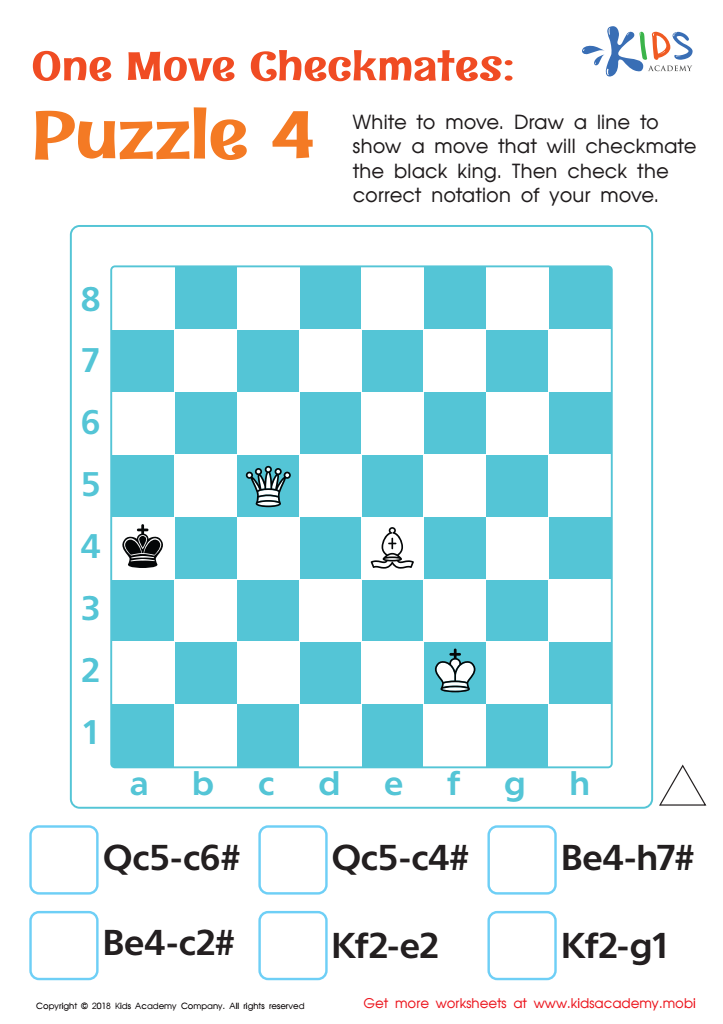
One Move Checkmates: Puzzle 4 Worksheet
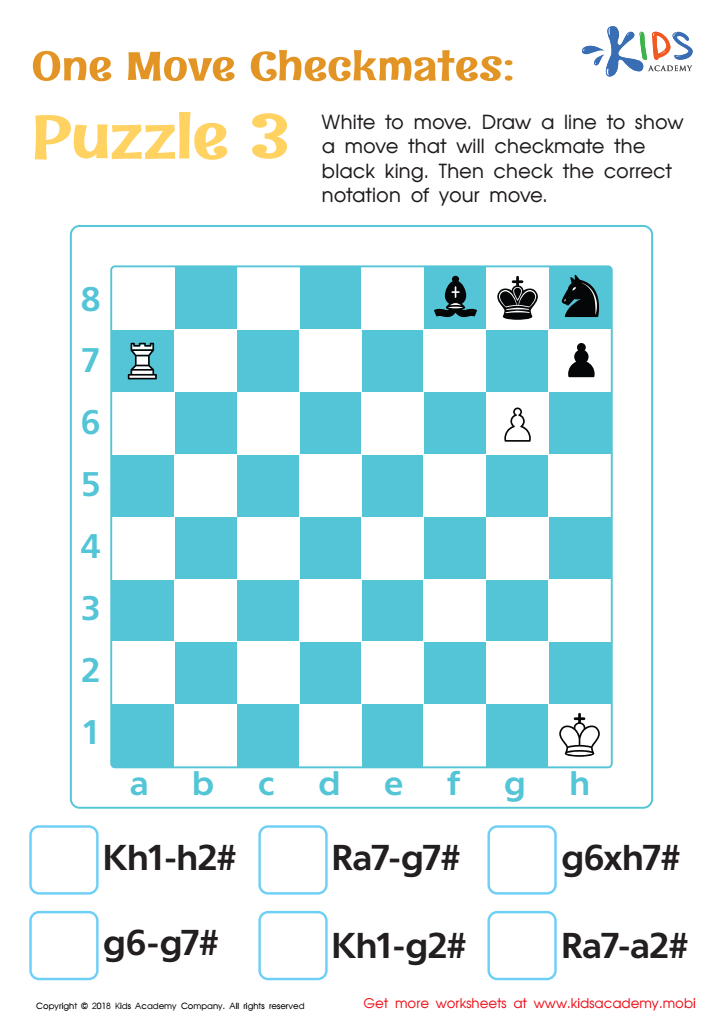
One Move Checkmates: Puzzle 3 Worksheet
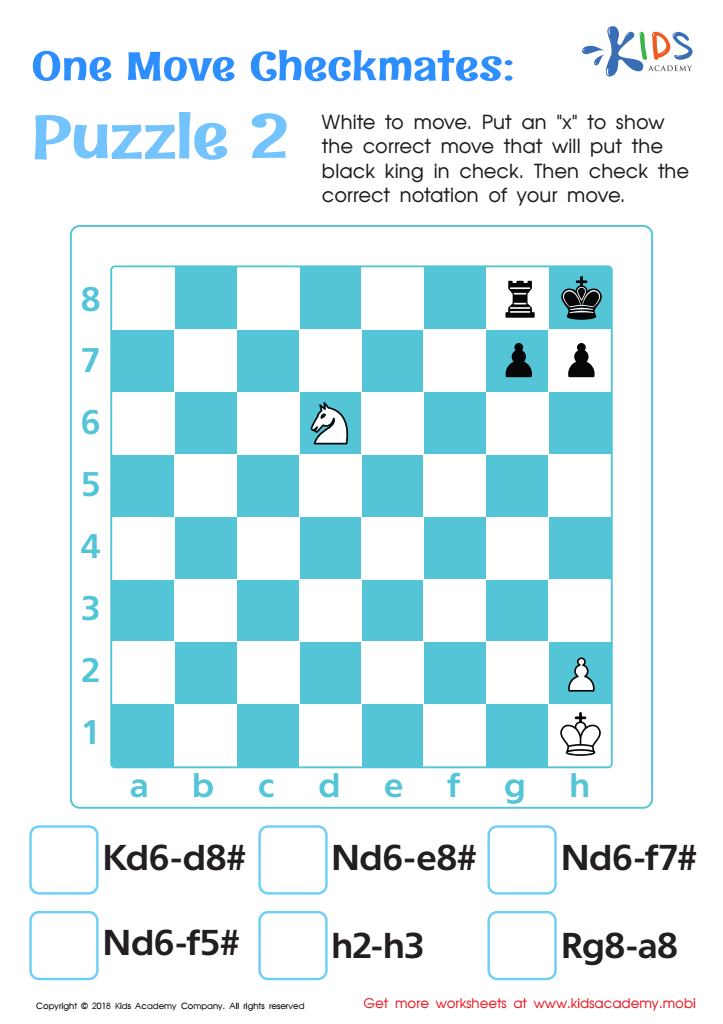
One Move Checkmates: Puzzle 2 Worksheet
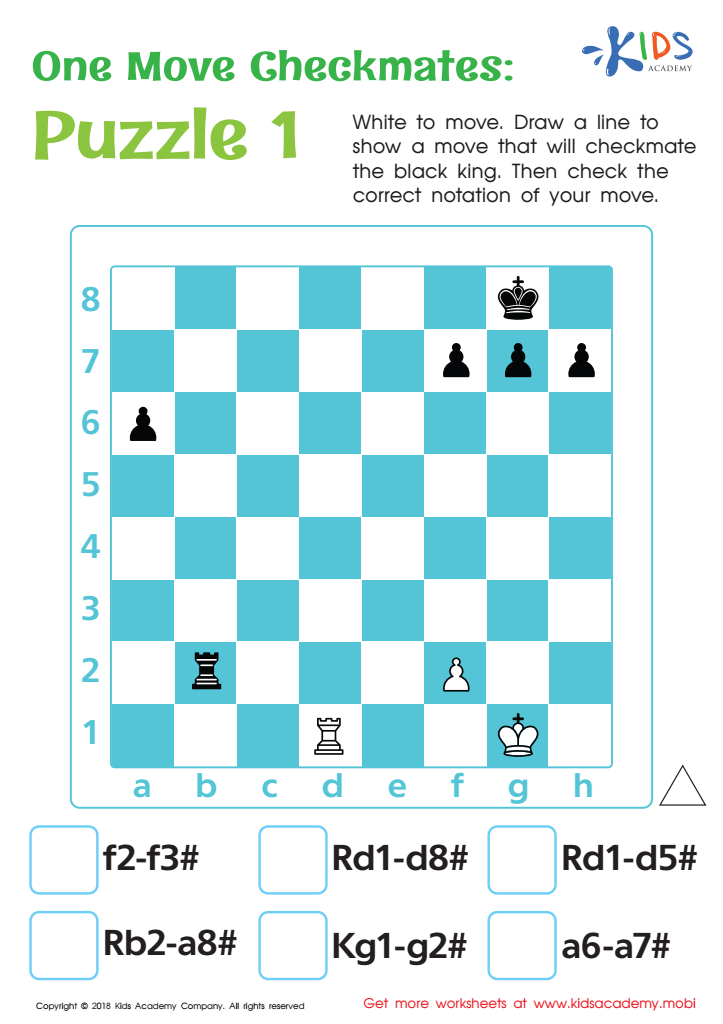
One Move Checkmates: Puzzle 1 Worksheet







Chess is more than just a game for young children ages 4-6; it is a powerful educational tool that can significantly benefit their development. Firstly, playing chess enhances cognitive abilities. It helps young minds learn to focus, improves their memory, and strengthens problem-solving skills by requiring them to think several steps ahead. Secondly, chess fosters critical thinking and spatial awareness, crucial for early mathematical understanding. Additionally, chess encourages patience and perseverance. Young children learn the importance of planning and the consequences of their actions, developing discipline and determination.
Moreover, chess promotes social skills. Playing with others teaches children the importance of taking turns, sharing, and sportsmanship, helping them understand empathy as they consider their opponent’s perspective. Furthermore, the game encourages independent thinking, allowing children to build confidence in their decisions without relying heavily on adult intervention.
Introducing chess at an early age can also provide a fun and engaging way to bond. It offers parents, teachers, and children a shared activity that can deepen relationships while providing immense educational value. In an era where screen time is prevalent, chess serves as a non-digital alternative that engages children’s minds holistically, setting a strong foundation for their future learning and personal growth.