Multiplication and Division Word Problems Worksheets for Ages 4-6
17 filtered results
-
From - To
Introducing our Multiplication and Division Word Problems Homeschool Worksheets, perfectly crafted for young learners aged 4-6 years. These engaging and vibrant worksheets are designed to introduce the foundational concepts of multiplication and division through simple, fun word problems. Tailored to spark curiosity and enhance early math skills, each worksheet provides a gentle introduction to problem-solving that is ideal for homeschooling. Watch your child develop confidence and mathematical fluency as they explore each problem with enthusiasm. Ideal for young minds beginning their mathematical journeys, these worksheets are a must-have resource for any homeschool curriculum.
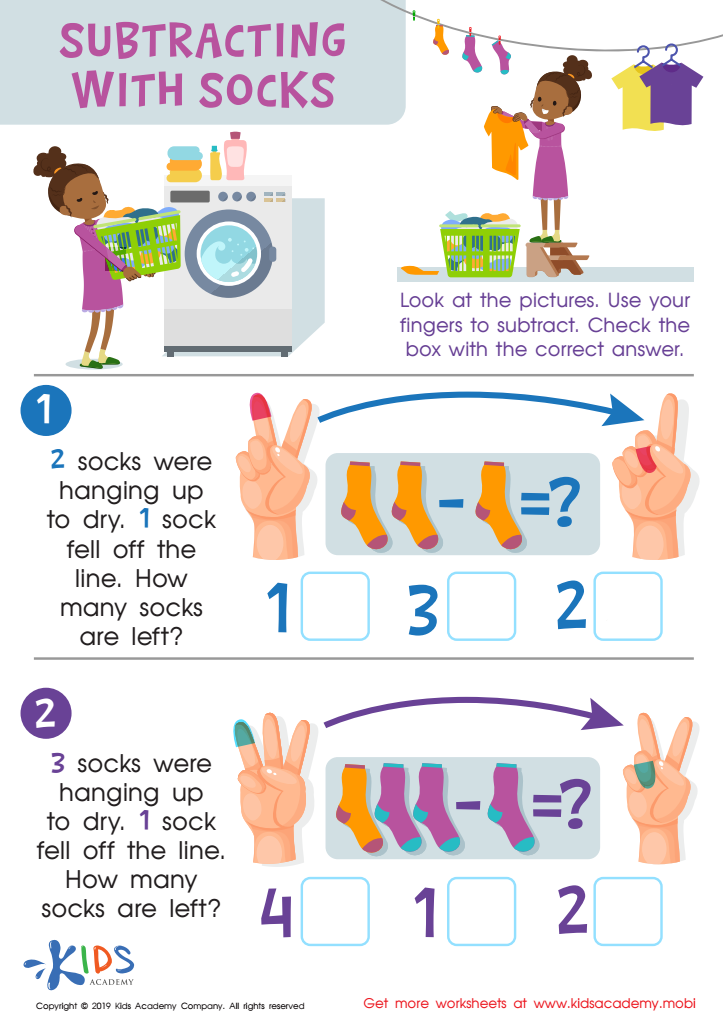
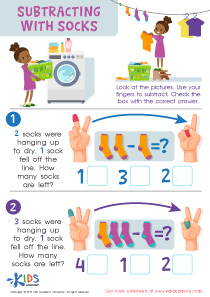
Subtracting Socks Worksheet
 Assign to My Students
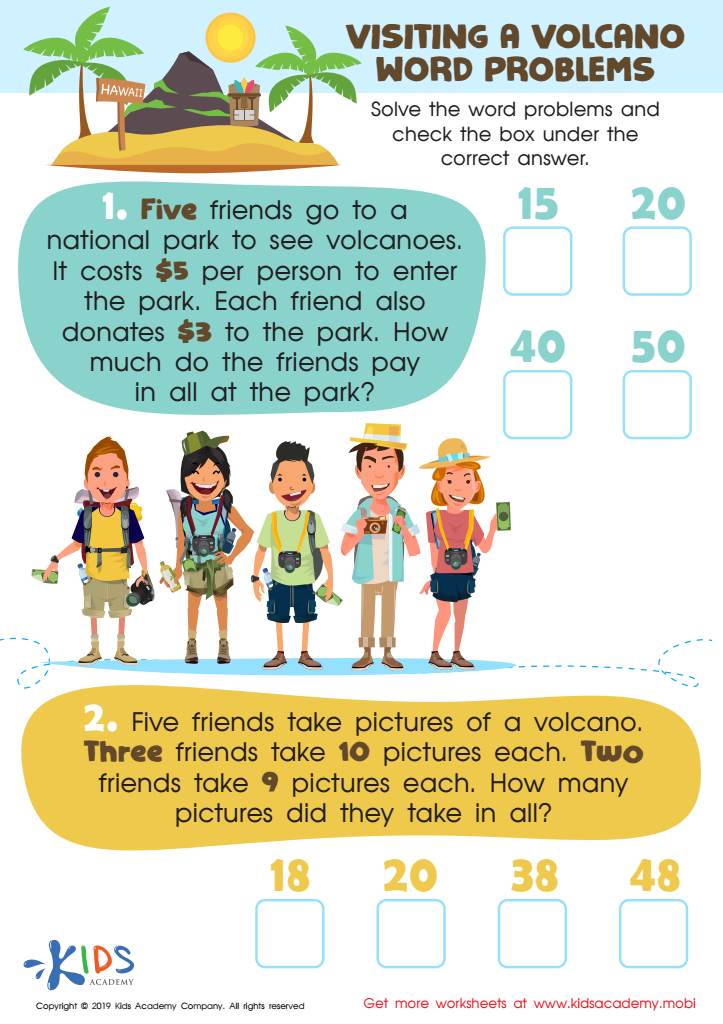
Visiting a Volcano Word Problems Worksheet
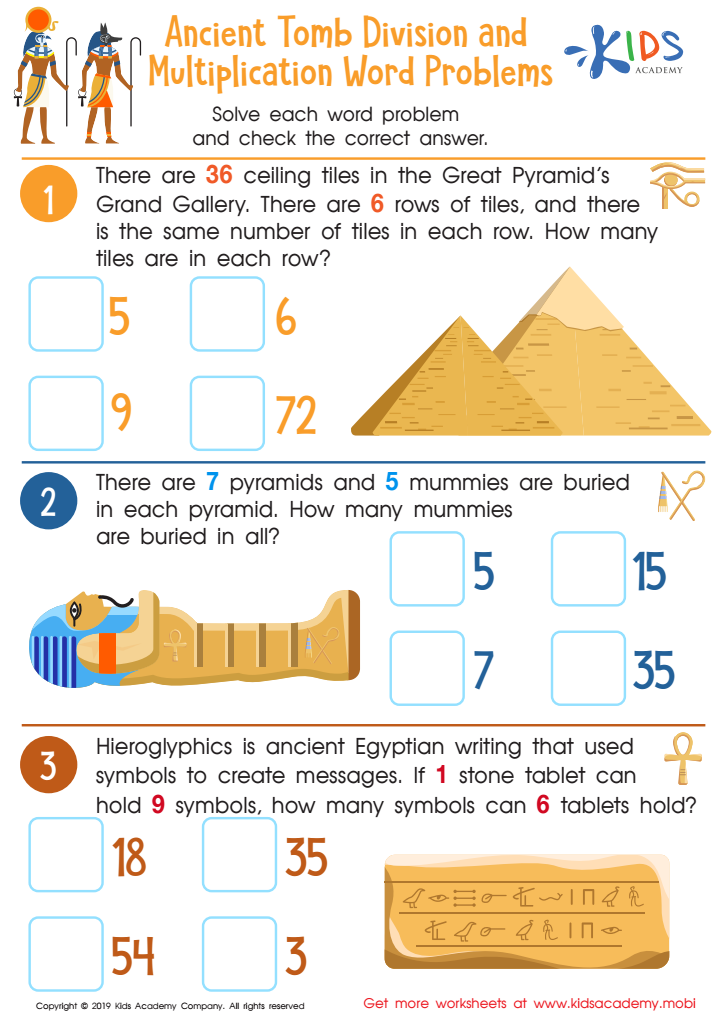
Ancient Tomb Division and Multiplication Word Problems Worksheet
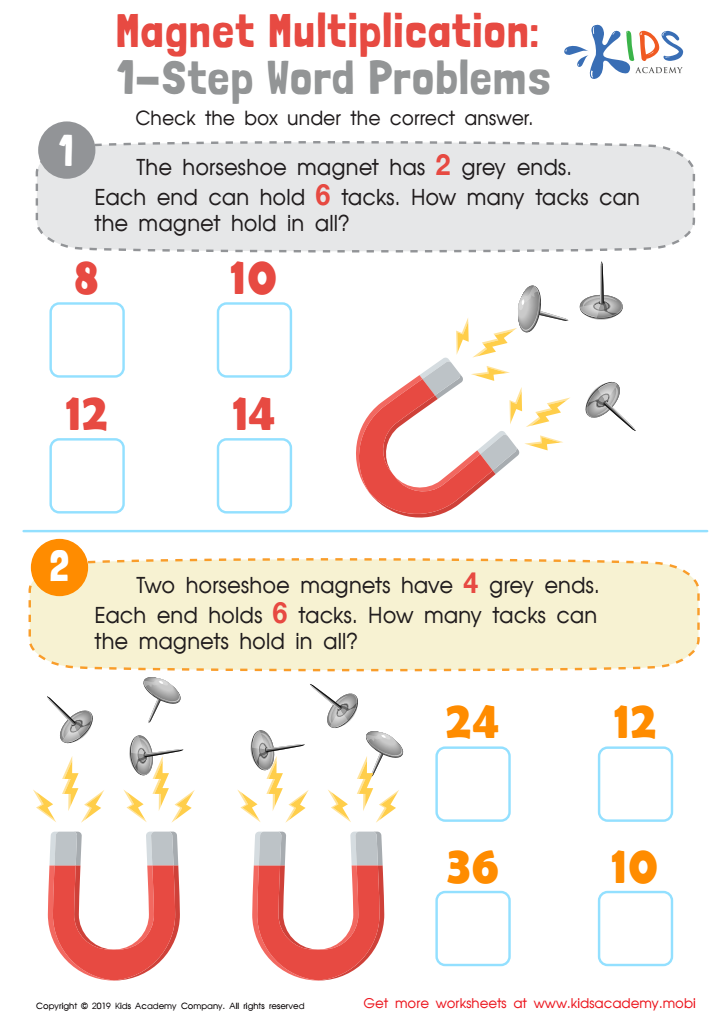
Magnet Multiplication: 1-Step Word Problems Worksheet
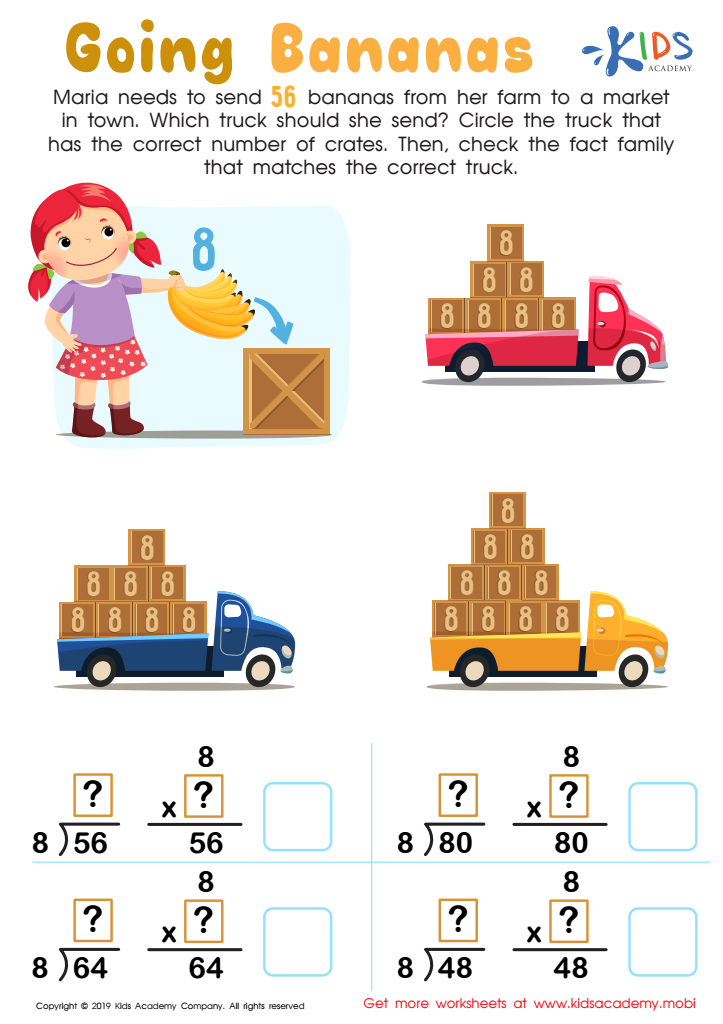
Going Bananas Worksheet
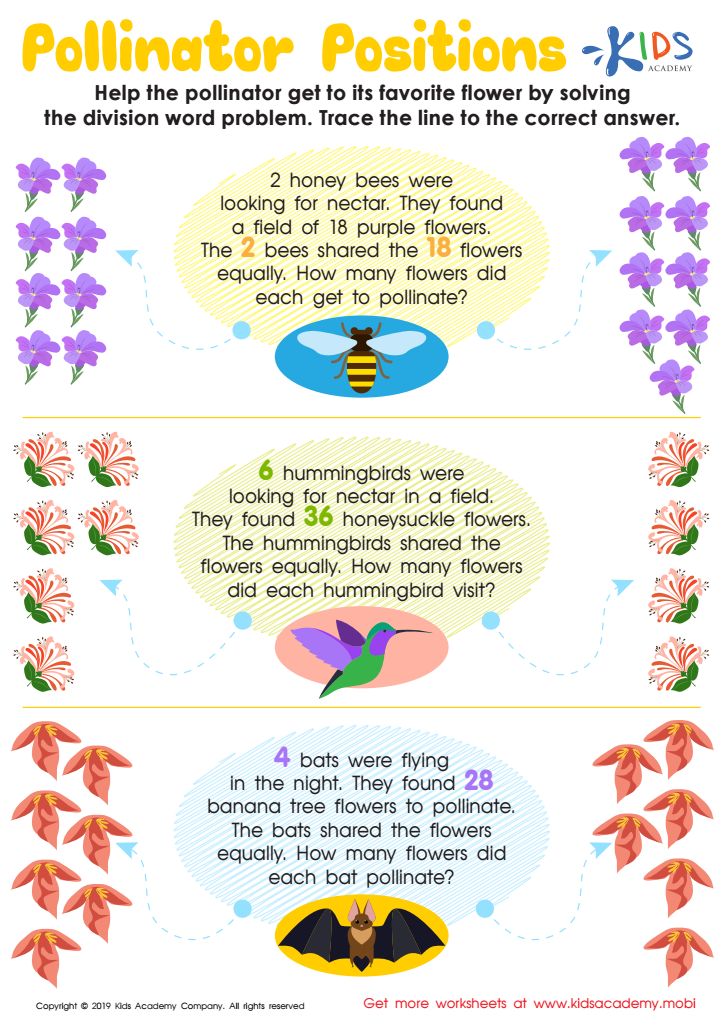
Pollinator Positions Worksheet
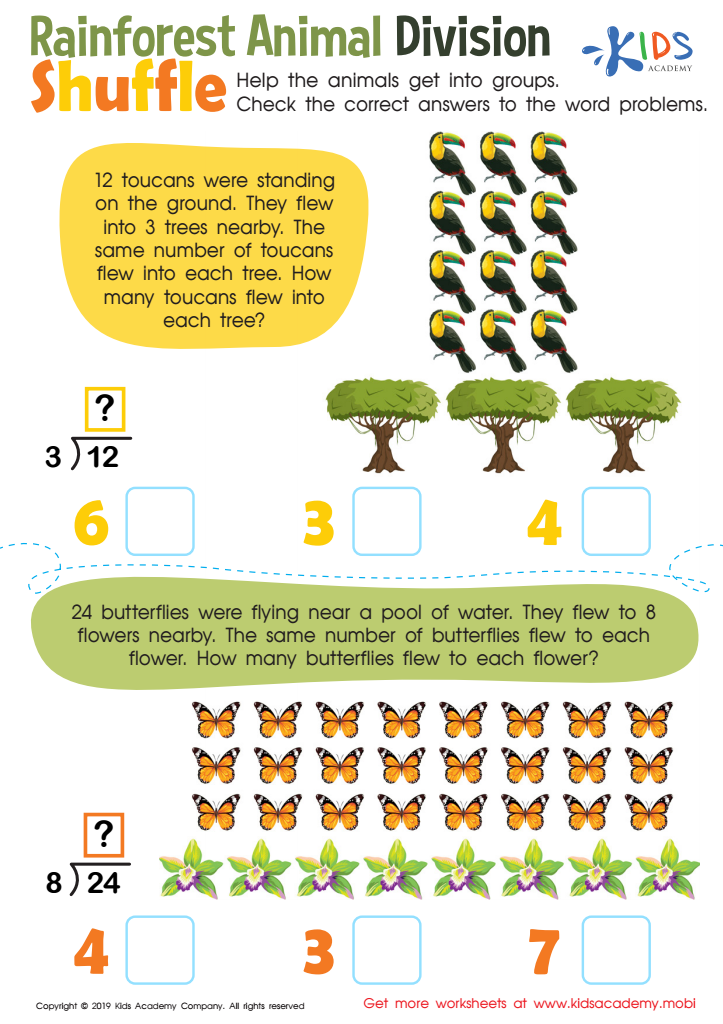
Rainforest Animal Division Worksheet
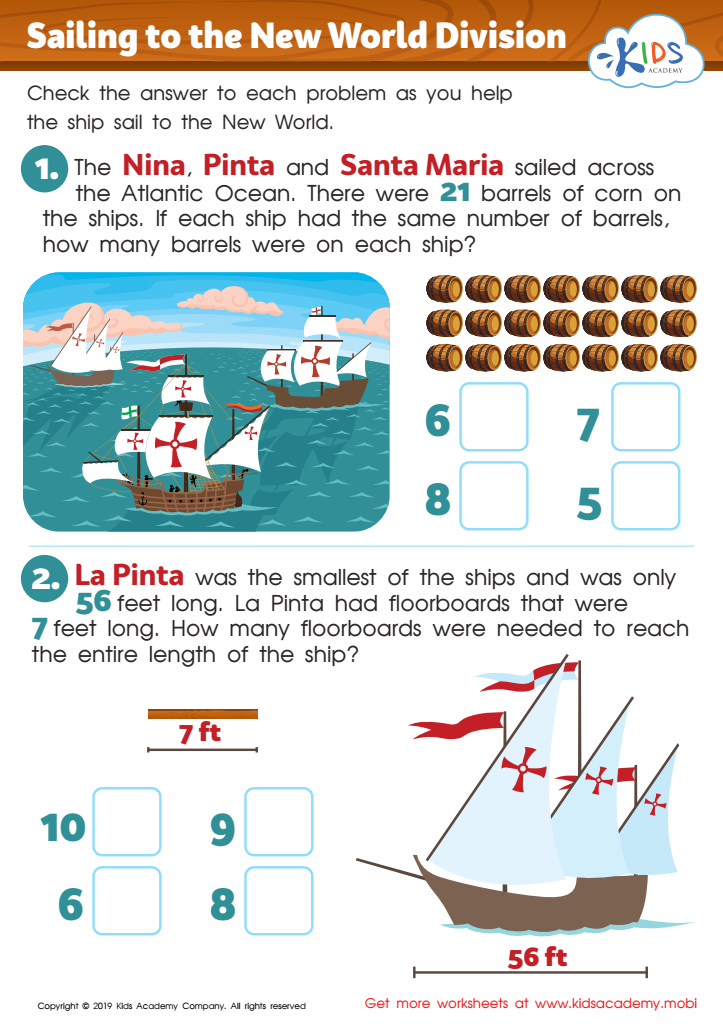
Sailing to the New World Division Worksheet
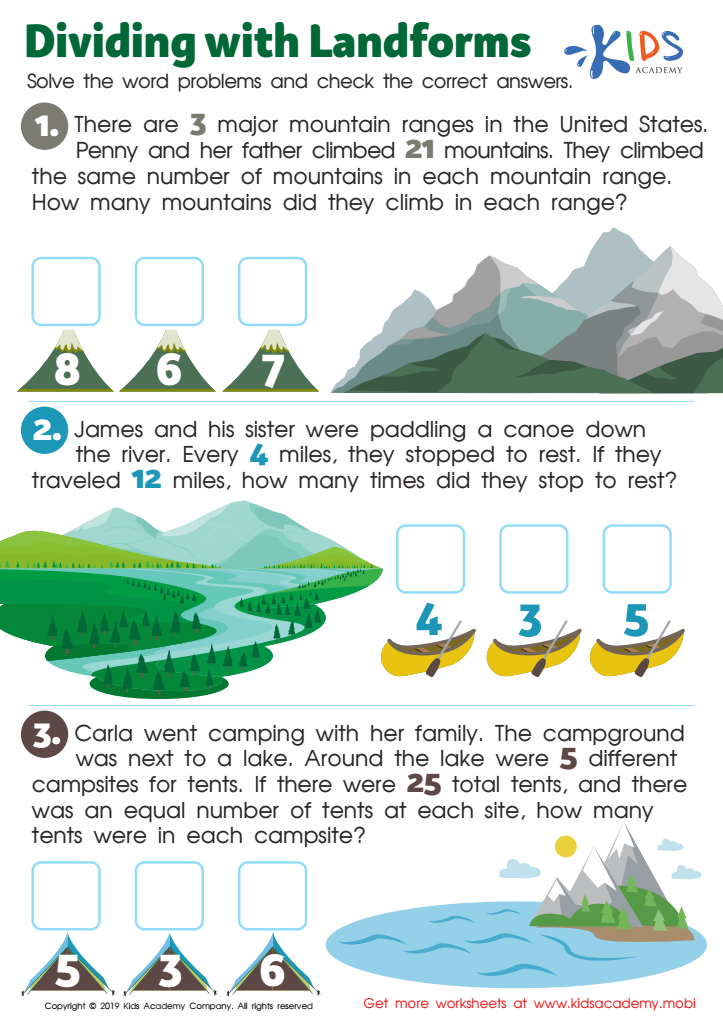
Dividing with Landforms
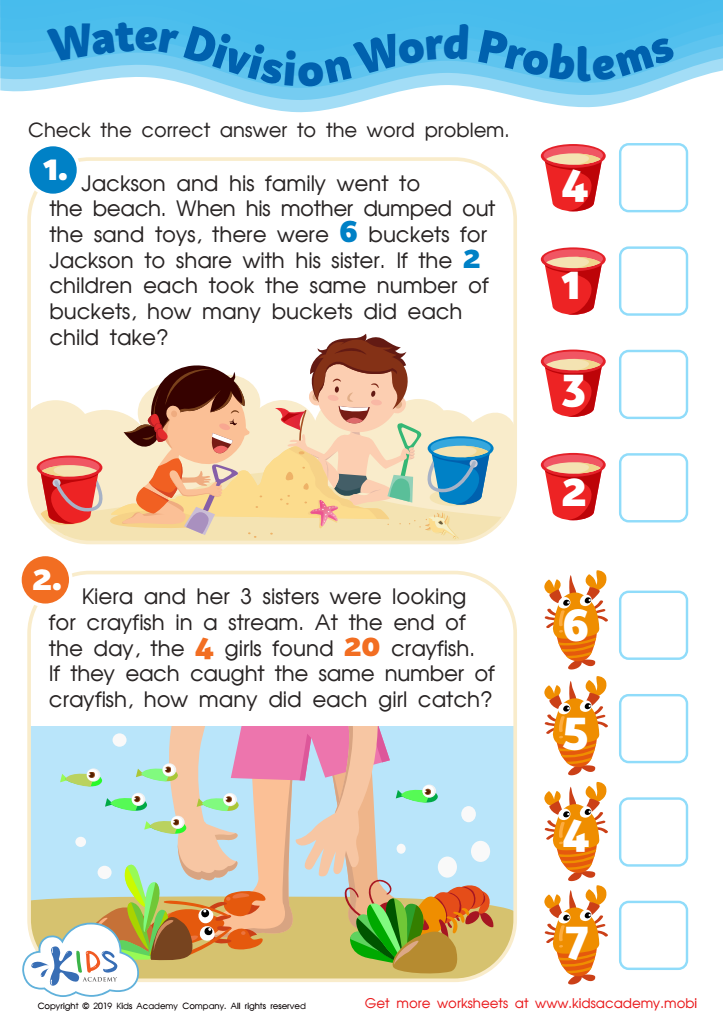
Water Division Word Problems Worksheet
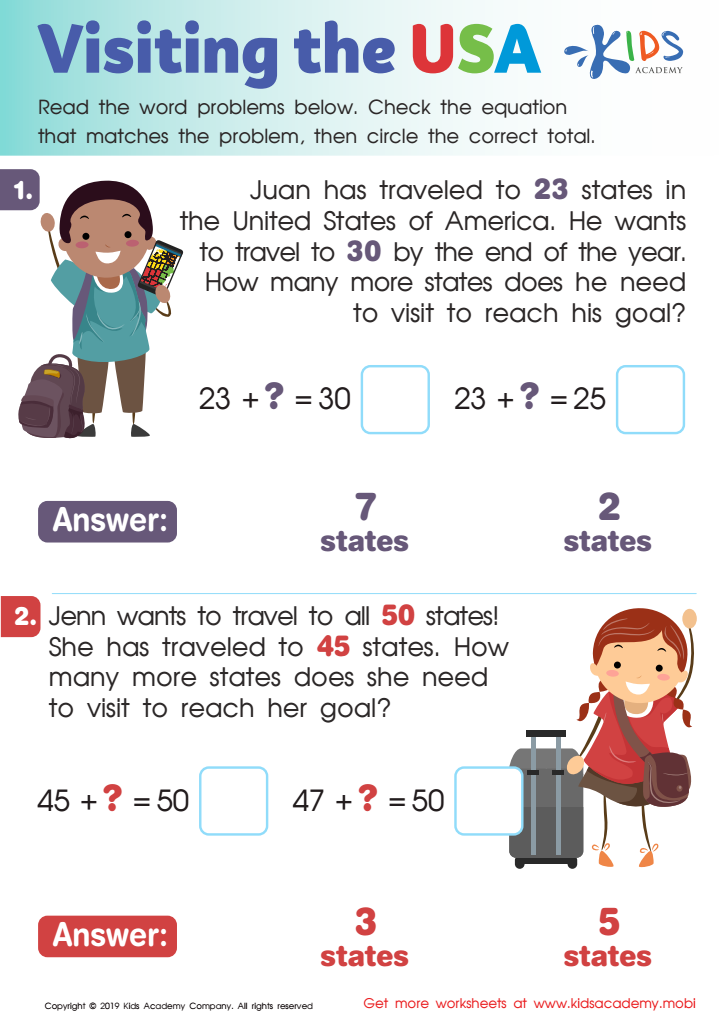
Visiting the USA Worksheet
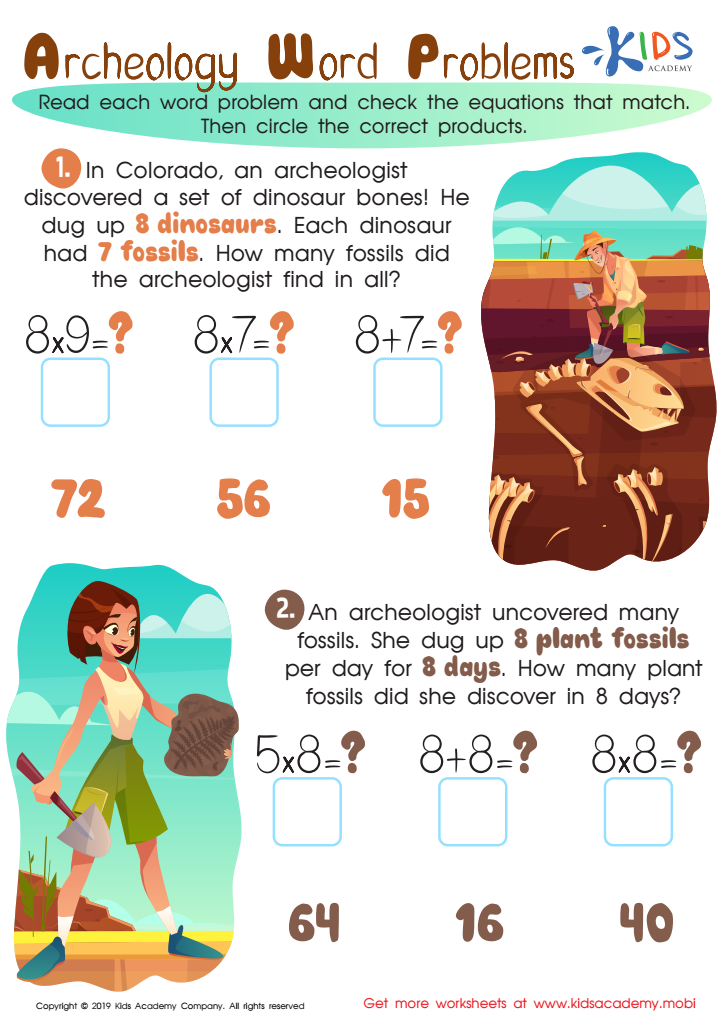
Archeology Word Problems Worksheet
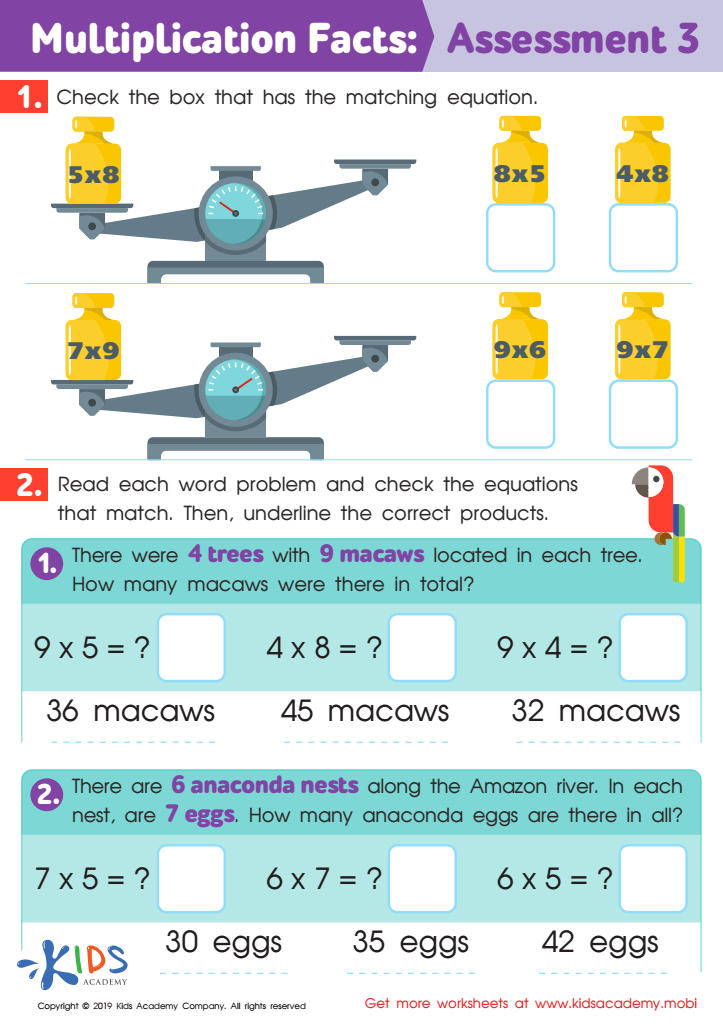
Multiplication Facts: Assessment 3 Worksheet
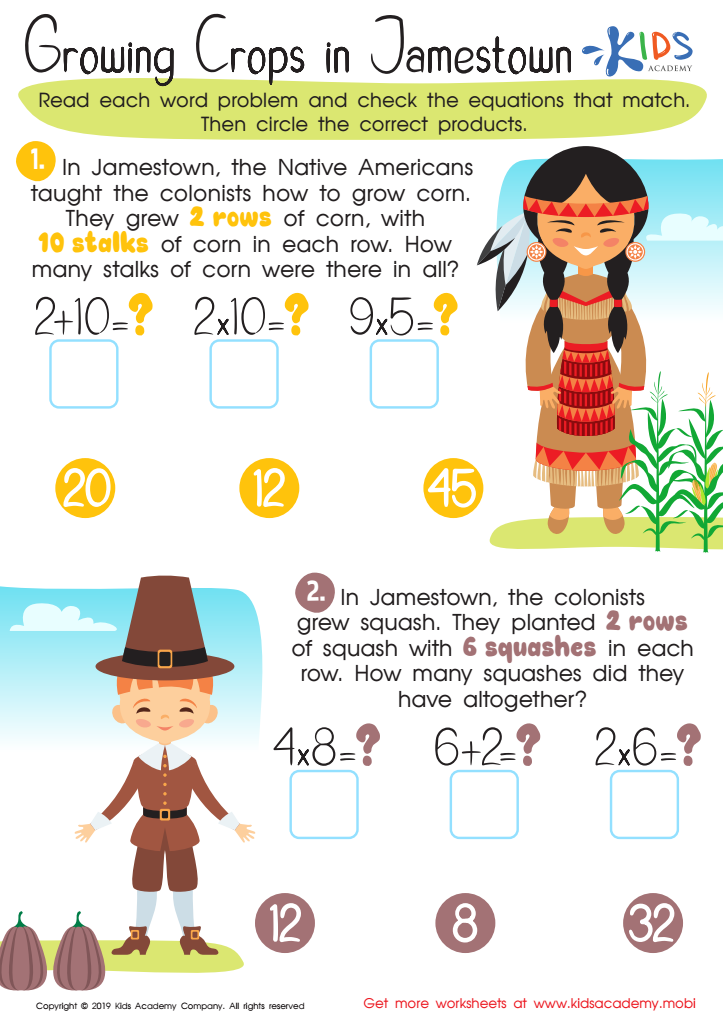
Growing Jamestown Worksheet
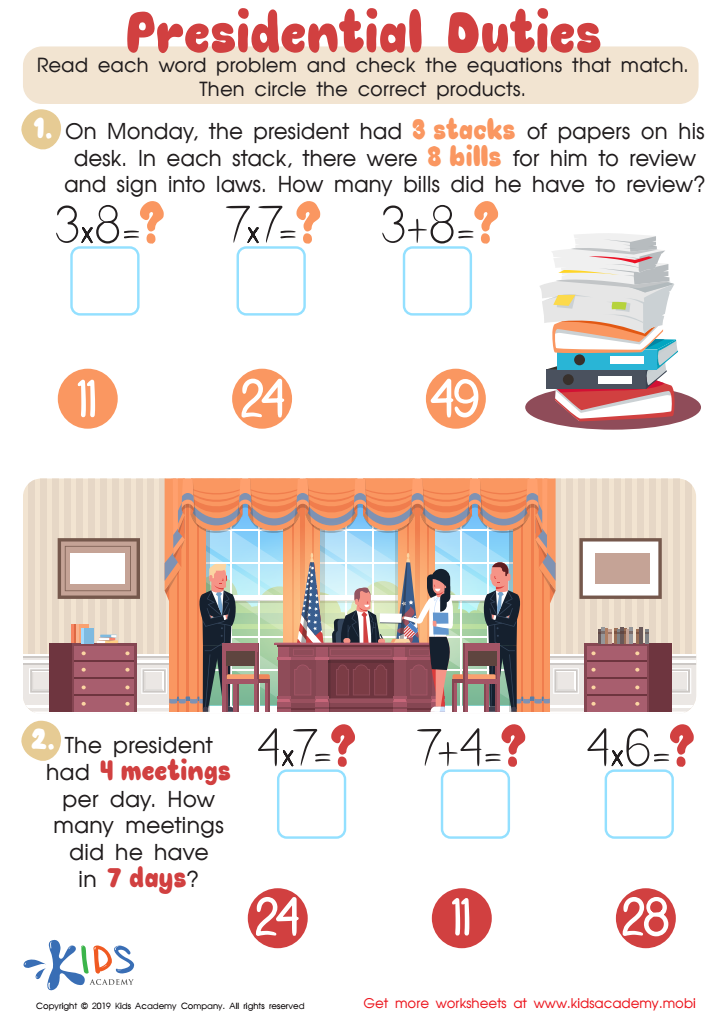
Presidential Duties Worksheet
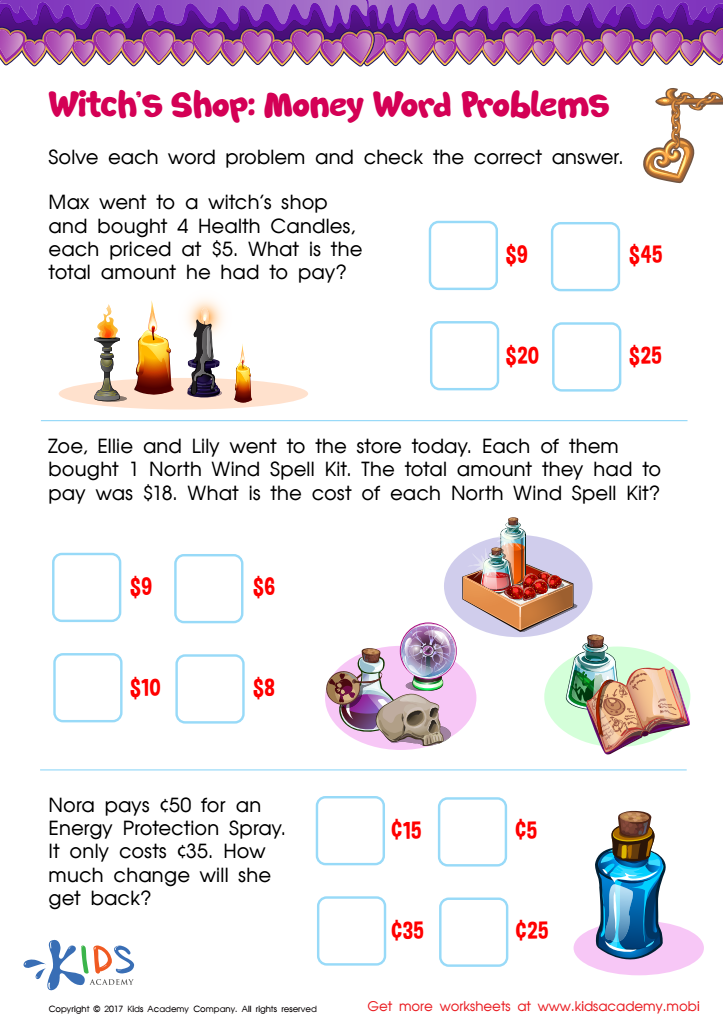
Money Word Problems Printable
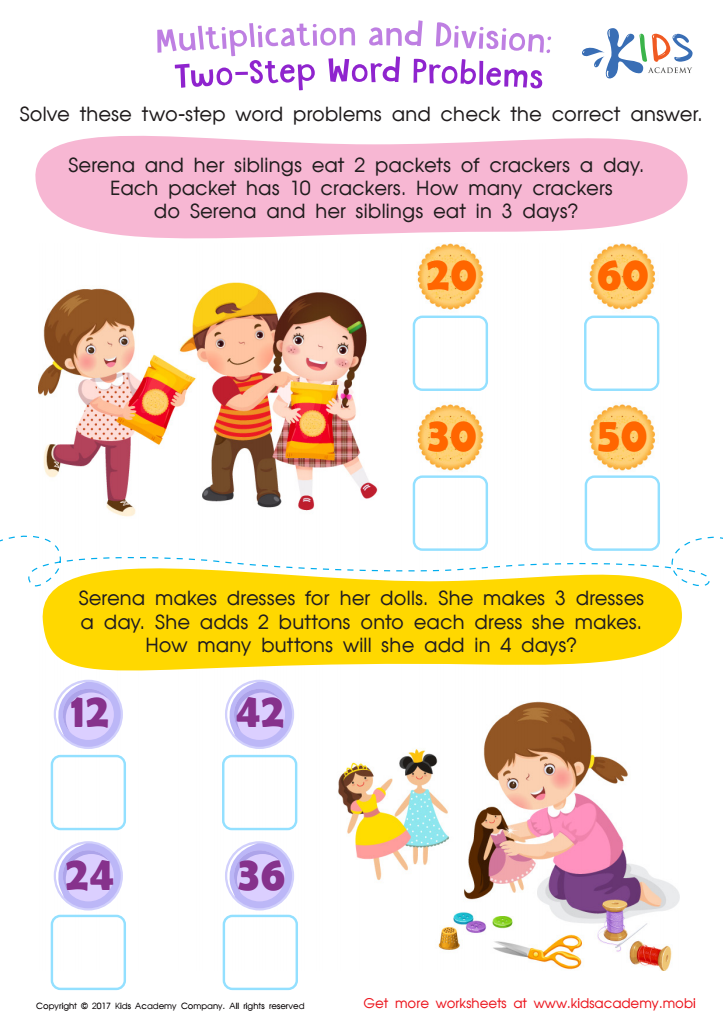
Two Step Word Problems Worksheet








The Value of Worksheets on Multiplication and Division Word Problems for Young Learners: A Guide to Homeschool Printables
When it comes to laying a solid mathematical foundation for young learners, ages 4-6, engaging educational resources are crucial. Incorporating worksheets specifically focused on multiplication and division word problems into early learning curriculums can be incredibly beneficial. These tools not only introduce basic concepts of mathematics but also enhance comprehension and application skills through practical examples. Homeschool printables serve as an excellent resource in this educational journey, offering customizable and accessible options for parents and educators.
Understanding the Importance of Word Problems
Word problems in multiplication and division help children transition from concrete mathematical operations to more abstract thinking. For young learners, especially those in a homeschool setting, these types of problems provide a context to what might otherwise be abstract numbers. By framing math within everyday scenarios, children can see the relevance of mathematics in daily life, enhancing their interest and engagement.
Advantages of Homeschool Printables
-
Tailored Learning: One of the significant advantages of homeschool printables is the ability to tailor the learning experience to a child’s specific needs. Children aged 4-6 vary widely in their developmental stages and learning styles. Printable worksheets can be selected based on the child’s current abilities and learning pace, making it possible to gradually introduce more complex problems as their skills improve.
-
Interactive and Fun: Homeschool printables often come in colorful and interactive formats that are appealing to young children. These worksheets can include fun themes and characters, turning a challenging multiplication or division problem into a playful activity. This makes learning less intimidating and keeps young learners motivated.
-
Repetition and Practice: Mastery in multiplication and division requires practice. Printables allow children to solve multiple problems in a structured format, helping them to reinforce their learning and commit key concepts to memory. With regular practice using these sheets, children’s accuracy and speed in solving mathematical problems can increase significantly.
-
Immediate Feedback and Adaptability: Parents and educators can provide immediate feedback as children work through their printables. This real-time assessment helps in identifying areas where a child might be struggling, allowing for quick intervention and explanation. Additionally, based on a child’s progress, the difficulty level of the worksheets can be adjusted accordingly.
-
Cost-Effective Resource: Homeschool printables are a cost-effective educational resource. Many high-quality printables are available for free or at a low cost online, making them accessible to a wider range of families. This affordability ensures that children can have a diverse array of materials at their disposal without significant financial investment, making comprehensive education more accessible for everyone.
-
Development of Critical Thinking Skills: Solving word problems requires more than just mathematical calculations; it demands critical thinking and problem-solving skills. Children must understand the problem, decide which operations to use, and apply them correctly to come up with a solution. This process enhances logical thinking and reasoning abilities, which are valuable across all areas of study and development.
-
Encourages Independent Learning: While young learners will need guidance from adults, multiplication and division word problems on homeschool printables can also encourage self-directed learning. Children can take initiative by attempting to solve problems before seeking help, fostering a sense of independence and confidence in their academic abilities.
-
Engagement with Parents or Guardians: Homeschooling and the use of printables facilitate increased engagement between children and their parents or guardians. Working together on worksheets can strengthen relationships and provide parents with hands-on opportunities to understand and contribute to their child’s educational growth. This collaborative effort not only boosts the child's morale but also ensures that learning becomes a shared journey.
-
Ease of Use and Flexibility: Printable worksheets can be used anywhere and anytime, making them an extremely flexible resource. Whether it’s during a quiet afternoon at home, a long car trip, or even while waiting at a doctor’s office, these worksheets can be easily carried along and used effectively to keep children engaged and learning continuously.
-
Preparation for Formal Schooling: For children in the 4-6 age range, early exposure to structured learning tasks like those found in multiplication and division worksheets can provide a significant advantage when transitioning to formal schooling. They become familiar with the format of organized tasks and written work, which can ease their adaptation to the more structured learning environments they will encounter in school.
In conclusion, worksheets on multiplication and division word problems are not just tools for learning mathematical operations; they are integral in developing a broader spectrum of cognitive abilities in young learners. Homeschool printables offer a practical, enjoyable, and effective means of delivering these lessons. By incorporating these resources into early childhood education, parents and educators can significantly enhance the mathematical aptitude and overall academic readiness of their children, setting them on a path to success in their continuing education.