Numbers up to 100 Worksheets for Ages 4-7 - Page 3
50 filtered results
-
From - To
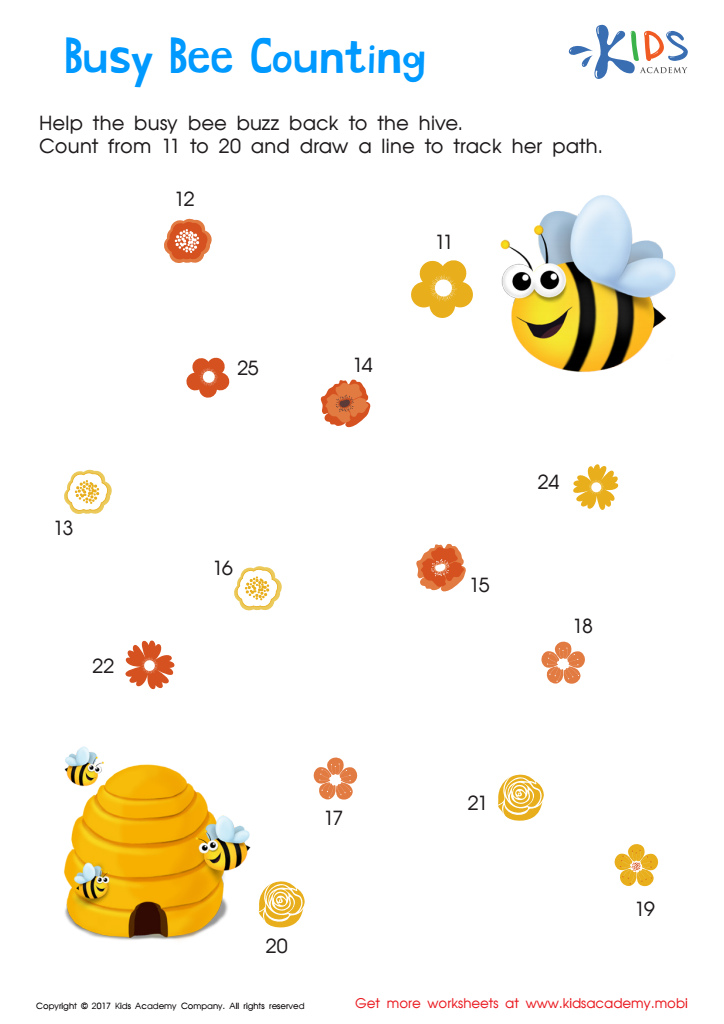
Ordering 11–20: Busy Bee Counting Worksheet
 Assign to My Students
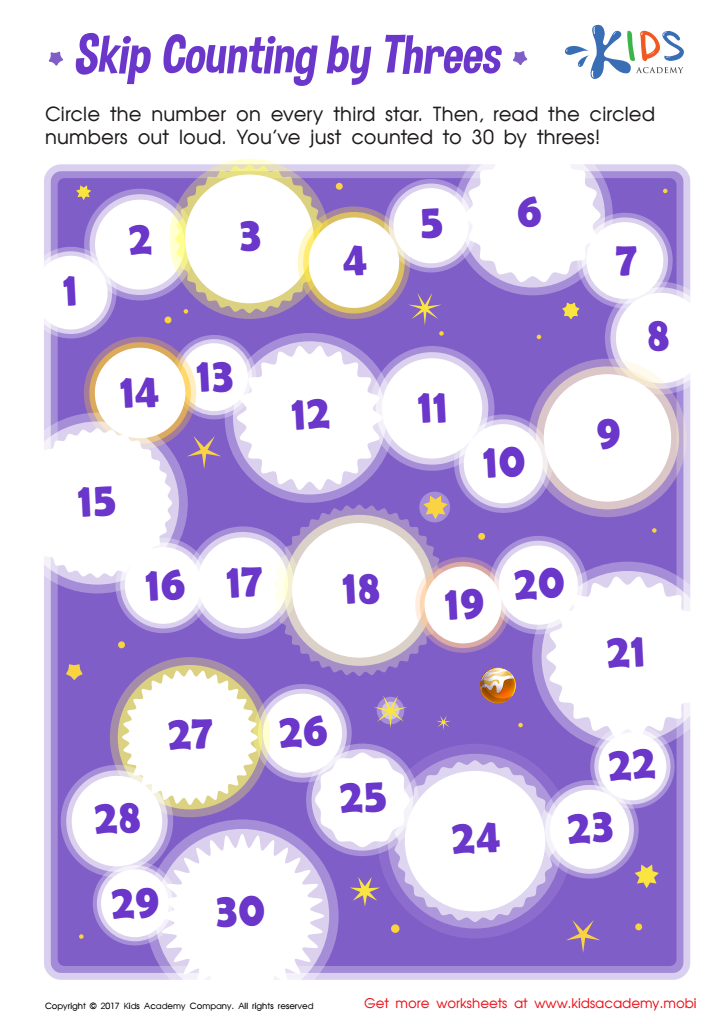
Skip Counting By Three Printable








Understanding numbers up to 100 is crucial for children aged 4-7 as it lays the foundation for their mathematical skills and cognitive development. In these early years, children are naturally curious and eager to learn, making it an ideal time to introduce concepts related to counting, addition, and subtraction. Engaging with numbers not only enhances their mathematical abilities but also improves their critical thinking and problem-solving skills.
Parents and teachers should care about this learning milestone because it is fundamental to a child's everyday life. Mastery of numbers helps children understand quantities, time, and simple measurements, which fosters independence and confidence in their abilities. Furthermore, early numeracy skills have been linked to future academic success; children with a solid grasp of numbers often excel in later math courses.
Fostering a positive attitude towards numbers can also prevent math anxiety, encouraging lifelong learning in mathematics. Activities such as counting toys, playing number games, or incorporating music can make learning enjoyable. By promoting an engaging environment around numbers, parents and teachers help children become more proficient and enthusiastic learners, ensuring a strong start in their educational journey.








