Vocabulary enhancement Reading Comprehension Worksheets for Ages 4-7 - Page 2
40 filtered results
Difficulty Level
Grade
Age
-
From - To
Subject
Activity
Standards
Favorites
With answer key
Interactive
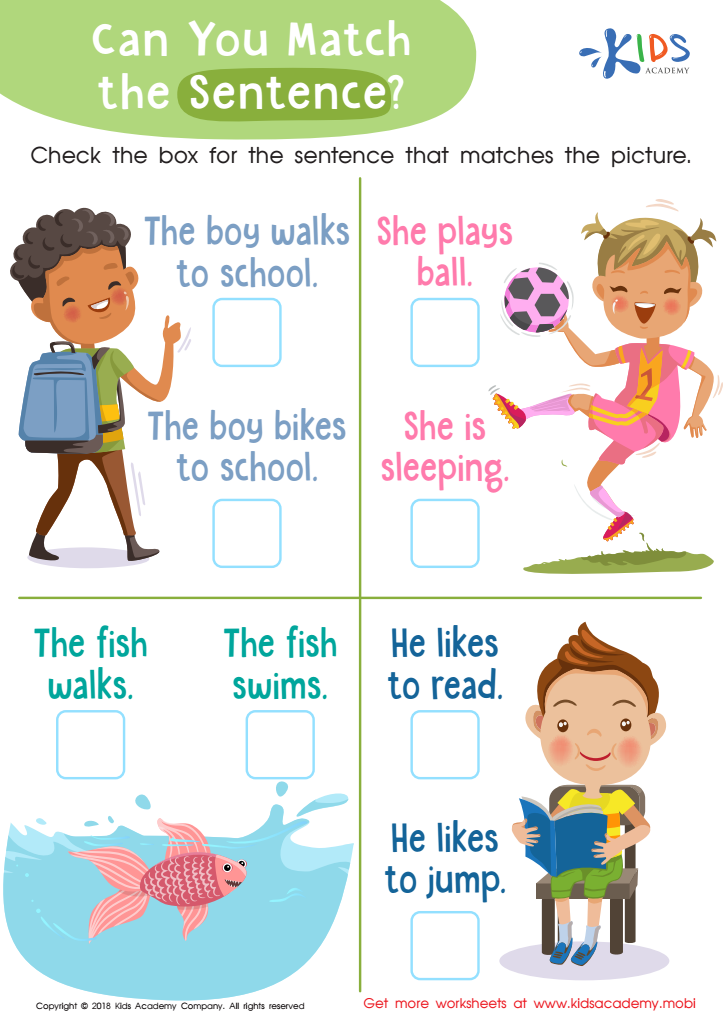
Can You Match the Sentence? Worksheet
Kids gain fluency with this worksheet which uses bright pictures. They select the sentence that matches the image and check the box. This repetition of words and phrases helps them improve their reading skills while having fun.
 Assign to My Students
Can You Match the Sentence? Worksheet
Worksheet
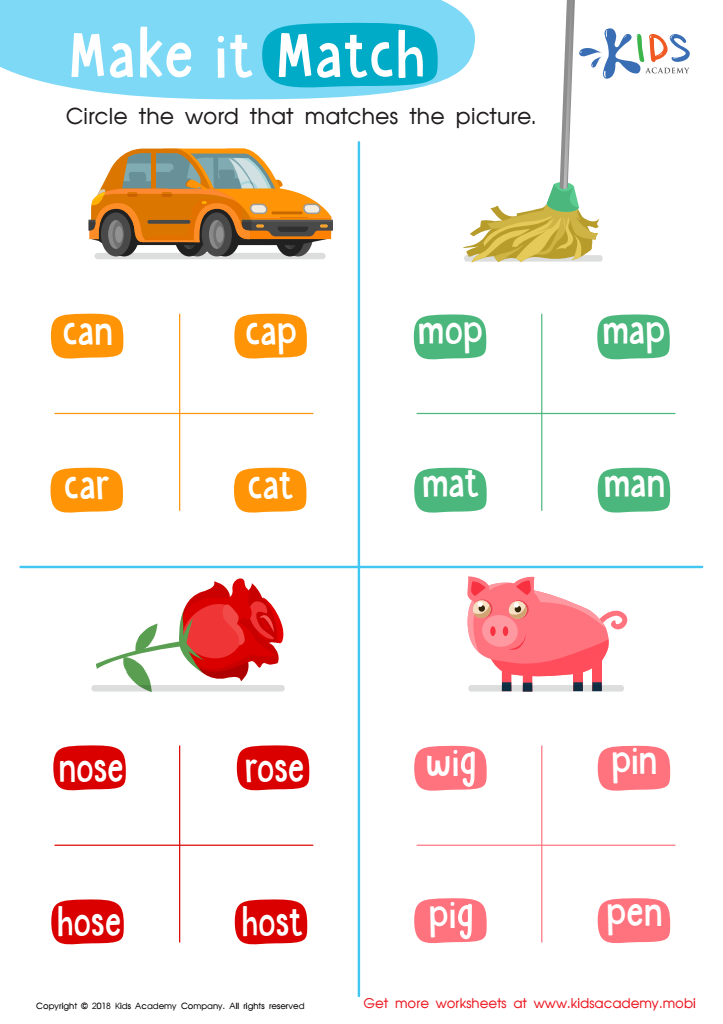
Make It Match Worksheet
This bright, cheery worksheet helps students practice discerning between mono-syllabic words with similar short vowel sounds. With familiar pictures and bold colors, they'll circle the word that matches each given picture, honing both reading and visual discrimination skills. A great tool for emerging readers!
Make It Match Worksheet
Worksheet
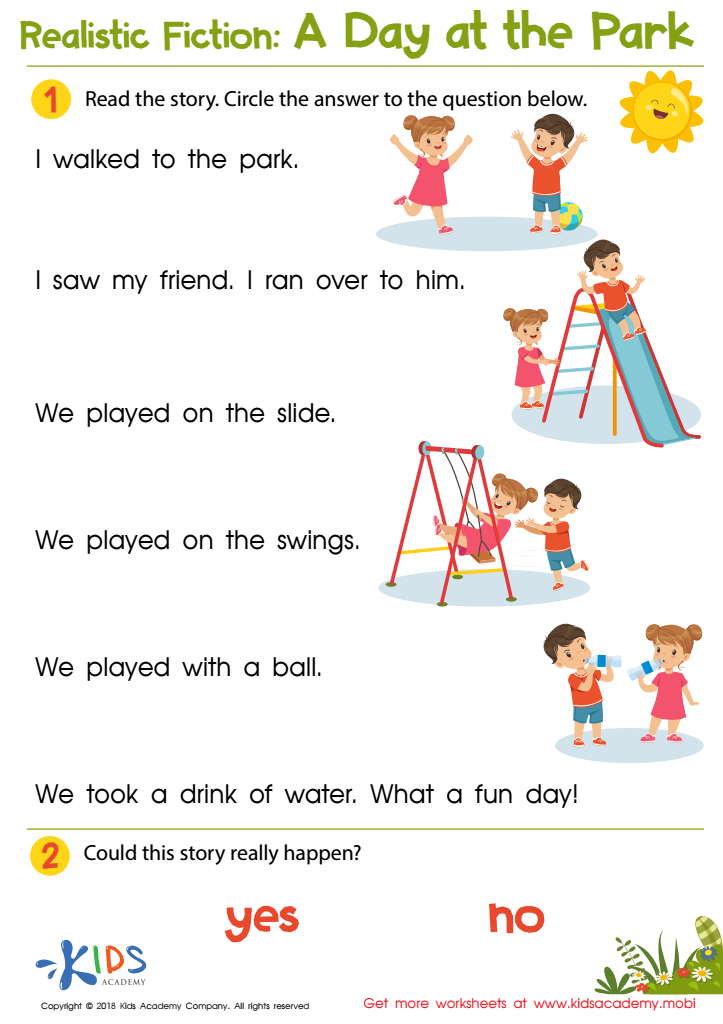
A Day at the Park Worksheet
Kids as young as preschool-age can be taught to evaluate stories! Use this fun worksheet about a day at the park. Read each sentence aloud, looking at the pictures. Ask your child if the events in the story could happen in real life - if yes, circle yes, otherwise circle no. When finished, discuss with them the genre, realistic fiction.
A Day at the Park Worksheet
Worksheet
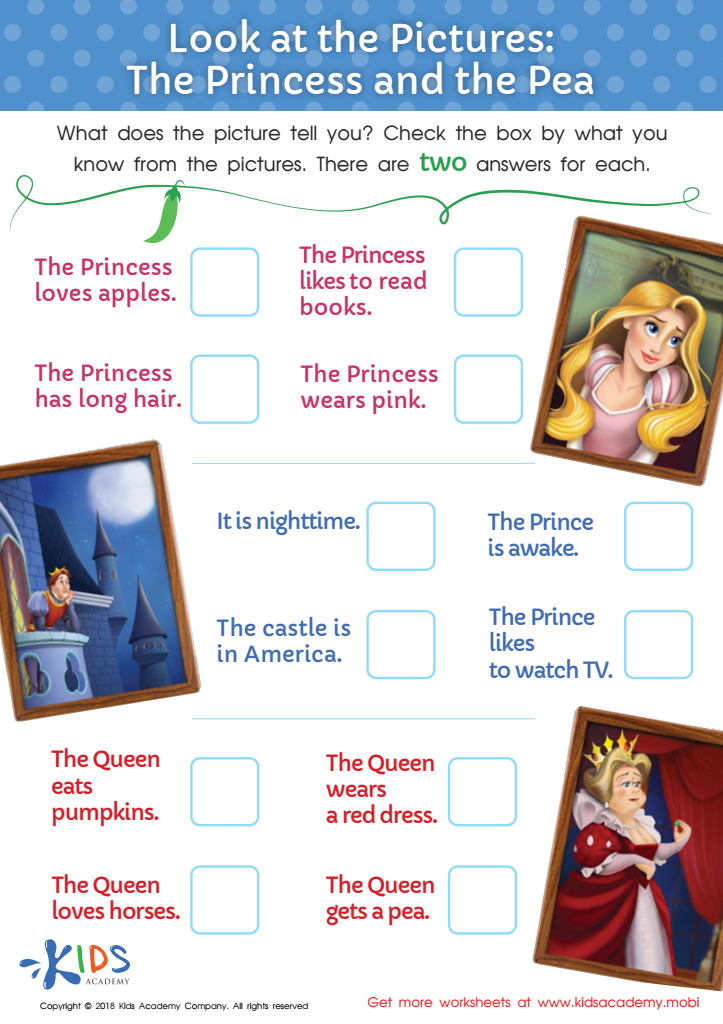
Look at the Pictures: The Princess and the Pea Worksheet
Early readers can benefit from picture clues to understand stories and text. Looking at images helps them learn the meaning of words and comprehend events. Use this worksheet on The Princess and the Pea to let students observe and learn from the pictures. It's a great way to help them comprehend early reading materials.
Look at the Pictures: The Princess and the Pea Worksheet
Worksheet
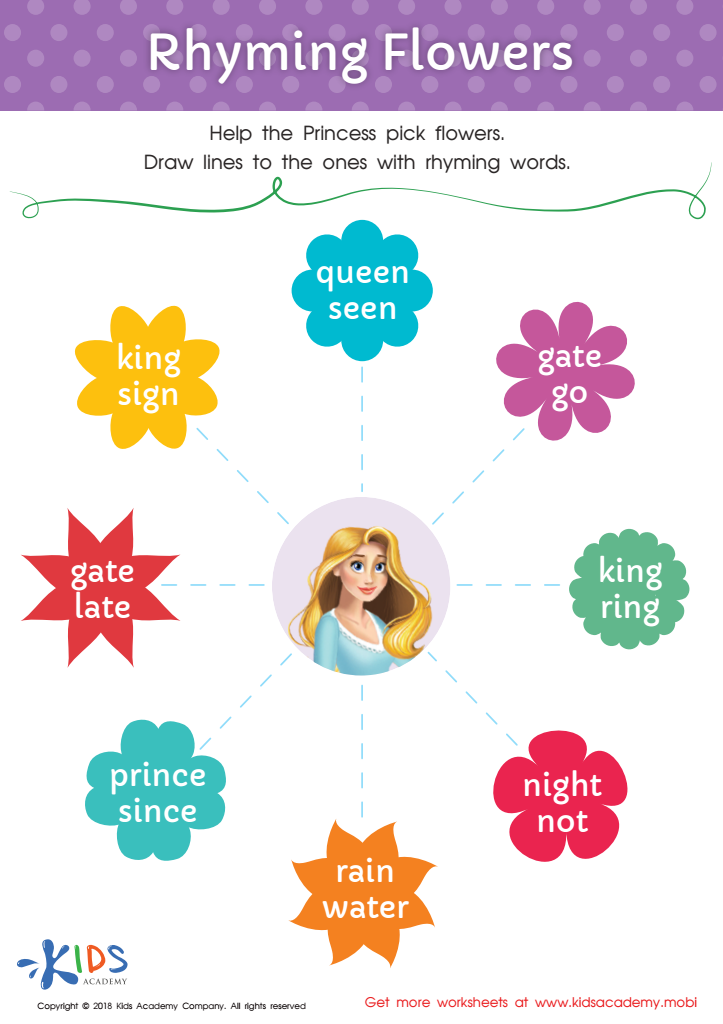
Rhyming Flowers Worksheet
Recognizing rhyming words boosts phonological awareness. With this skill, students can identify similar sounds in words and predict new words more accurately. This worksheet provides practice and is ideal for the reading classroom. Download and find the rhyming words! (80 words)
Rhyming Flowers Worksheet
Worksheet
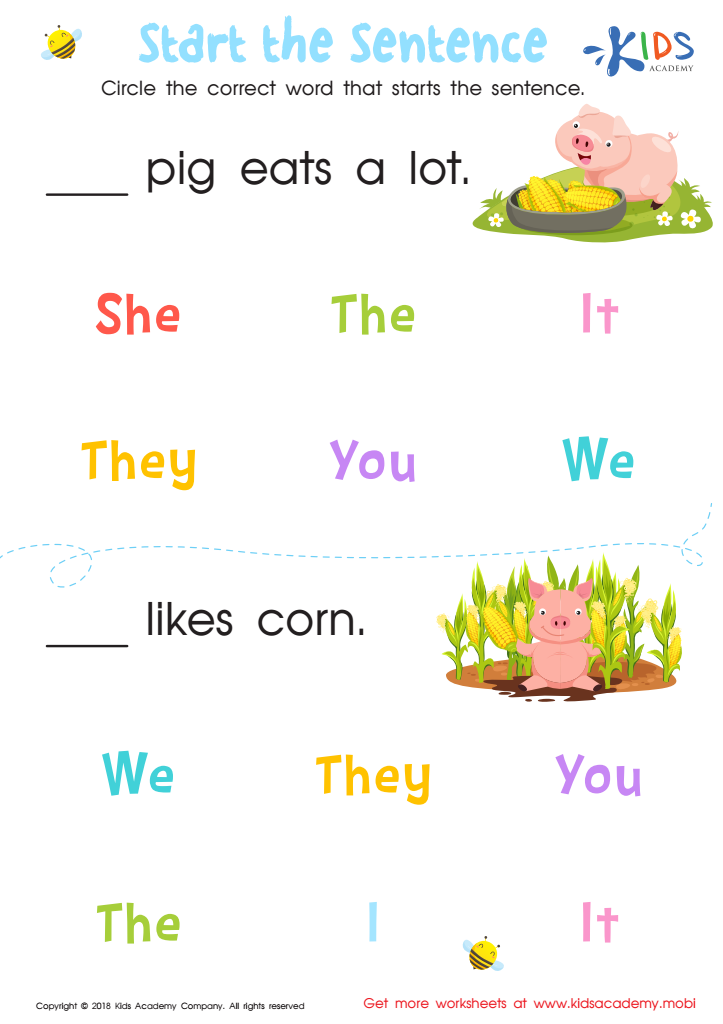
Start the Sentence Worksheet
Test your students' understanding of sentences with this easy worksheet. Ask them to read the sentences and circle the correct word that starts each. This will show how well their lessons have paid off and if they can construct short simple sentences.
Start the Sentence Worksheet
Worksheet
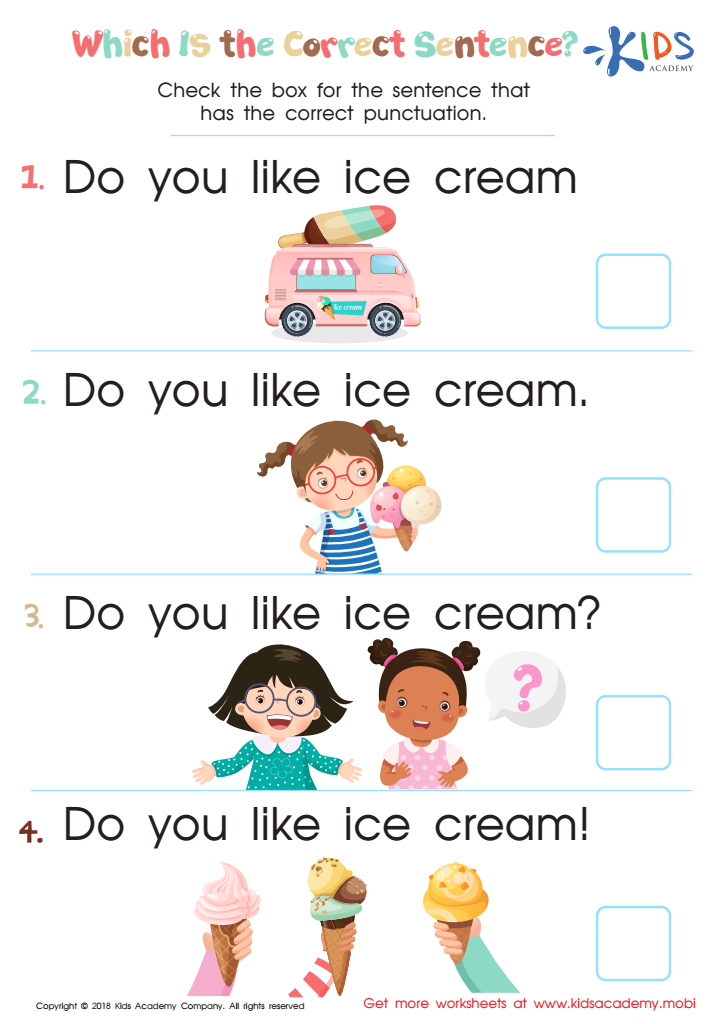
Which is the Correct Sentence? Worksheet
Punctuation is crucial in sentence formation. If your kid still doesn't grasp it, bigger hurdles await when writing sentences. Get them to read simple sentences, then ask if they know the right punctuation. Assist them in selecting the sentence that has the accurate punctuation.
Which is the Correct Sentence? Worksheet
Worksheet
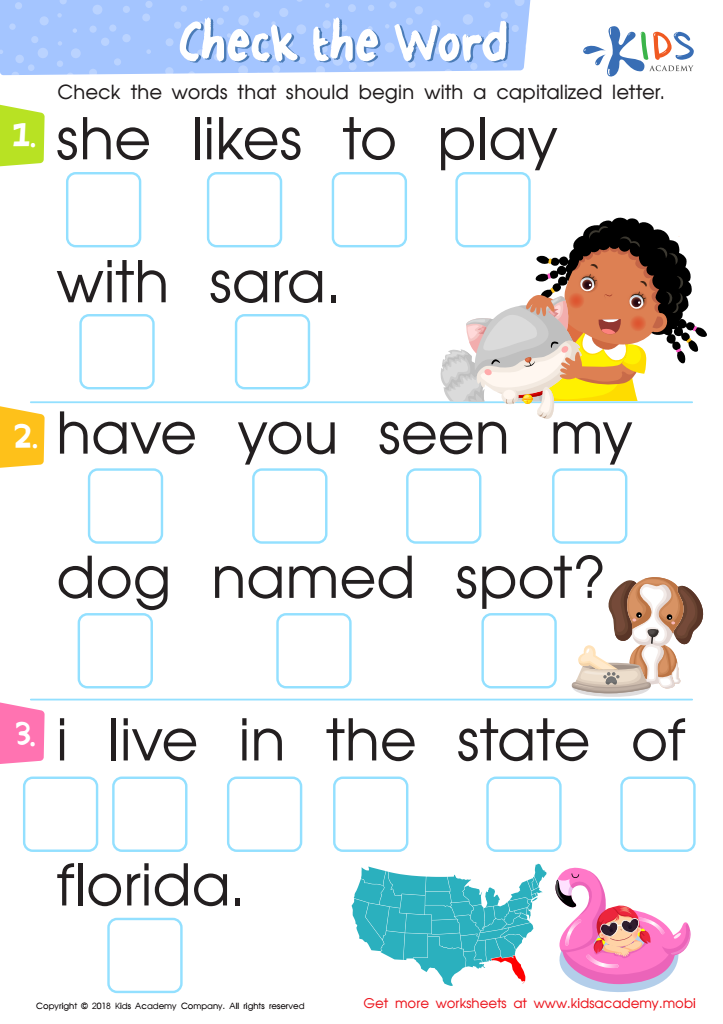
Check the Word Worksheet
Help your kids learn the rules of capitalisation - that the first word of each sentence and nouns must start with a capital letter. Use this worksheet to test their understanding: ask them to identify which words should begin with a capital.
Check the Word Worksheet
Worksheet
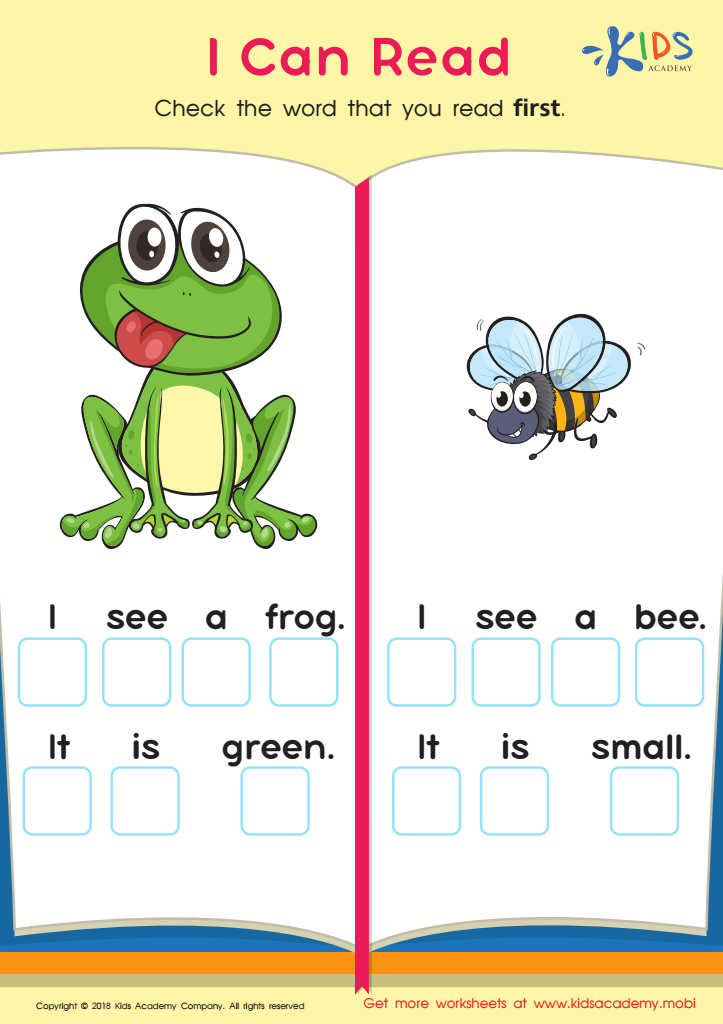
I Can Read Worksheet
Test your child's reading skills with this fun worksheet. See how well they know one-letter, two-letter, and five-letter words. Ask your little one to read the sentences and tick the word they identify first. It's a great way to track their progress and help them become more confident readers.
I Can Read Worksheet
Worksheet
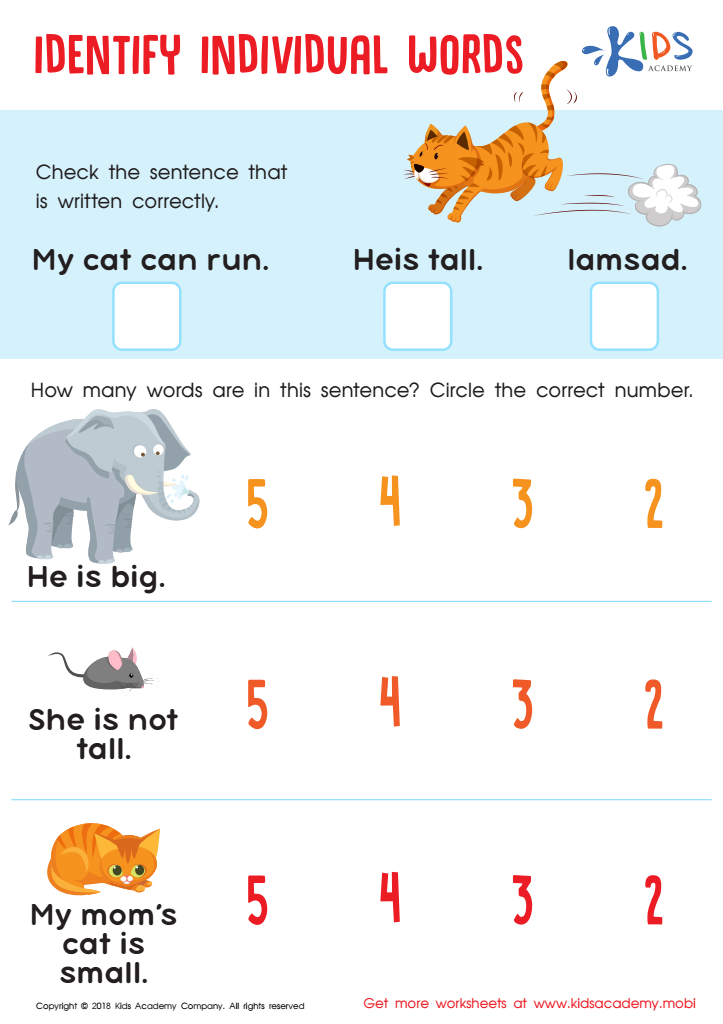
Identify Individual Words Worksheet
Does your child have trouble constructing sentences? Check out this worksheet! It will help them identify words that make up sentences and assess how well they can read and answer questions. The first part tests how well they can recognize a written sentence. The second part has them read questions and circle the correct number of words. Give it a try!
Identify Individual Words Worksheet
Worksheet
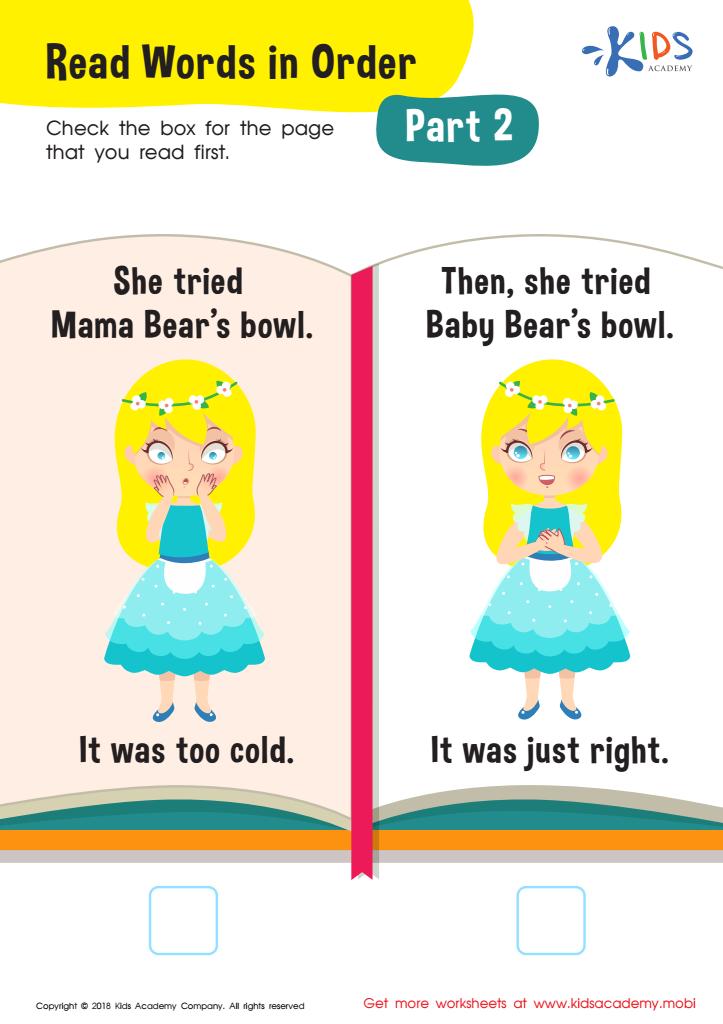
Read Words Order Part 2 Worksheet
Help your students make progress with reading by using this easy worksheet. It includes two pictures with short sentences your child should be able to read. Ask them to read these out loud, and if they're struggling, help them. Then, they should check the box that shows the page they'd read first.
Read Words Order Part 2 Worksheet
Worksheet
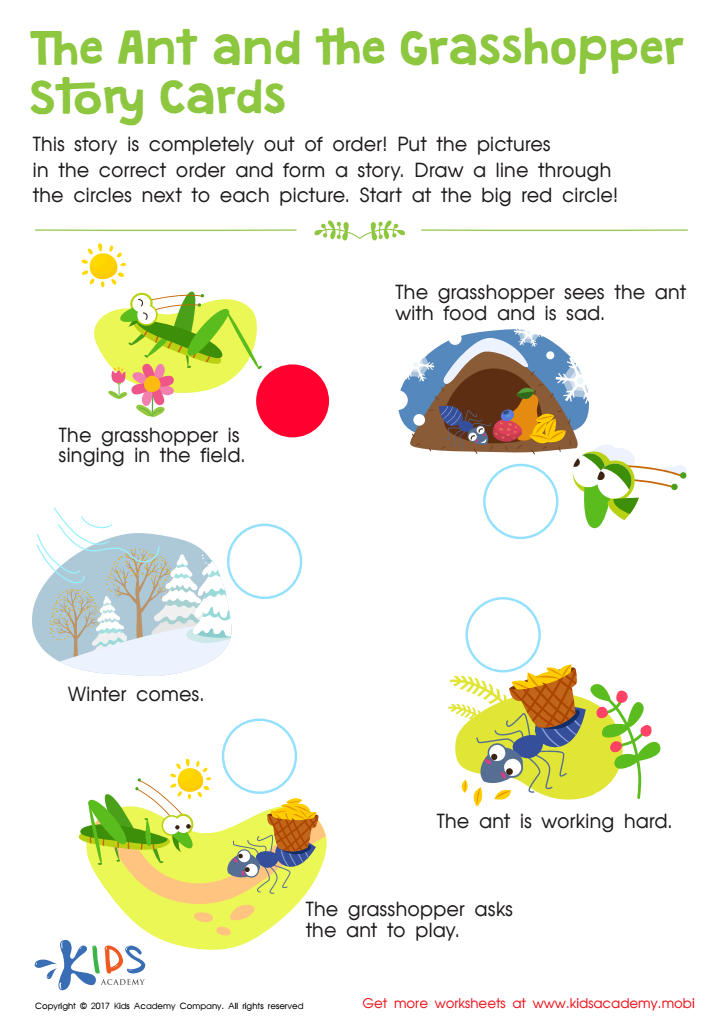
The Ant and The Grasshopper Worksheet
This worksheet uses the beloved childhood fable "The Ant and the Grasshopper" to teach your child about plot and order of events. Your child must read the events and put them in the right order. Once completed, review the story with your child to ensure its accuracy.
The Ant and The Grasshopper Worksheet
Worksheet
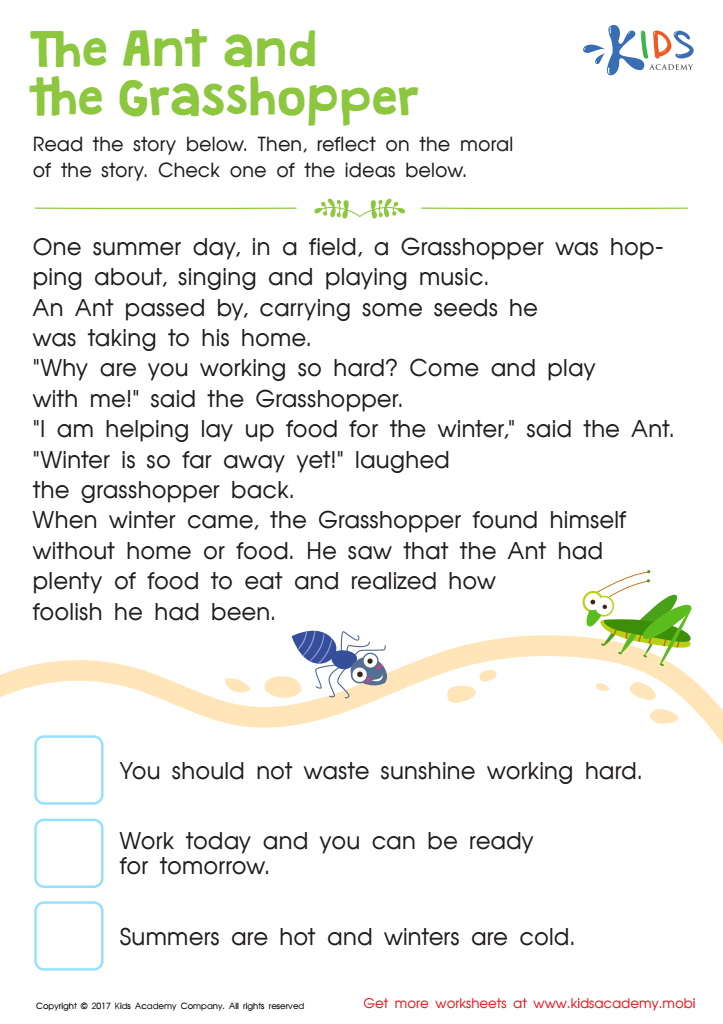
The Ant and The Grasshopper Printable
Aesop's fables have clear messages, which make them memorable and loved by children and adults. Use Kids Academy's ant and grasshopper worksheet to help your child reflect on stories and discover the life lesson.
The Ant and The Grasshopper Printable
Worksheet
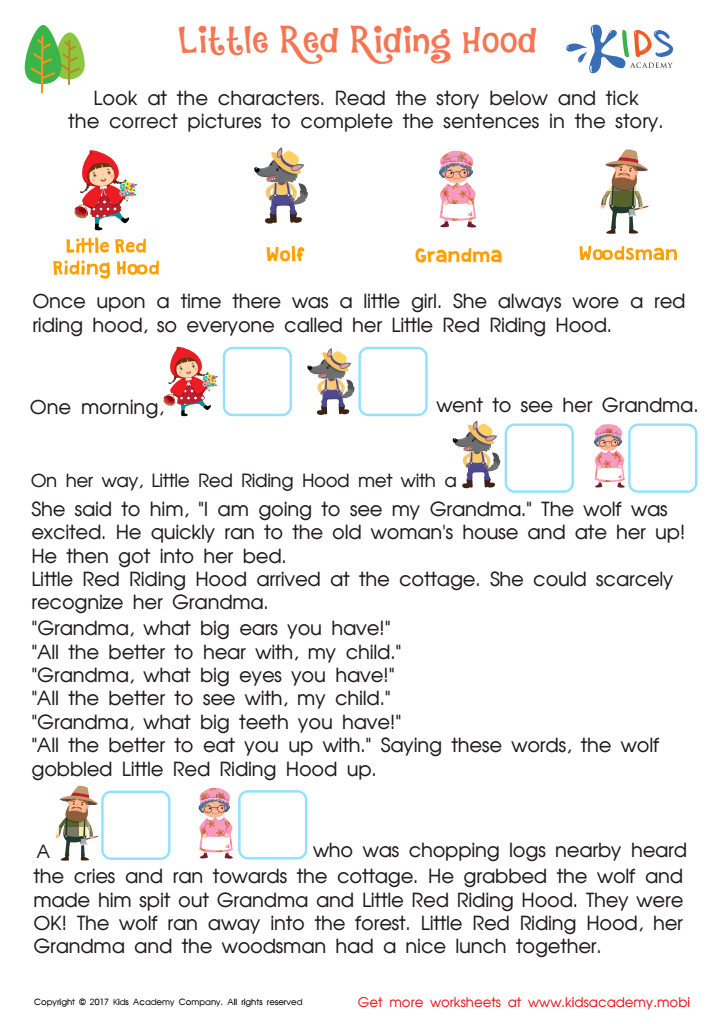
Little Red Riding Hood Printable
Give them this worksheet to practice.
Help your child strengthen their reading skills with this worksheet. It asks them to read Little Red Riding Hood and fill in the missing words using context clues from the text. Encourage your child to look at the surrounding words to determine the answer and get the best results!
Little Red Riding Hood Printable
Worksheet
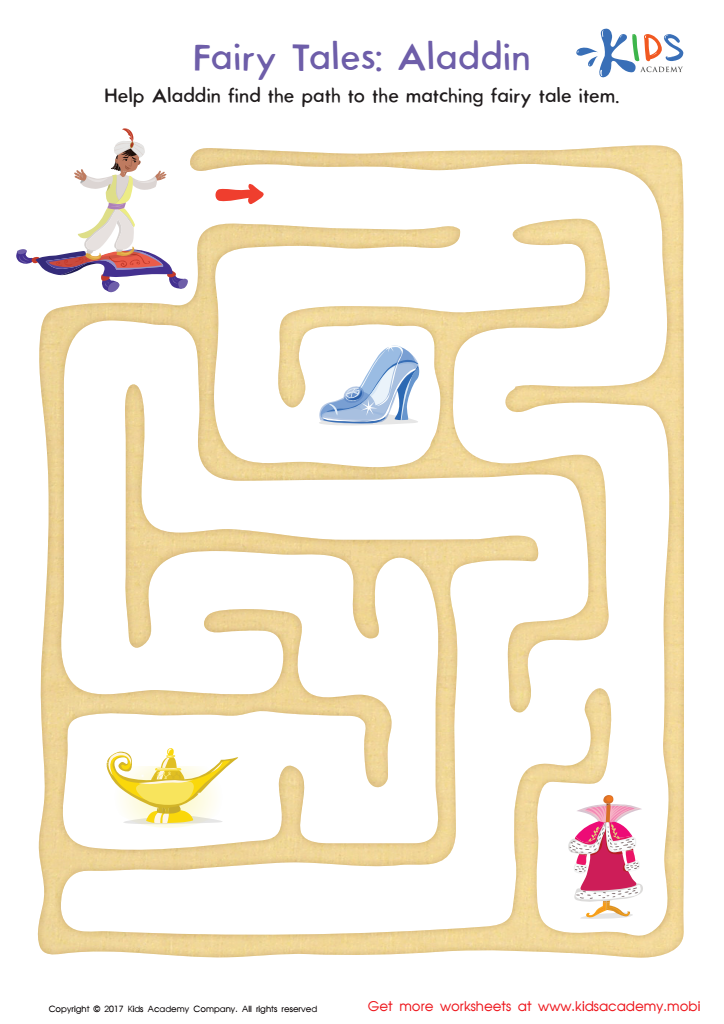
Fairy Tales Aladdin Printable
Test your child's reading recall with this challenge: the Aladdin maze worksheet! Guide your learner to identify objects linked to the story, then ask them to retell it afterwards. Hone those memory skills while having fun!
Fairy Tales Aladdin Printable
Worksheet
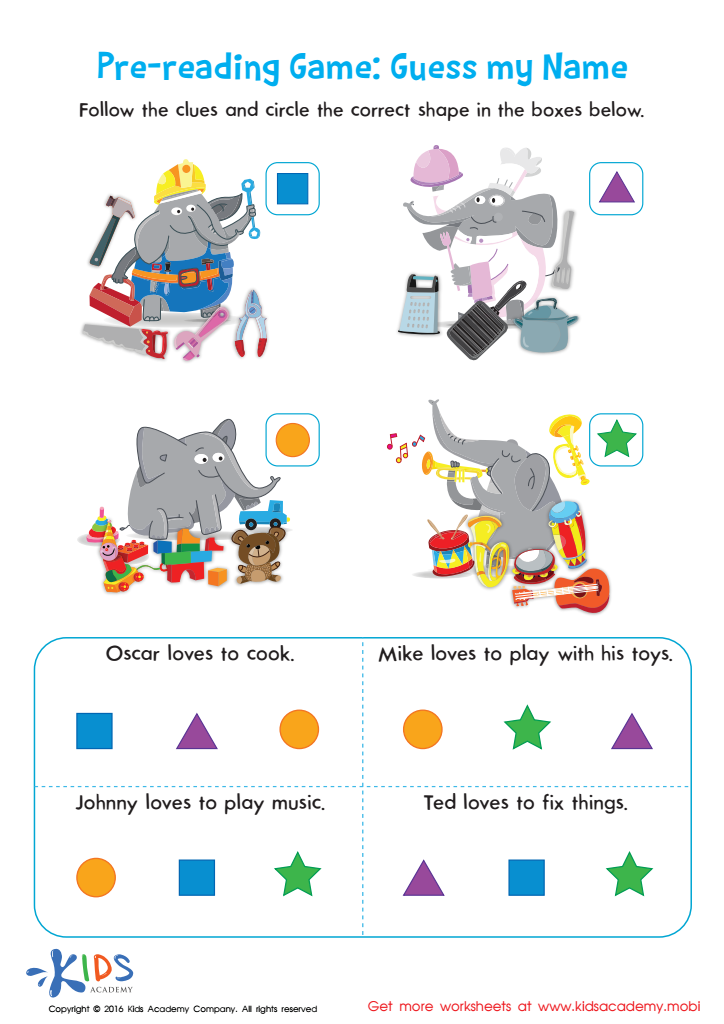
Pre Reading Worksheet Guess My Name
Guess My Name is a fun way to practice inference skills.
Guess My Name is a fun pre-reading game to help your child practice drawing inferences from clues. With colorful illustrations, they'll use clues to match each elephant with its sentence and sharpen their inference skills.
Pre Reading Worksheet Guess My Name
Worksheet
Join Kids Academy for Free
Who is primarily going to use this learning content?