Filters

131 filtered results

Clear all filters
Favorites
With answer key
Interactive

131 filtered results

Difficulty Level

Grade


Unlock your child's imagination with our engaging Reading Fiction Worksheets designed for ages 4-7! Our thoughtfully crafted resources help young learners develop essential reading skills through fun, interactive activities. With vibrant illustrations and age-appropriate stories, these worksheets inspire creativity and enhance comprehension. Children will explore characters, settings, and plots, fostering a love for reading while building literacy fundamentals. Each worksheet is structured to accommodate various learning styles, making reading enjoyable and accessible for every child. Perfect for home or classroom use, our fiction worksheets pave the way for confident readers. Discover the joy of storytelling and encourage your child’s lifelong love of reading today!

Check out this FREE Trial Lesson on Reading Fiction for age 4-7!

Days of the Week. Day and Night

Favorites
With answer key
Interactive
  • 4-7
  • Interactive
  • Reading Fiction
Find the Setting Worksheet

Find the Setting Worksheet

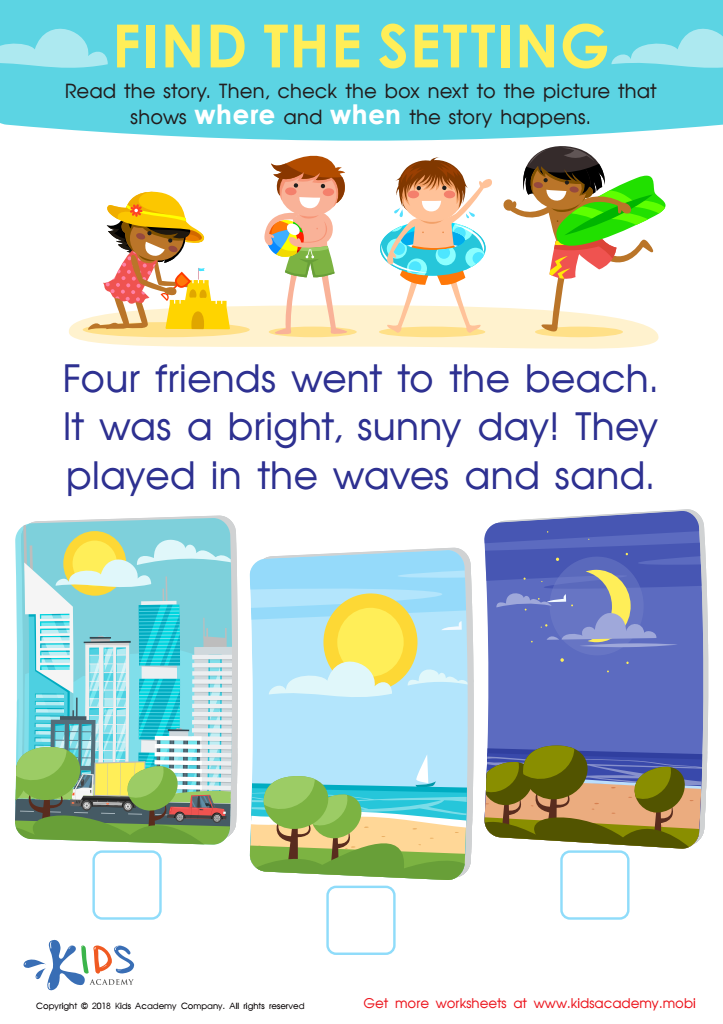
Writing a good story requires decisions about theme, plot, characters, and setting. Setting is the place and time where events occur. Read the story in this fun worksheet with your children and ensure they are paying attention. Guide them to check the box next to the picture that shows the story's setting. 80 words.
Find the Setting Worksheet
Worksheet
Where Does It Happen? Worksheet

Where Does It Happen? Worksheet

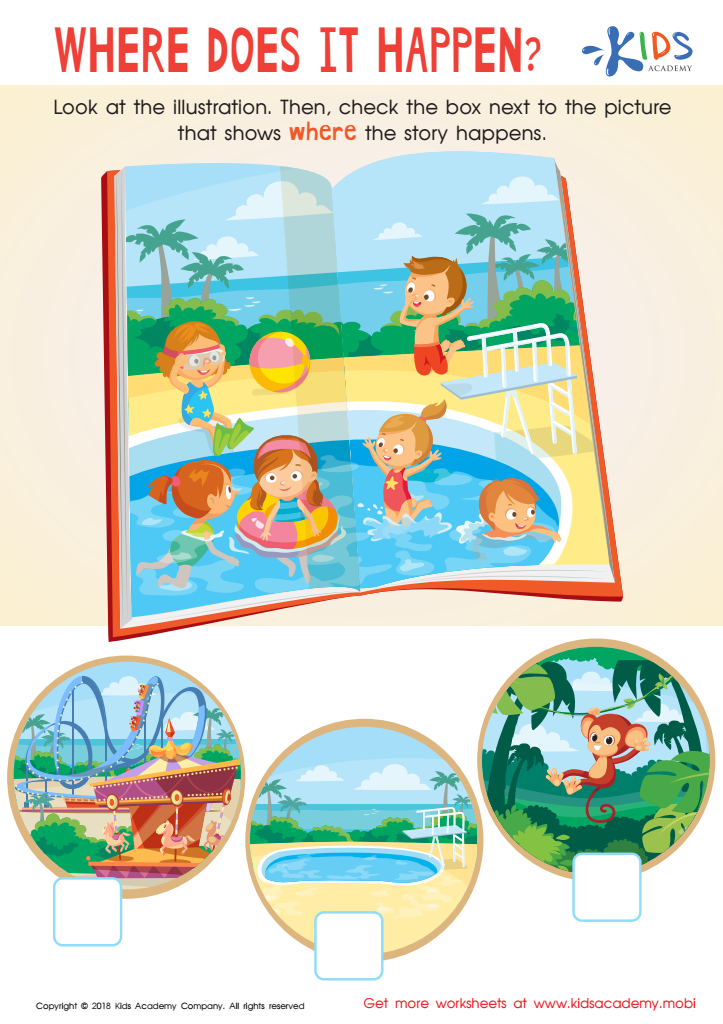
This worksheet helps kids give better descriptions of events and their locations. Look at the illustration with them, then help them check the box next to the relevant picture. This will help them explain where stories are happening or have happened.
Where Does It Happen? Worksheet
Worksheet
When Does It Happen? Worksheet

When Does It Happen? Worksheet

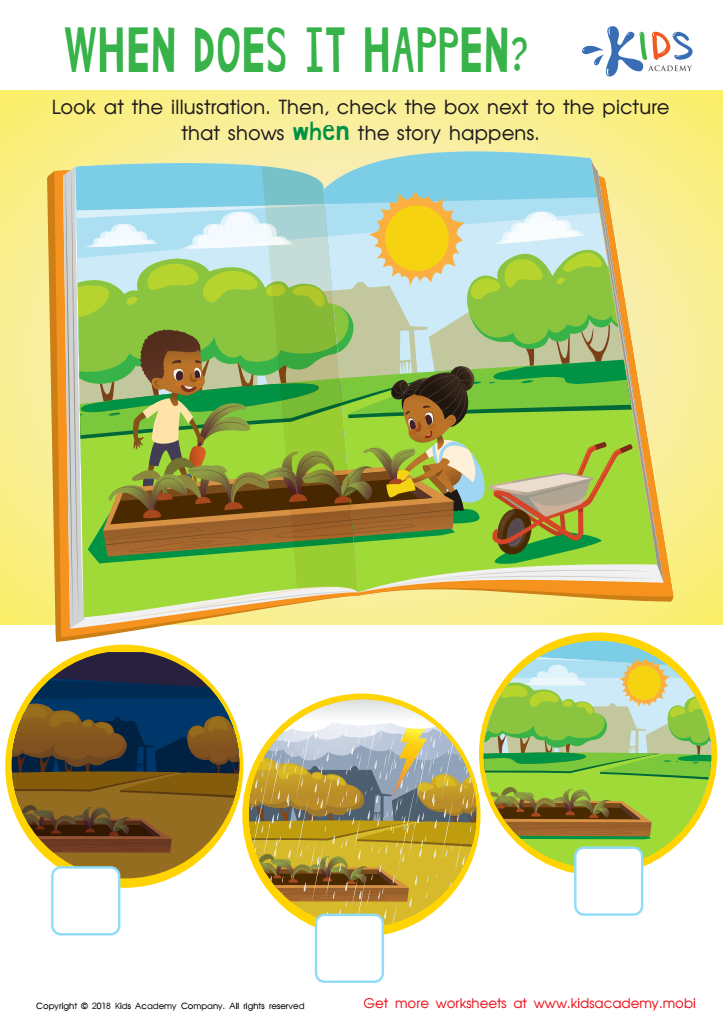
Help your kids learn about the different times of day and when events occur using this worksheet. Ask them to look at the pictures and determine which box shows when the story happened. Then, discuss how they can use this knowledge to better describe events that occur.
When Does It Happen? Worksheet
Worksheet
Identifying Poems Worksheet

Identifying Poems Worksheet

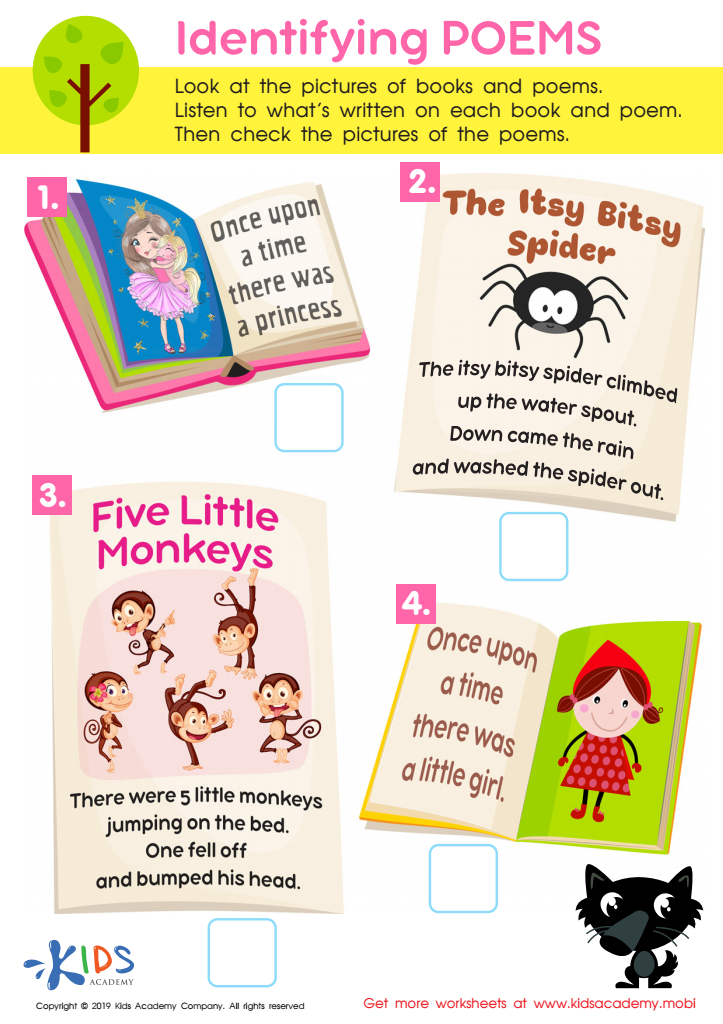
Read to your kids often and look at the pictures of books and poems in this worksheet. Guide them by reading aloud each book and poem. Make sure they are paying attention and help them check the pictures. This is a great way for your kids to learn to read properly.
Identifying Poems Worksheet
Worksheet
Picture in Books Worksheet
Picture in Books Worksheet

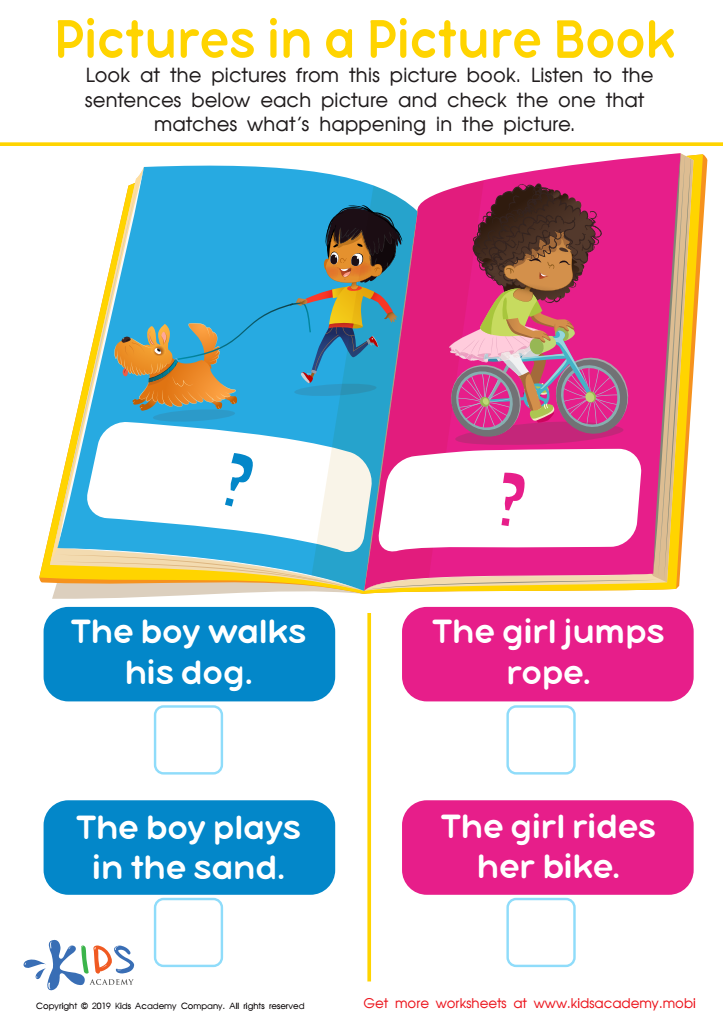
Picture books are popular with students - they're easier to read and understand because of the captions and illustrations. With preschoolers, look at the pictures in the book and read the sentences in the worksheet. Help them choose the one that matches the scene.
Picture in Books Worksheet
Worksheet
Story Structure Worksheet

Story Structure Worksheet

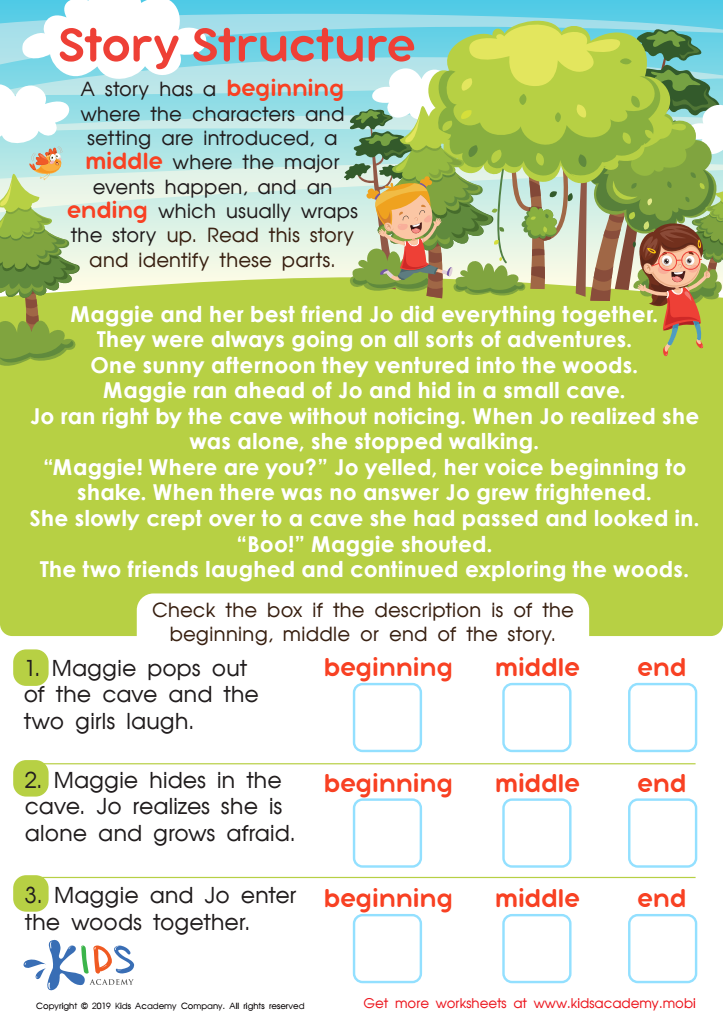
Help your students read and identify the parts of the story in this worksheet: the beginning (characters and setting), middle (major events), and ending (events are resolved). Show them how to structure a story for clarity.
Story Structure Worksheet
Worksheet
Setting of a Story Worksheet

Setting of a Story Worksheet

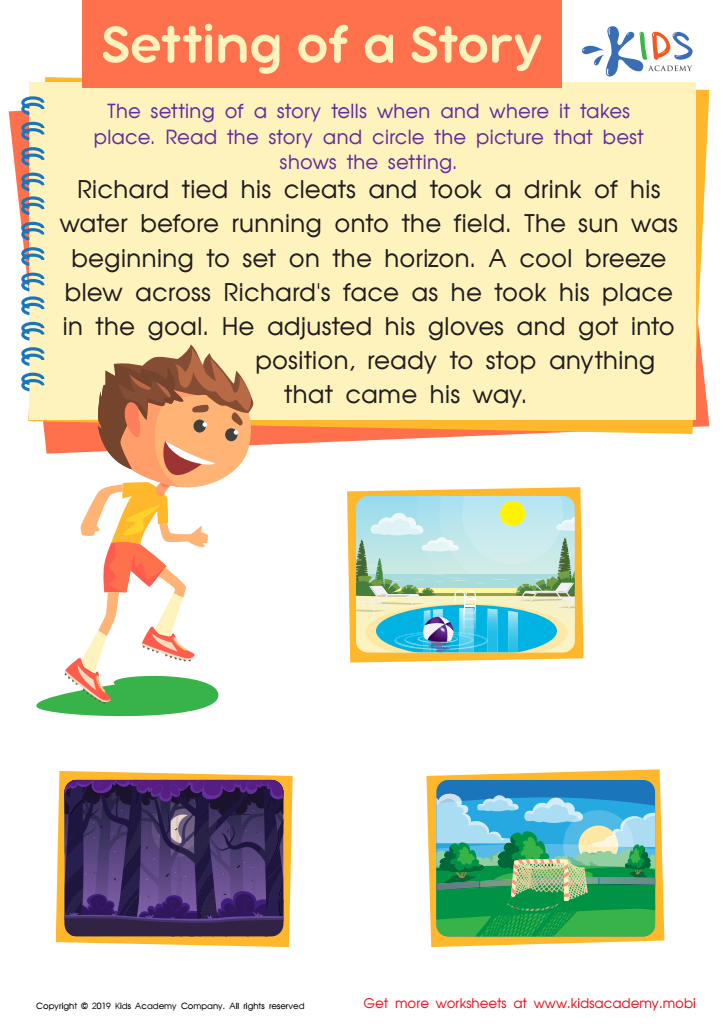
You need characters, theme, POV, plot and setting to tell a good story. Ask your kids to explain them and use this worksheet with a story to teach them about setting. Read the story with your kids, then have them circle the picture that best shows the setting.
Setting of a Story Worksheet
Worksheet
Homework Blues Worksheet

Homework Blues Worksheet

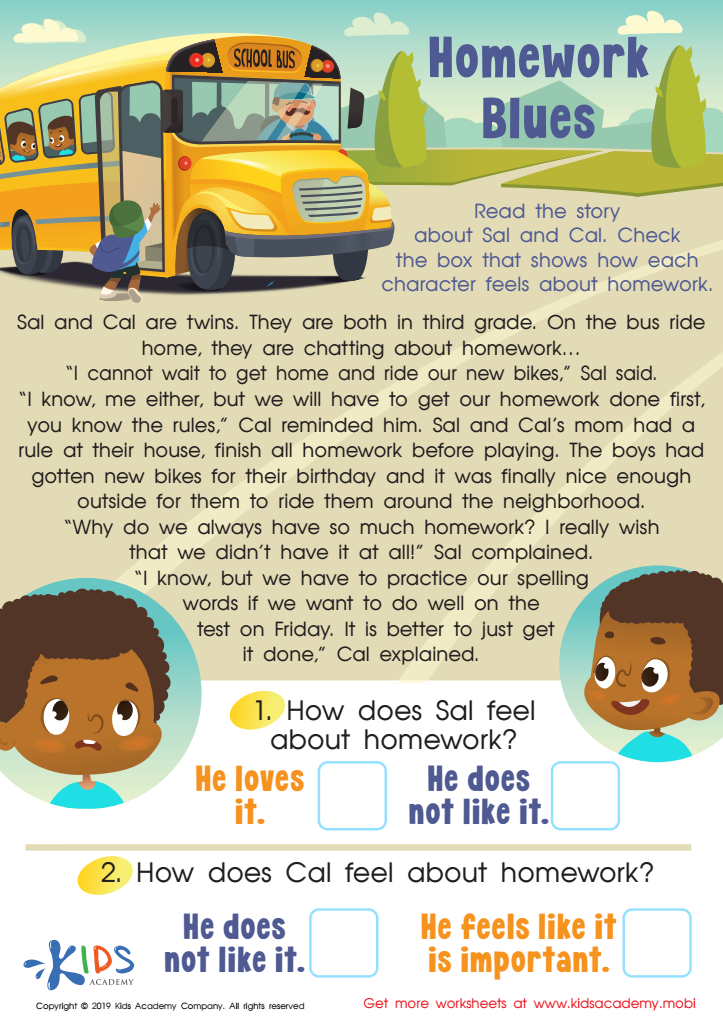
Cal and Sal don't love doing homework, just like your kids. Use this worksheet to help your children understand why homework is important. Read the passage together and then answer the questions at the bottom of the page. It's a fun way to learn together!
Homework Blues Worksheet
Worksheet
Point of View Printable

Point of View Printable

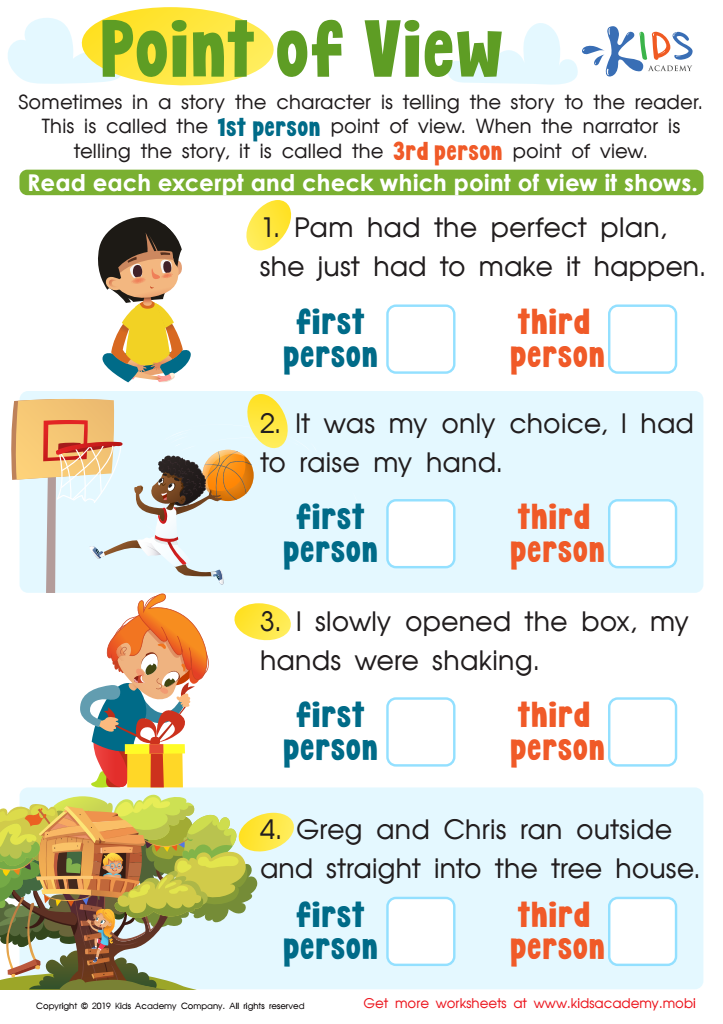
Teach your kids about points of view with this worksheet! In a story, characters can tell the story in first person or it can come from a narrator in third person. Read the excerpt in the worksheet and ask your kids to identify which point of view it is.
Point of View Printable
Worksheet
Changing Feelings Worksheet

Changing Feelings Worksheet

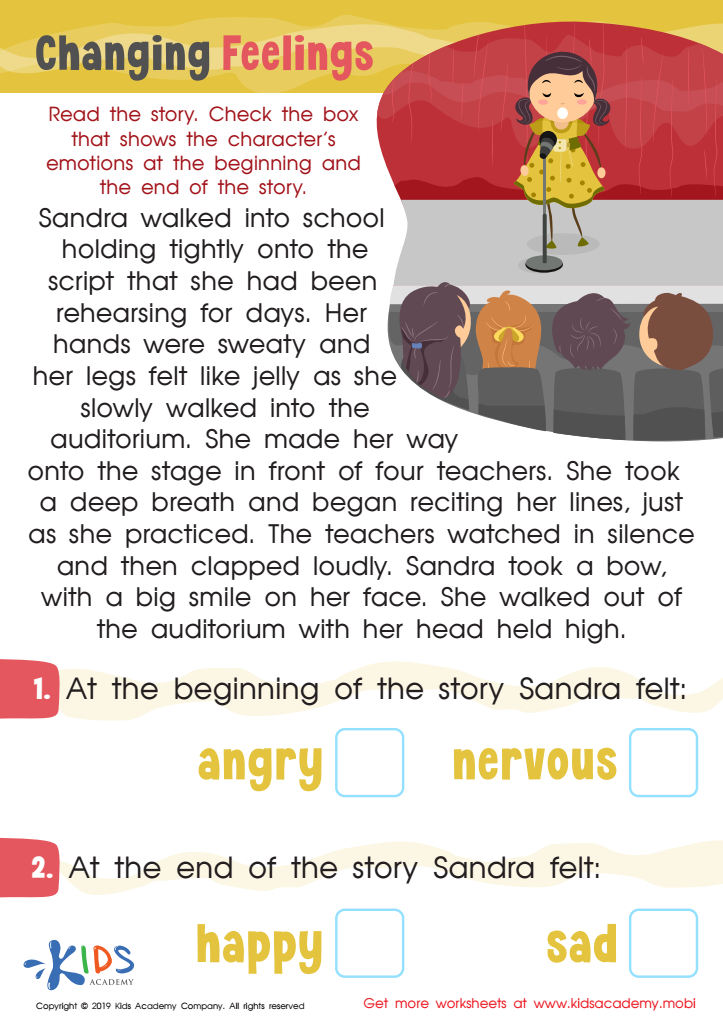
Help your kids practice reading skills with this exercise. Ask them to read the short passage, then check the boxes showing the character's emotions at the start and end. This will help them improve their reading and understanding.
Changing Feelings Worksheet
Worksheet
Character’s Feelings Worksheet

Character’s Feelings Worksheet

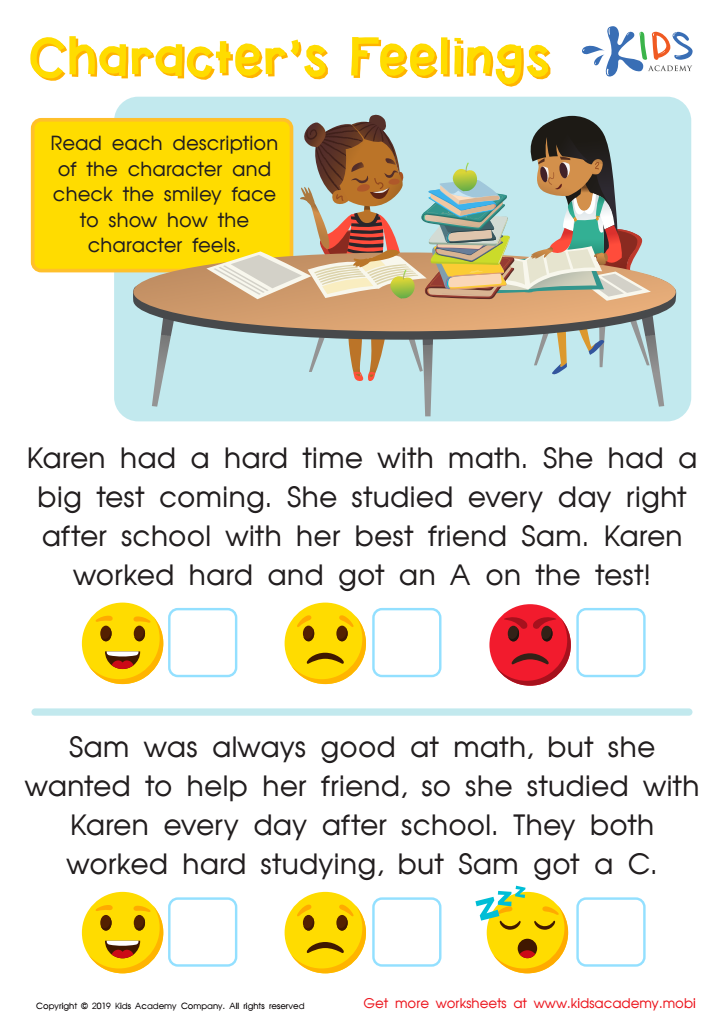
To help your child with reading and writing, encourage them to read simple texts and comprehension passages. This will help them learn new words, build their grammar and practice their reading skills. Go through a worksheet together, read the character descriptions then ask your child to pick the smiley face which shows how the character feels.
Character’s Feelings Worksheet
Worksheet
Special Day Worksheet

Special Day Worksheet

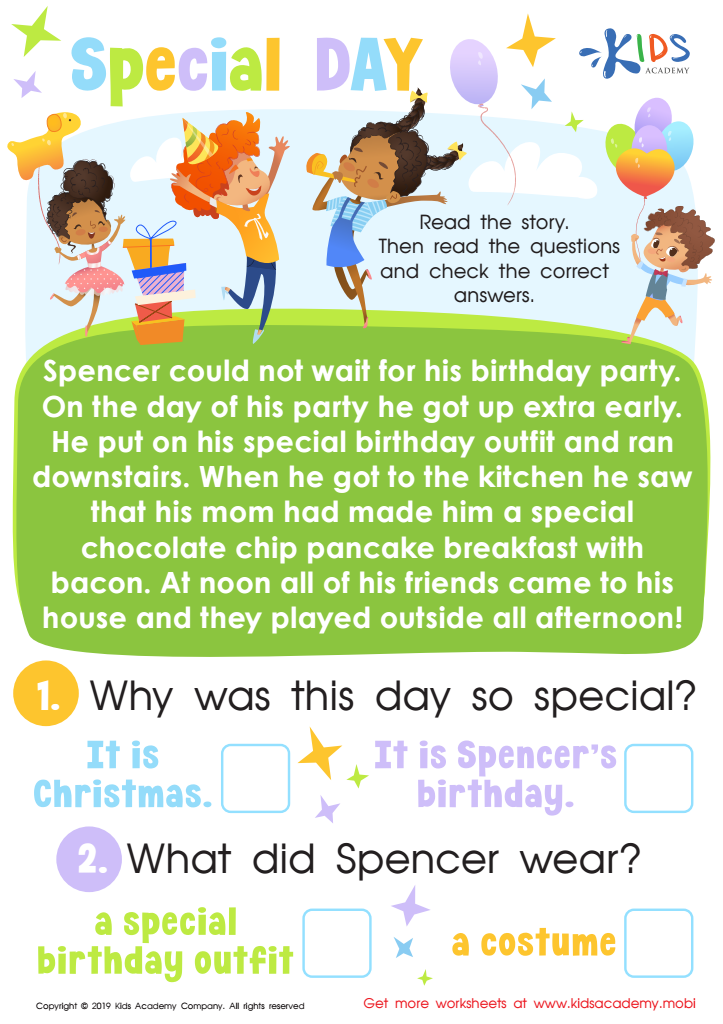
What's your child's favorite day? Let them tell you what makes it special and what they enjoy most. With the worksheet, show them the picture and ask them to identify the day. Read the story aloud, and help them answer the questions and check the right responses.
Special Day Worksheet
Worksheet
Soccer Star Worksheet

Soccer Star Worksheet

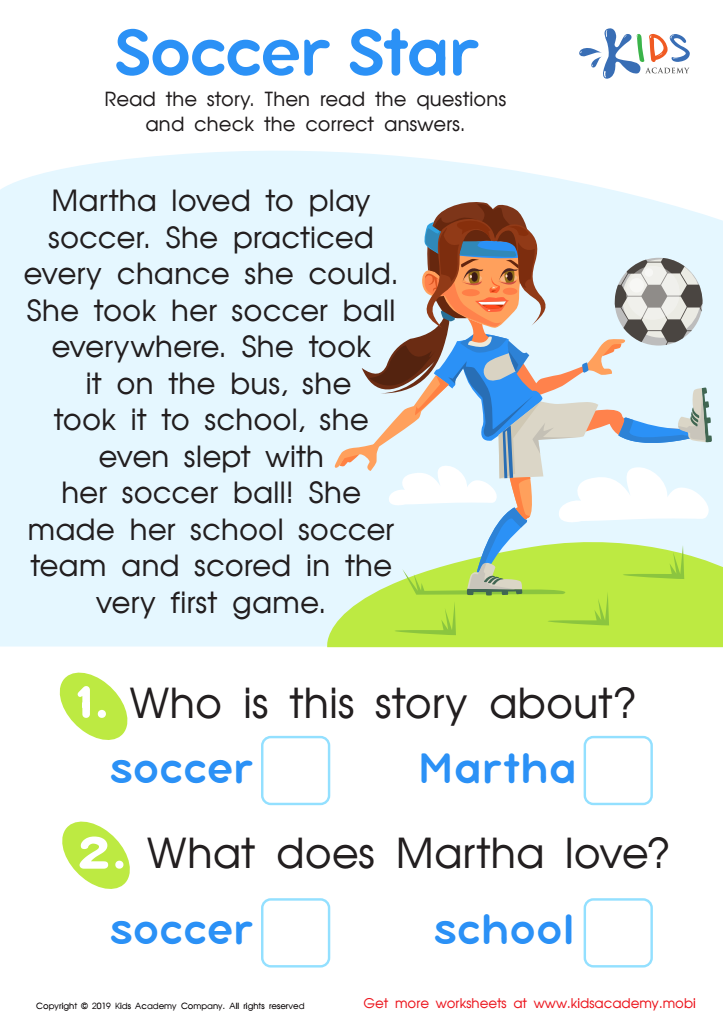
Do your kids play sports? Ask them what their favourite activities are and what they like most about them. Look at the picture in the worksheet with your kids. Can they tell you what sport the girl is playing? Read the story and help them answer the two questions at the bottom.
Soccer Star Worksheet
Worksheet
Find the Title Worksheet

Find the Title Worksheet

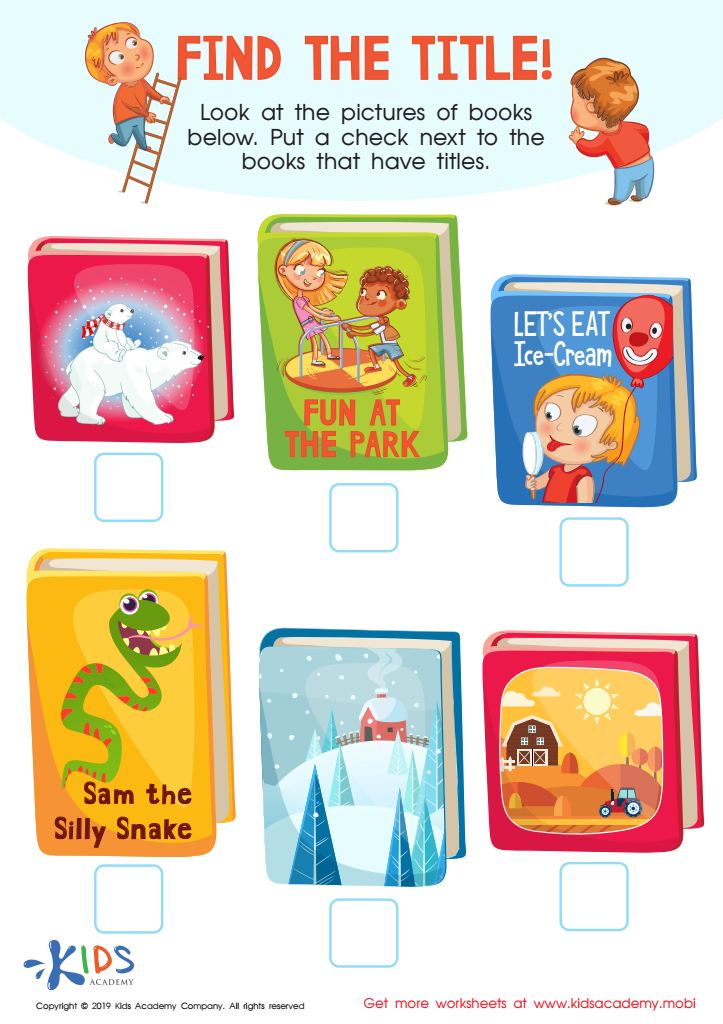
Help your kids to identify the colors of the books on this worksheet. Ask them to spot the differences between the six books, such as which ones have titles printed on their covers. Ask them to put a check next to the books with titles. This activity will promote your kids' thinking skills.
Find the Title Worksheet
Worksheet
Author's Purpose Worksheet
Author's Purpose Worksheet

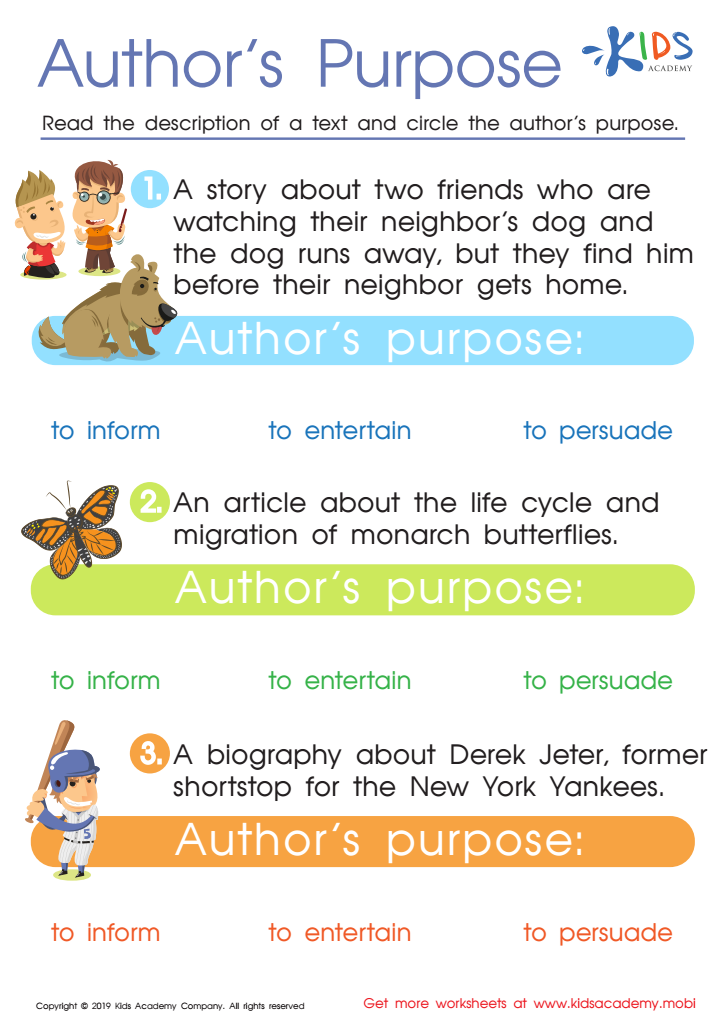
Help your kids figure out the author's purpose when they read something. In this worksheet, there are three descriptions; they must identify the author's purpose and circle it from the options provided. Doing this will help them to get correct information from what they read.
Author's Purpose Worksheet
Worksheet
Caring for the Community Worksheet

Caring for the Community Worksheet

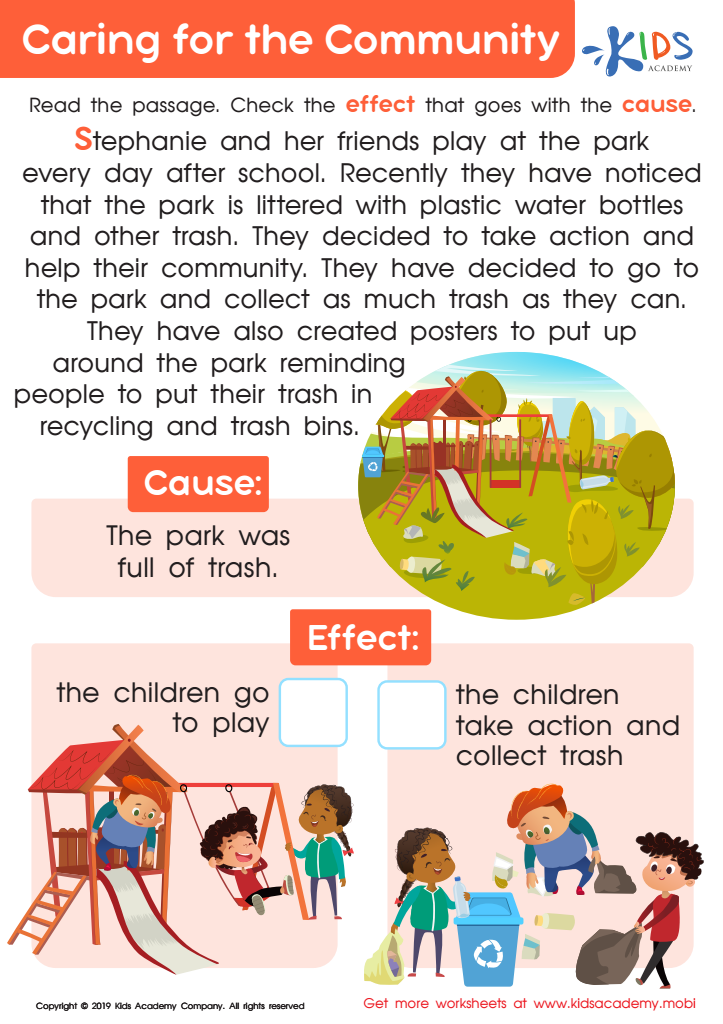
Before beginning, get your kids in the right mind-set by having them name ways to care for their community. Read the passage with them, pointing at pictures, then ask them to match the ‘cause’ with the ‘effect’ on the worksheet. This will help them learn more about how to care for their community.
Caring for the Community Worksheet
Worksheet
Craft and Structure: Assessment 1 Worksheet

Craft and Structure: Assessment 1 Worksheet

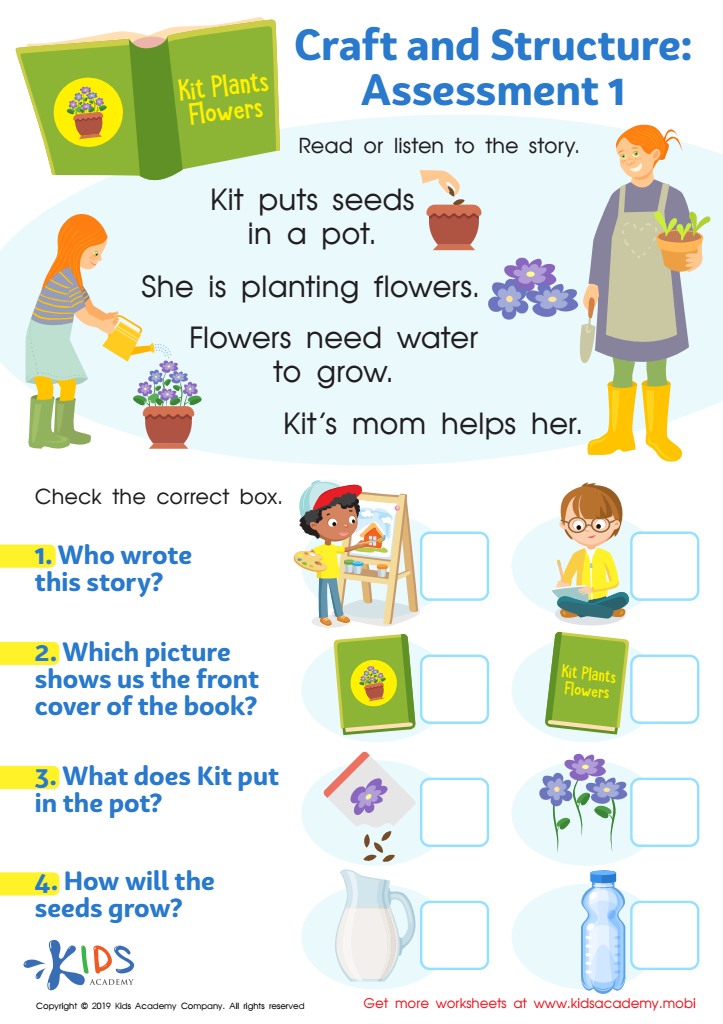
A good reader needs more than word recognition: children must be able to identify story elements like author and main points. Test your child's craft and structure knowledge with this free PDF worksheet. They will read or listen to a story, then check off the correct answers according to what they heard or read.
Craft and Structure: Assessment 1 Worksheet
Worksheet
Cities: Finding Similarities Worksheet

Cities: Finding Similarities Worksheet

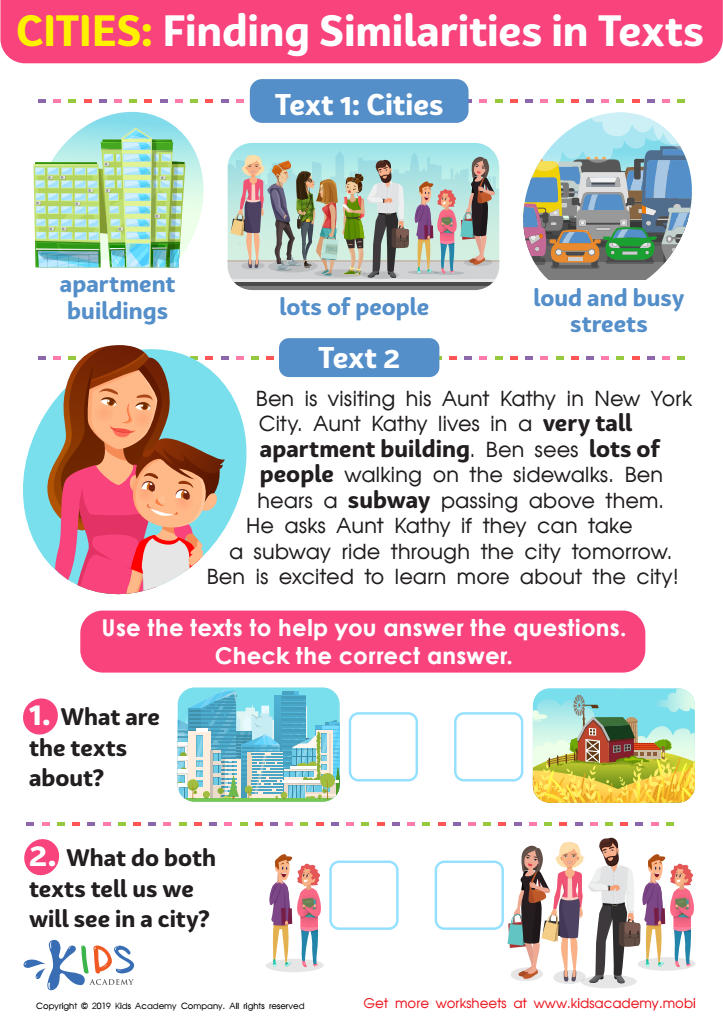
This worksheet offers kids a chance to explore how information can be presented differently but still contain similar facts. They'll compare two texts and look for similarities, honing their reading comprehension and critical thinking skills.
Cities: Finding Similarities Worksheet
Worksheet
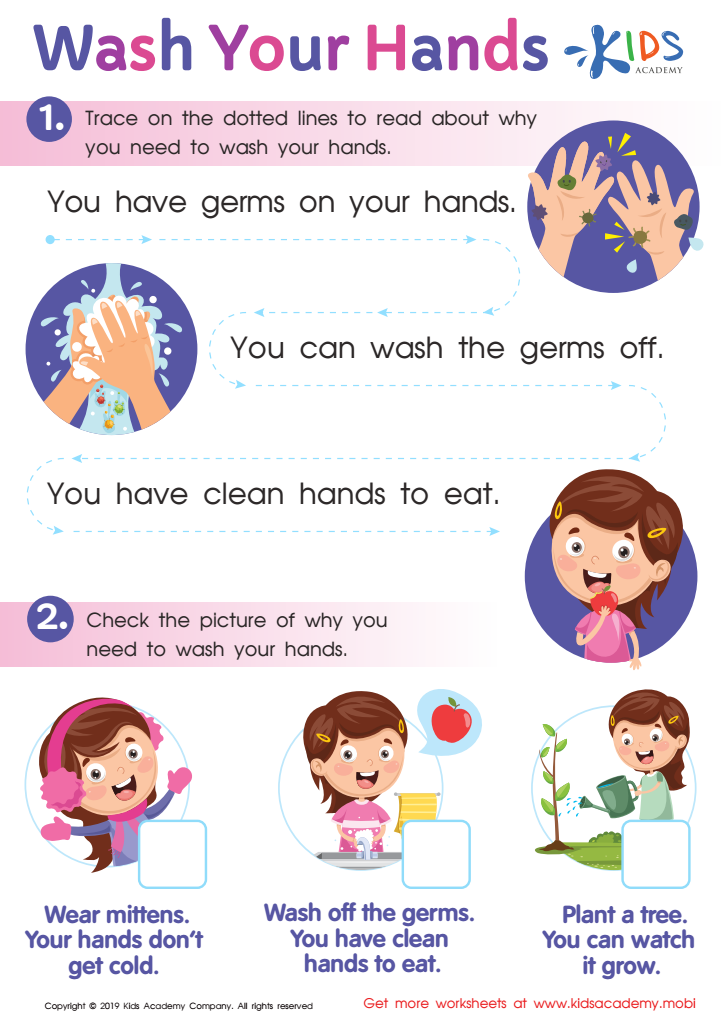
Wash Your Hands Worksheet

Wash Your Hands Worksheet

Kids learn best when they understand why they need to do something. This free worksheet uses traceable lines and pictures to teach them about germs and why washing hands is important. The child follows a left-to-right sequence and must check the correct picture to show they understand.
Wash Your Hands Worksheet
Worksheet
Authors and Illustrators Worksheet

Authors and Illustrators Worksheet

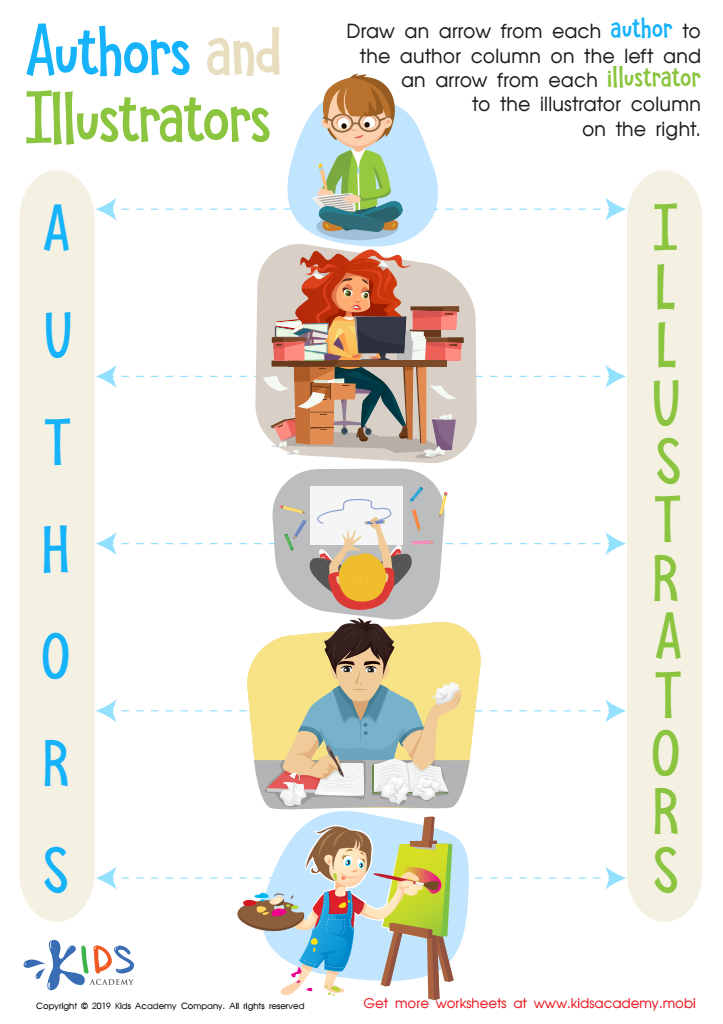
This free PDF provides a simple and fun way to understand the roles of authors and illustrators for beginning readers. It offers concrete pictures of what each one does and traceable lines for children to decide whether they are an author or an illustrator. It will help build their critical thinking skills and foster a better understanding of the book-making process.
Authors and Illustrators Worksheet
Worksheet
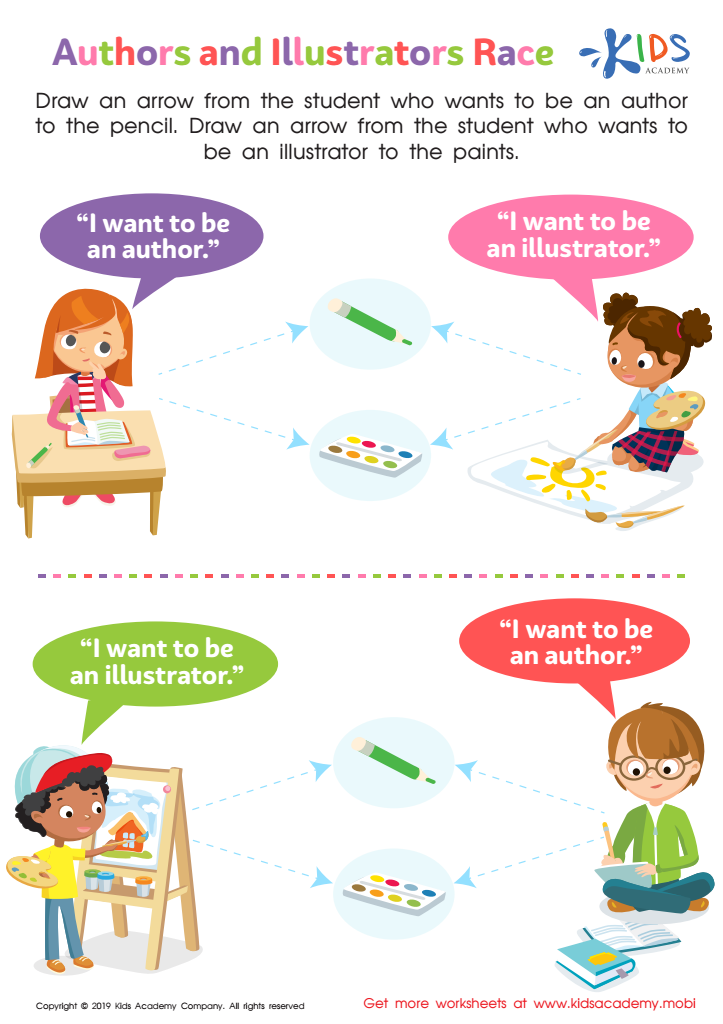
Authors and Illustrators Race Worksheet

Authors and Illustrators Race Worksheet

Help your child learn about the author and illustrator of a book with this free and colorful worksheet. They'll trace lines to pick the tools used by each and understand the difference between them. It's a great way to introduce fundamental concepts of reading.
Authors and Illustrators Race Worksheet
Worksheet
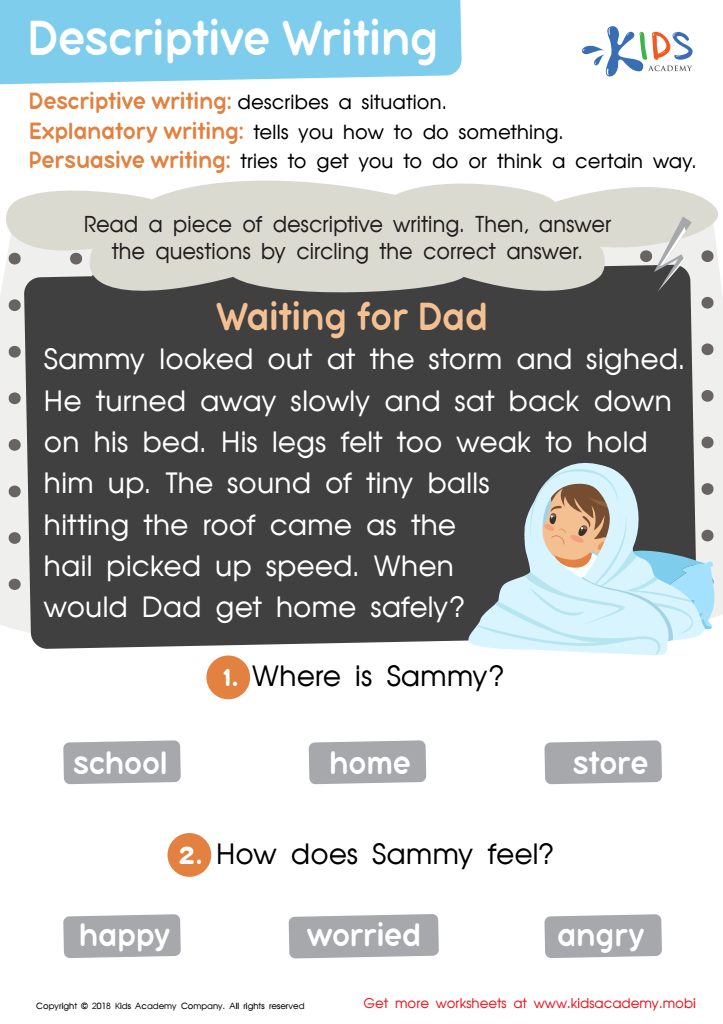
Descriptive Writing Worksheet: Part 2

Descriptive Writing Worksheet: Part 2

In this worksheet, your kids will explore writing styles like descriptive, explanatory and persuasive. Read them the descriptive text, then have them answer the questions. Writing is an art – it's a way to express emotions, tell stories and share information.
Descriptive Writing Worksheet: Part 2
Worksheet
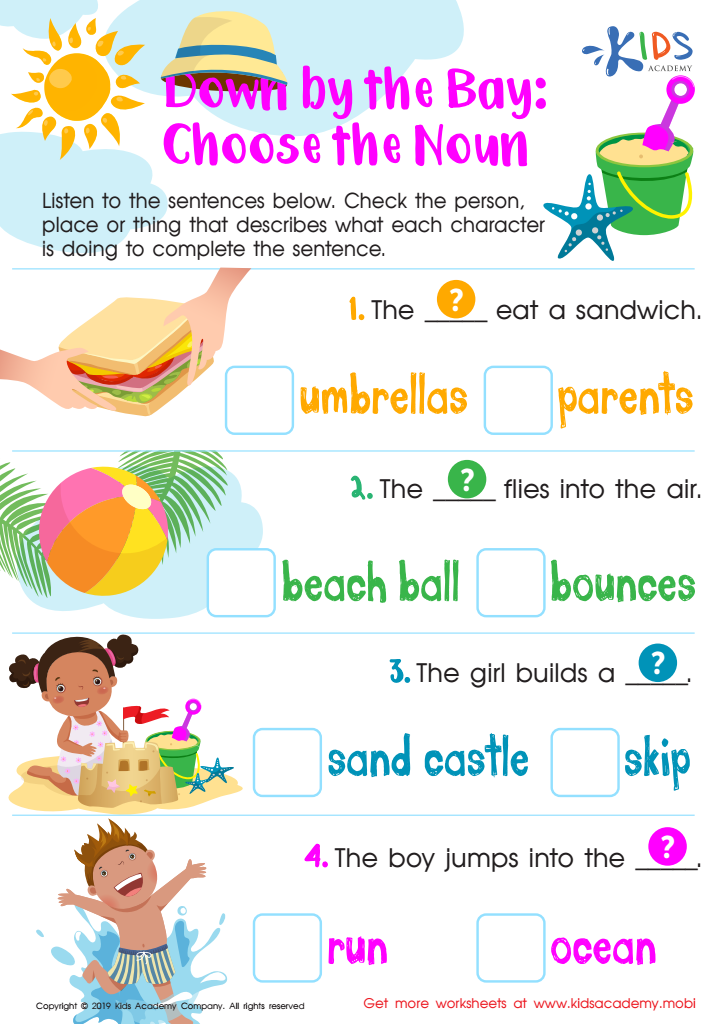
Down by the Bay: Choose the Noun Worksheet

Down by the Bay: Choose the Noun Worksheet

Teach your child the basics of speaking and constructing English, like the parts of speech. Nouns are especially important; they are names of people, animals, objects, places, or things. Go through this worksheet with your kids and have them identify the nouns in the sentences. This exercise will help them understand the concept better.
Down by the Bay: Choose the Noun Worksheet
Worksheet
“The Princess and the Pea” and “Cinderella” Worksheet


“The Princess and the Pea” and “Cinderella” Worksheet

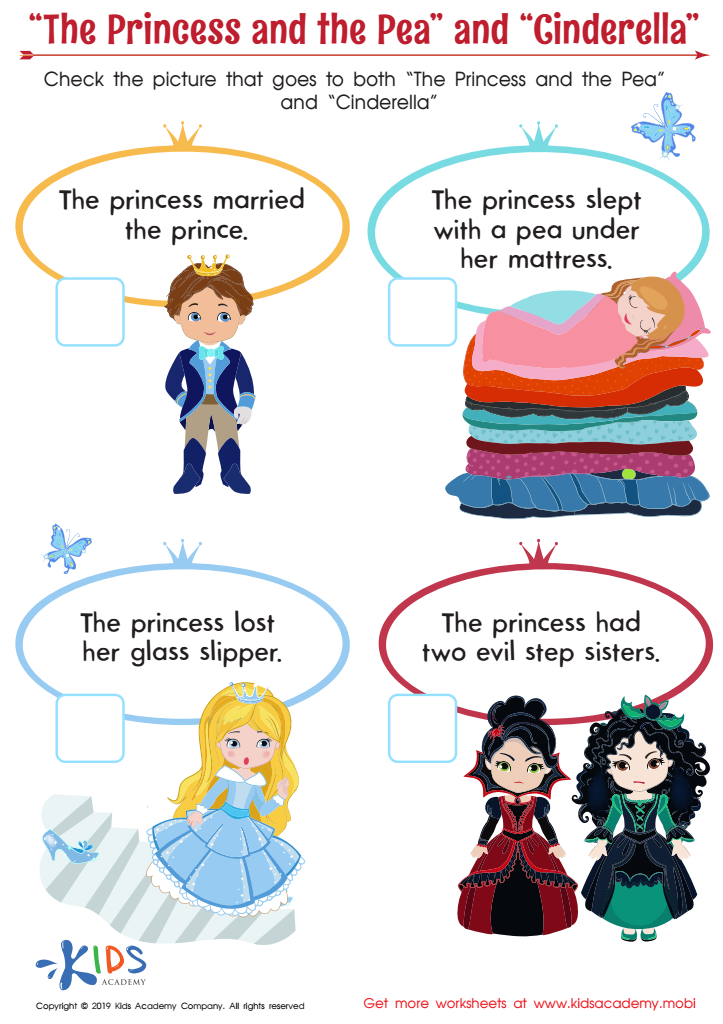
Read "Cinderella" and "The Princess and the Pea" to your little ones. Ask them what their favorite parts were and what similarities they found in the princesses. This worksheet has four pictures of scenes from the stories. Ask your kids which picture goes with both tales.
“The Princess and the Pea” and “Cinderella” Worksheet
Worksheet


Reading fiction to children aged 4-7 is vital for their developmental growth and emotional well-being. At this stage, children's imaginations flourish, and exposure to fictional stories can significantly enhance their creativity. Engaging narratives help them explore different worlds, characters, and situations, fostering empathy and understanding of diverse perspectives.

Moreover, reading fiction promotes language development by introducing new vocabulary and sentence structures in a memorable context. As children listen to stories, they encounter rhythms of language and develop auditory discrimination skills, which are crucial for future literacy. This early exposure to reading lays a strong foundation for comprehension skills, enabling children to make sense of texts as they progress to more complex literature.

Furthermore, fiction helps in building concentration and attention spans. As children become absorbed in stories, they learn to follow plots and anticipate outcomes, stimulating critical thinking and increasing their curiosity about the world around them. Such sessions also nurture a love for reading, making it a lifelong habit that benefits academic success. Ultimately, prioritizing reading fiction can transform these formative years into a supercharged launchpad for cognitive, social, and emotional development, paving the way for well-rounded individuals.