Filters

52 filtered results

Clear all filters
Favorites
With answer key
Interactive

52 filtered results

Difficulty Level

Grade


Check out this FREE Trial Lesson on Animals for age 4-7!

Animal Habitats

Favorites
With answer key
Interactive
  • 4-7
  • Interactive
  • Animals
Arctic Animals Worksheet

Arctic Animals Worksheet

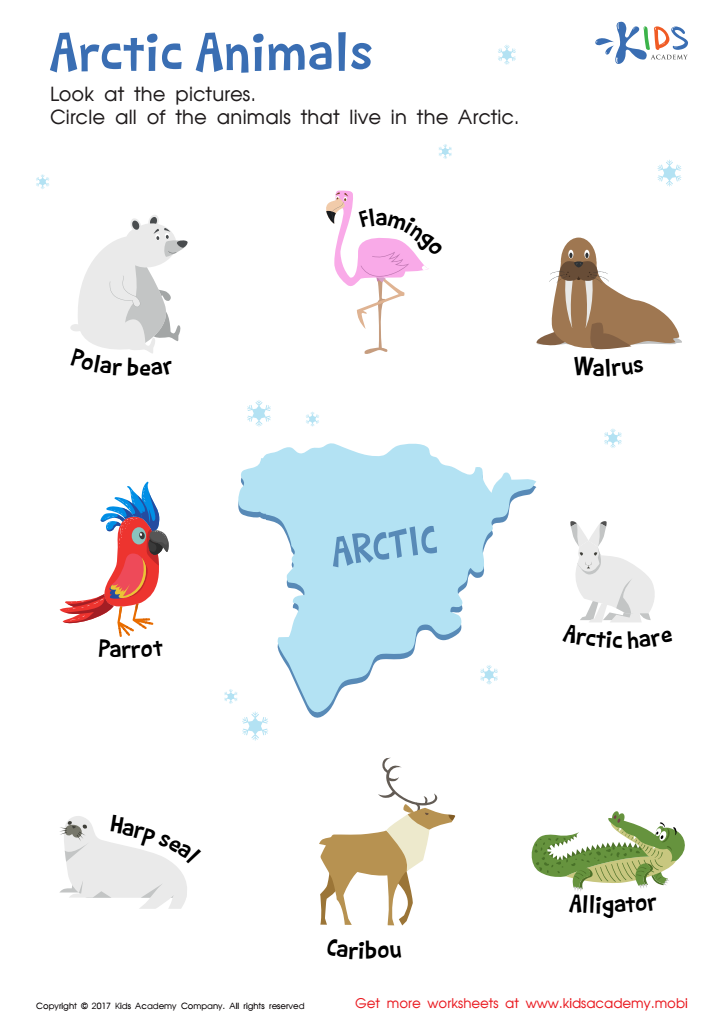
Kids love animals and this worksheet is a great way to teach them where they live. It reinforces classification skills and introduces new animals, like the Arctic hare. Use it to discuss the Arctic climate and how these animals live, then ask your child where other animals live to keep the conversation going.
Arctic Animals Worksheet
Worksheet
Mammals and Reptiles Worksheet

Mammals and Reptiles Worksheet

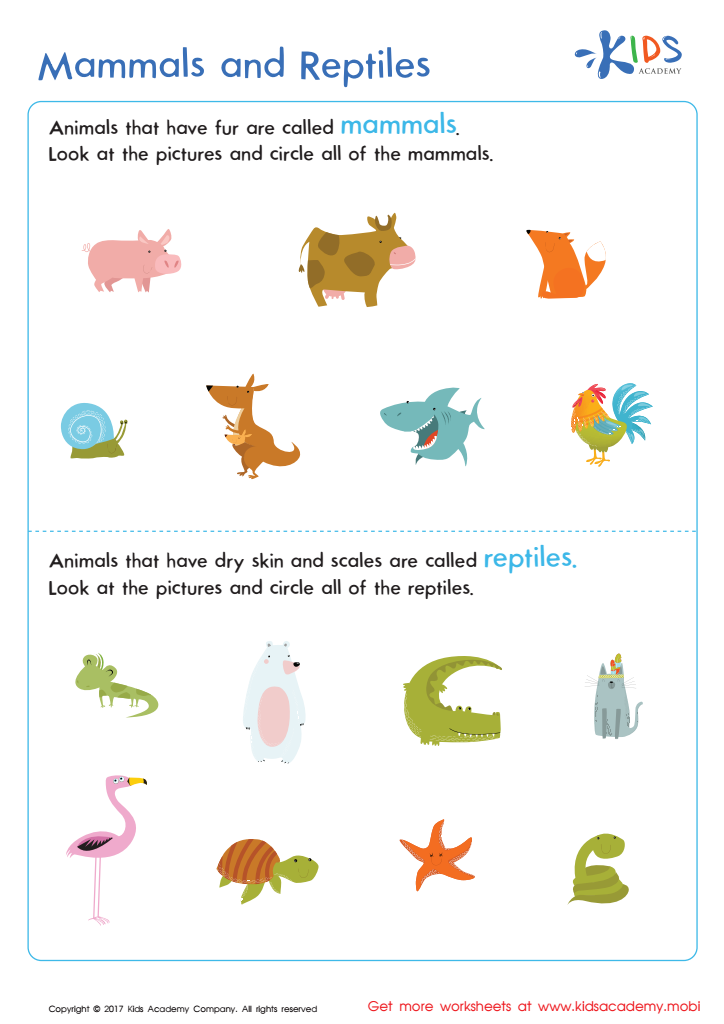
Challenge your child to identify mammals and reptiles with this worksheet. It's a great way to help them recognize the differences between these two types of animals.
Mammals and Reptiles Worksheet
Worksheet
Living and Non-living Worksheet

Identifying Living or Non–living Worksheet
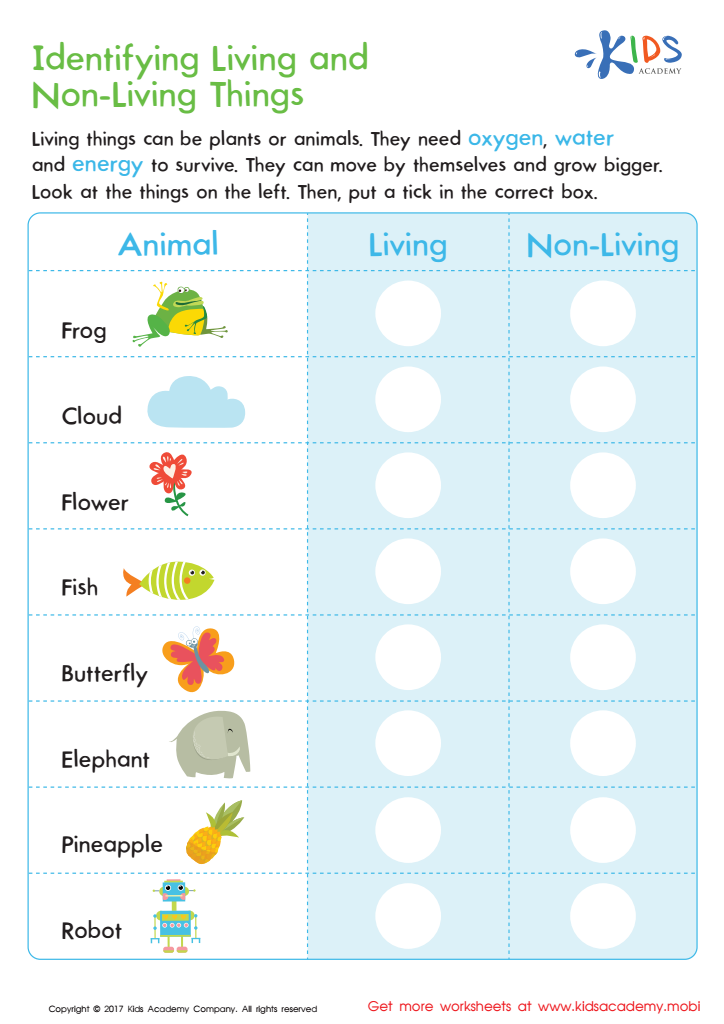
Help your child learn to sort and categorize in a new way! Teach them to classify things as living or non-living using this worksheet. It's the perfect way to build their scientific understanding, and to have some learning fun! Print this worksheet and watch them discover the world of science!
Identifying Living or Non–living Worksheet
Worksheet
Where Animals Live PDF Worksheet

Where Animals Live Worksheet

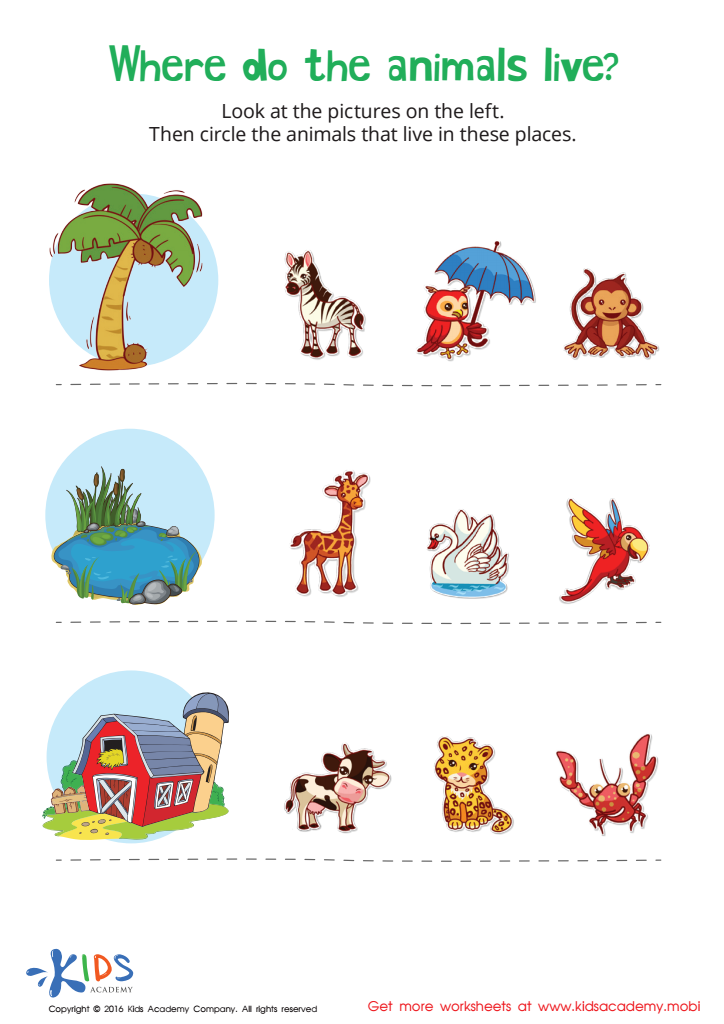
Teaching early reading and math skills is important, but don't forget about science. With the Where Animals Live PDF worksheet, kids can identify their favorite animals and the environments they live in. Ask them what type of environment the animals like and introduce them to geography. It's great for logical reasoning and classification skills. Your kid will practice with their favorite animals and love the trip to the zoo afterwards!
Where Animals Live Worksheet
Worksheet


... 2 3

Parents and teachers should care about animals for children aged 4-7 for several important reasons. First, learning about animals fosters children's natural curiosity and wonder about the world around them. This age group is particularly inquisitive, making it the perfect time to nurture an appreciation for living creatures.

Animals are also an excellent way to teach important life skills and values, such as empathy, kindness, and respect for all forms of life. Engaging with animals helps children understand the concept of care and responsibility, whether it’s through observing pets, visiting zoos, or participating in nature walks. Through these experiences, children learn that all beings have feelings and needs, promoting emotional intelligence.

Additionally, animals play a significant role in environmental education. Familiarizing young learners with different species and their habitats encourages them to think critically about nature and instills a sense of stewardship for the environment.

Lastly, discussing animals can enhance literacy and communication skills. Stories about animals can ignite imaginative thinking, leading to creative storytelling and discussions. Overall, incorporating animals into early education cultivates a rich, holistic learning experience that nurtures compassion and a better understanding of the world.