Filters

229 filtered results

Clear all filters
Favorites
With answer key
Interactive

229 filtered results

Difficulty Level

Grade


Check out this FREE Trial Lesson on Writing for age 4-7!

Collective nouns

Favorites
With answer key
Interactive
  • 4-7
  • Interactive
  • Writing
Plural Nouns Ending with -o Worksheet

Plural Nouns Ending with -o Worksheet

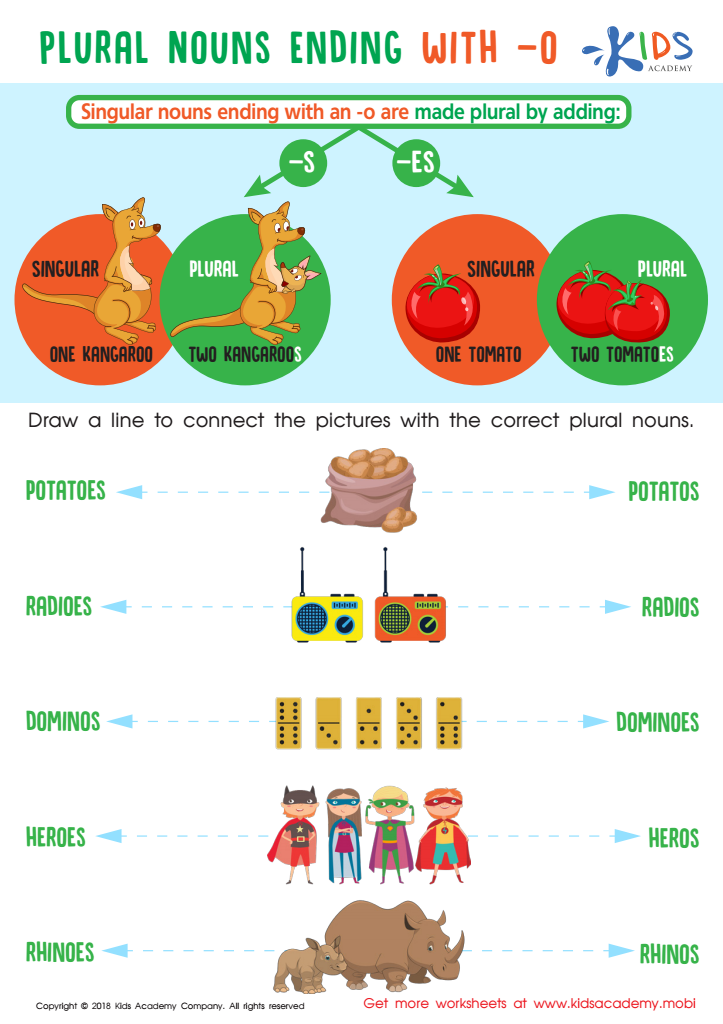
Have your child use this printable sheet to learn how to make singular nouns plural. Ask them to draw a line from pictures to the correct plural forms, such as 'kangaroos' and 'tomatoes'. This worksheet provides an easy and fun way for your child to learn this important grammar concept.
Plural Nouns Ending with -o Worksheet
Worksheet
Regular Plural Nouns Worksheet

Regular Plural Nouns Worksheet

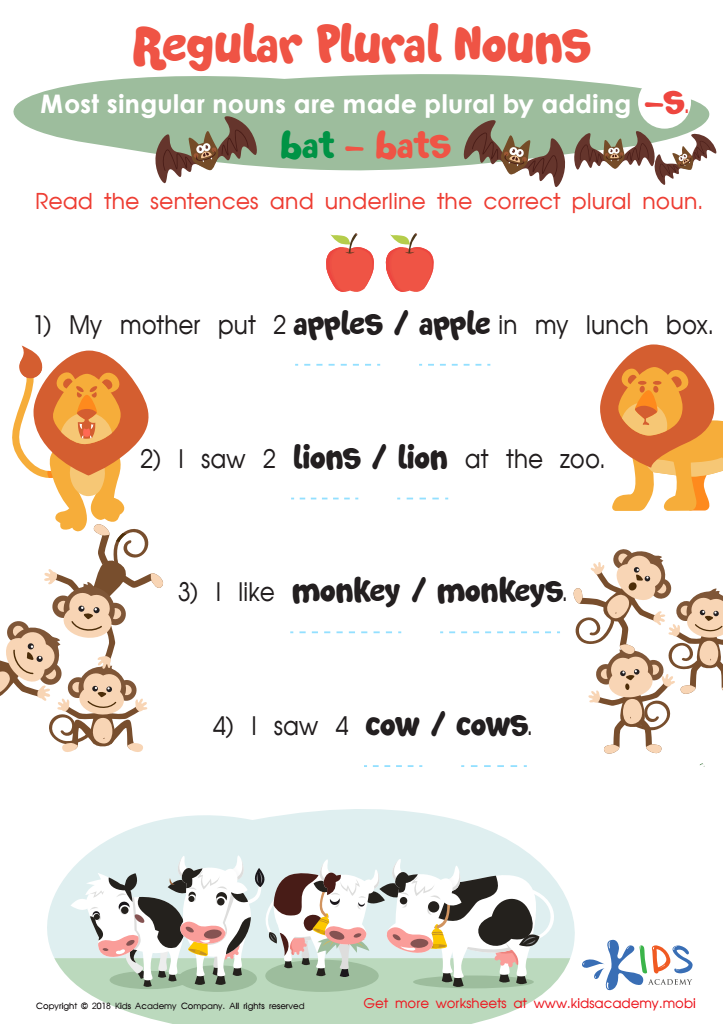
Your child should know the rule of adding '-s' to form plurals of nouns by now. Examples: bat-bats, cat-cats, song-songs etc. If they understand this, the task in the worksheet should be easy. Read the sentences and ask them to underline the correct plural noun.
Regular Plural Nouns Worksheet
Worksheet
Tricky Nouns: Irregular Plurals Practice Worksheet

Tricky Nouns: Irregular Plurals Practice Worksheet

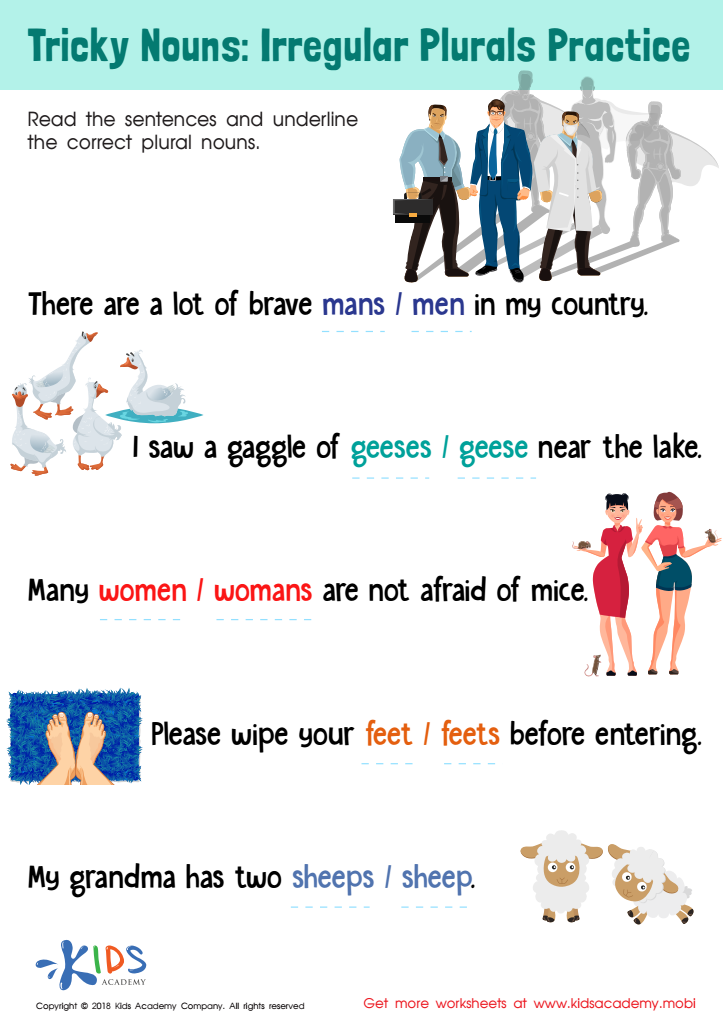
Rules for forming plurals of words can be tricky, but with practice, your child can learn to identify the right ones. This worksheet provides the necessary practice - ask your child to read the sentences, then underline the correct plural words.
Tricky Nouns: Irregular Plurals Practice Worksheet
Worksheet
Collective Nouns Practice Worksheet

Collective Nouns Practice Worksheet

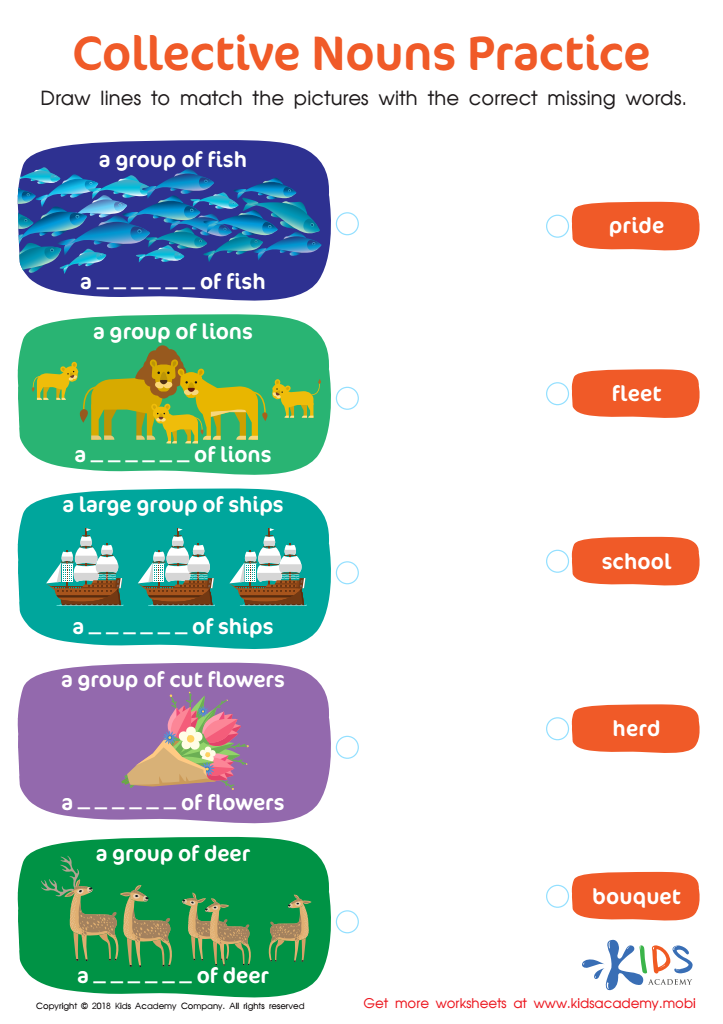
This worksheet helps your child master collective nouns. Five pictures show different groups of nouns, and your child must draw lines to the right collective noun words. It's a great way to help them sort out the words and understand collective nouns.
Collective Nouns Practice Worksheet
Worksheet
Singular or Plural? - Part 2 Worksheet

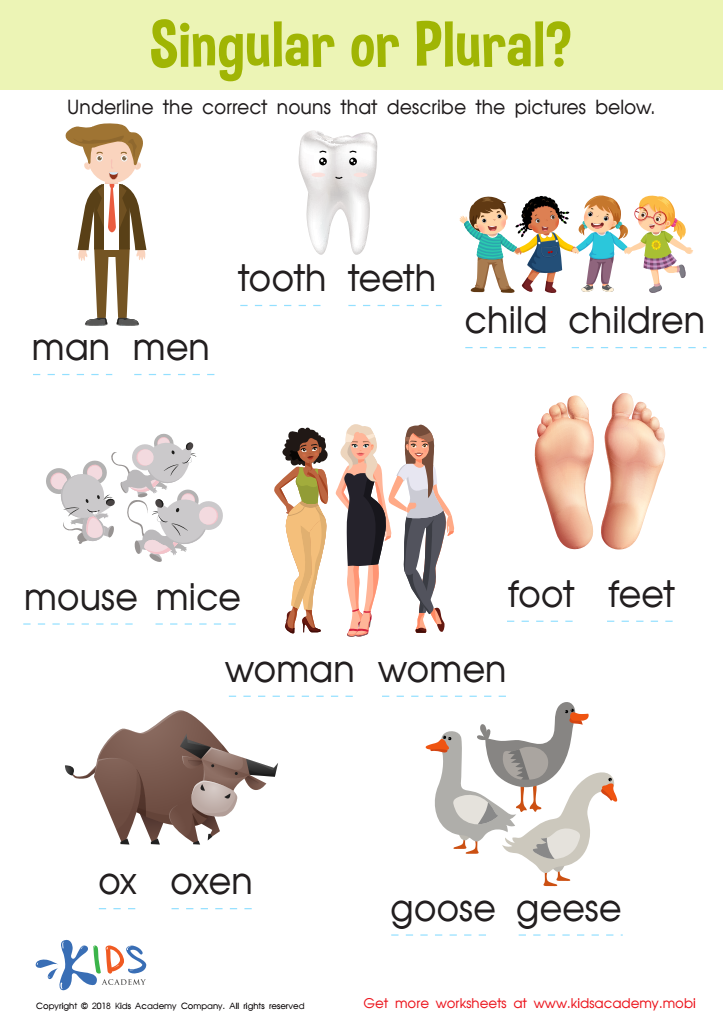
Singular or Plural? - Part 2 Worksheet

If your child knows their nouns, help them understand singular and plural words. Some are straightforward to make plural, but the rules can be tricky. Ease their confusion with this worksheet; they need to underline the correct nouns (singular or plural) that describe the pictures.
Singular or Plural? - Part 2 Worksheet
Worksheet
Plural Nouns Practice Worksheet

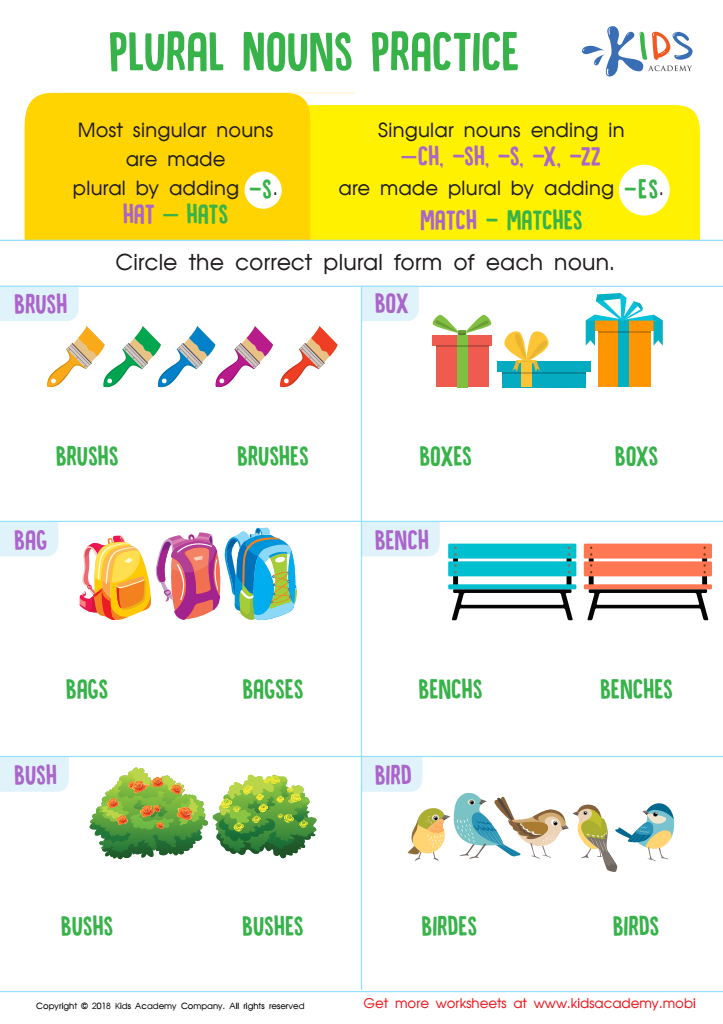
Plural Nouns Practice Worksheet

Explain to your child that most singular nouns become plural by adding "-s". E.g. "cat"->"cats". For words ending in "-ch", "-sh", "-s", "-x", or "-zz", add "-es". E.g. "buzz"->"buzzes". Then, get them to circle the right plural form of each noun on the worksheet.
Plural Nouns Practice Worksheet
Worksheet
Spider Verbs Worksheet

Spider Verbs Worksheet

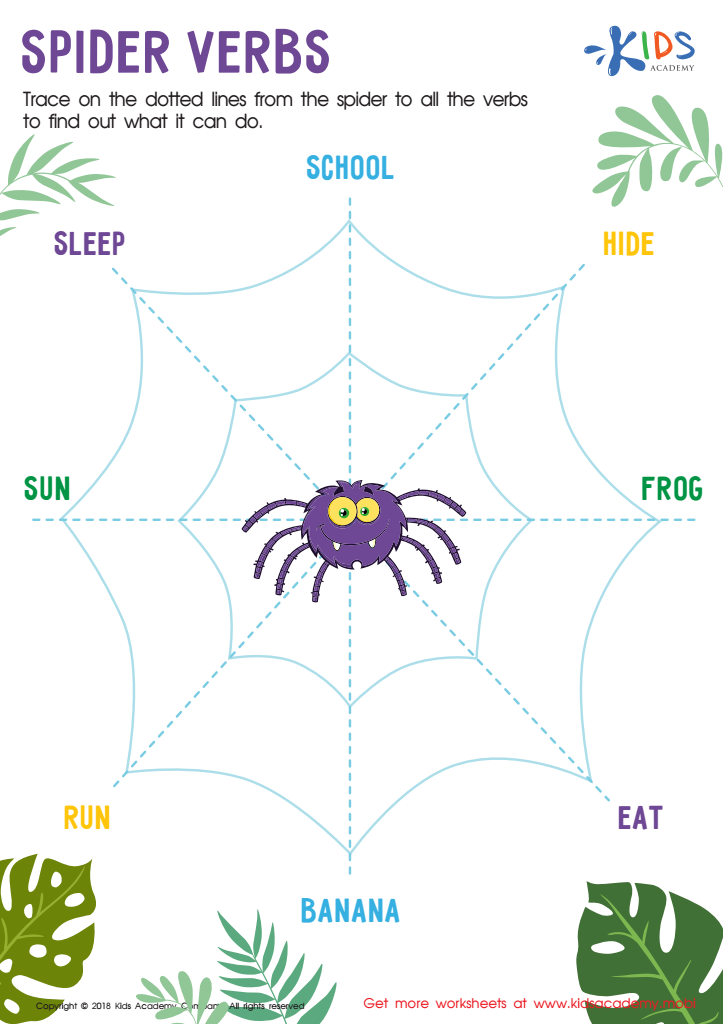
Verbs are action words. Examples: run, play, talk. Show your child this tracing sheet for them to learn about verbs. Ask them to trace the dotted lines from the spider to the words that are verbs. These words are what the spider can do.
Spider Verbs Worksheet
Worksheet
Verbs and Nouns Worksheet

Verbs and Nouns Worksheet

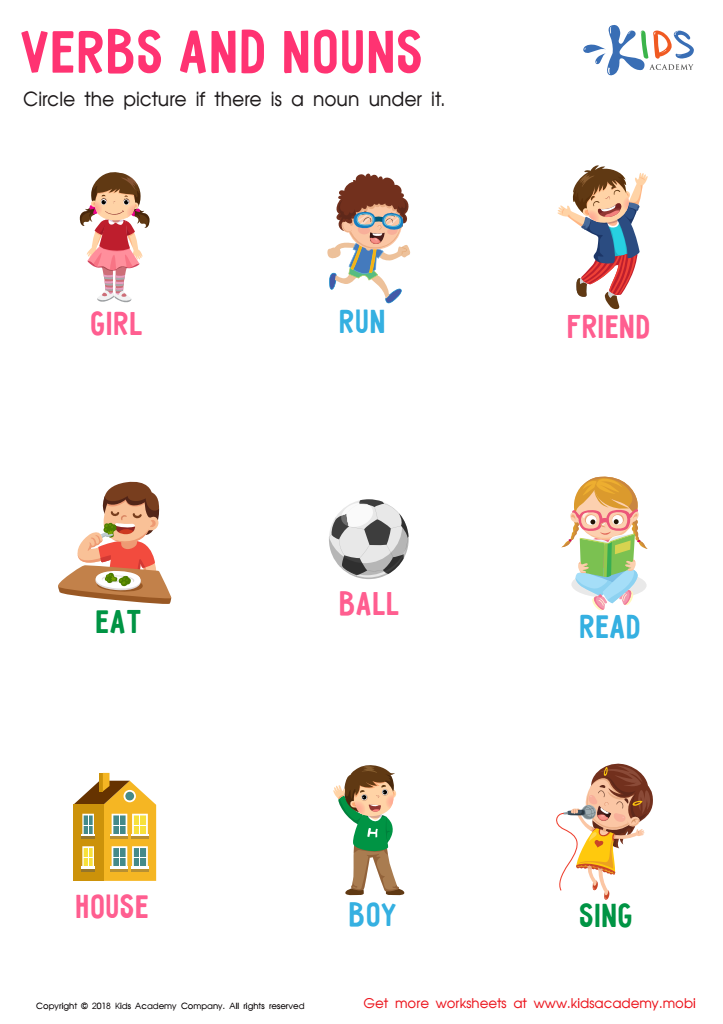
Your child should have basic knowledge of verbs and nouns before starting this worksheet. Go through it with them and ask them to circle the pictures with nouns under them. This way, they'll become more familiar with parts of speech.
Verbs and Nouns Worksheet
Worksheet
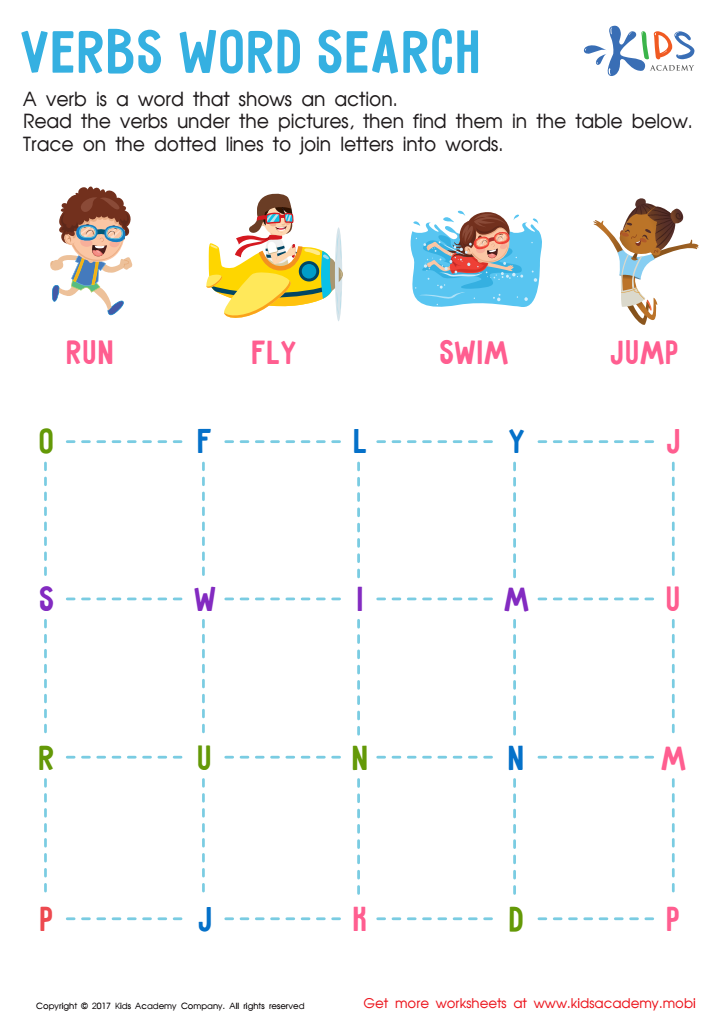
Verbs Word Search Worksheet

Verbs Word Search Worksheet

Ask your child if they understand the meaning of the word "verb". If not, explain that it's a word that shows an action. Give examples of familiar verbs. Then look at the pictures in the tracing sheet and read the words. Ask your child to follow the dotted lines to find the hidden words. Perfect tool to teach spot and use verbs!
Verbs Word Search Worksheet
Worksheet
Read from Left to Right: Hats and Spiders Worksheet

Read from Left to Right: Hats and Spiders Worksheet

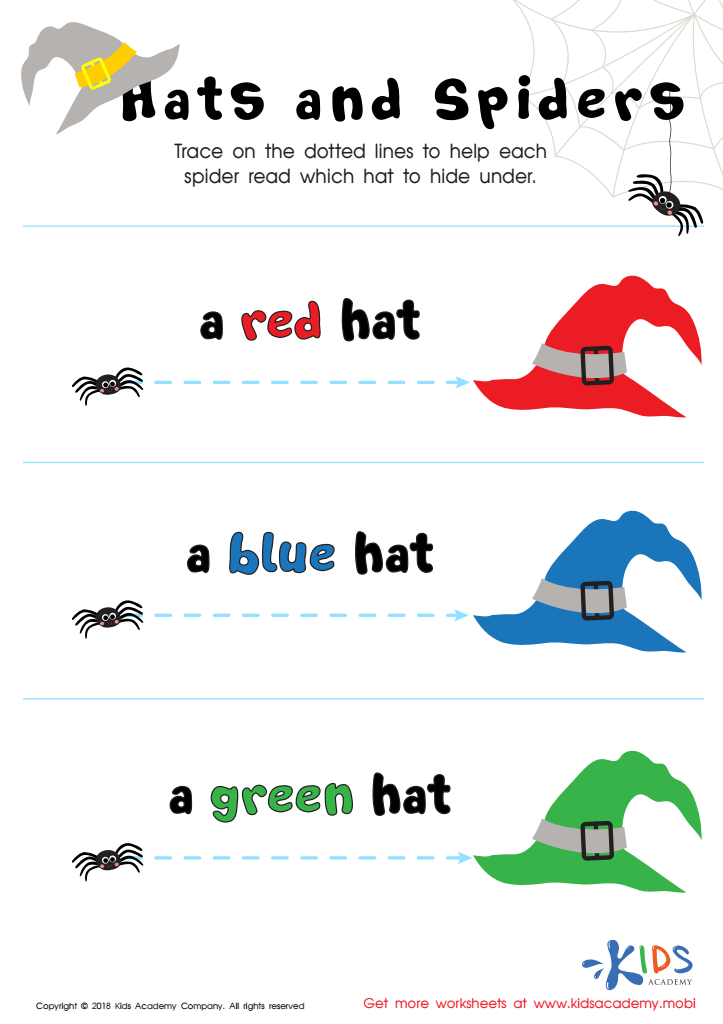
Do your kids love or fear spiders? Either way, they'll enjoy helping the little critters with this traceable worksheet. Ask them to read out the words in the picture, explaining it's the description of the hats. Then help them trace on the dotted lines, so the spiders know which hat to hide under.
Read from Left to Right: Hats and Spiders Worksheet
Worksheet
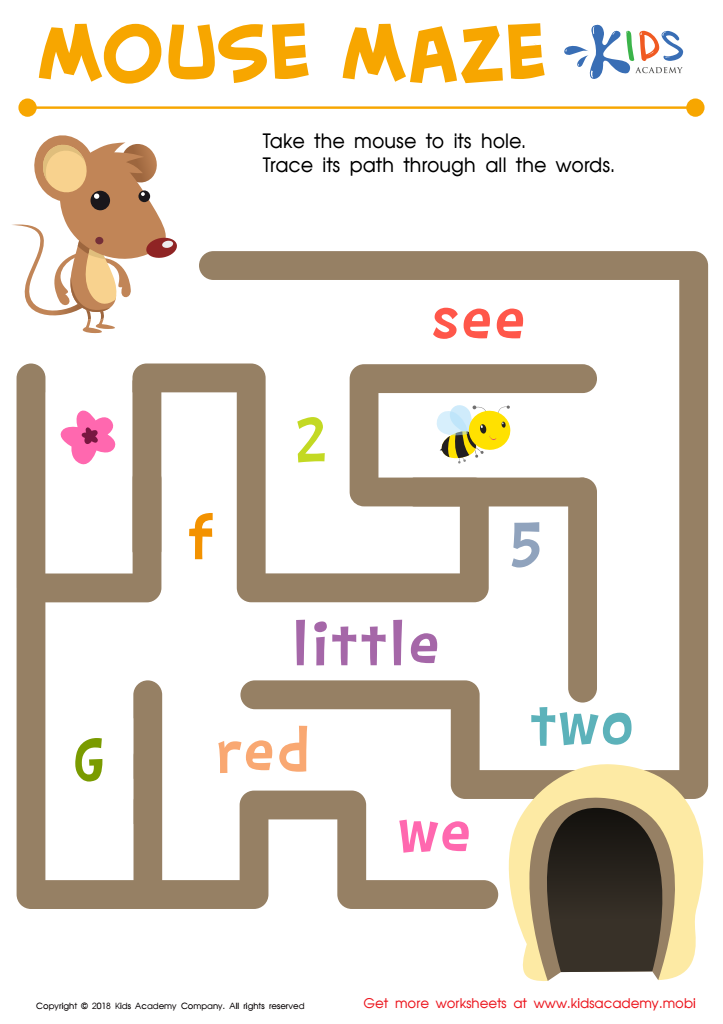
Find Words Mouse Maze Worksheet

Find Words Mouse Maze Worksheet

Help your child identify words and guide the mouse home! Ask them to point out the colorful animal on the worksheet, then take their hand and show them how to trace the path, going through all the words in the maze to get the mouse back to its hole.
Find Words Mouse Maze Worksheet
Worksheet
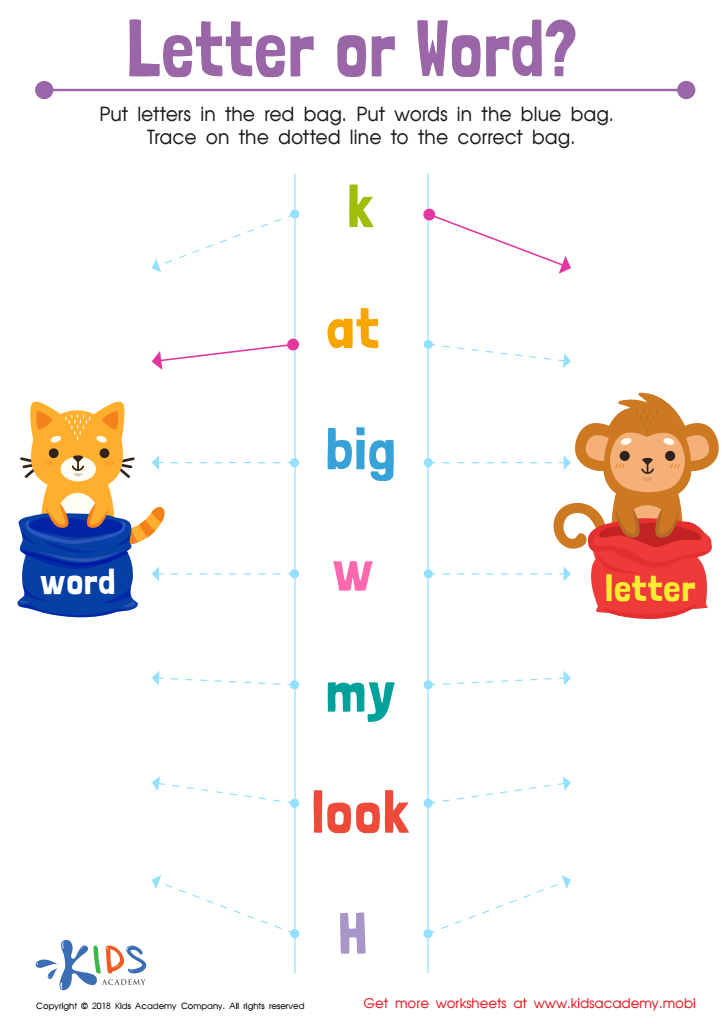
Letter or Word? Worksheet

Letter or Word? Worksheet

Help your kids differentiate between words and letters. If they can recite their alphabets and identify common words, this tracing sheet will be a breeze. Have them trace on the dotted lines to place the letters in the red bag with the kitten, and the words in the blue bag with the monkey.
Letter or Word? Worksheet
Worksheet
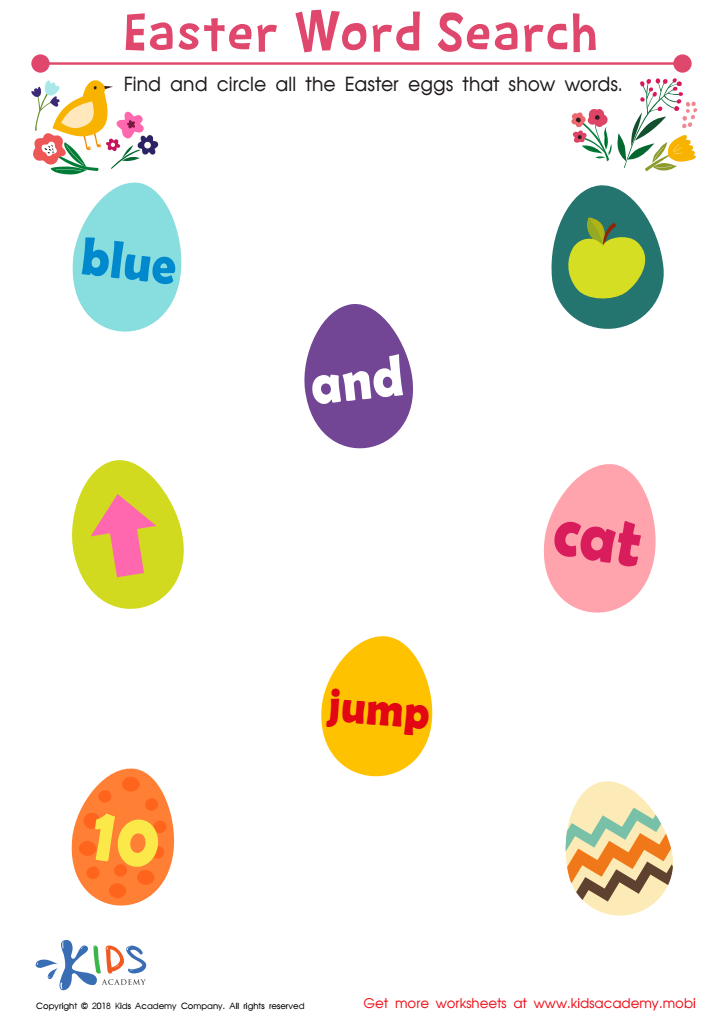
Easter Word Search Worksheet

Easter Word Search Worksheet

Kids love Easter - food, picnics, games - and the egg hunt! Does your family celebrate Easter? Get your kids to find some of the Easter egg words in this word search. Ask them to read each word and circle the eggs. It's a fun way to celebrate the holiday!
Easter Word Search Worksheet
Worksheet
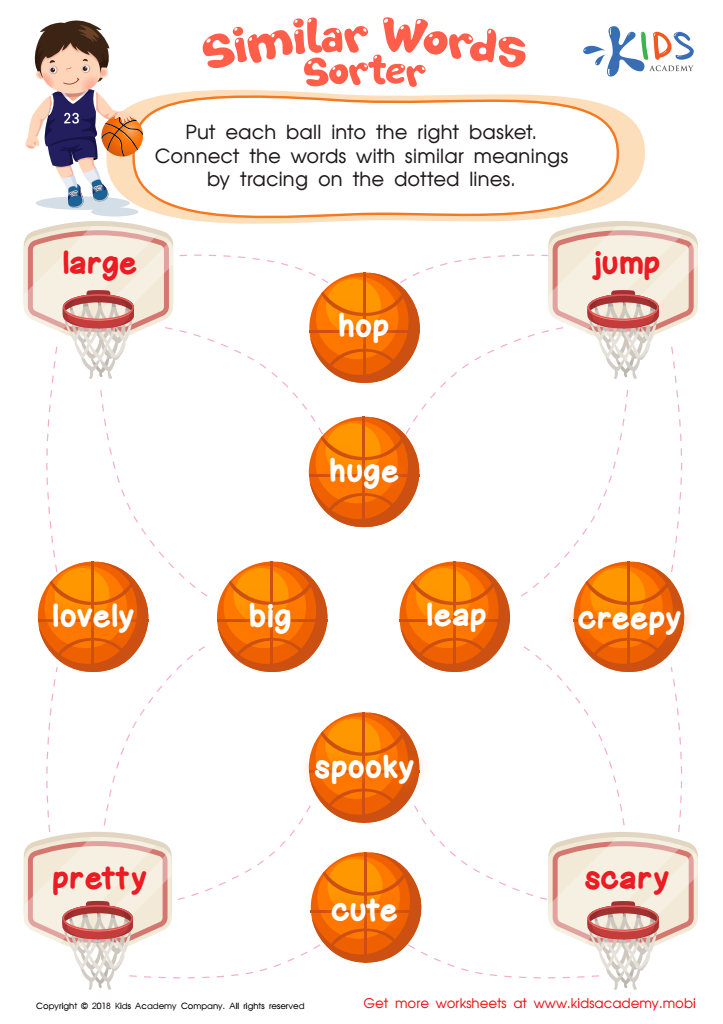
Similar Words Worksheet

Similar Words Worksheet

Test your child's knowledge of synonyms by having them name five words for "up"! This tracing sheet is a fun way to do it: your child must trace the dotted lines to put each ball in its right basket. To do so, they must know the synonyms and trace them to the correct baskets.
Similar Words Worksheet
Worksheet
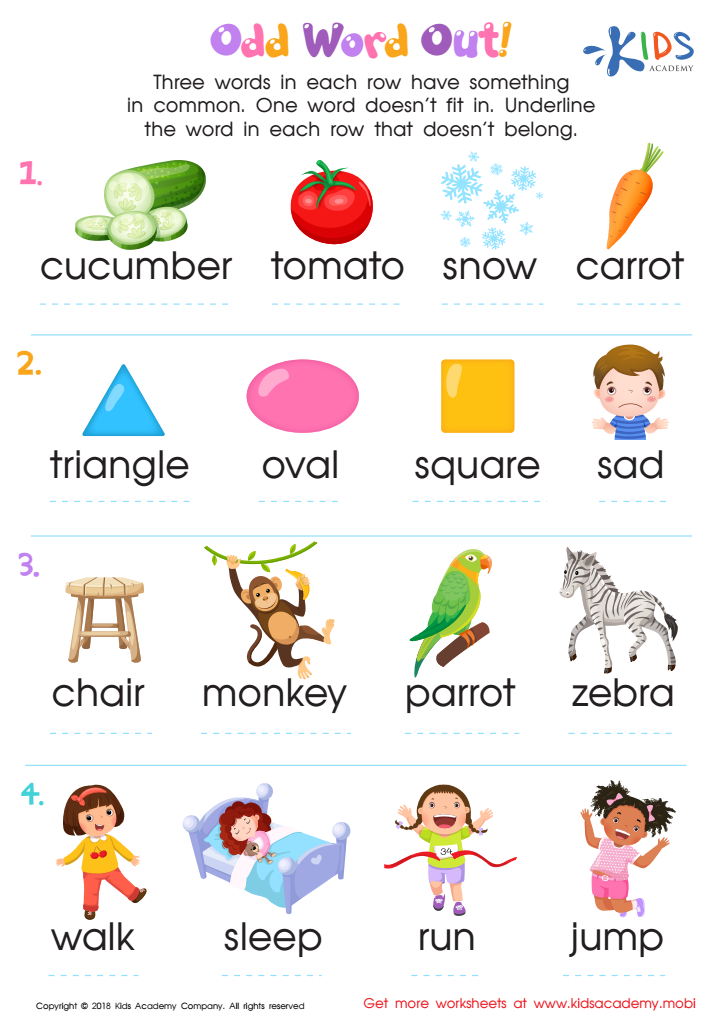
Odd Word Out Worksheet

Odd Word Out Worksheet

Ask your child to name all pictures in each row and see if there's something they share. Then, have them identify the odd one out and underline it. Repeat for all words in the rows to help them understand how to identify words.
Odd Word Out Worksheet
Worksheet
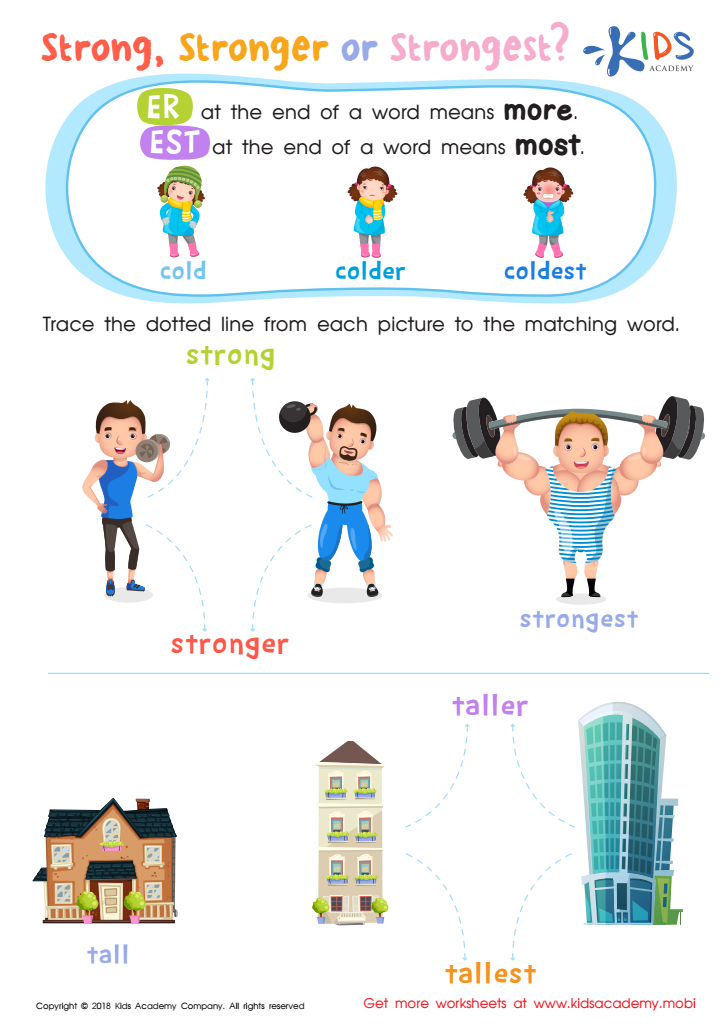
Strong or Stronger? Worksheet

Strong or Stronger? Worksheet

Help your child understand the concept of size gradients with a fun worksheet. Explain to them that adding "-er" to words means "more" and "-est" means "most". Point to the pictures and have your little one trace the dotted line to the corresponding words to learn the concept of highest and lowest.
Strong or Stronger? Worksheet
Worksheet
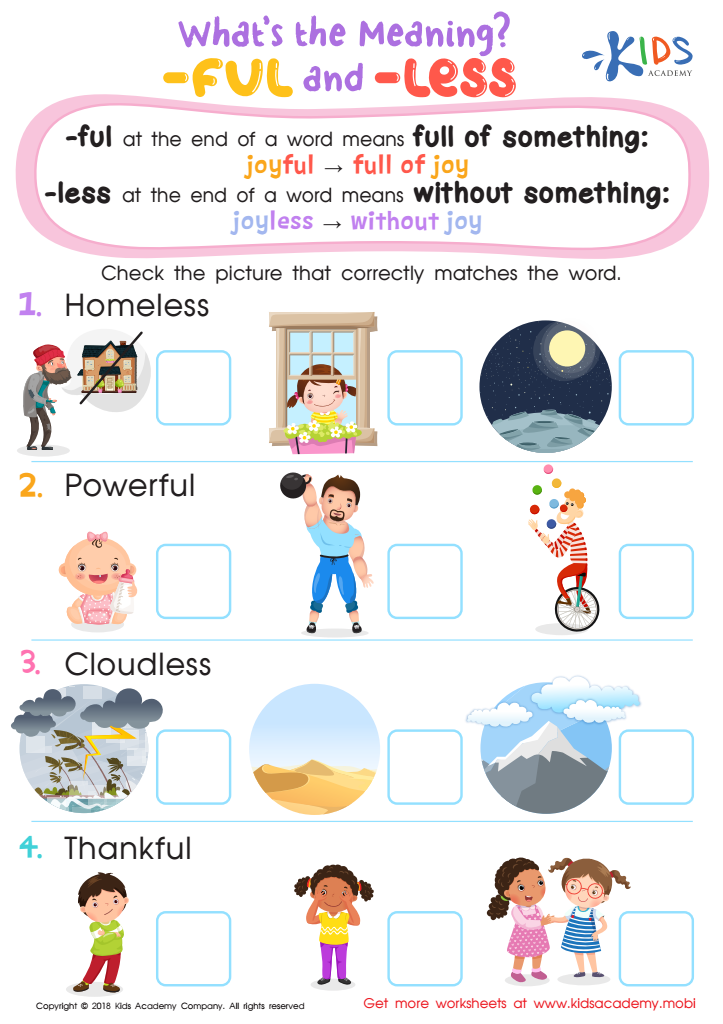
What's the Meaning? Worksheet

What's the Meaning? Worksheet

Look with your youngster through this colorful worksheet and match the pictures to the words at the top. These words have different meanings due to either a prefix or suffix being added, such as "ful" or "less".
What's the Meaning? Worksheet
Worksheet
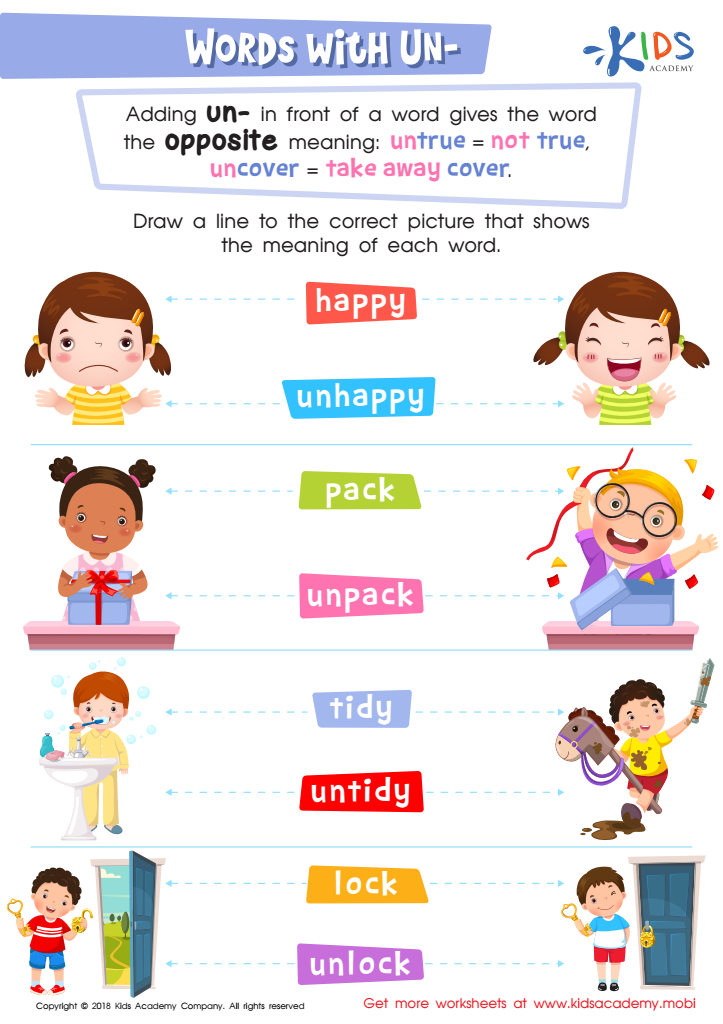
Words with Un– Worksheet

Words with Un– Worksheet

Prefixes can change the meaning of words. Adding "Un-" can give the opposite meaning, like Un-true, Un-happy, and Un-finish. Help your child learn with this worksheet. Draw a line to the picture that shows each word's meaning.
Words with Un– Worksheet
Worksheet
Which Is Correct? Worksheet

Which Is Correct? Worksheet

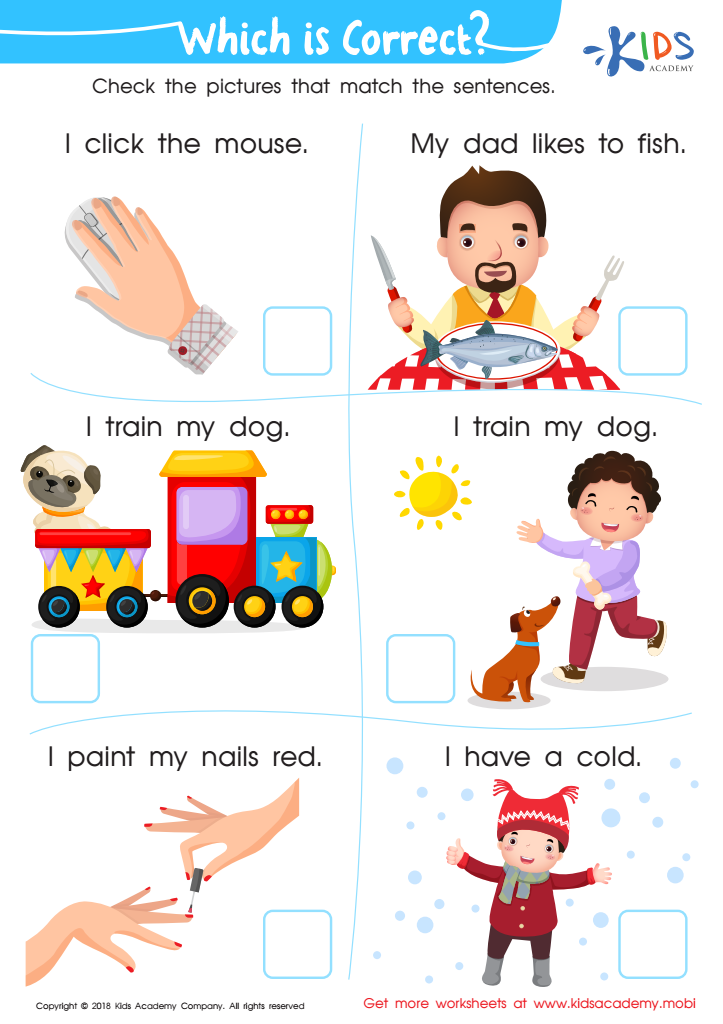
Go over the exercise with your students. Ask them to read the sentences and explain what they mean. Check the pictures that correspond to the sentences. For example, what does "My dad likes to fish" mean? Test their understanding with the worksheet.
Which Is Correct? Worksheet
Worksheet
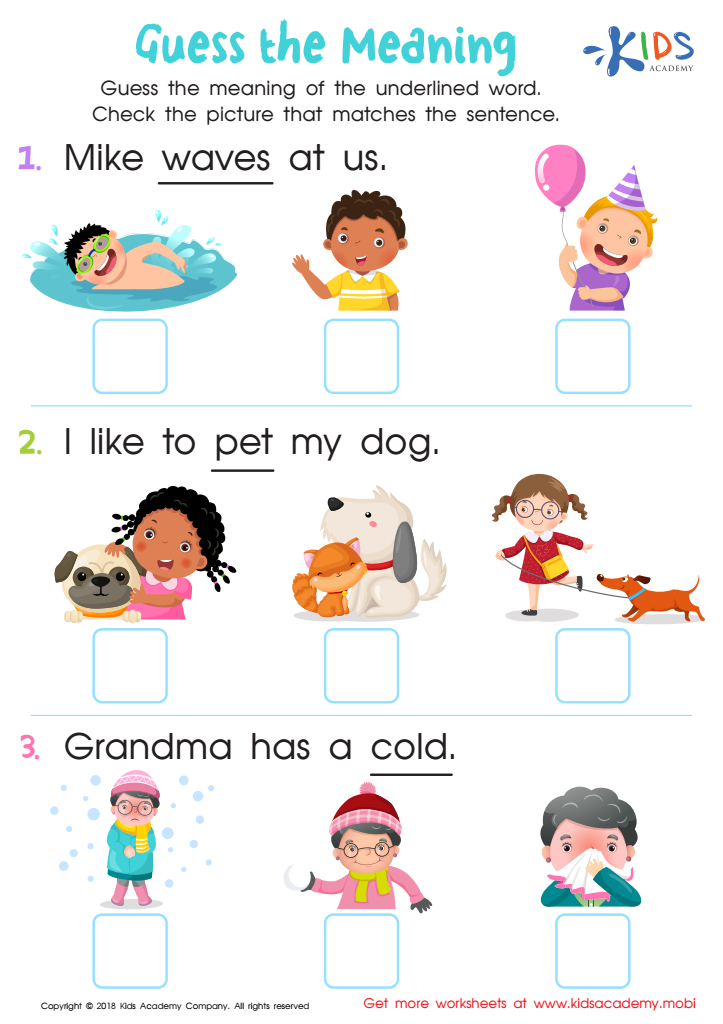
Guess the Meaning Worksheet

Guess the Meaning Worksheet

Help your child learn the meanings of words in different contexts by using this colourful, free worksheet. What is the meaning of the underlined words in each sentence? Look at the images and pick the one that accurately describes the word's context.
Guess the Meaning Worksheet
Worksheet
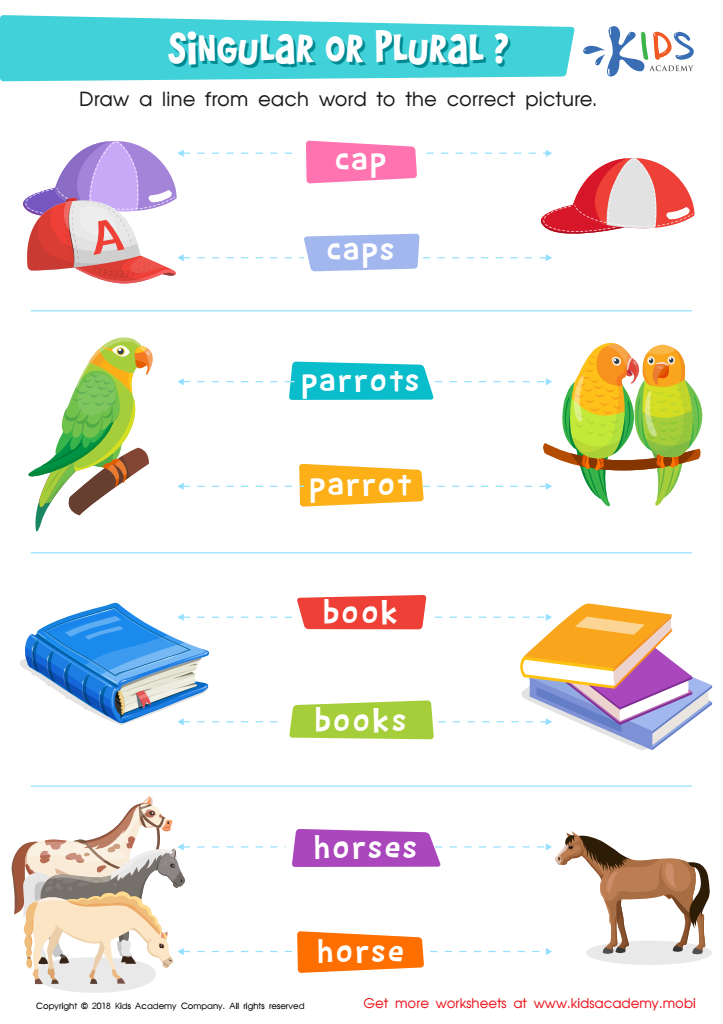
Singular or Plural? Worksheet

Singular or Plural? Worksheet

Help your child practice recognizing the plural forms of words with this fun tracing worksheet! They'll need to connect each word and its plural form to the correct picture. For example, they'll write "cap" for one cap and "caps" for two. Enjoy this learning activity together! 80 words.
Singular or Plural? Worksheet
Worksheet
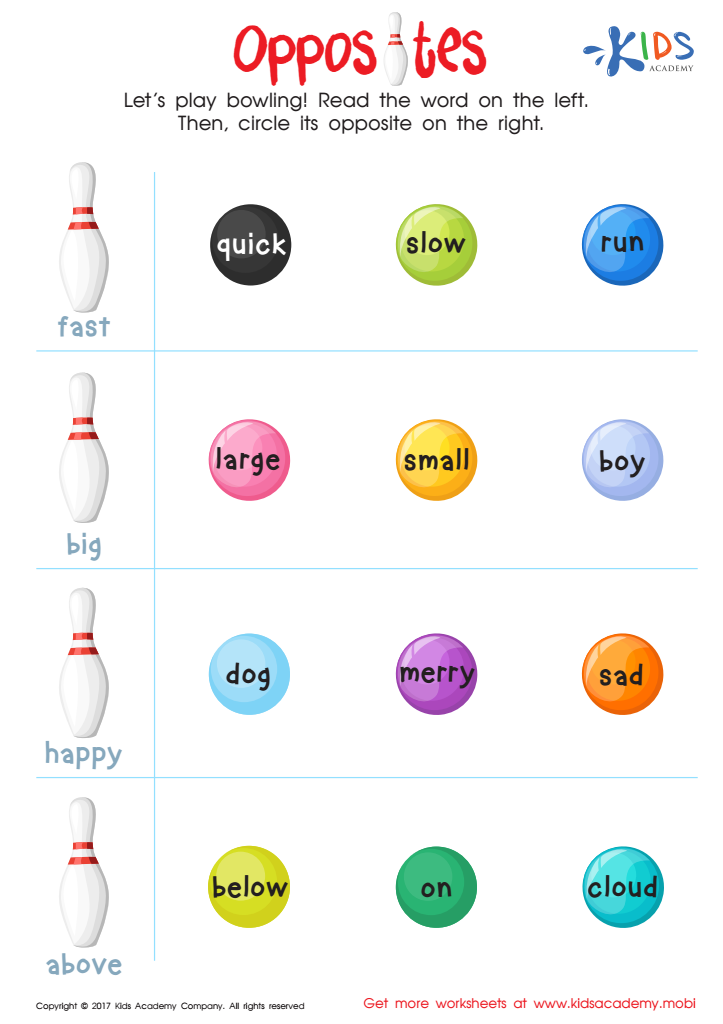
Opposites Worksheet
Opposites Worksheet

Opposites Worksheet

Have your students identify and circle the opposites of the words on the left. As a fun bowling-themed exercise, read the words and ask your kids if they know the opposites. Look through the options on the right and see if the answer is there; then, circle the correct answers.
Opposites Worksheet
Worksheet
Opposite Words Worksheet

Opposite Words Worksheet

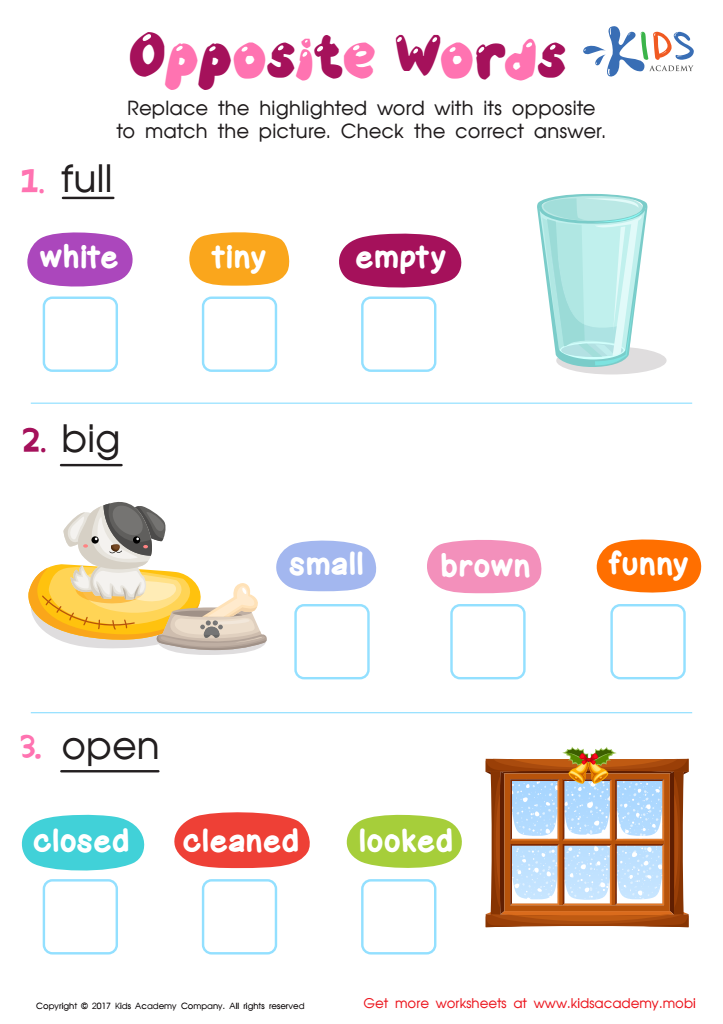
Help your child learn words and opposites. Look through a worksheet with them. Ask if they can read the underlined words. Then, ask which highlighted word is the opposite of the underlined word. The answer should match the picture.
Opposite Words Worksheet
Worksheet
Warm Words Worksheet

Warm Words Worksheet

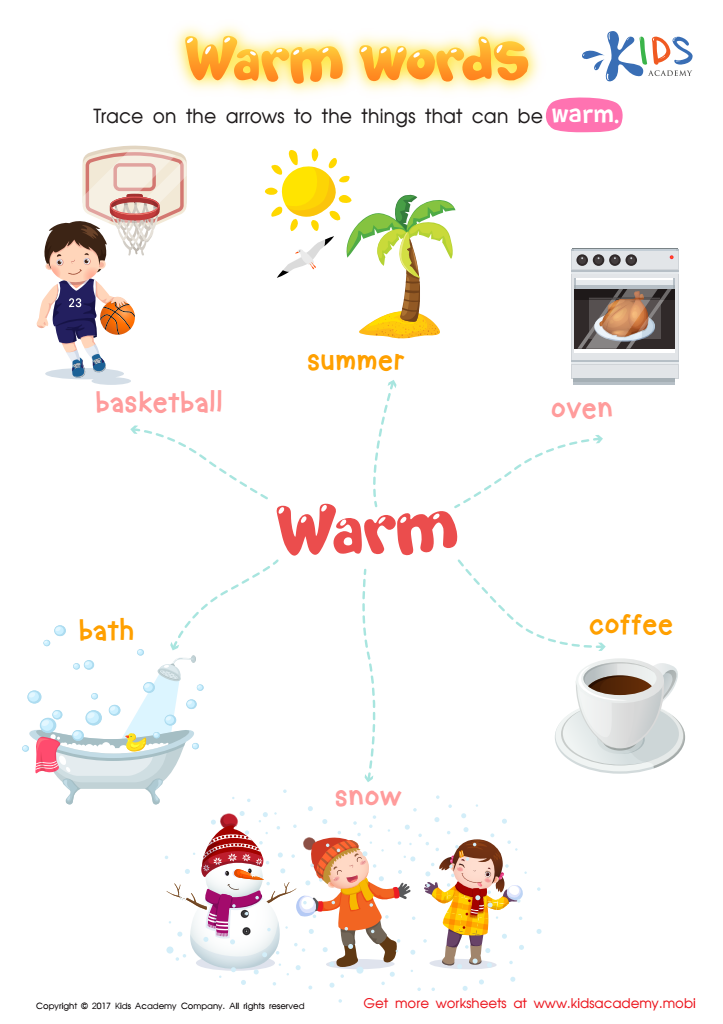
Learning with tracing sheets is fun! Ask your child to list some things associated with warm temperatures. Then, trace the arrows on the worksheet with them and explore the items that can be warm. Have fun!
Warm Words Worksheet
Worksheet


Writing in early childhood (ages 4-7) is crucial for several developmental reasons. At this stage, children are at a prime age for learning foundational skills that will support their academic and personal growth. Firstly, writing facilitates literacy development. When children learn to write, they build letter recognition and phonemic awareness, which are essential for reading. This dual engagement with both writing and reading reinforces each skill.

Additionally, writing at a young age fosters fine motor development. Holding a pencil, forming letters, and controlling their hand movements help children develop the motor skills needed for various everyday tasks. Writing also encourages cognitive development. The process of creating written communication demands the organization of thoughts and the application of language rules, advancing brain development.

Furthermore, writing is a means of self-expression. Children learn to convey their thoughts, feelings, and experiences, nurturing emotional growth and self-confidence. This strong foundation in writing opens pathways for effective communication and academic success.

Parents and teachers play a vital role in supporting this development by providing opportunities and encouragement for practice, creating a positive learning environment that is patient and exciting, fosters a love of writing, and cultivates skills that will benefit children throughout their lives.