Letter Q Worksheets for Ages 4-8
3 filtered results
-
From - To
Introduce your young learners to the quirky Letter Q with our engaging worksheets for ages 4-8! Perfect for early literacy development, these fun and educational printables help kids recognize, trace, and write the letter Q while boosting their phonics skills. Filled with delightful illustrations and creative challenges, our worksheets make learning the alphabet enjoyable and interactive. Explore a variety of exercises designed to nurture your child's reading and writing abilities in an entertaining way. Ideal for parents and teachers, our Letter Q worksheets are a fantastic resource for fostering early reading confidence and enthusiasm!
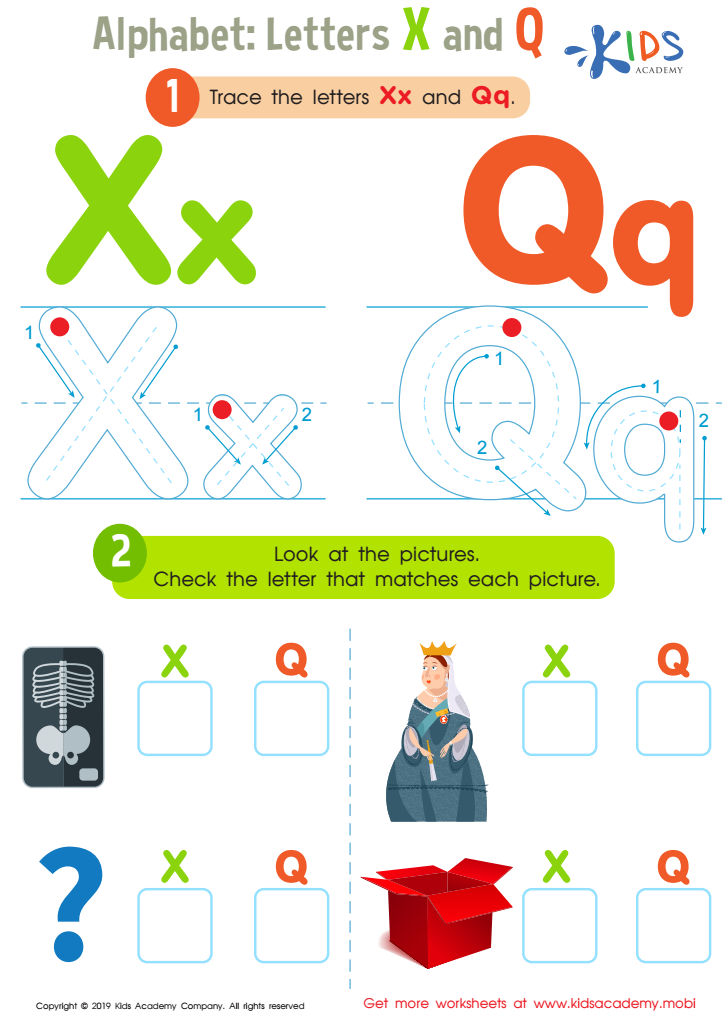
Letters X and Q Tracing Worksheet
 Assign to My Students
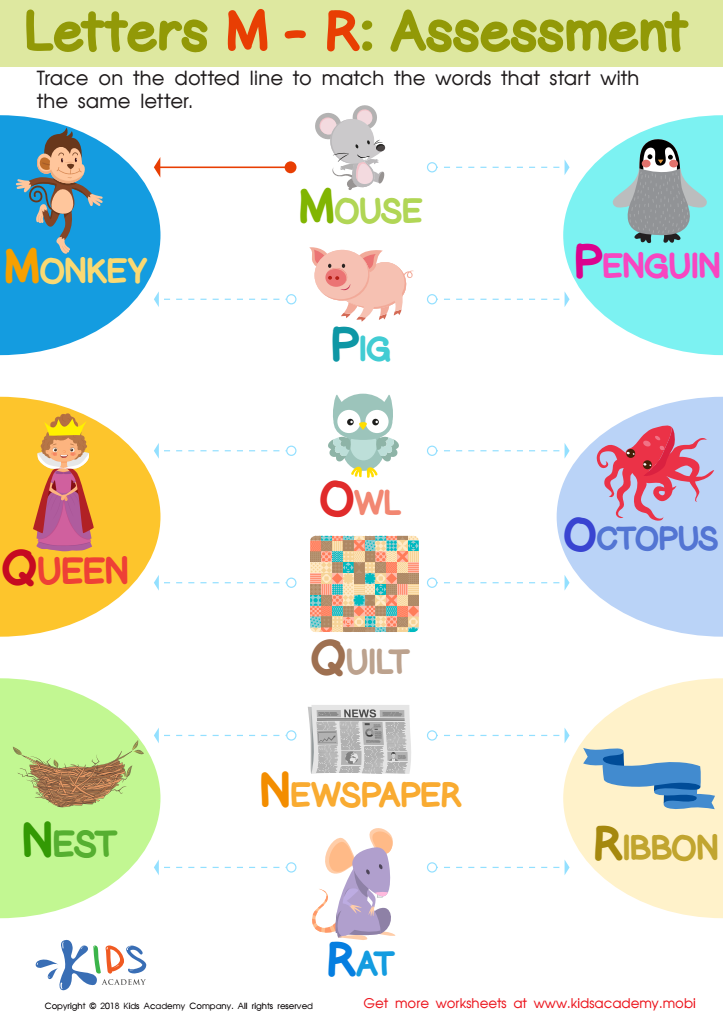
Letters M-R Tracing Worksheet
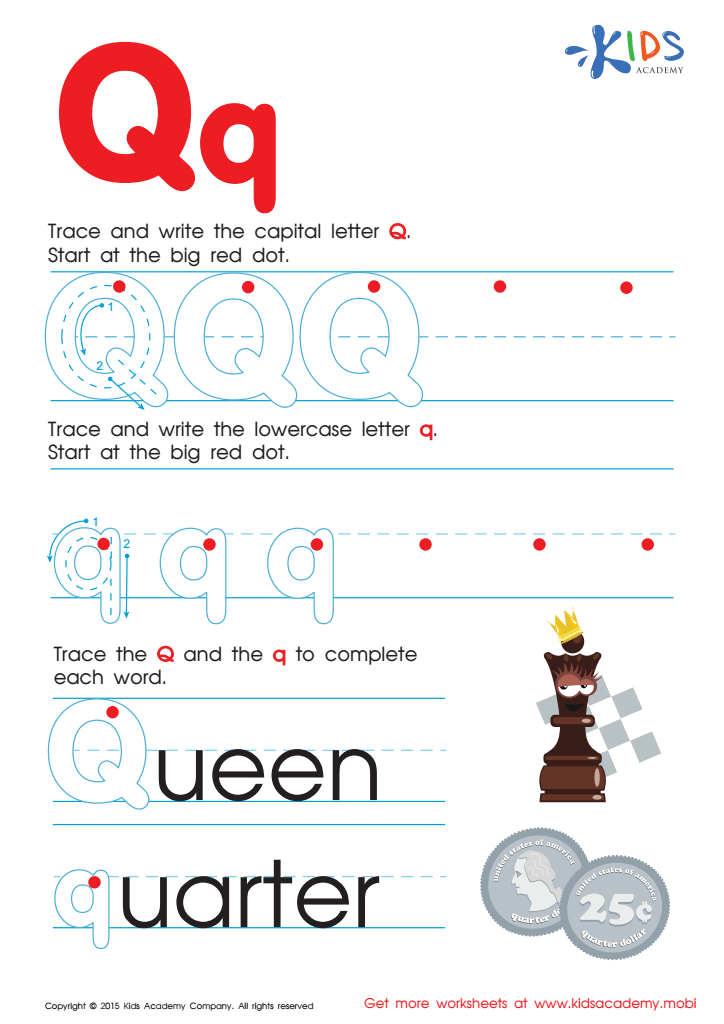
Letter Q Tracing Page





For children aged 4-8, the letter "Q" holds significant importance as a building block in early literacy development, and both parents and teachers should emphasize its value.
At this formative age, children are developing their phonemic awareness, an essential skill for reading and writing. The letter "Q" is particularly challenging because it seldom appears alone; it is almost always paired with the letter "U." Understanding this combination helps children pronounce words like "queen," "quick," and "question" correctly, thereby expanding their vocabulary. Introducing the letter "Q" along with "U" fosters not just recognition but also an understanding of these linguistic rules.
Furthermore, mastering "Q" early on can enhance a child's confidence in tackling more complex linguistic patterns. As children learn to distinguish between similarly shaped letters (like "O" and "Q") and identify the unique sound pairs, they build foundational skills that aid in their overall literacy.
Using engaging activities such as storytelling, drawing, and word games that incorporate "Q" words can make the learning process enjoyable. Parents and teachers play a crucial role in guiding and supporting children through this journey, ensuring they gain the phonetic skills necessary for their academic success and daily communication. Ignoring such essential elements can create gaps in their reading and writing abilities, impacting their long-term literacy development.