Graphs Worksheets for Ages 4-8 - Page 2
27 filtered results
-
From - To
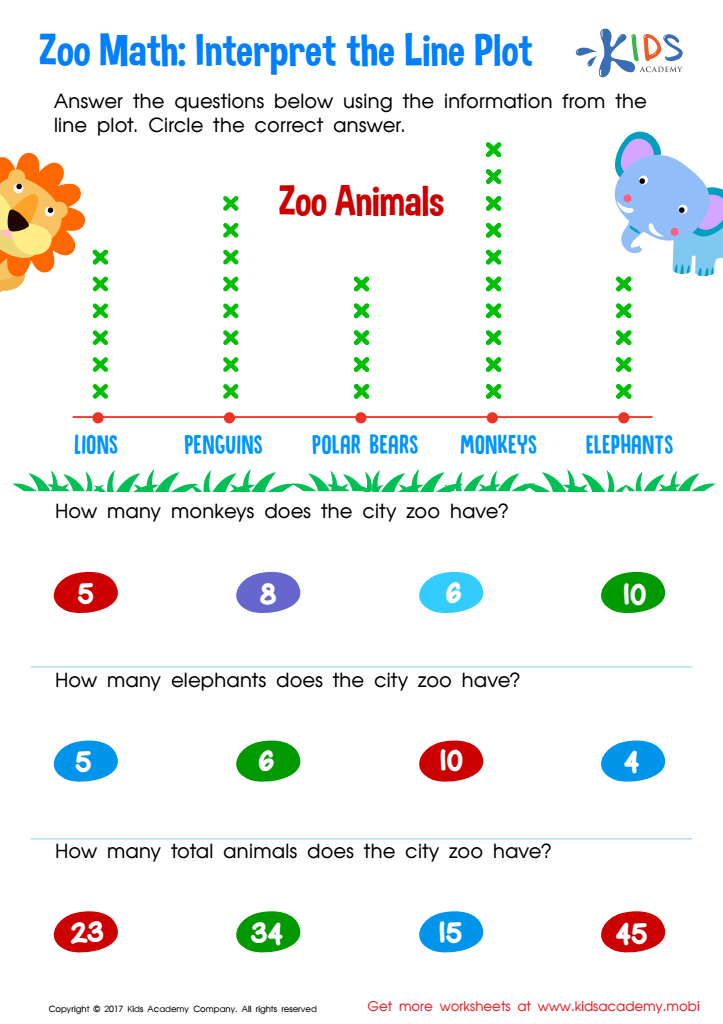
Interpret Line Plot Worksheet
 Assign to My Students
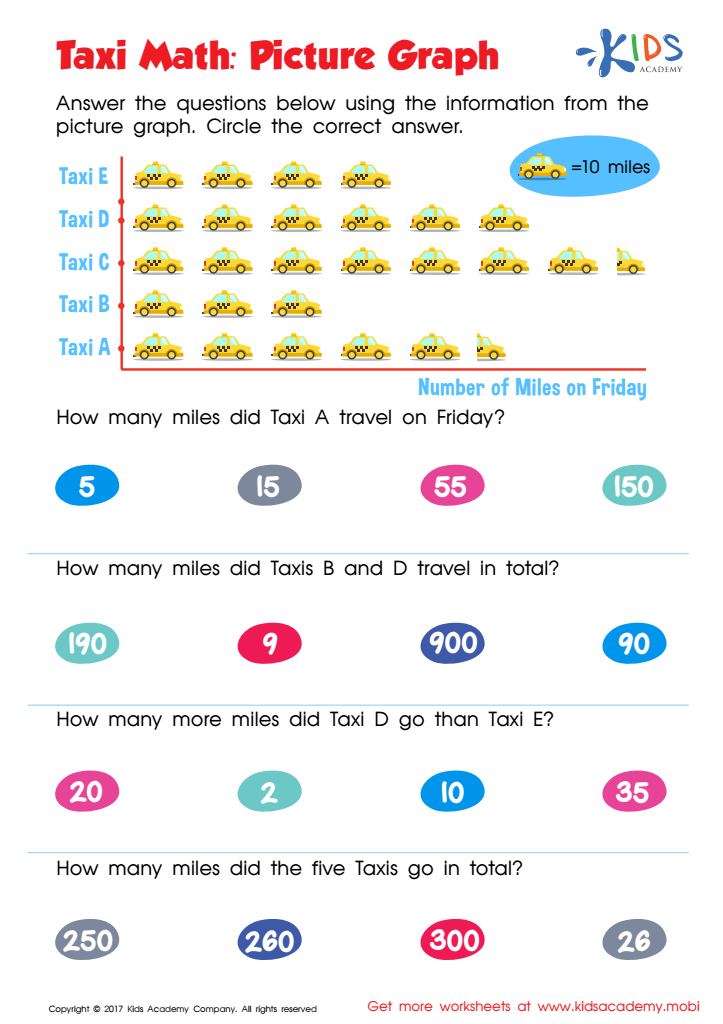
Taxi Math Worksheet
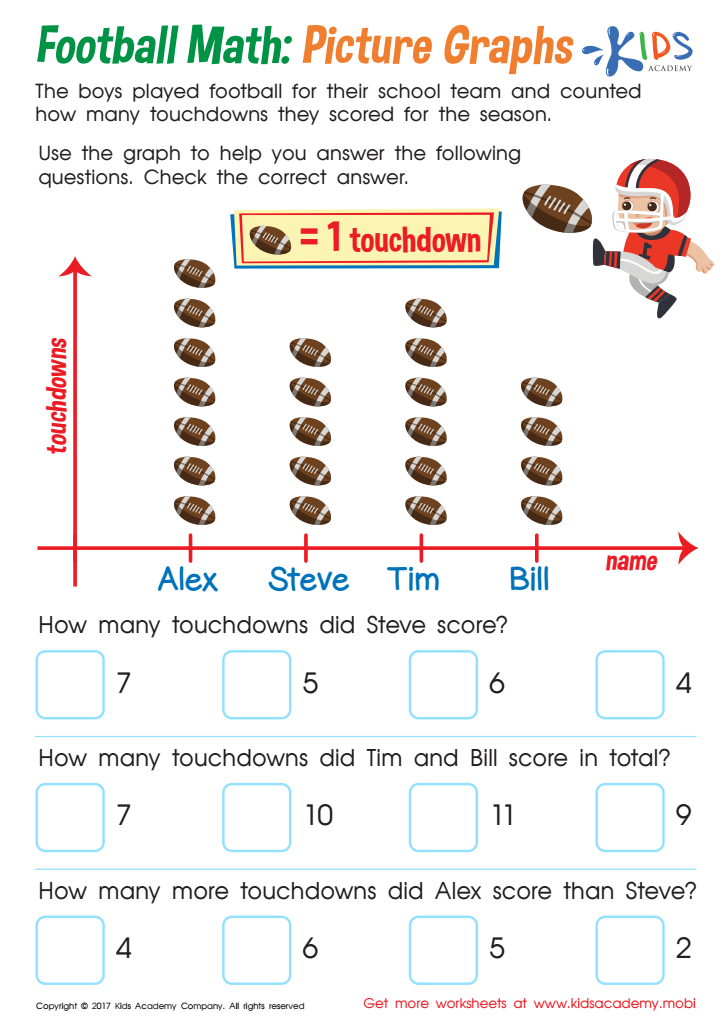
Football Math Worksheet








Graphs are a fundamental tool for helping children aged 4-8 understand and interpret information visually. They play a crucial role in developing critical thinking and analytical skills at a young age. Teaching children about graphs fosters their ability to compare values, identify trends, and make decisions based on data. This skill set is essential not just in mathematics but across various subjects and real-life situations.
For parents and teachers, caring about graphs means prioritizing a child's ability to comprehend and use data effectively. Engaging children with simple bar graphs, pictographs, or line charts helps them grasp basic concepts such as quantities, categories, and time sequences. Moreover, through hands-on experiences, children learn to organize information, which enhances their data literacy.
Incorporating graphing activities into daily learning keeps children interactive and motivated. It can turn everyday tasks—like counting toys or tracking weather changes—into meaningful educational experiences. As children draw or interpret graphs, they improve their reasoning and communication skills, laying a strong foundation for future academic success. In a world driven increasingly by data, early exposure to graphs equips children not just for school, but also for informed decision-making in their lives.








