Numbers up to 100 Worksheets for Ages 4-8 - Page 3
50 filtered results
-
From - To
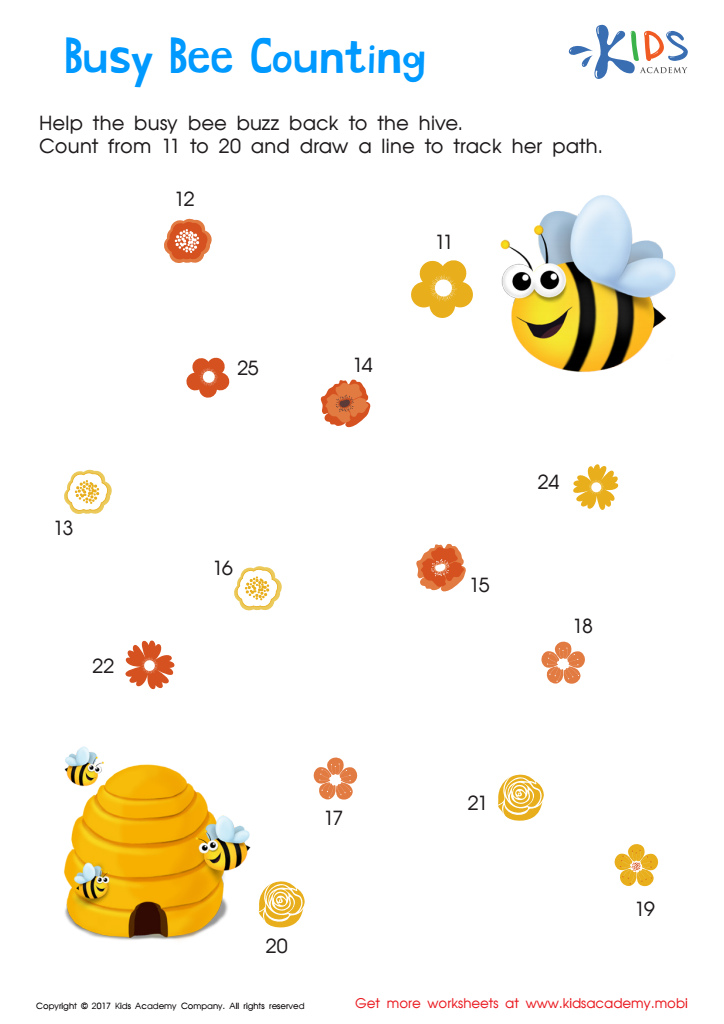
Ordering 11–20: Busy Bee Counting Worksheet
 Assign to My Students
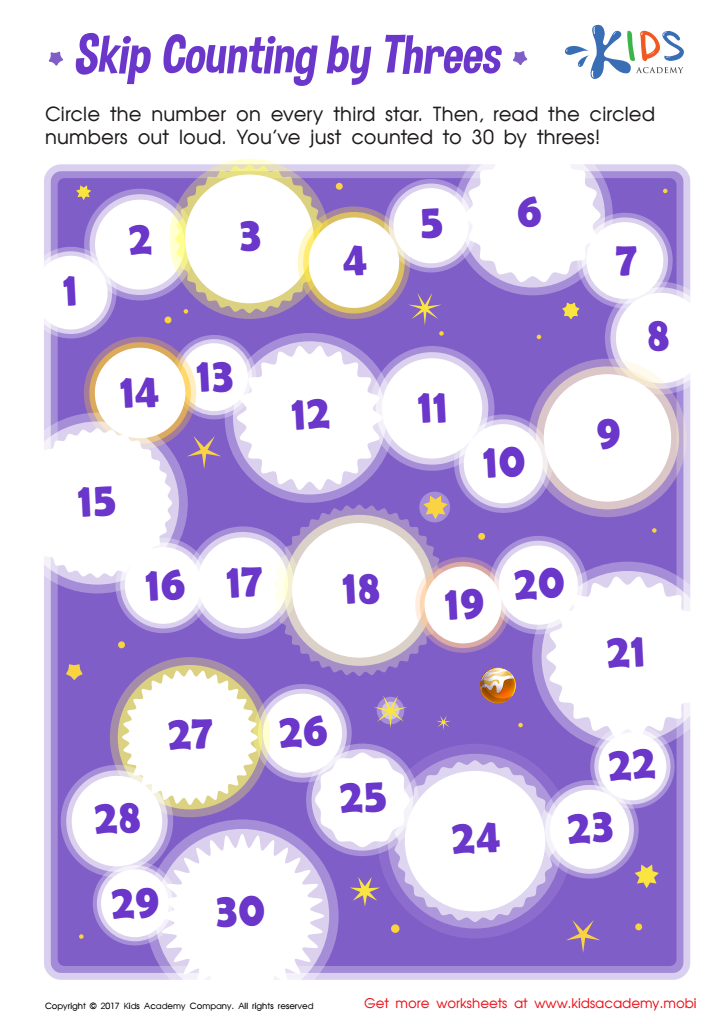
Skip Counting By Three Printable


%20(1).jpg)





Understanding numbers up to 100 is crucial for children ages 4-8 as it lays the foundation for their mathematical skills and overall cognitive development. At this stage, children are developing numeracy skills that will influence their future success in math and related disciplines. Being proficient with numbers helps enhance critical thinking and problem-solving abilities, which are essential skills in everyday life.
Moreover, counting and recognizing numbers fosters a sense of confidence and competence in young learners. It empowers them to understand quantities, make comparisons, and engage in simple addition and subtraction, crucial for tasks they encounter in school and at home.
Parents and teachers should also recognize that engaging with numbers supports language development. Concepts like "more" and "less," as well as simple mathematical vocabulary, enhance communication skills.
Additionally, numeracy is linked to broader academic achievement. Early exposure to numbers and hands-on activities strengthens connections in the brain that promote learning in other subjects. Encouraging children to explore numbers through play and real-life situations not only makes learning enjoyable but builds a lifelong appreciation for math, paving the way for future educational pursuits. Hence, caring about numbers at this formative age is vital for holistic development.