Phonics Worksheets for Ages 4-9 - Page 11
242 filtered results
-
From - To
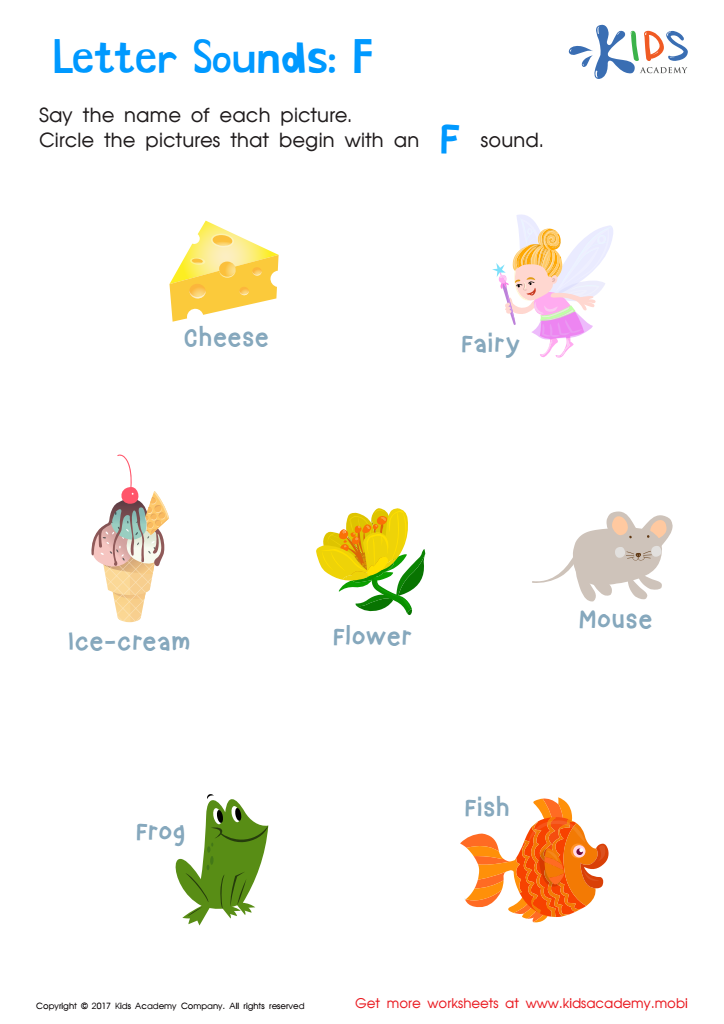
Letter F Sounds Worksheet
 Assign to My Students
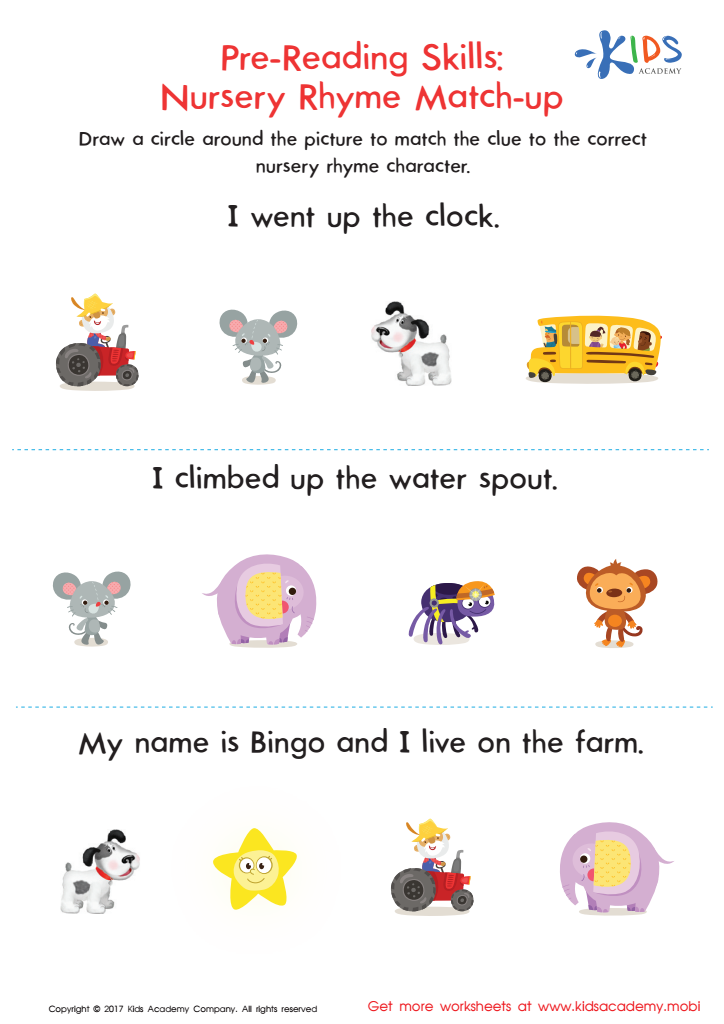
Nursery Rhyme Match–Up Worksheet








Phonics is a fundamental component of early childhood literacy, and parents or teachers should deeply care about incorporating it into the education of children aged 4-9. Phonics is the method of teaching reading by correlating sounds with letters or groups of letters. This skill is critical as it lays the foundation for a child's ability to decode new words, leading to better reading fluency and comprehension.
For children in this age bracket, a solid understanding of phonics can dramatically enhance their academic success. At a time when their brains are highly receptive to learning language, teaching them the connection between letters and sounds can lead to more confident readers. Moreover, early proficiency in reading is often tied to better performance across all subjects, including math and science, as well as improved problem-solving and critical-thinking skills.
Phonics instruction also supports spelling and writing skills, enabling children to sound out words and understand spelling patterns. This scaffolding provides them with the tools to become independent writers over time. Furthermore, early literacy, achieved through strong phonics skills, can foster a love for reading, turning it into a lifelong habit that expands their knowledge and imagination. In sum, prioritizing phonics for young learners sets the stage for educational achievement and lifelong literate engagement.







