Silent Vowels Worksheets for Ages 4-9
5 filtered results
-
From - To
Discover our engaging Silent Vowels Worksheets designed for children aged 4 to 9! These fun, interactive worksheets help young learners recognize and understand the concept of silent vowels in words. Through colorful activities and varied exercises, students will enhance their phonics skills while building confidence in their reading abilities. Perfect for home or classroom use, these worksheets feature eye-catching illustrations and easy instructions to keep kids motivated. Encourage a love for reading and improve literacy skills with our silent vowels worksheets. Start your child's journey to mastering phonics today and watch them thrive as they explore the exciting world of language!
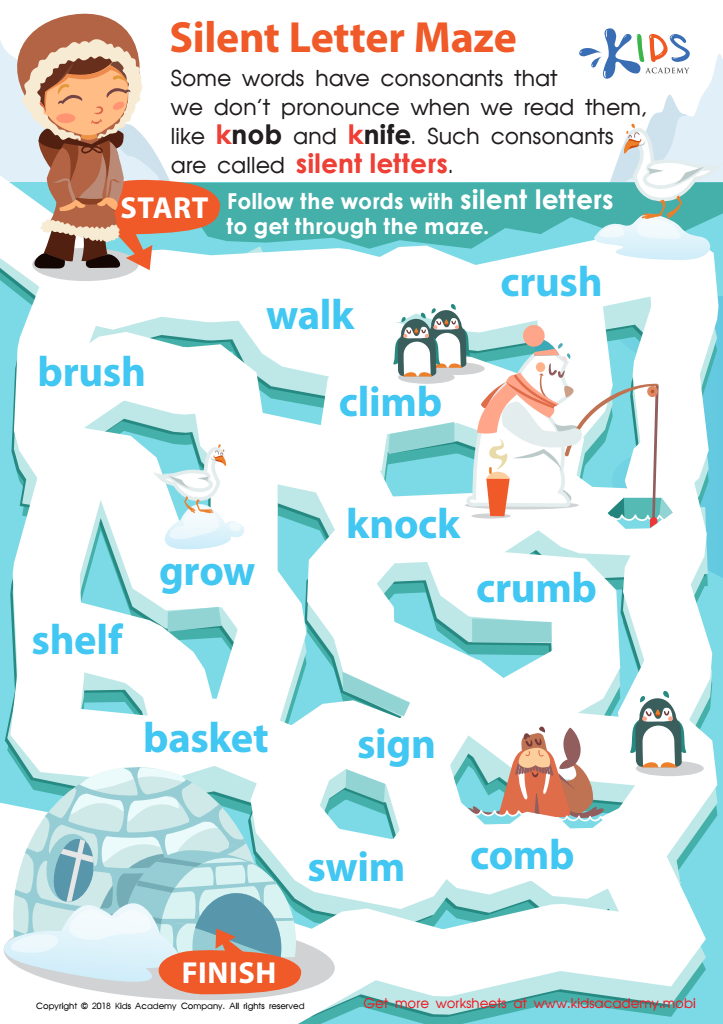
Silent Letter Maze Worksheet
 Assign to My Students
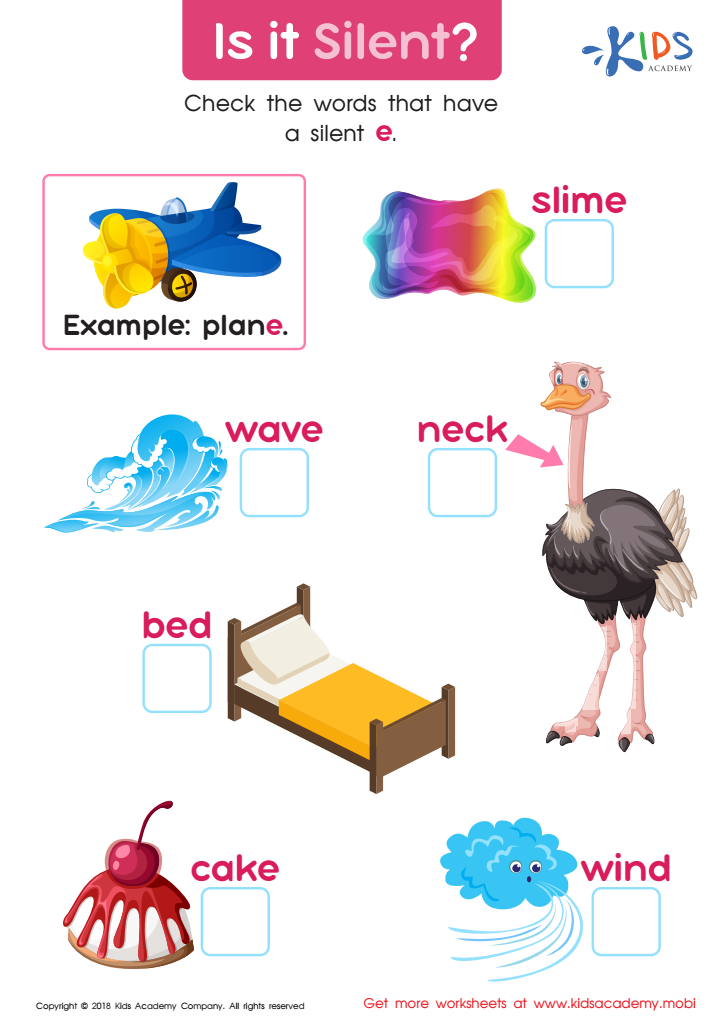
Is It Silent? Worksheet
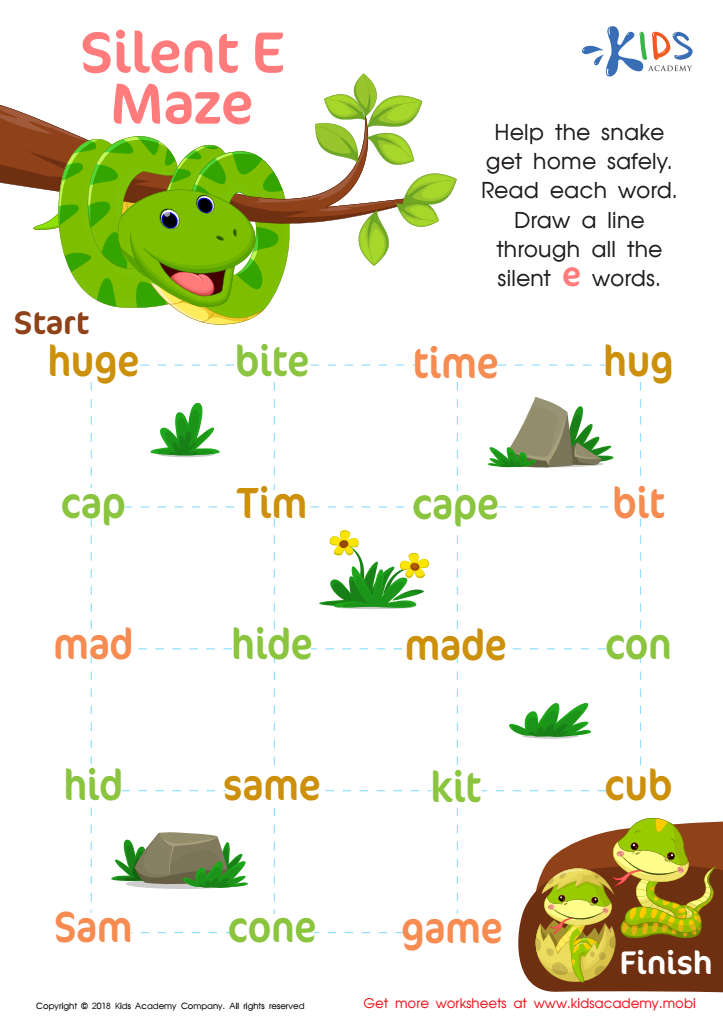
Silent E Maze Worksheet
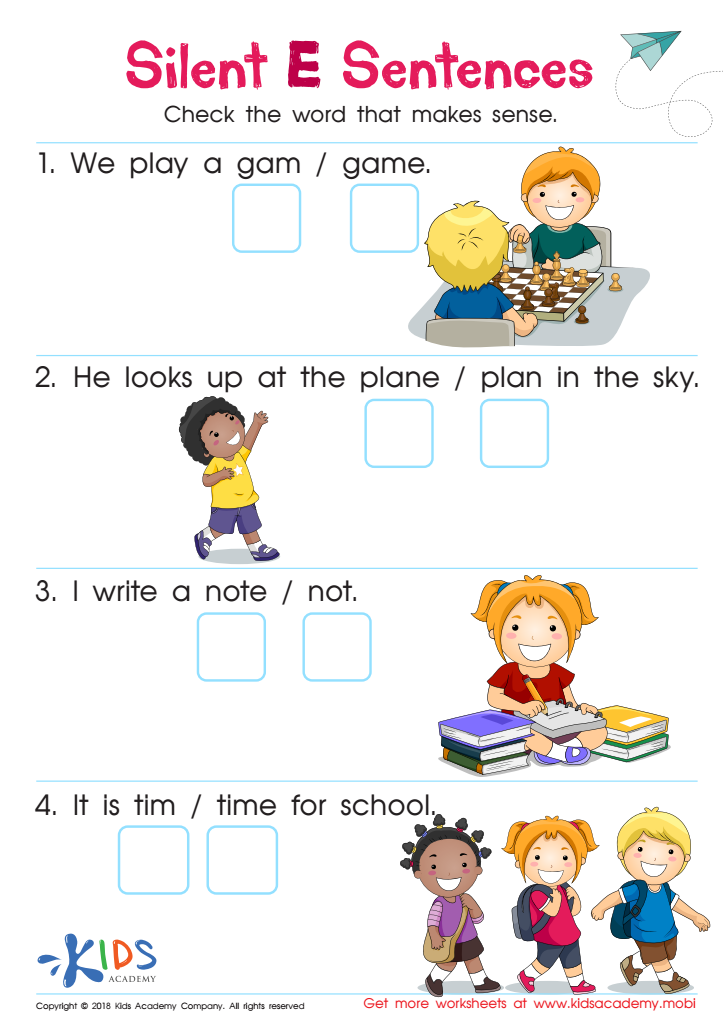
Silent E Sentences Worksheet
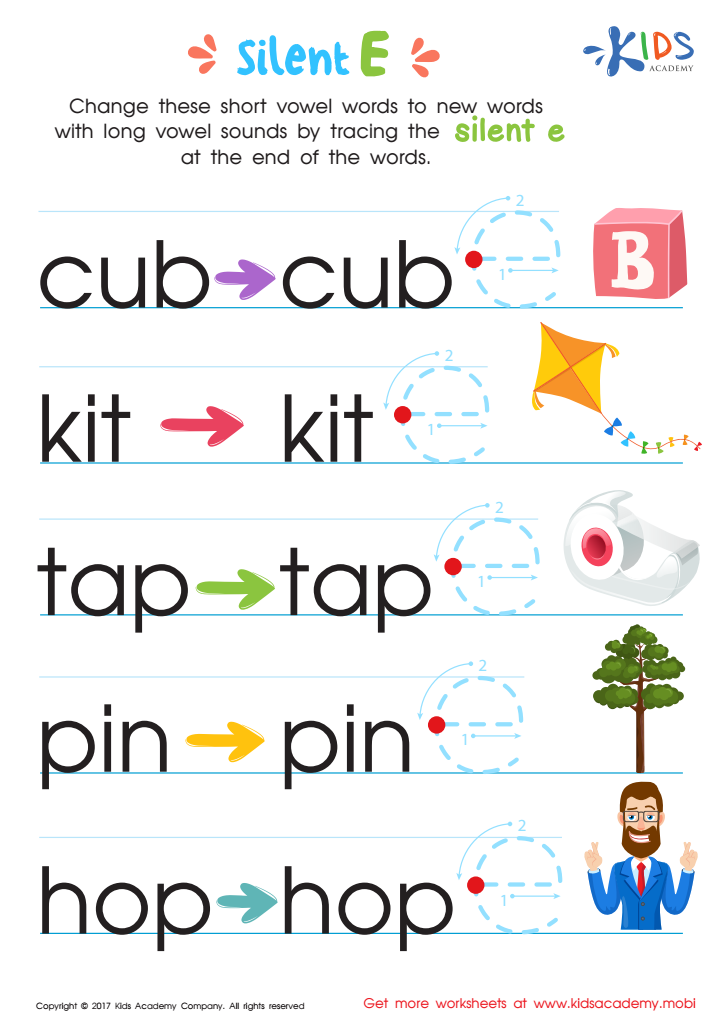
Silent E Words Worksheet


Silent vowels, such as the 'e' in "hat," play a crucial role in literacy development for children aged 4 to 9. Understanding and recognizing silent vowels enhances phonemic awareness, helping children grasp the connections between letters and sounds. This skill is fundamental for reading fluency, enabling young learners to decode words more effectively.
When teachers and parents invest time in explaining silent vowels, they support children's vocabulary growth. Many common words rely on silent letters, and acknowledging their presence cultivates curiosity about language, encouraging children to become more engaged readers and writers. Additionally, recognizing silent vowels helps improve spelling skills; students who understand these nuances are less likely to make careless errors in their writing.
Furthermore, focusing on silent vowels promotes critical thinking. It encourages children to analyze words and recognize patterns, leading to deeper language comprehension. This critical skill is essential as they progress in their literacy journey.
Ultimately, the awareness of silent vowels equips young learners with a stronger foundation in reading and writing, making their educational experience richer and more enjoyable. By prioritizing this concept, parents and teachers create a supportive environment that fosters lifetime literacy skills and a love for language.