Understanding measurements Math Worksheets for 4-Year-Olds
5 filtered results
-
From - To
Explore our "Understanding Measurements Math Worksheets for 4-Year-Olds" designed to make learning fun and engaging for young children. These worksheets introduce basic measurement concepts through colorful and interactive activities that captivate kids' curiosity. Your little ones will learn to compare sizes, lengths, and weights in a playful and educational environment. Perfect for preschoolers, these worksheets foster essential math skills, preparing kids for future learning. Boost their confidence and understanding with tasks tailored for early developmental stages. Dive into a world of measurement and make learning an enjoyable journey for your child!
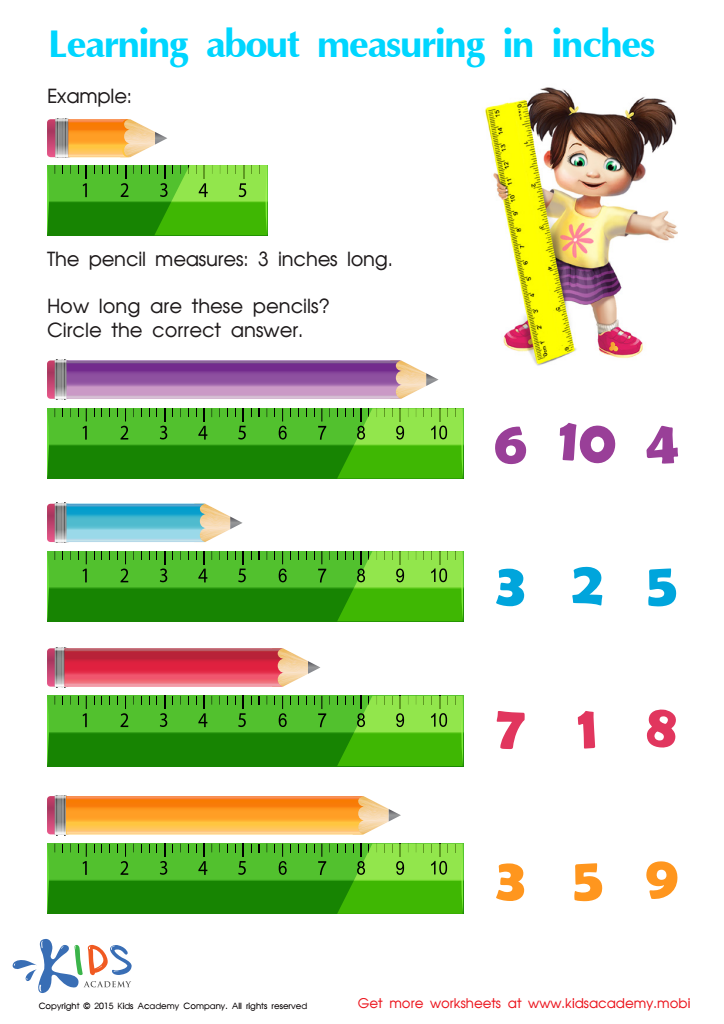
Learning About Measuring In Inches Printable
 Assign to My Students
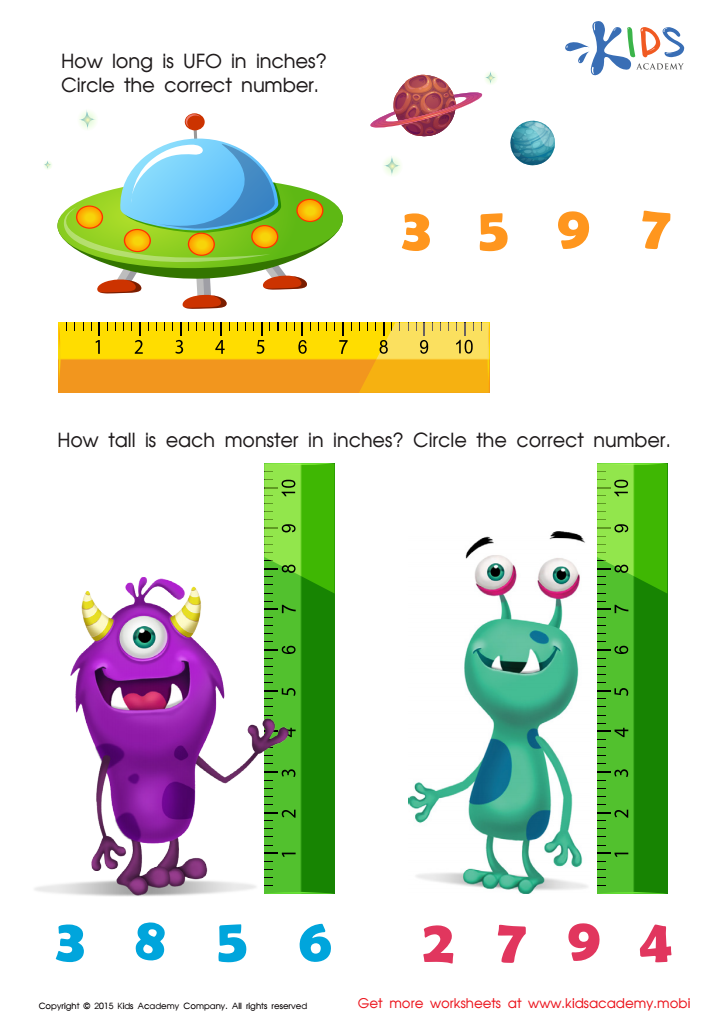
Measuring in Inches Worksheet
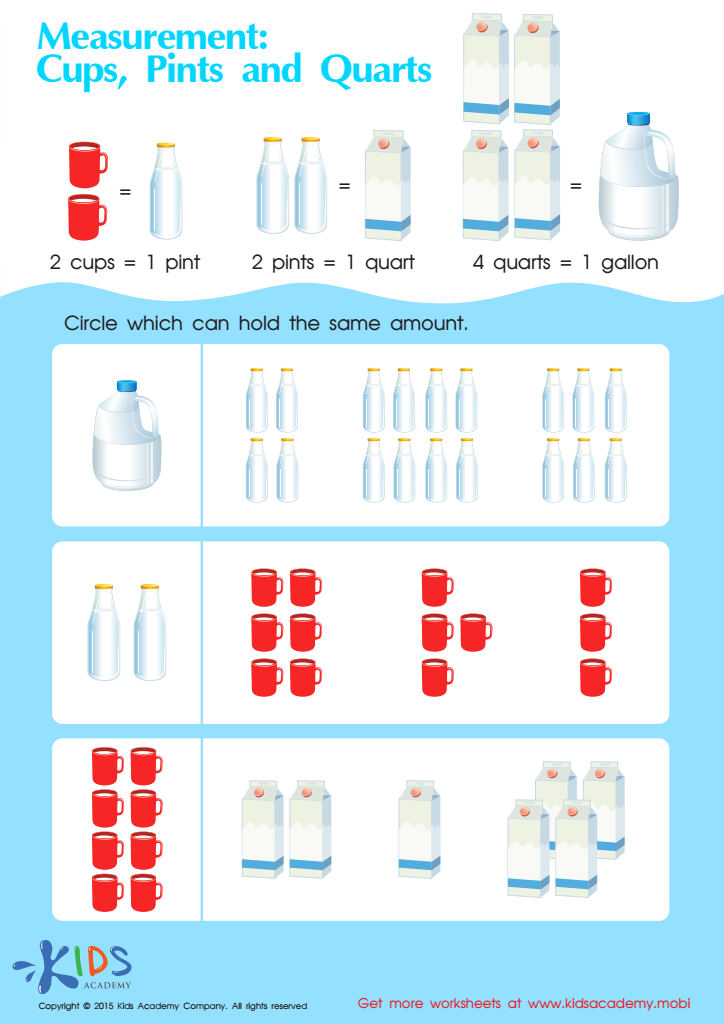
Cups, Pints and Quarts 2 Worksheet
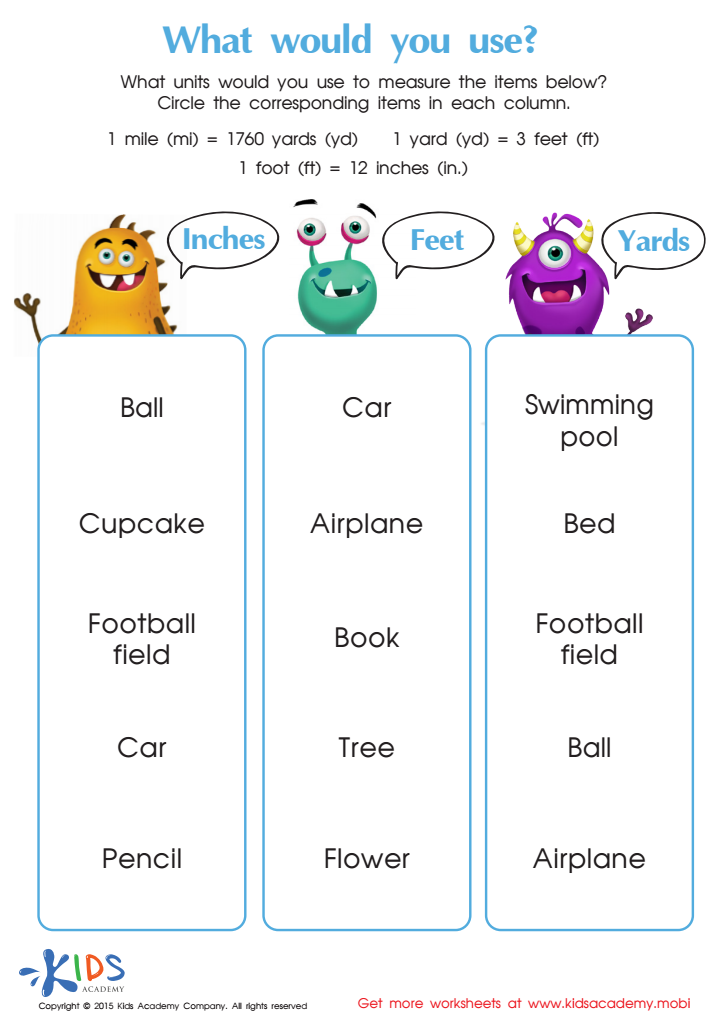
Learning about measuring objects in inches, feet and yards Worksheet
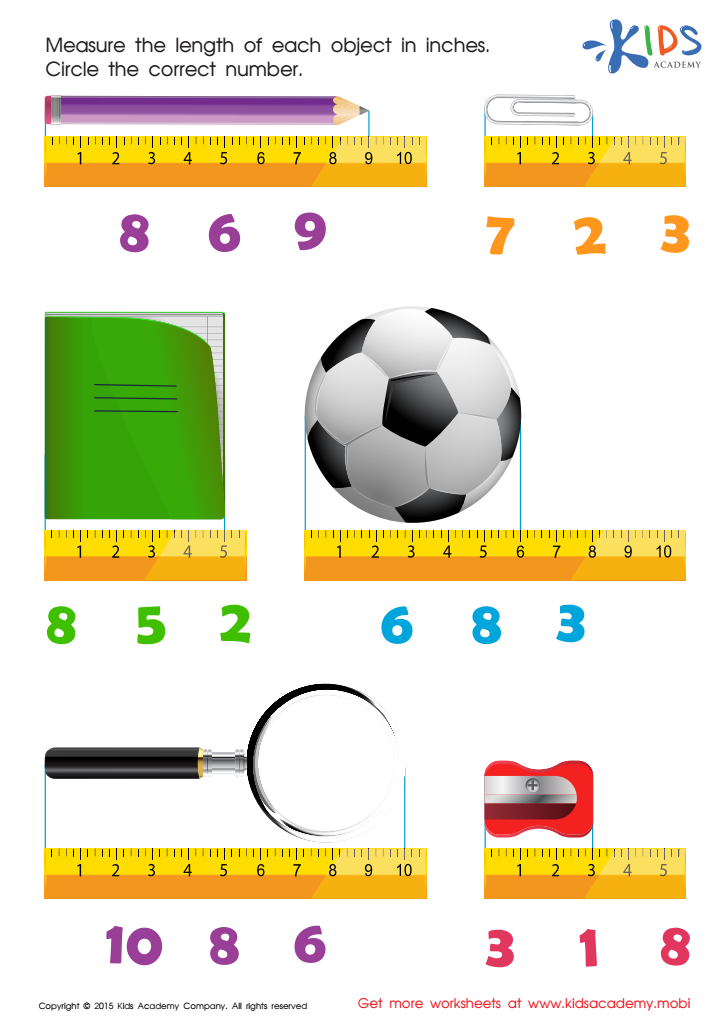
Learning measuring objects in inches Worksheet







Understanding measurements is a foundational math skill that offers essential benefits for 4-year-olds, and both parents and teachers should prioritize it. At this formative age, children are naturally curious and absorb information quickly, which makes it an ideal time to introduce basic measurement concepts. This early exposure helps kids develop their spatial awareness, critical thinking, and problem-solving skills.
For instance, simple activities like comparing the lengths of different objects or understanding big versus small can enhance a child's ability to observe and analyze the world around them. These basic measurement skills form the building blocks for more complex mathematical and scientific concepts that children will encounter later in their education.
Moreover, teaching measurements helps integrate math into everyday life, making it more relatable and less intimidating. Tasks such as measuring ingredients while cooking or determining if a toy will fit into a box encourage practical application and hands-on learning, which can solidify these early concepts.
Finally, an early understanding of measurements improves a child's confidence in their mathematical abilities. It lays a foundation for future academic success and fosters a positive attitude toward learning. Therefore, both parents and teachers play crucial roles in encouraging and nurturing these early skills, setting the stage for a well-rounded and mathematically competent individual.








