Vowel Diphthongs Worksheets for Ages 5-7 - Page 2
26 filtered results
-
From - To
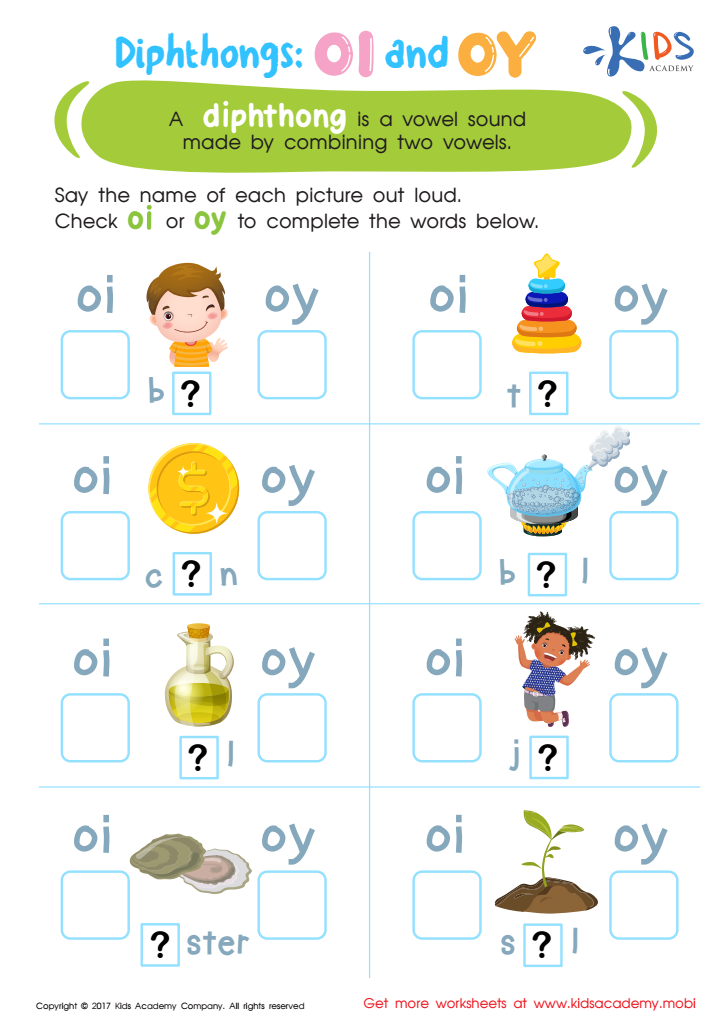
Vowel Diphthongs OI OY Worksheet
 Assign to My Students
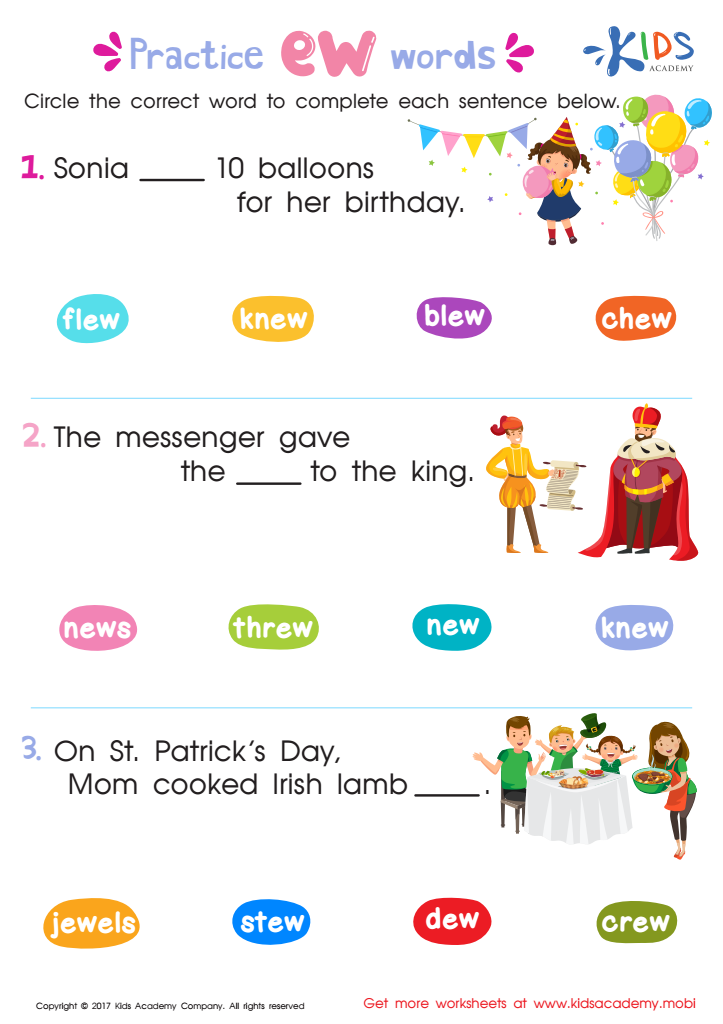
EW Words Worksheet


Vowel diphthongs are important for young learners aged 5-7 because they significantly contribute to language development and reading proficiency. As these students begin to explore the world of language, understanding diphthongs—as combinations of two vowel sounds within a single syllable—helps them grasp the complexities of pronunciation and spelling. Recognizing diphthongs like "oy" in "toy" or "ow" in "cow" enables children to segment words while reading, aiding decoding and fluency.
Moreover, a solid understanding of vowel diphthongs enhances vocabulary acquisition. When children can identify diphthongs in new words, they become better equipped to spell and embrace language variations, enriching their communication skills. This aspect is particularly crucial as phonics instruction heavily influences early literacy capabilities.
By fostering awareness of diphthongs, parents and teachers empower children to become confident readers and writers. Engaging activities, such as rhyming games or phonics songs, can make learning about diphthongs enjoyable, sparking enthusiasm for language. Ultimately, attention to vowel diphthongs supports foundational literacy—essential for success in later academic pursuits—while also nurturing a lifelong love for reading and learning. This commitment can set the stage for comprehension and effective communication throughout a child's education.








