Visual Learning Geometry Worksheets for Ages 5-7
4 filtered results
-
From - To
Unlock the joy of math with our Visual Learning Geometry Worksheets for ages 5-7! These engaging printables are designed to make geometry fun and accessible for young learners, helping them master essential skills such as shape recognition, pattern identification, and spatial reasoning. Developed by educational experts, our worksheets feature colorful visuals and interactive exercises to boost your child's confidence and interest in math. Ideal for both classroom use and home learning, these worksheets align with early learning standards, ensuring your child is on the path to math success. Spark a love for learning and geometric thinking today!
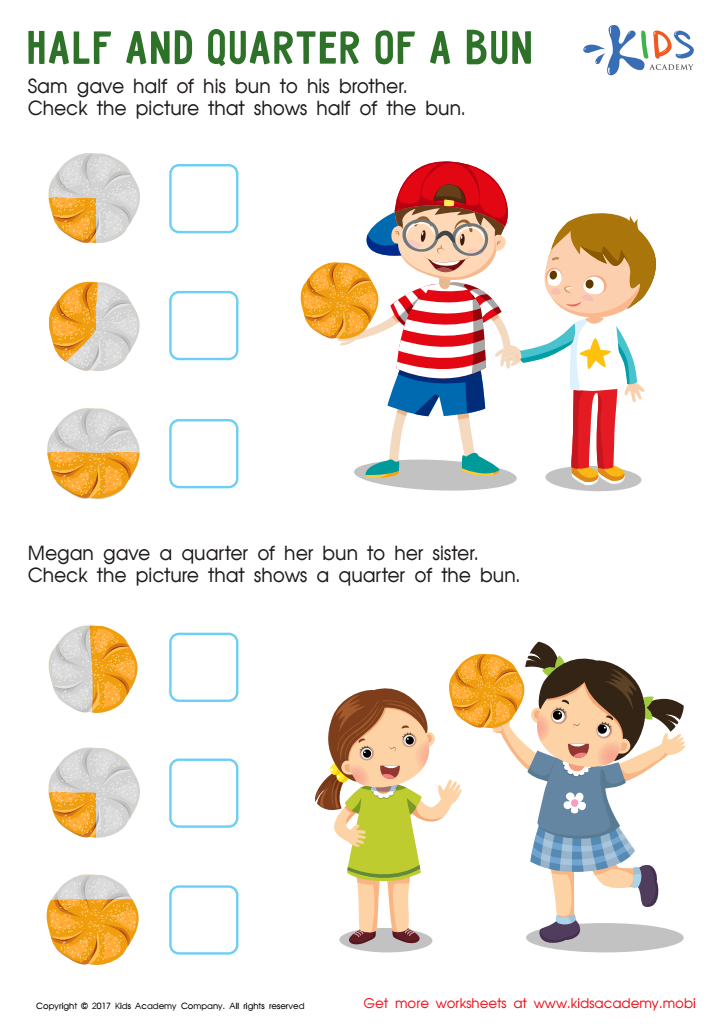
Half and Quarter of a Bun Worksheet
 Assign to My Students











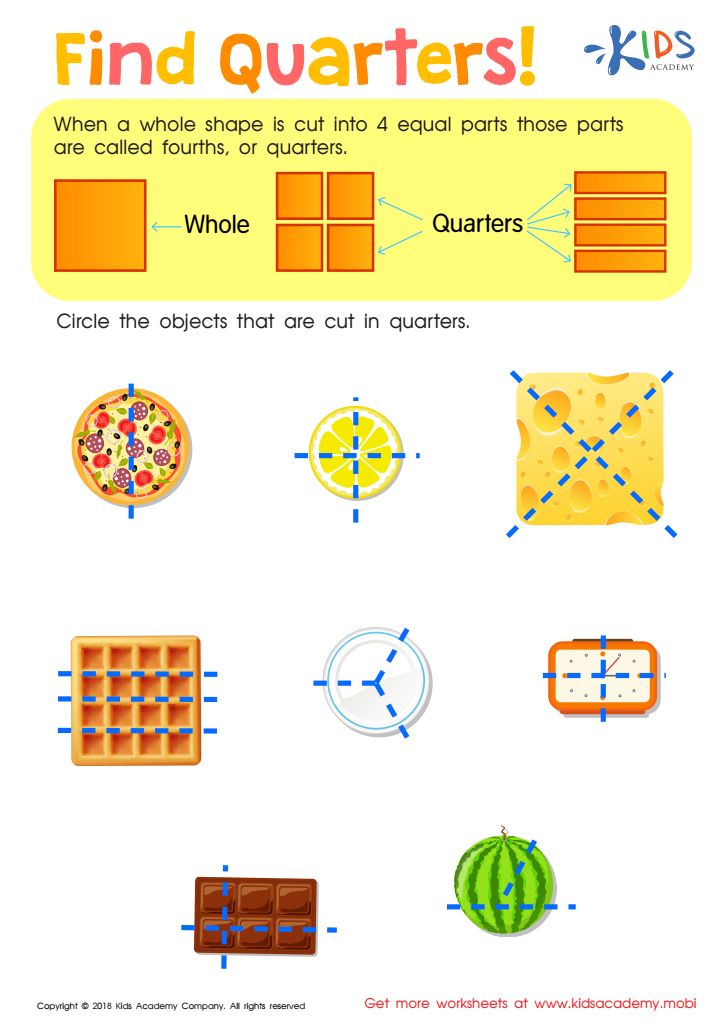
Find Quarters Worksheet
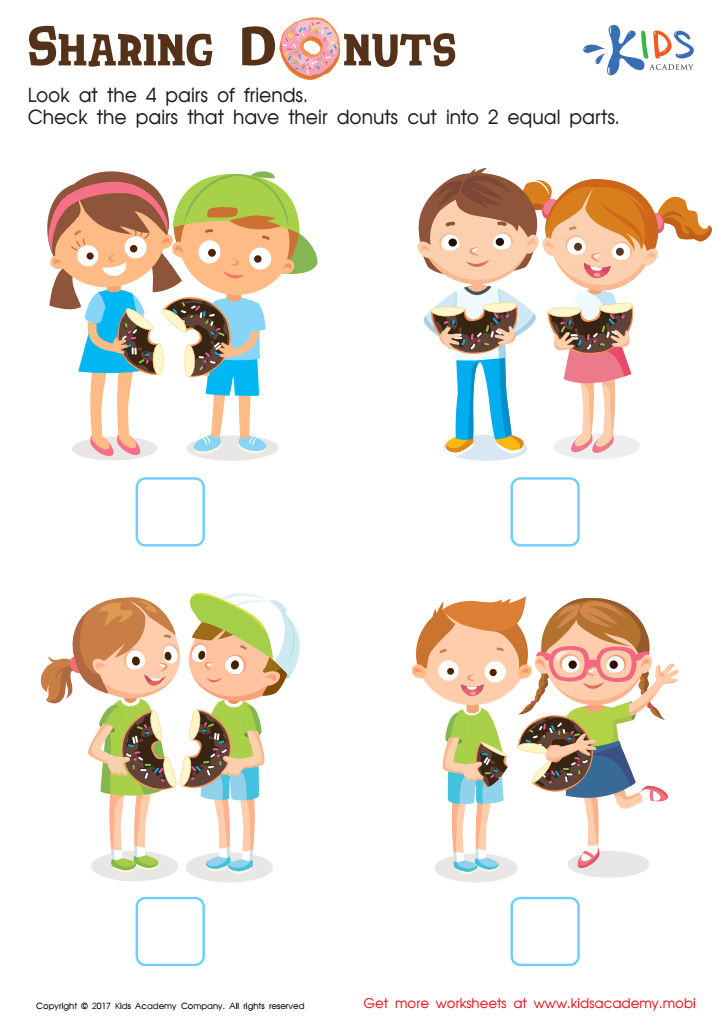
Sharing Donuts Worksheet
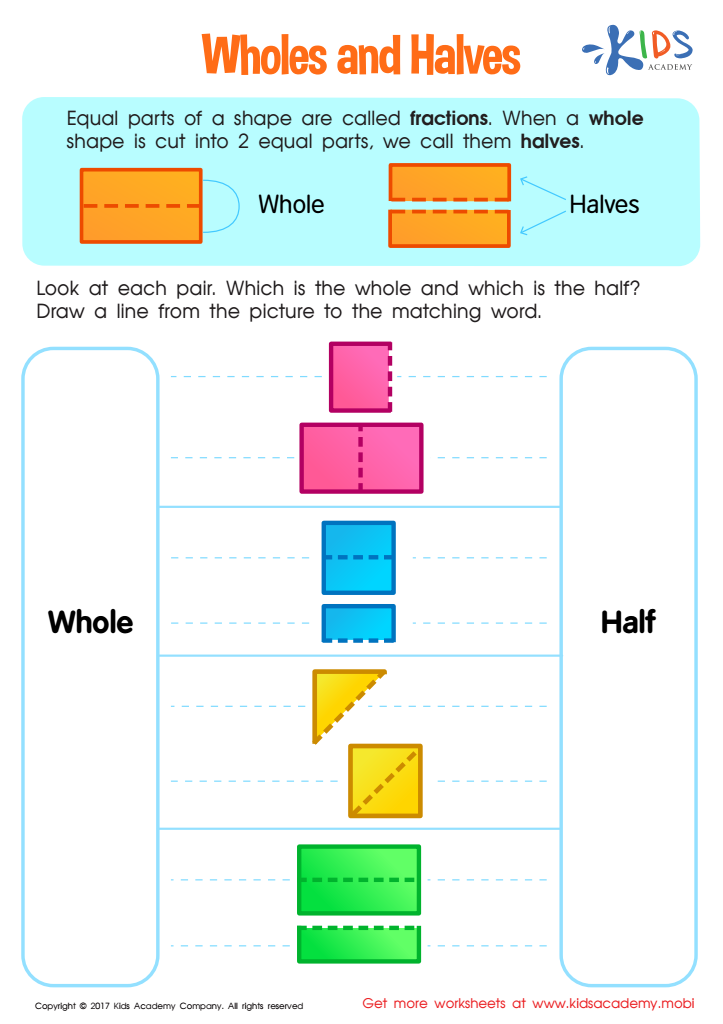
Wholes and Halves Worksheet








Visual learning geometry for children ages 5-7 is a potent educational tool that lays a foundation for critical thinking, problem-solving, and visual-spatial skills. At this pivotal stage, children's brains are developing rapidly and are exceptionally receptive to visual and tactile learning experiences.
Introducing basic geometric concepts through visual learning fosters an intuitive sense of shapes, sizes, and spatial relationships. It's more than just about understanding squares, triangles, or circles; young learners begin to differentiate and organize these shapes in meaningful ways that align with everyday experiences. For instance, recognizing shapes helps kids in activities such as organizing objects, understanding patterns, and enhancing their drawing and building skills.
Moreover, visual learning aids like puzzles, blocks, and interactive digital tools make geometry fun and engaging, encouraging a positive attitude toward math. This engagement promotes deeper learning since children are more likely to retain information they find enjoyable and relevant.
Teachers and parents should care because these early interactions with geometry can boost a child's overall academic confidence. Early exposure also leads to improved math performance later in life, as foundational understanding makes advanced concepts less intimidating and more intuitive. In effect, fostering visual learning geometry supports a holistic educational development that benefits children's cognitive and psychomotor abilities, preparing them well for future academic endeavors.








