Beginning Sounds Worksheets for Ages 5-8
19 filtered results
-
From - To
Our beginning sounds worksheets are designed for kids aged 5-8 to master phonics effortlessly. These engaging and colorful printables help young learners recognize and match initial consonant and vowel sounds, boosting their reading ability and confidence. Featuring interactive activities, such as picture matching, puzzles, and filling in missing letters, these worksheets are perfect for classroom use or at-home practice. Developed by educational experts, our beginning sounds resources ensure every child embarks on a successful reading journey. Download today and watch your child excel in phonics and early literacy skills. Suitable for grades Pre-K to 2nd!
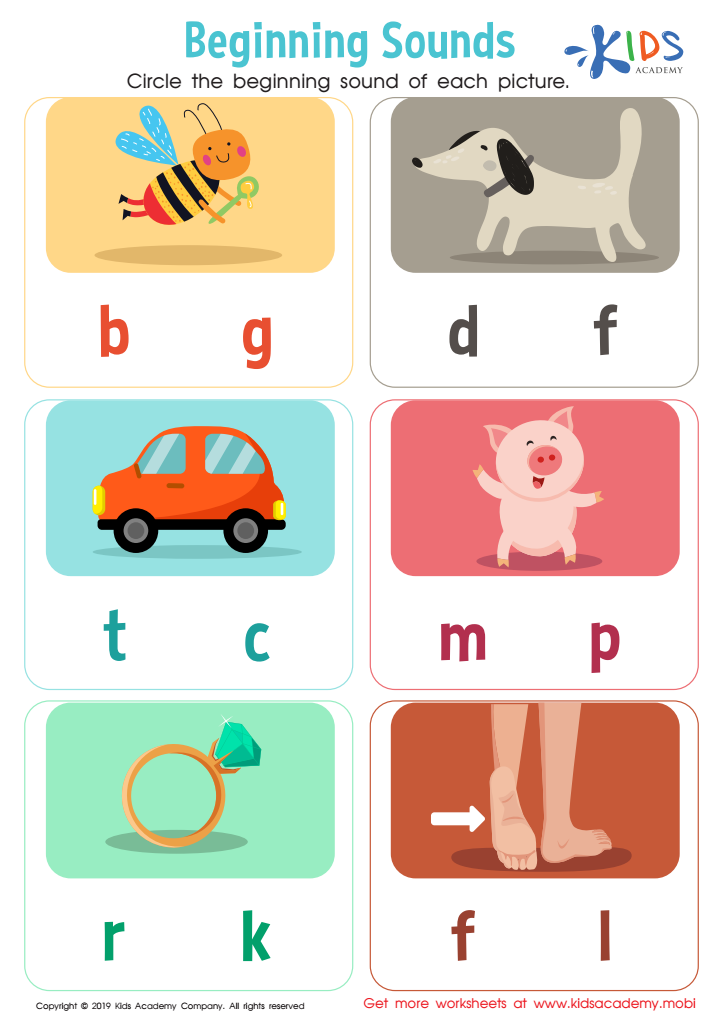
Beginning Sounds Worksheet
 Assign to My Students
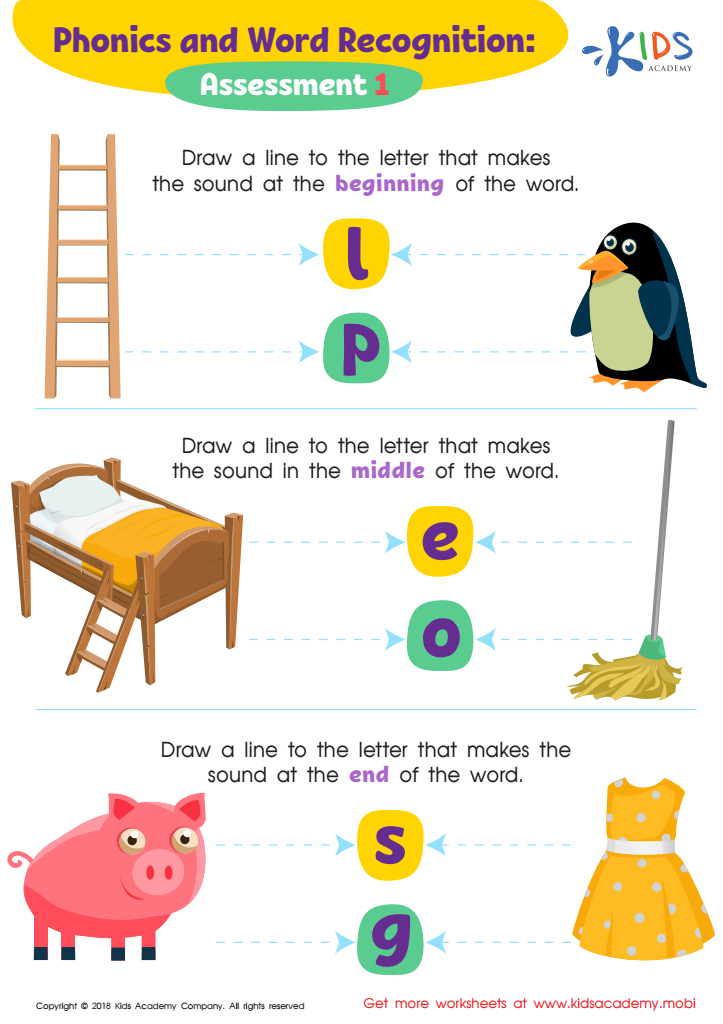
Phonics and Word Recognition: Assessment 1 ELA Worksheet
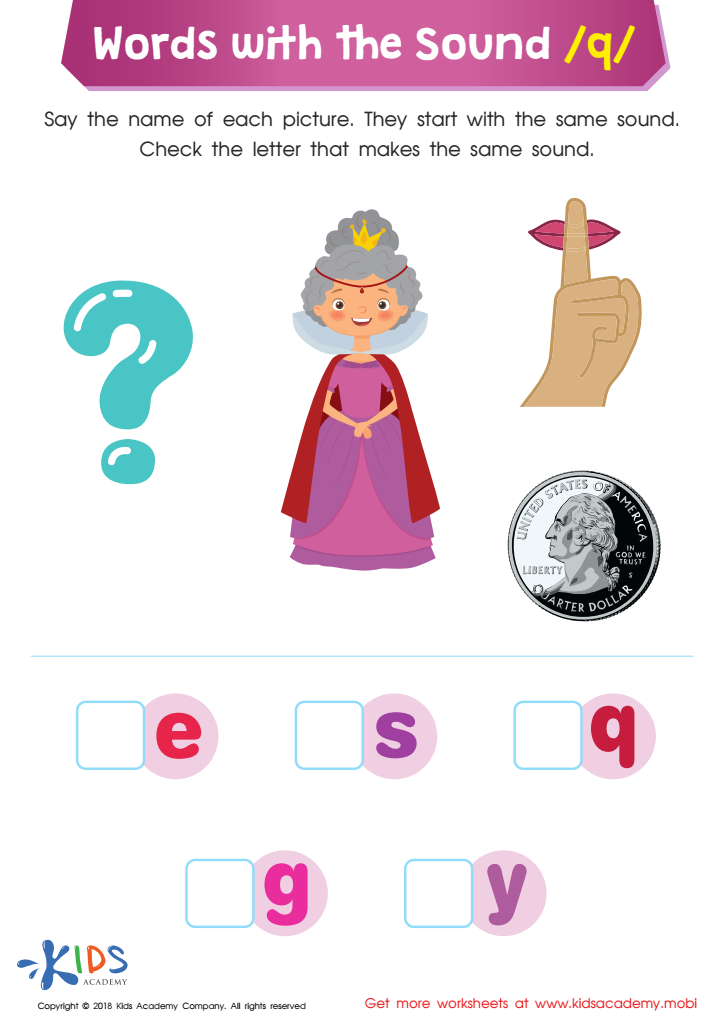
Words with Sound Q Reading Worksheet
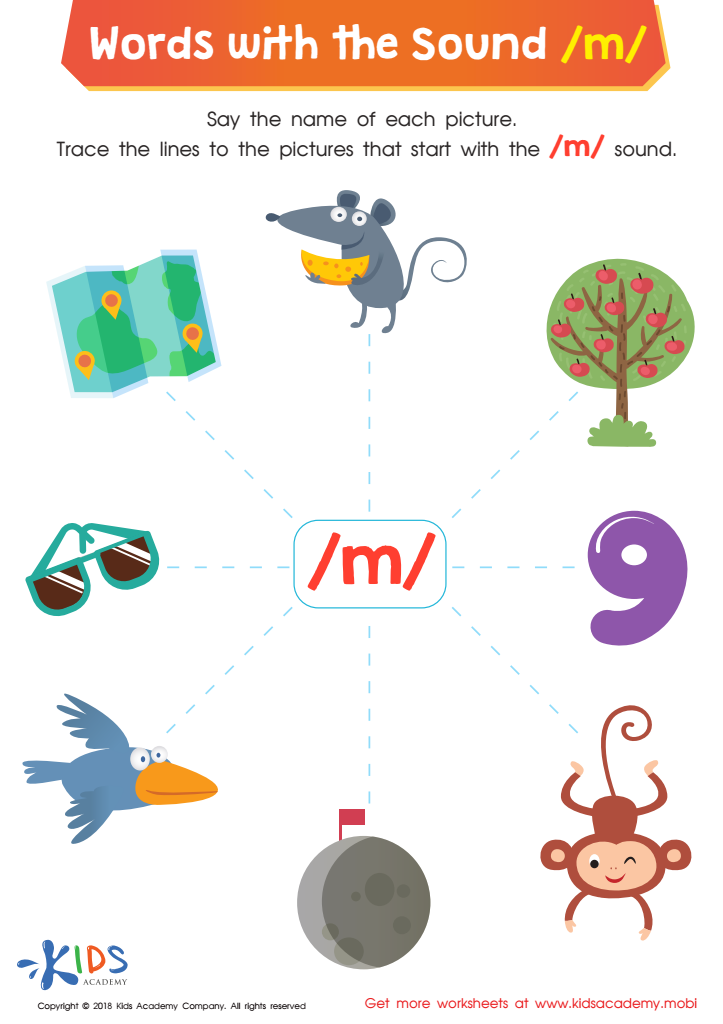
Words with Sound M Reading Worksheet
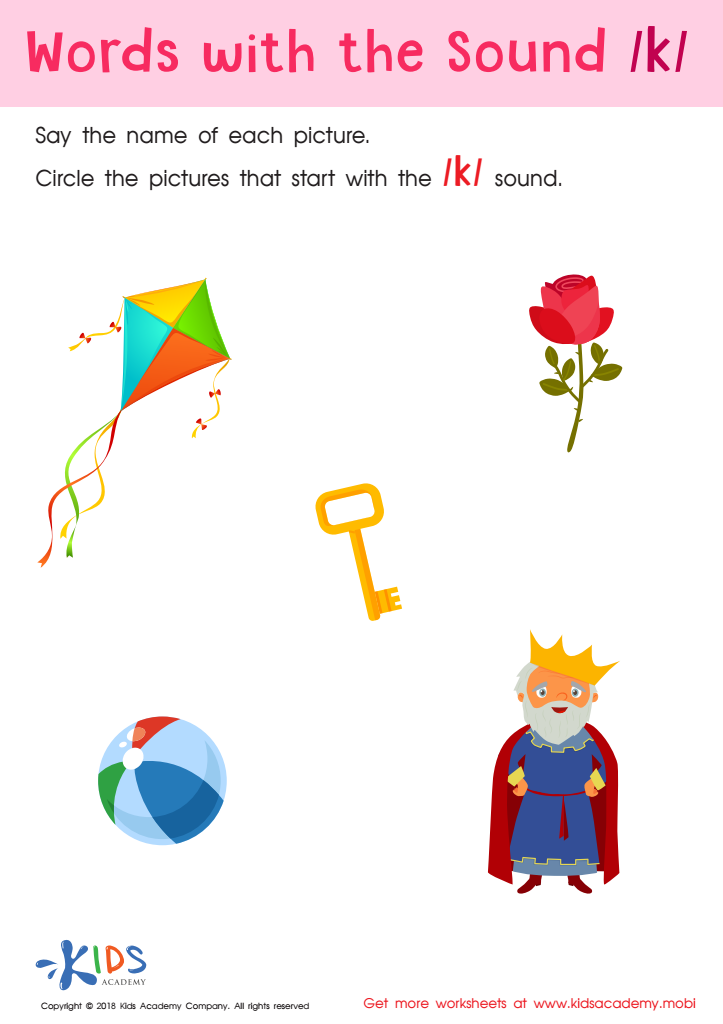
Words with sound k Reading Worksheet
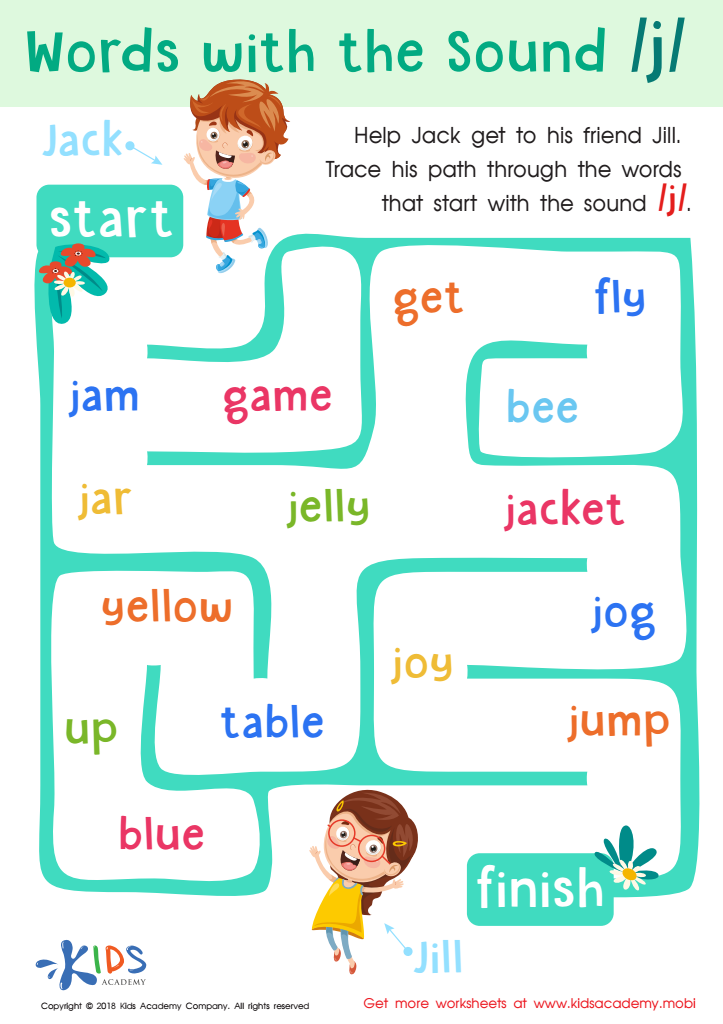
Words with sound j Reading Worksheet
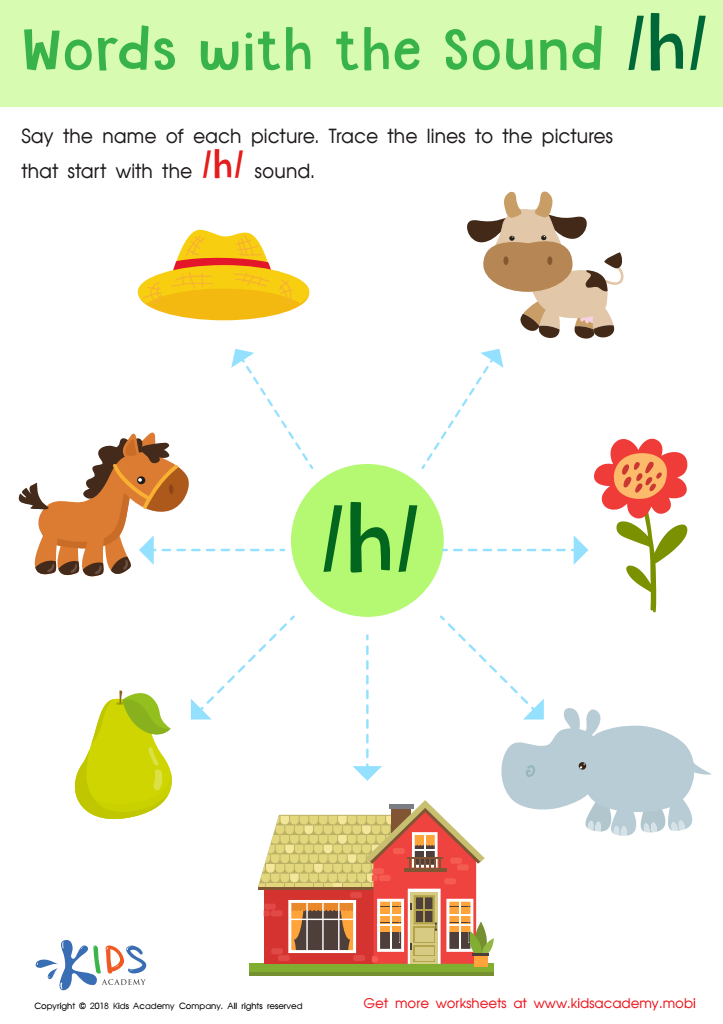
Words with sound h Reading Worksheet
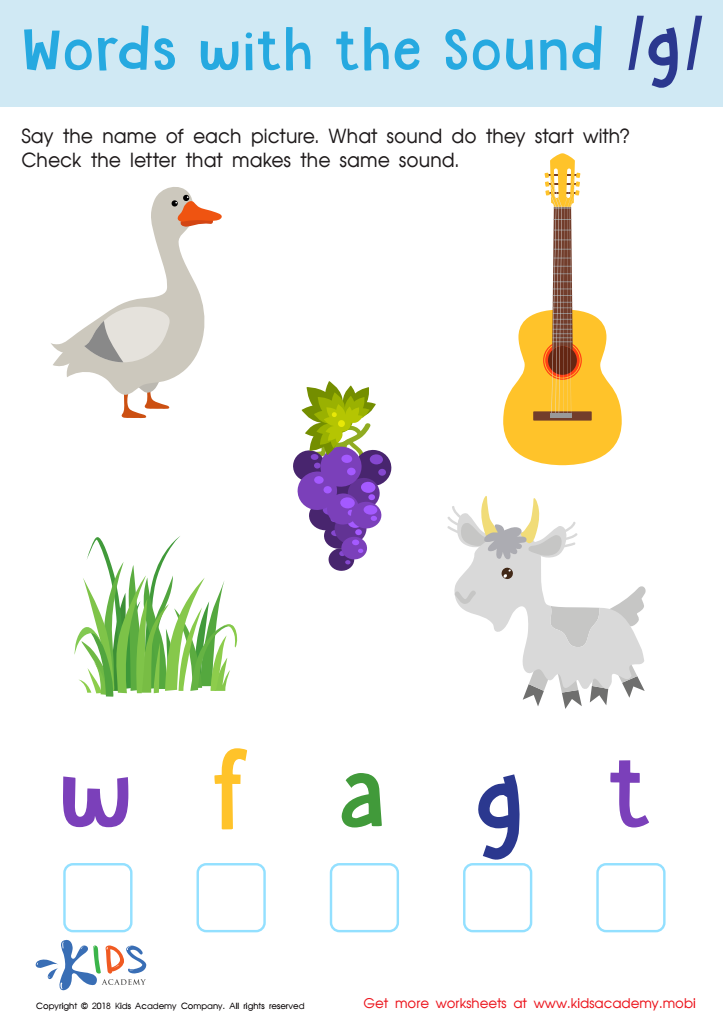
Words with sound g Reading Worksheet
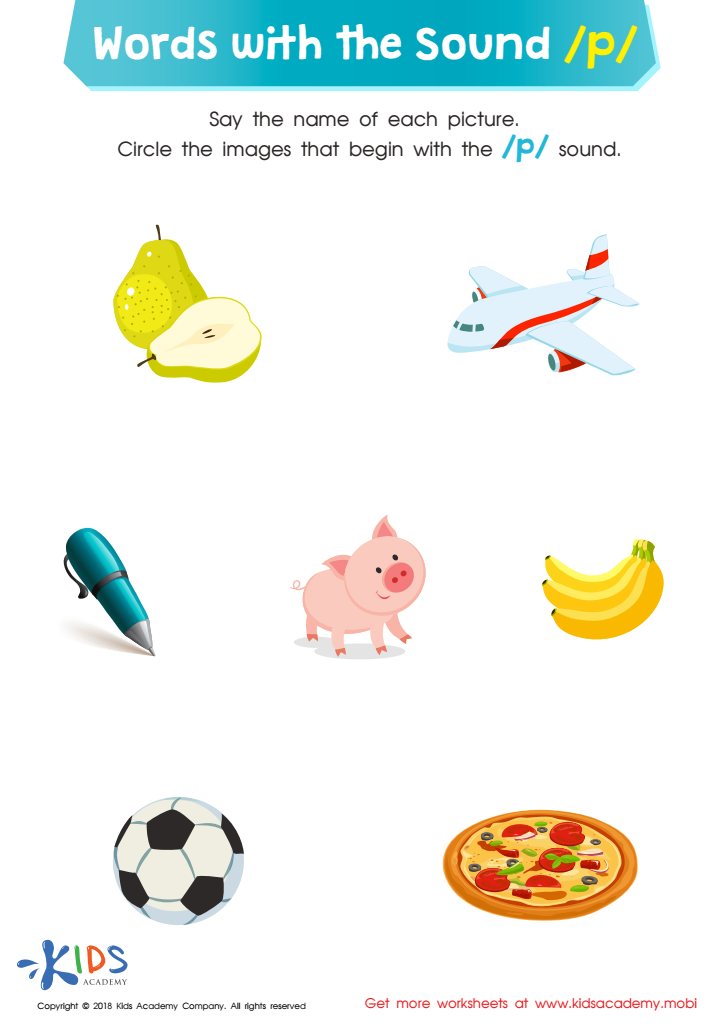
Words with sound p Reading Worksheet
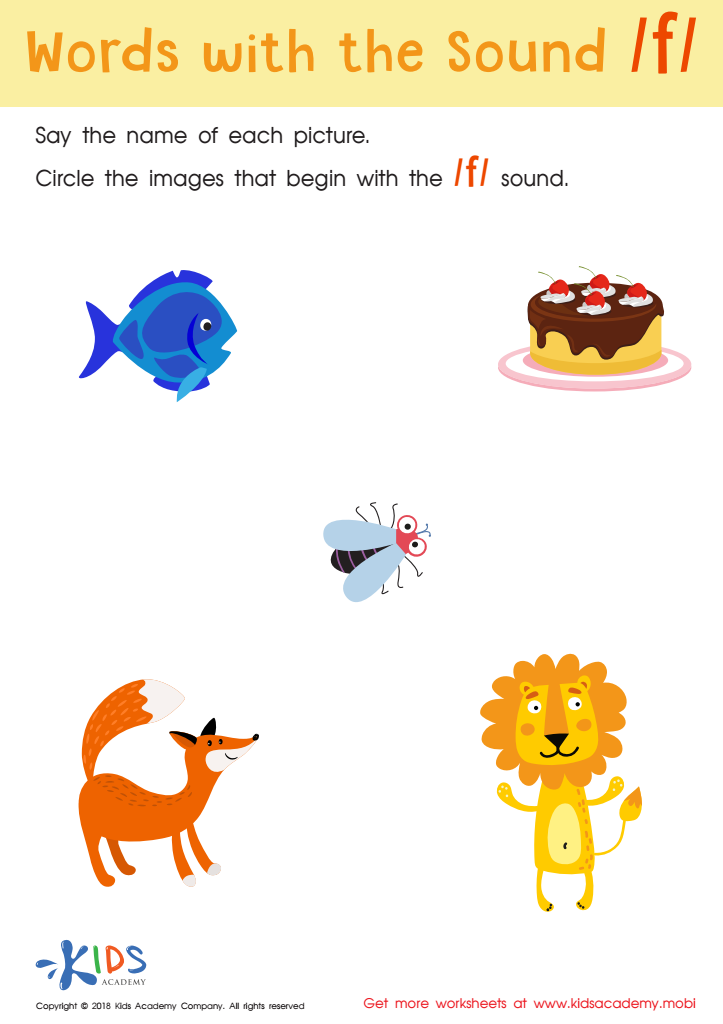
Words with sound f Reading Worksheet
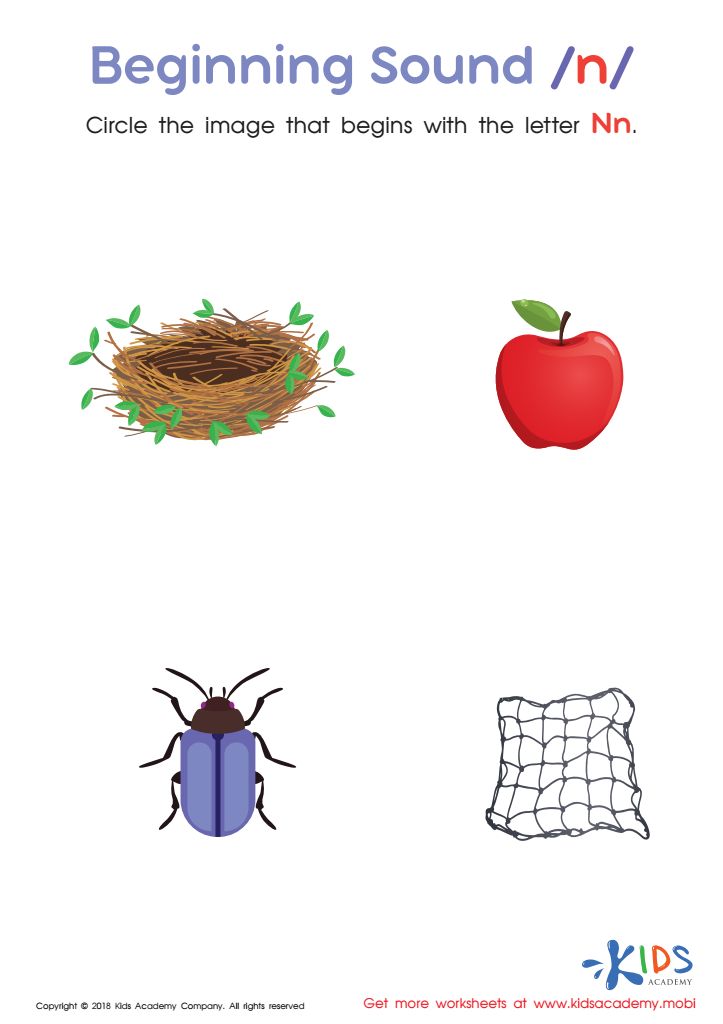
Beginning Sound «n» Worksheet
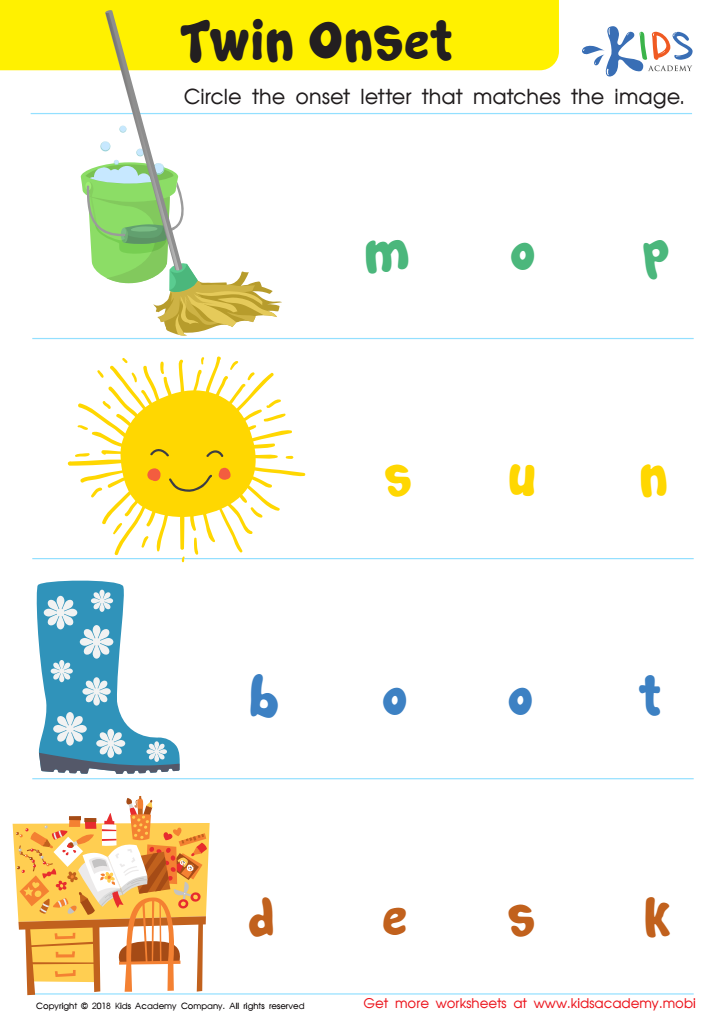
Twin Onset Worksheet
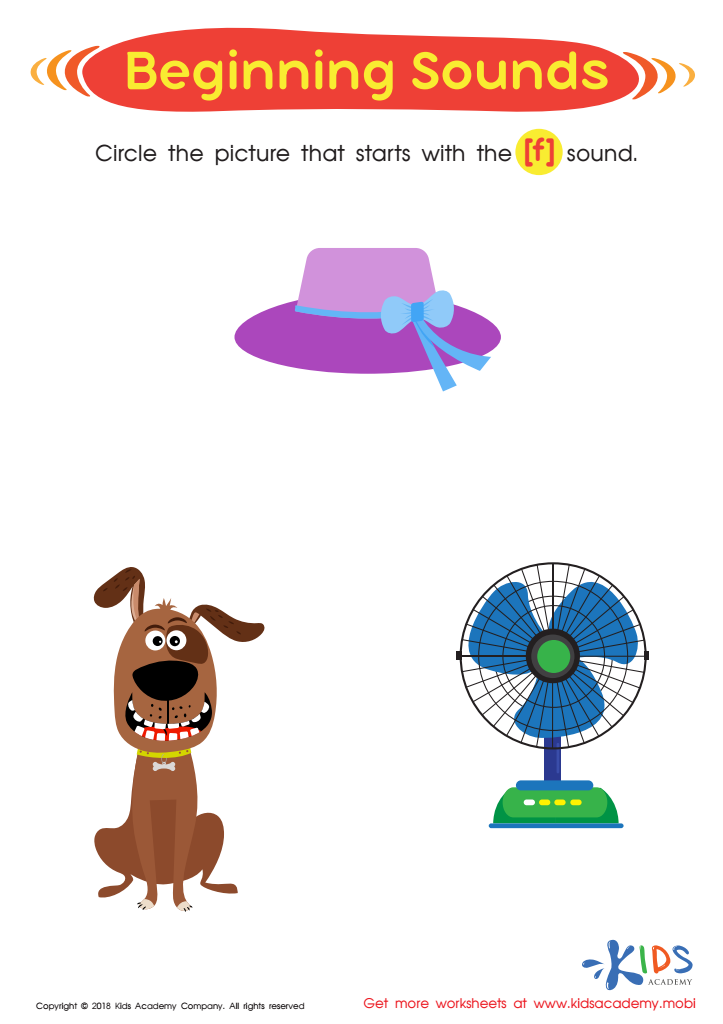
Beginning Sounds Assessment Printable
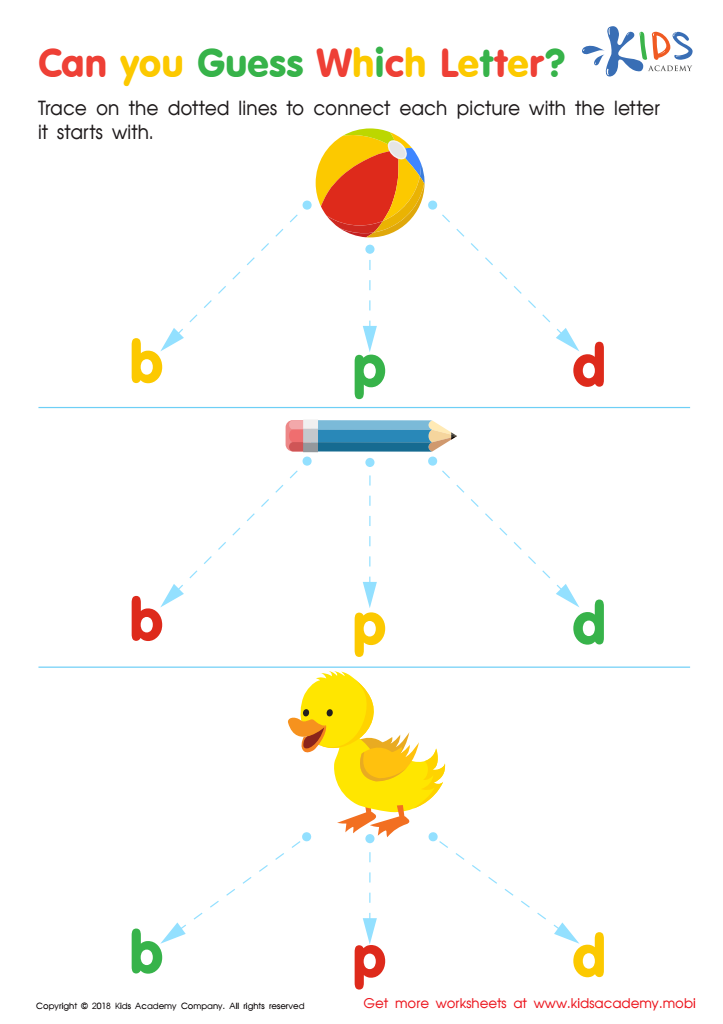
Can you Guess Which Letter? Worksheet
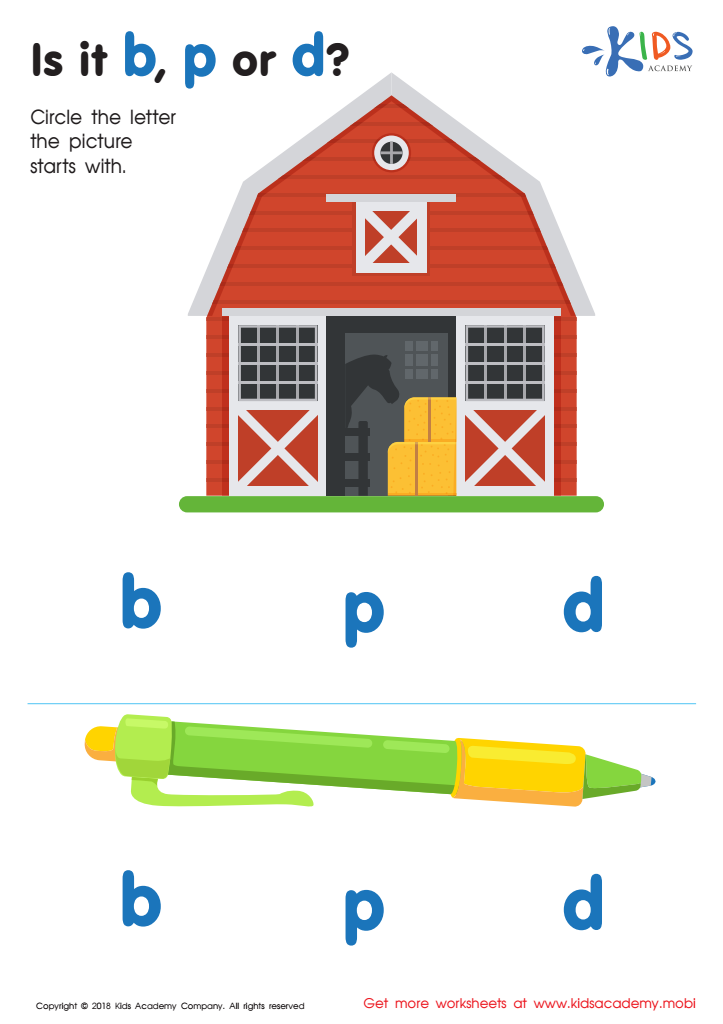
Is it b, p or d? Worksheet
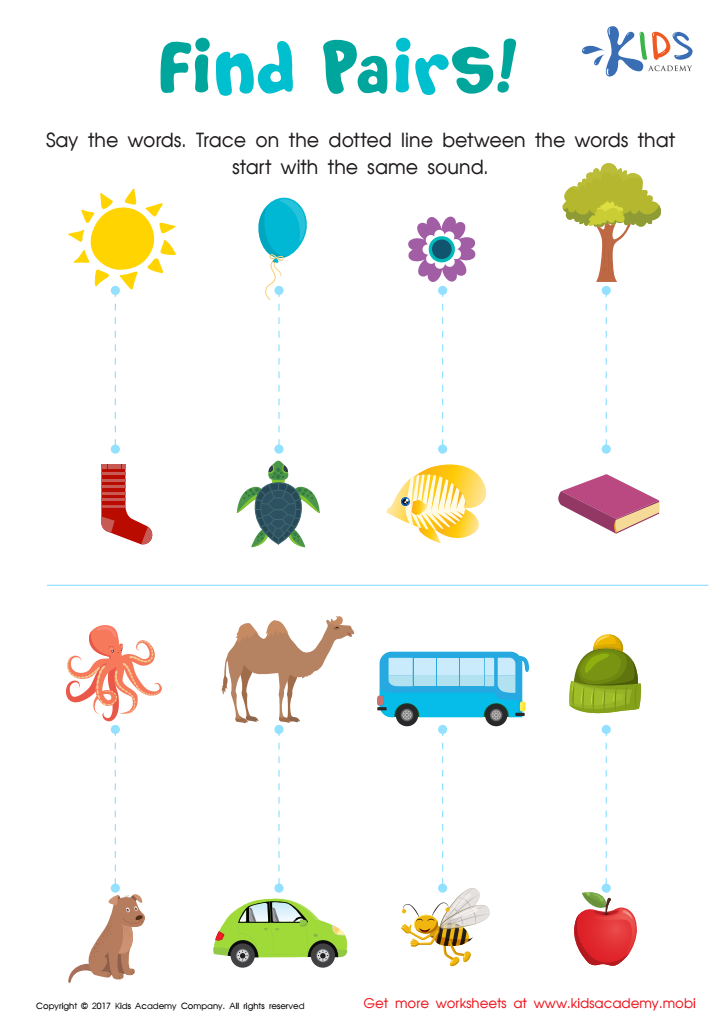
Beginning Sound: Find Pairs Worksheet
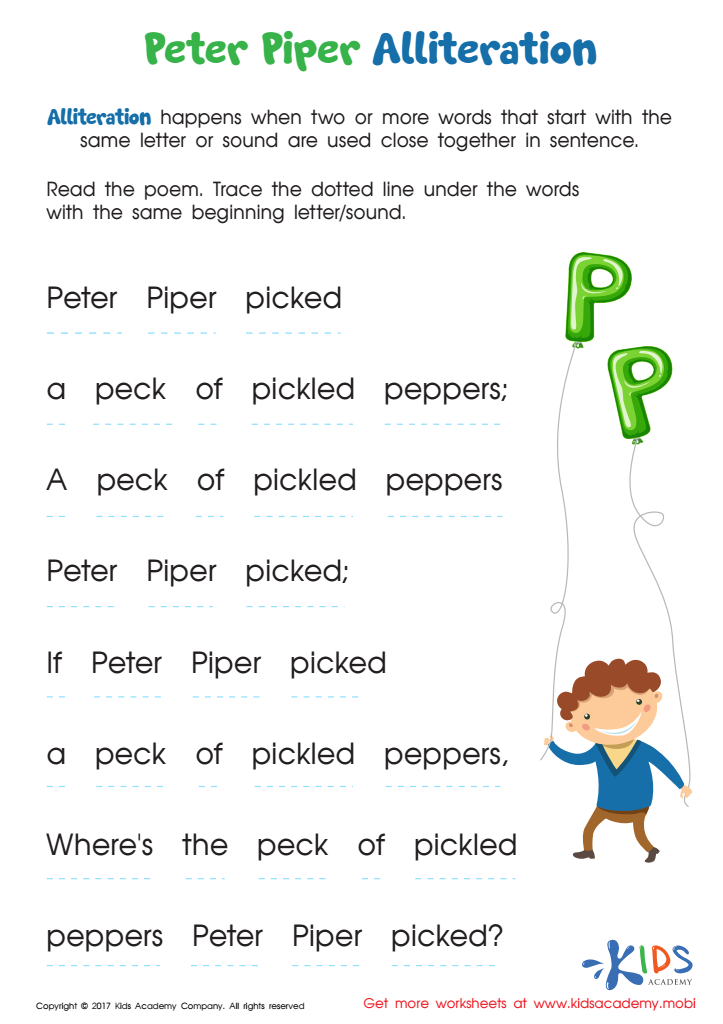
Peter Piper Alliteration Worksheet
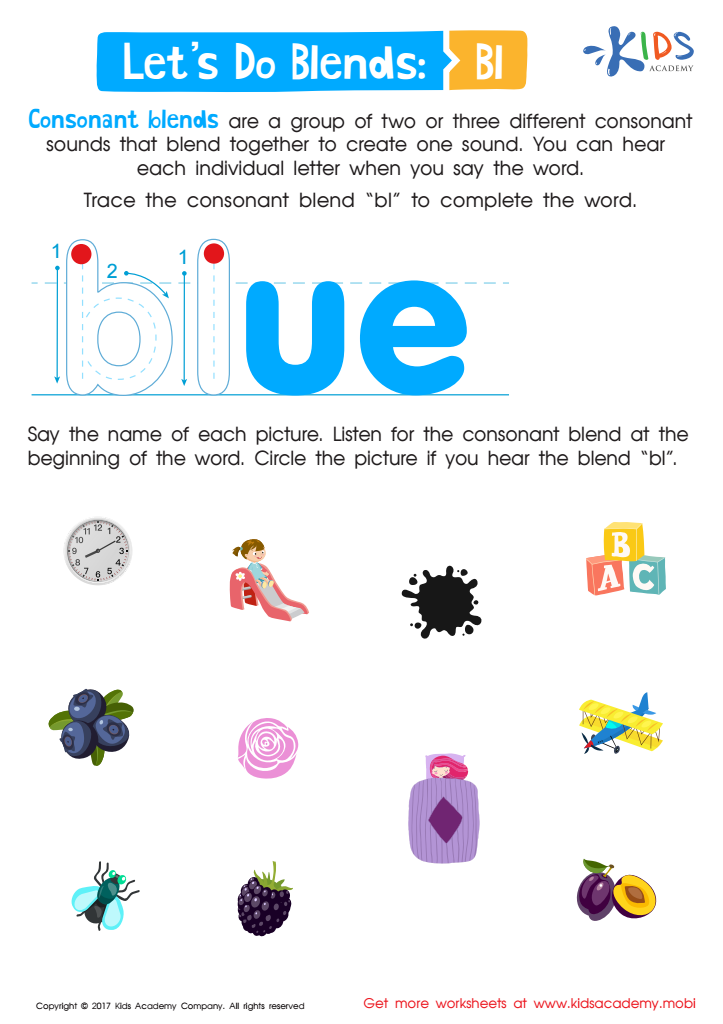
Beginning Blends: "Bl" Words Worksheet
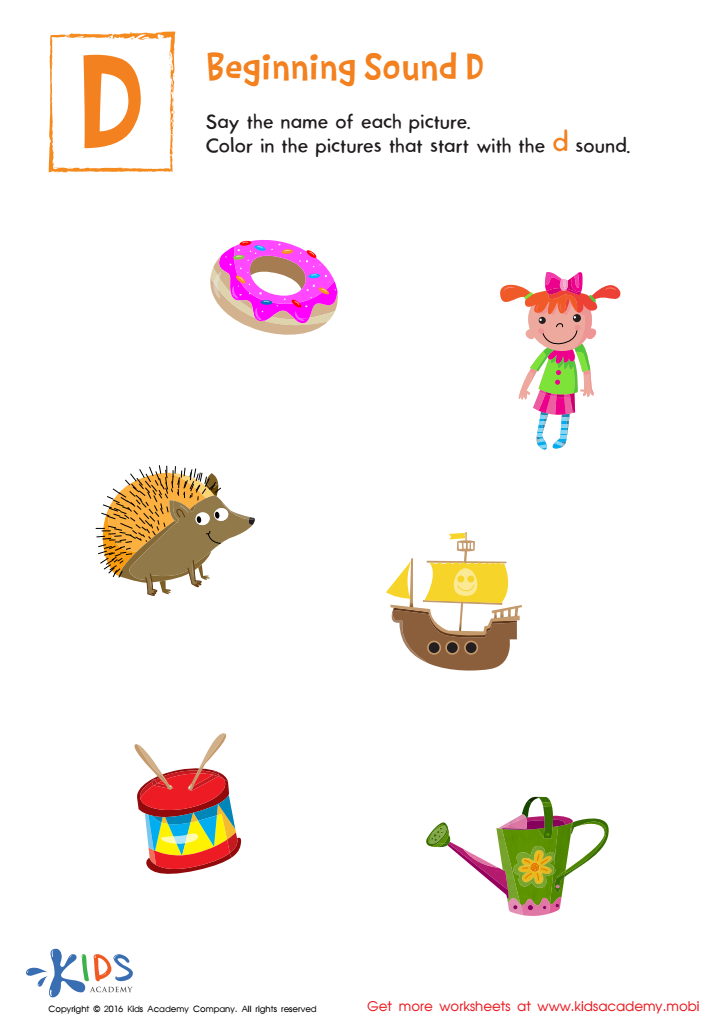
Beginning Sound D Worksheet








Understanding beginning sounds is crucial for children aged 5-8 because it builds the foundation for reading and writing skills. Developmentally, this age marks the transition from recognizing letters to decoding words, a process known as phonemic awareness. By learning beginning sounds, children associate specific sounds (phonemes) with their corresponding letters (graphemes), which aids in word recognition.
Phonemic awareness allows children to sound out new words, boosting their reading fluency. This skill also aids in spelling as children can break words into individual sounds and match them with letters. Strong phonemic skills are directly linked to later success in literacy.
Moreover, developing beginning sounds enhances listening skills and auditory discrimination, both essential for effective communication. This heightened awareness nurtures a child’s ability to comprehend and generate words, augmenting vocabulary.
Teachers and parents play a pivotal role here. Engaging activities like reading aloud, playing rhyming games, and practicing with phonics worksheets can captivate children’s interest, making learning enjoyable while solidifying these critical skills.
In essence, focusing on beginning sounds is not just about learning letters and words; it is about equipping children with the tools they need for fluent reading, accurate spelling, and effective communication, all fundamental for academic success and lifelong learning.







