Missing Vowels Worksheets for Ages 5-8
6 filtered results
-
From - To
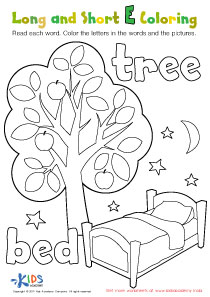
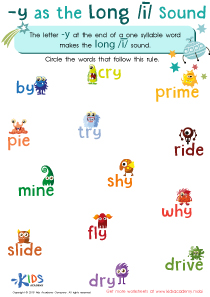
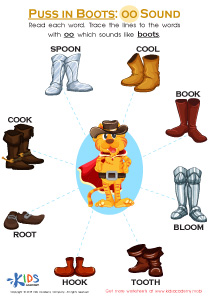
Unlock your child's potential with our engaging Missing Vowels Worksheets designed for ages 5-8! These interactive activities help strengthen literacy skills by encouraging kids to identify missing vowels in words, enhancing their understanding of phonics and word structure. With vibrant illustrations and age-appropriate content, these worksheets make learning fun and effective. Ideal for homeschooling or classroom use, our resources promote independent learning while boosting vocabulary and reading comprehension. Download and print our missing vowels worksheets today to provide your little learners with an exciting opportunity to sharpen their skills in a delightful way! Perfect for cultivating a love for language early on!
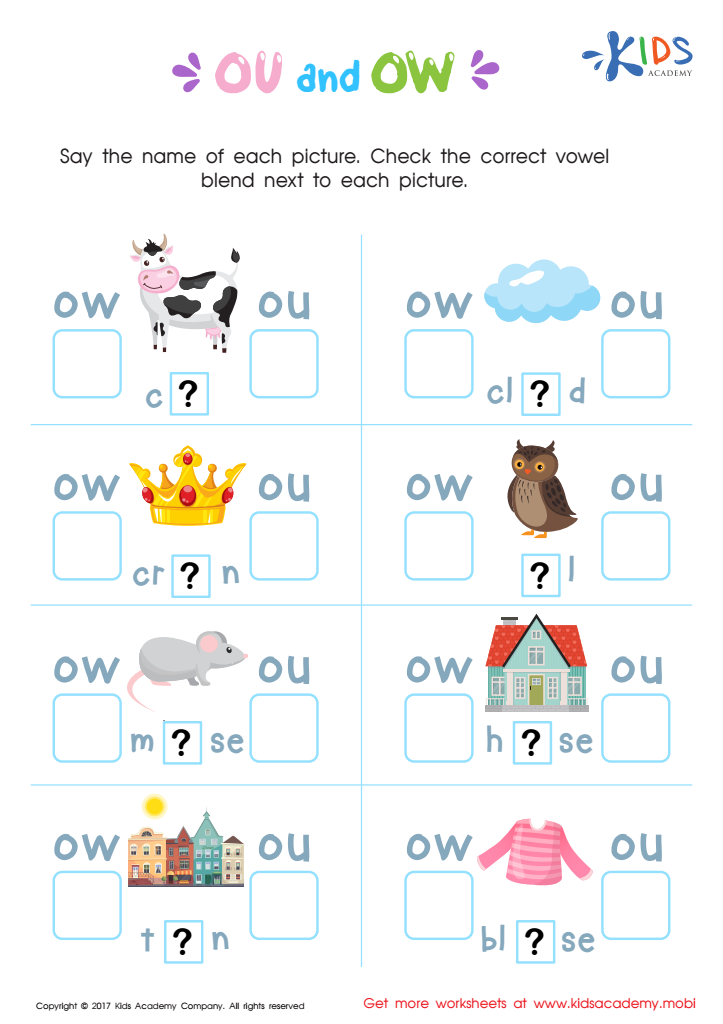
OU and OW Words Worksheet
 Assign to My Students
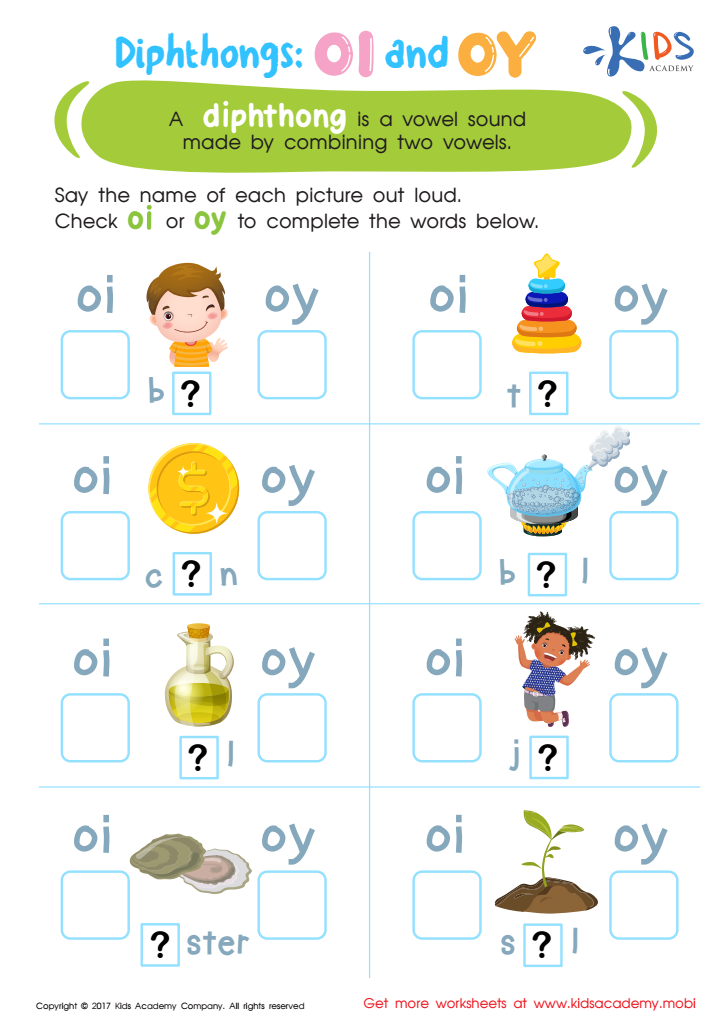
Vowel Diphthongs OI OY Worksheet
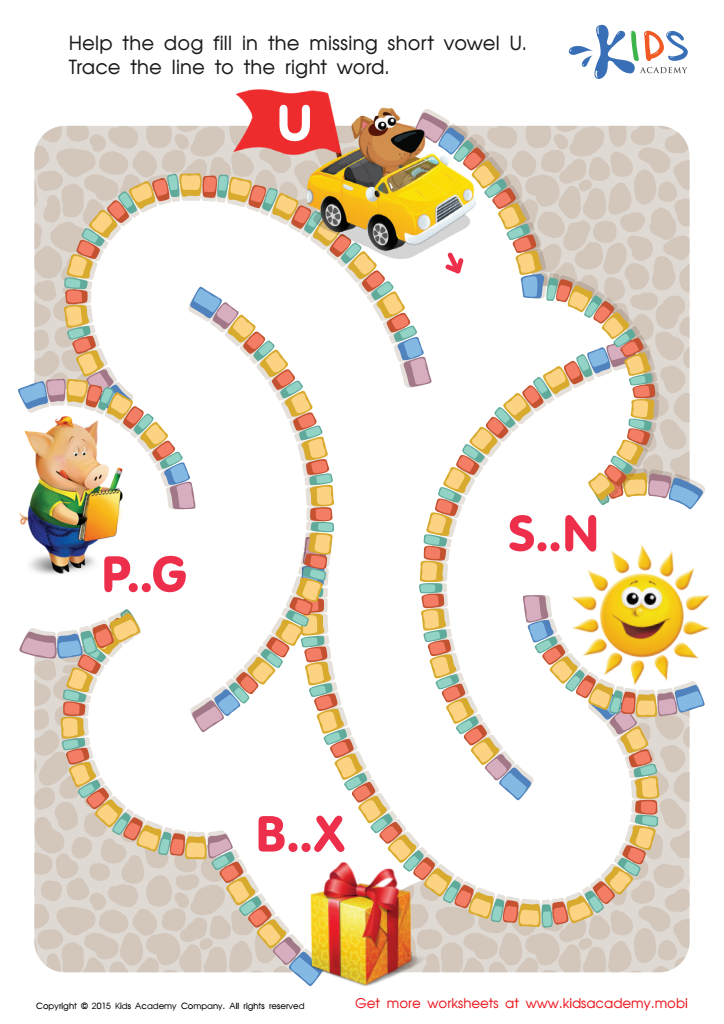
Short Vowel Sound U Worksheet
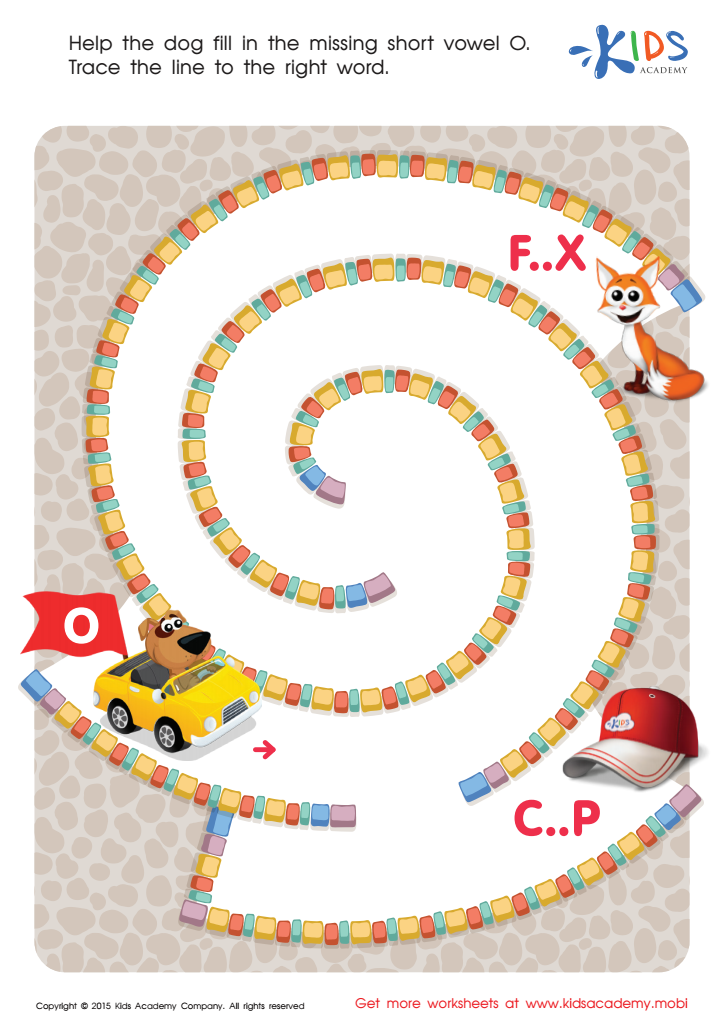
Short Vowel Sound O Worksheet
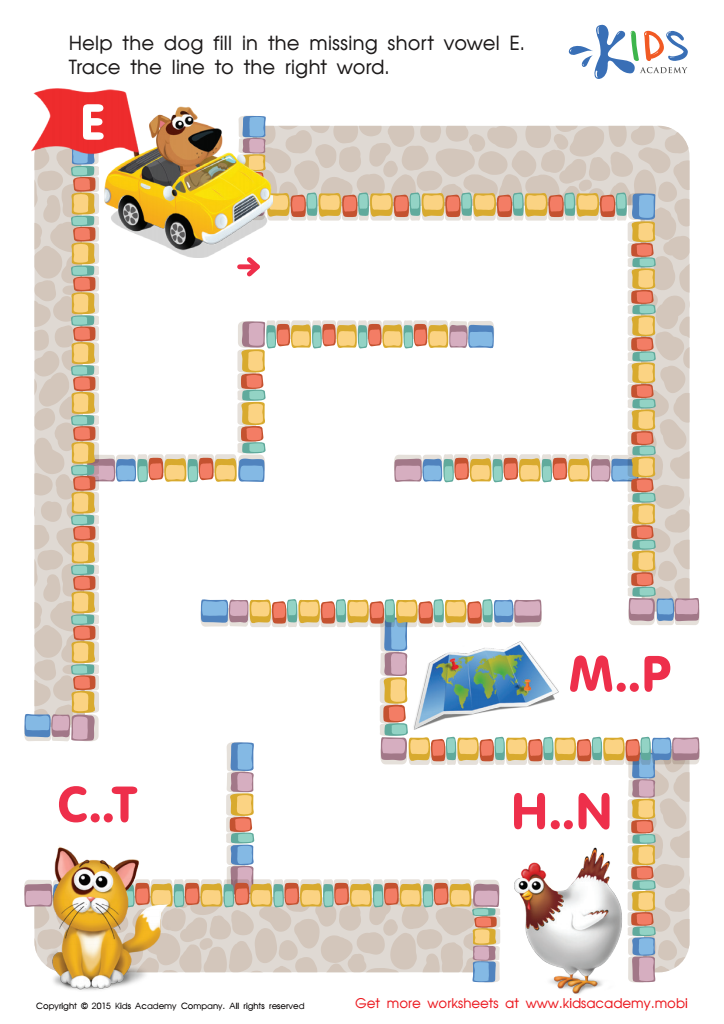
Short Vowel Sound E Worksheet
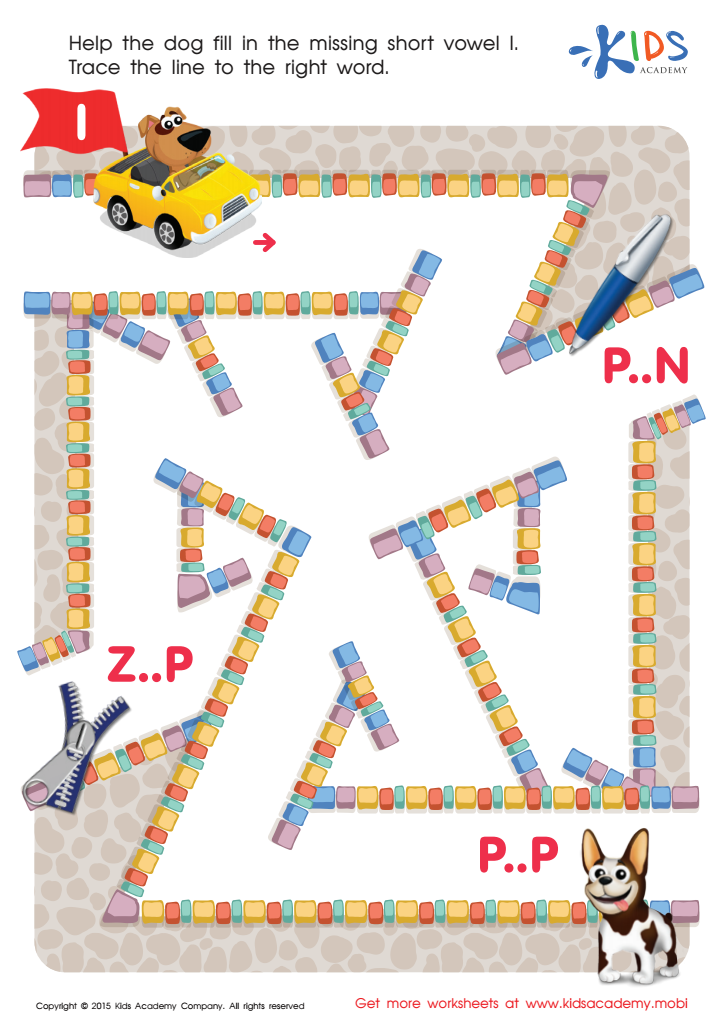
Short Vowel Sound I Worksheet


Missing Vowels is a fun and educational activity that can significantly enhance the reading and language skills of children aged 5-8. Parents and teachers should care about this exercise because it promotes critical thinking and cognitive development in young learners. By removing vowels from words, kids are encouraged to utilize their problem-solving skills as they fill in the gaps, fostering a deeper understanding of phonetics and spelling patterns.
Additionally, Missing Vowels aids in improving overall literacy. It engages children in recognizing patterns in words, which aids in decoding and enhances reading fluency. The engaging format keeps young learners excited and motivated, making learning enjoyable and interactive.
Furthermore, this activity encourages collaboration and communication among peers. Children often work together to solve vowel puzzles, fostering social skills while building confidence in their reading abilities. The playful challenge can also be adapted for various learning levels, ensuring that every child is both challenged and supported.
Ultimately, incorporating Missing Vowels into learning routines nurtures a love for language and provides foundational skills that can have lasting effects on a child's academic journey. By emphasizing these skills early on, parents and teachers set children up for success as they progress in their literacy development.