Initial and Final Consonant Blends Worksheets for Ages 5-9
5 filtered results
-
From - To
Enhance your child's reading skills with our engaging Initial and Final Consonant Blends Worksheets designed specifically for ages 5-9. These worksheets provide interactive activities that help young learners decode words by blending initial and final consonants, improving their phonemic awareness and vocabulary. From fun illustrations to entertaining exercises, each worksheet captivates children's interest while promoting essential literacy skills. Ideal for home or classroom use, our resources cater to different learning styles, ensuring every child finds joy in mastering consonant blends. Inspire a love for reading and establish a strong foundation for future literacy success with our thoughtfully crafted worksheets!
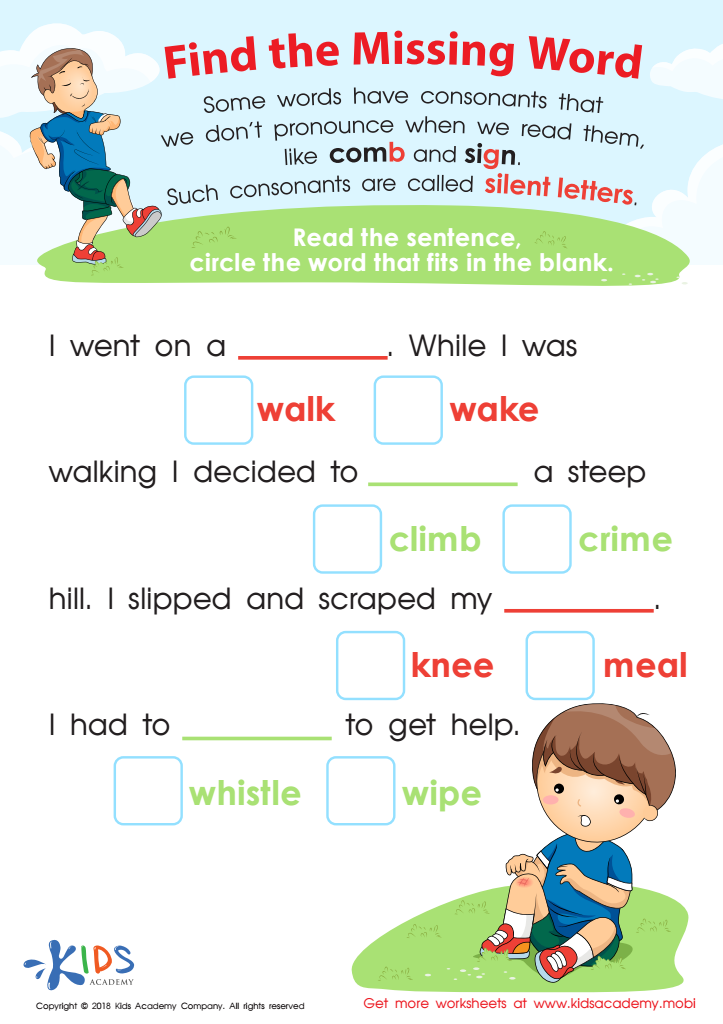
Find The Missing Word Worksheet
 Assign to My Students
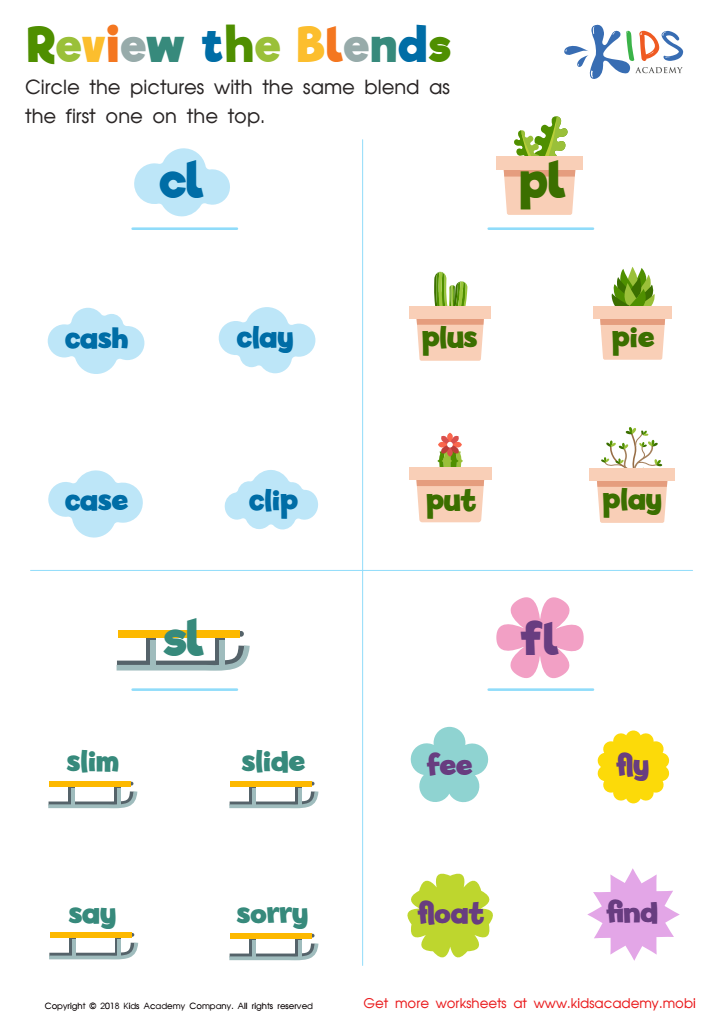
Review the Blends Worksheet
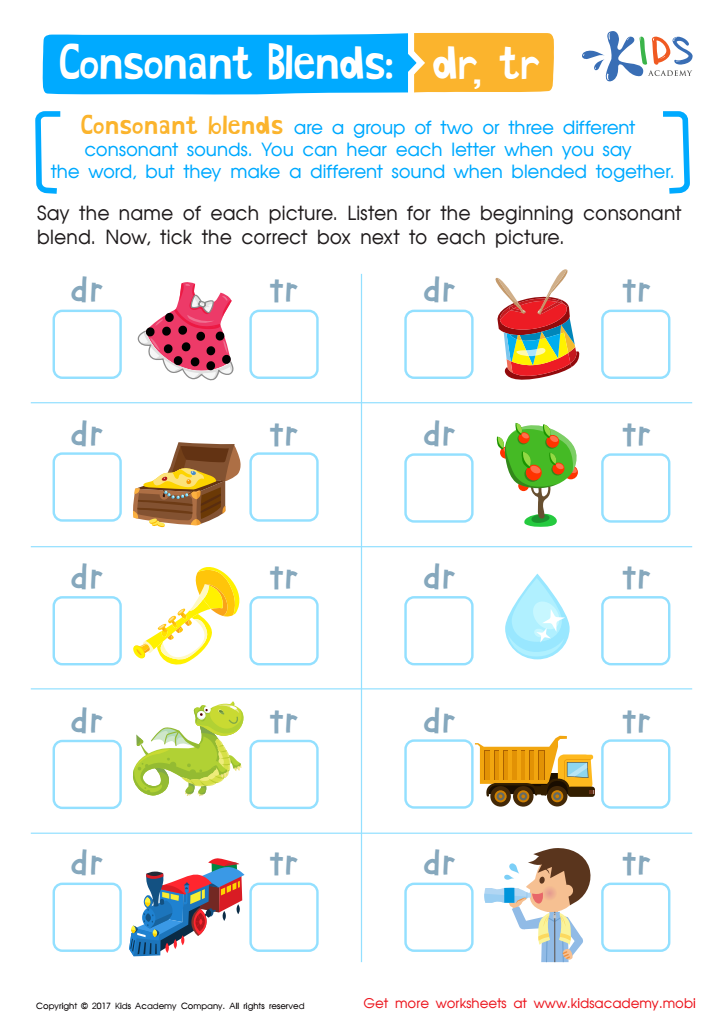
Consonant Blends: "Dr" and "Tr" Printable
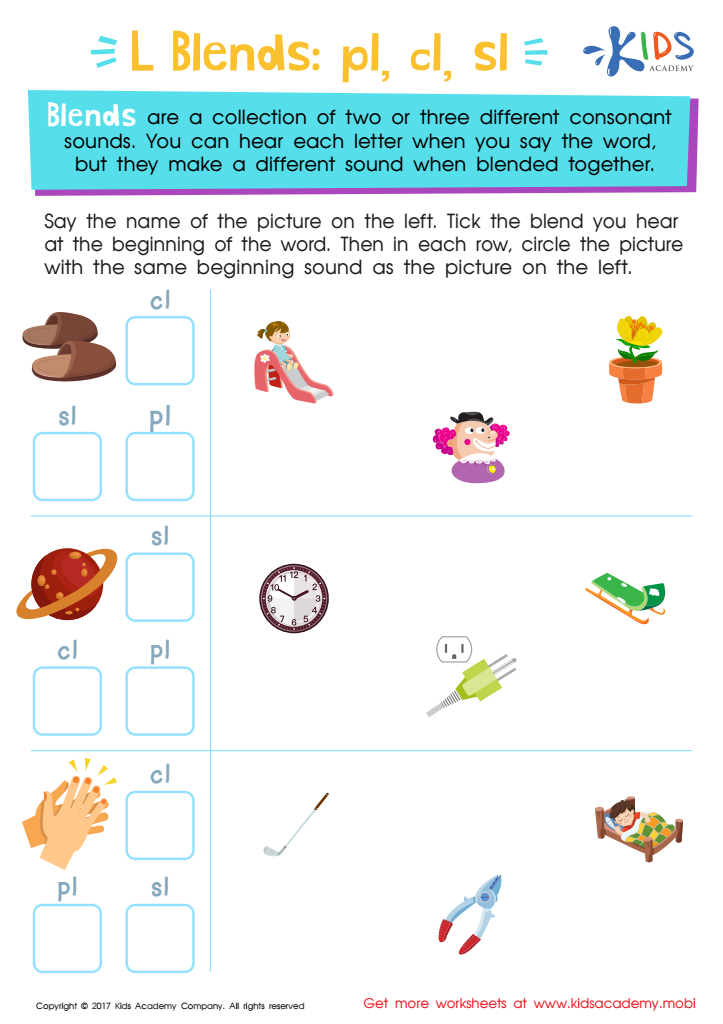
L Blends: "Pl", "Cl" and "Sl" Printable
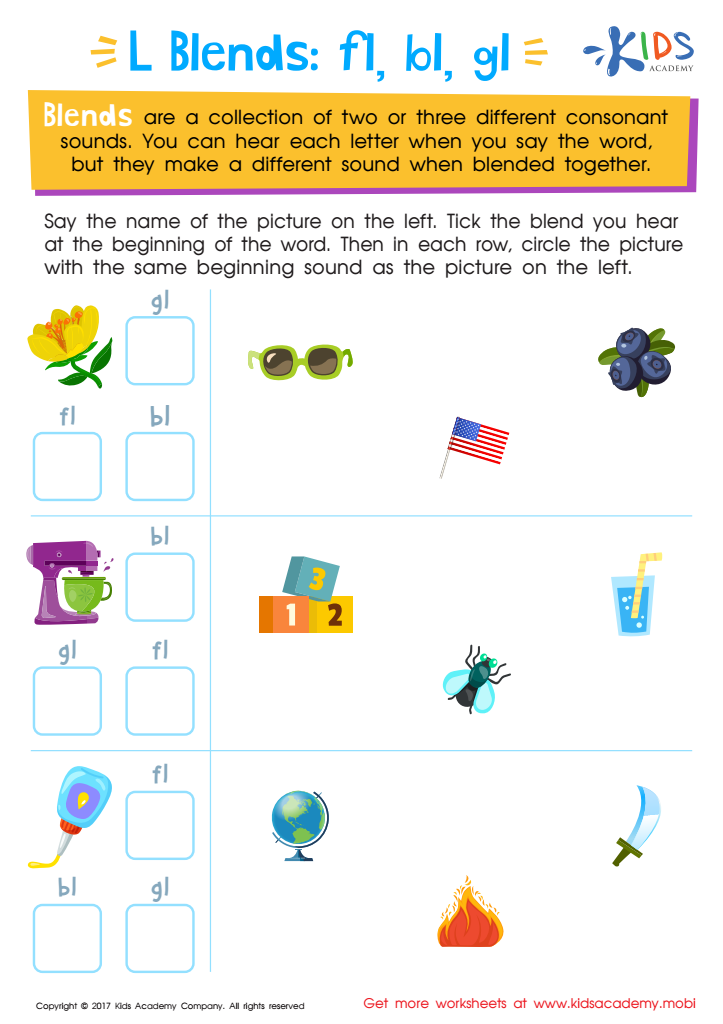
Blending Consonants: "Fl", "Bl" and "Gl" Printable


Understanding initial and final consonant blends is crucial for young learners aged 5-9, as these phonetic skills lay the foundation for reading and writing proficiency. Initial consonant blends, like "fl" in "flag" or "bl" in "blend," combine two or three consonant sounds at the beginning of words, helping children unlock a broader range of vocabulary. Final consonant blends, such as "nd" in "bend" or "st" in "last," enhance students' decoding skills, enabling them to sound out unfamiliar words, thereby boosting their reading fluency and comprehension.
Parents and teachers should care about these blends because mastering them reinforces the relationship between sounds and letters, promoting effective phonemic awareness. This awareness is essential for spelling, as it helps children understand how to break down and construct words. Additionally, strong phonetic skills can build confidence in young learners, encouraging a lifelong love for reading and learning.
By supporting students in tracing blends, using engaging activities and games, parents and teachers can make phonics enjoyable. Ultimately, fostering these skills not only aids literacy development but also equips children with the linguistic tools they need for future educational success.








