Filters

220 filtered results

Clear all filters
Favorites
With answer key
Interactive

220 filtered results

Difficulty Level

Grade


Check out this FREE Trial Lesson on Writing for age 6-7!

Collective nouns

Favorites
With answer key
Interactive
  • 6-7
  • Interactive
  • Writing
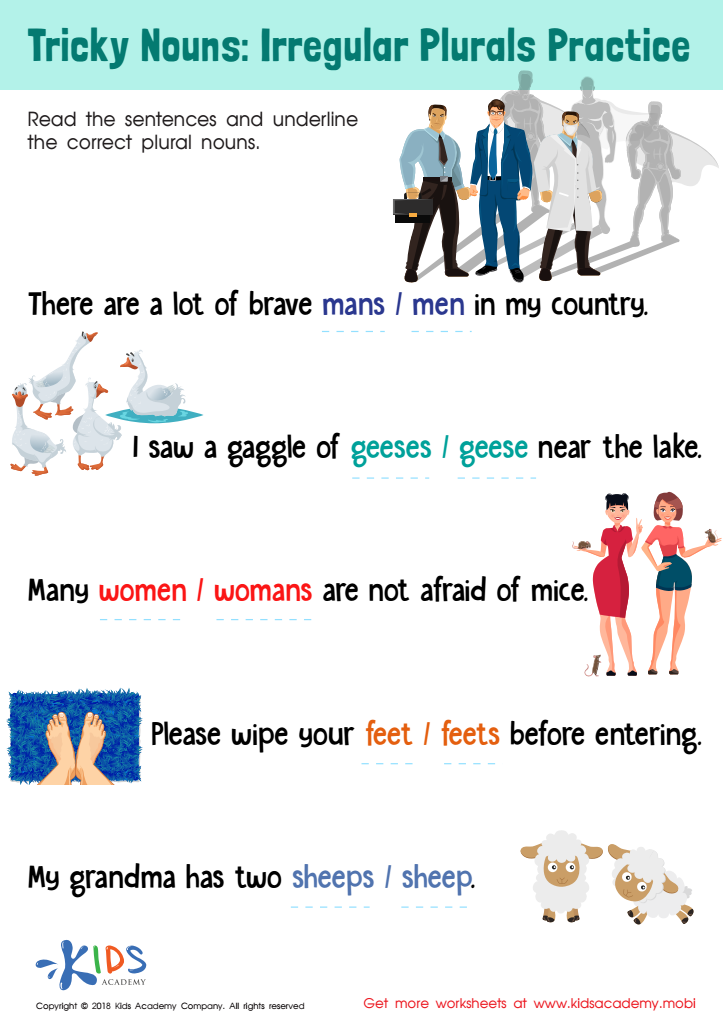
Tricky Nouns: Irregular Plurals Practice Worksheet

Tricky Nouns: Irregular Plurals Practice Worksheet

Rules for forming plurals of words can be tricky, but with practice, your child can learn to identify the right ones. This worksheet provides the necessary practice - ask your child to read the sentences, then underline the correct plural words.
Tricky Nouns: Irregular Plurals Practice Worksheet
Worksheet
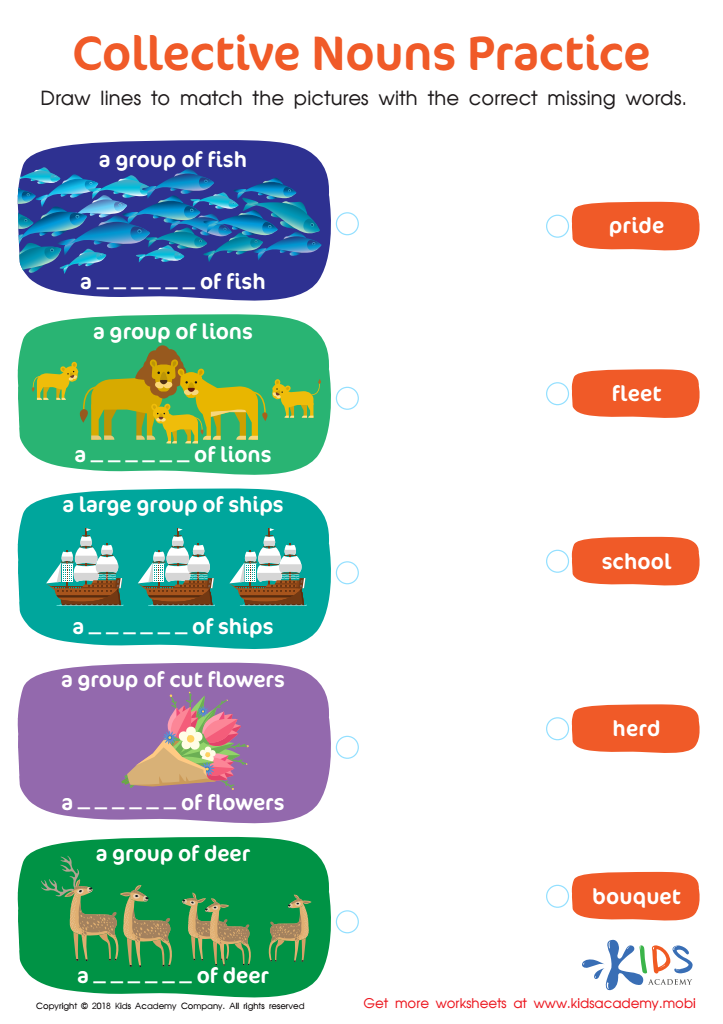
Collective Nouns Practice Worksheet

Collective Nouns Practice Worksheet

This worksheet helps your child master collective nouns. Five pictures show different groups of nouns, and your child must draw lines to the right collective noun words. It's a great way to help them sort out the words and understand collective nouns.
Collective Nouns Practice Worksheet
Worksheet
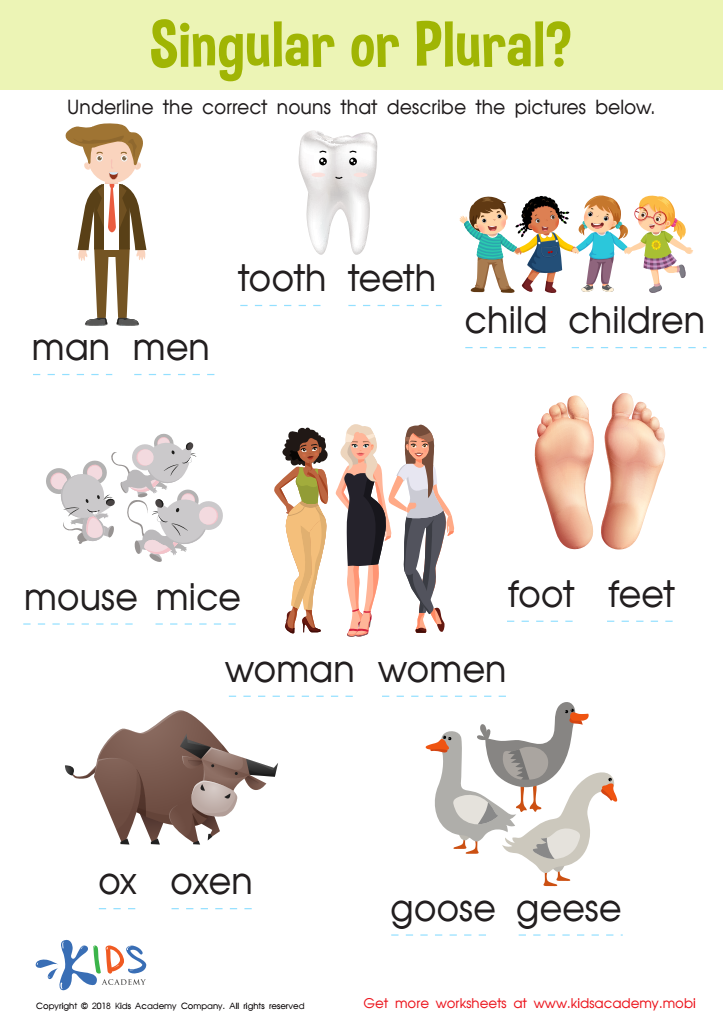
Singular or Plural? - Part 2 Worksheet

Singular or Plural? - Part 2 Worksheet

If your child knows their nouns, help them understand singular and plural words. Some are straightforward to make plural, but the rules can be tricky. Ease their confusion with this worksheet; they need to underline the correct nouns (singular or plural) that describe the pictures.
Singular or Plural? - Part 2 Worksheet
Worksheet
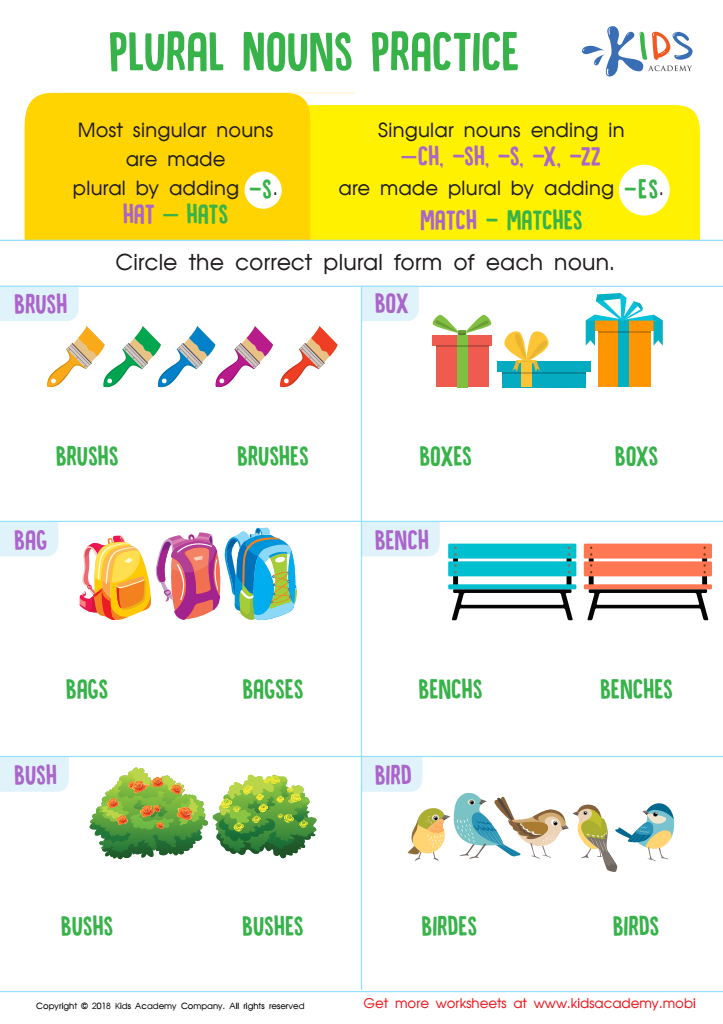
Plural Nouns Practice Worksheet

Plural Nouns Practice Worksheet

Explain to your child that most singular nouns become plural by adding "-s". E.g. "cat"->"cats". For words ending in "-ch", "-sh", "-s", "-x", or "-zz", add "-es". E.g. "buzz"->"buzzes". Then, get them to circle the right plural form of each noun on the worksheet.
Plural Nouns Practice Worksheet
Worksheet
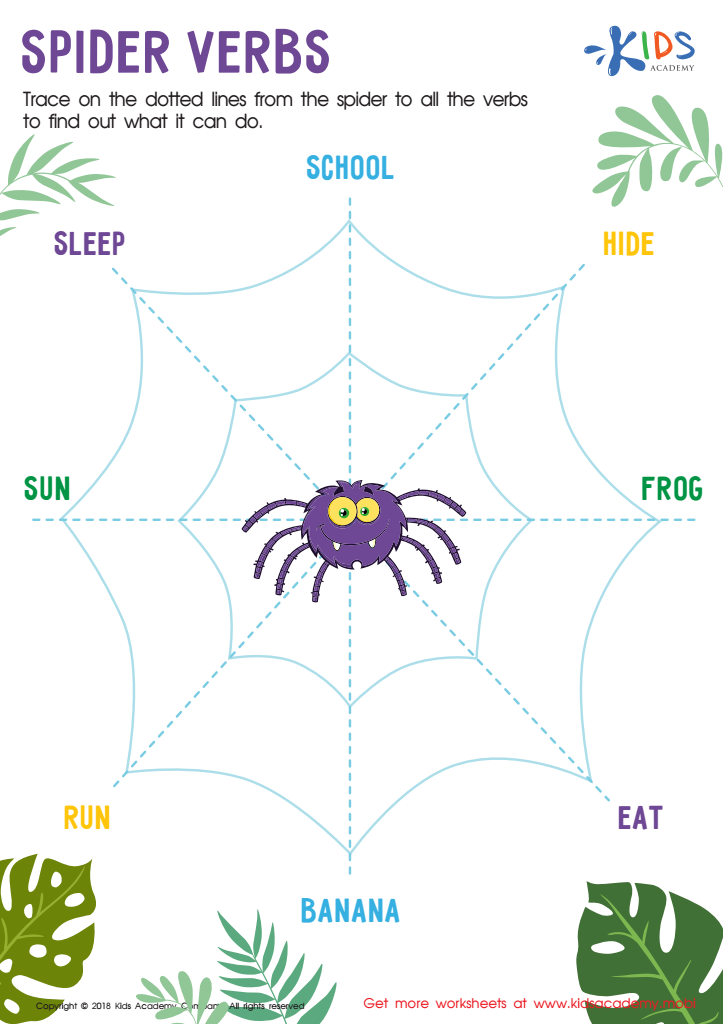
Spider Verbs Worksheet

Spider Verbs Worksheet

Verbs are action words. Examples: run, play, talk. Show your child this tracing sheet for them to learn about verbs. Ask them to trace the dotted lines from the spider to the words that are verbs. These words are what the spider can do.
Spider Verbs Worksheet
Worksheet
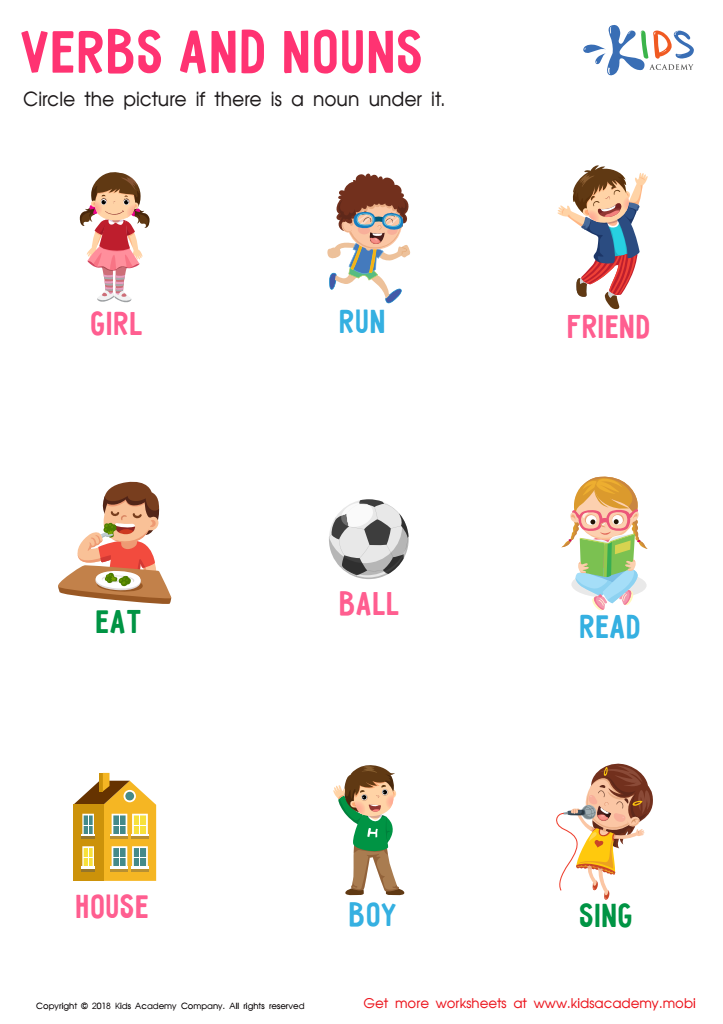
Verbs and Nouns Worksheet

Verbs and Nouns Worksheet

Your child should have basic knowledge of verbs and nouns before starting this worksheet. Go through it with them and ask them to circle the pictures with nouns under them. This way, they'll become more familiar with parts of speech.
Verbs and Nouns Worksheet
Worksheet
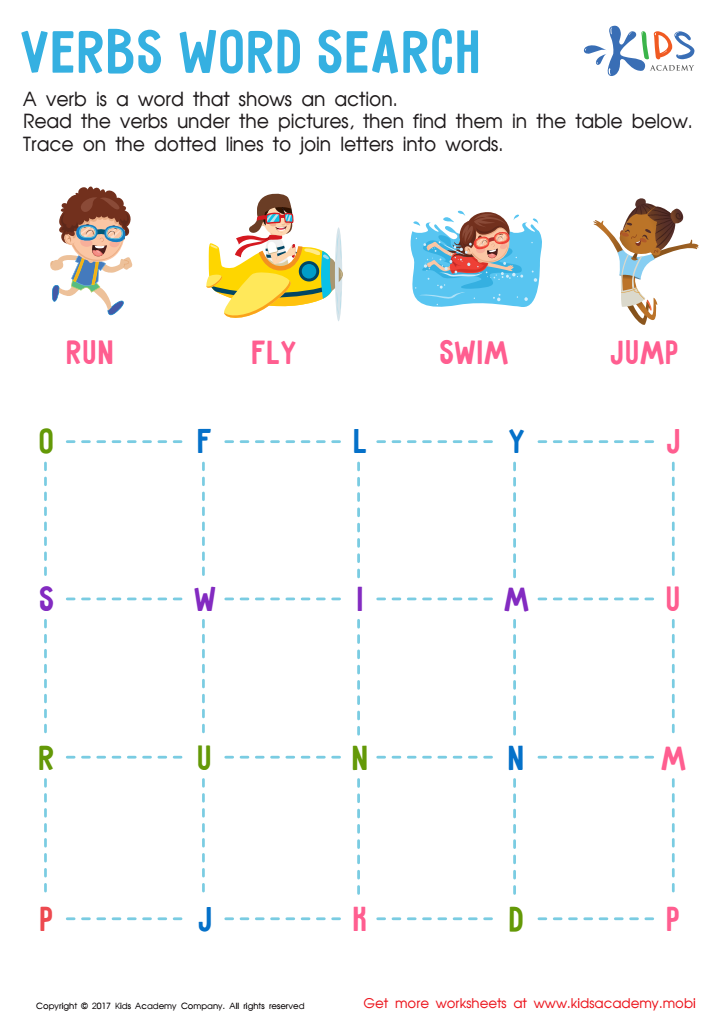
Verbs Word Search Worksheet

Verbs Word Search Worksheet

Ask your child if they understand the meaning of the word "verb". If not, explain that it's a word that shows an action. Give examples of familiar verbs. Then look at the pictures in the tracing sheet and read the words. Ask your child to follow the dotted lines to find the hidden words. Perfect tool to teach spot and use verbs!
Verbs Word Search Worksheet
Worksheet
Similar Words Worksheet

Similar Words Worksheet

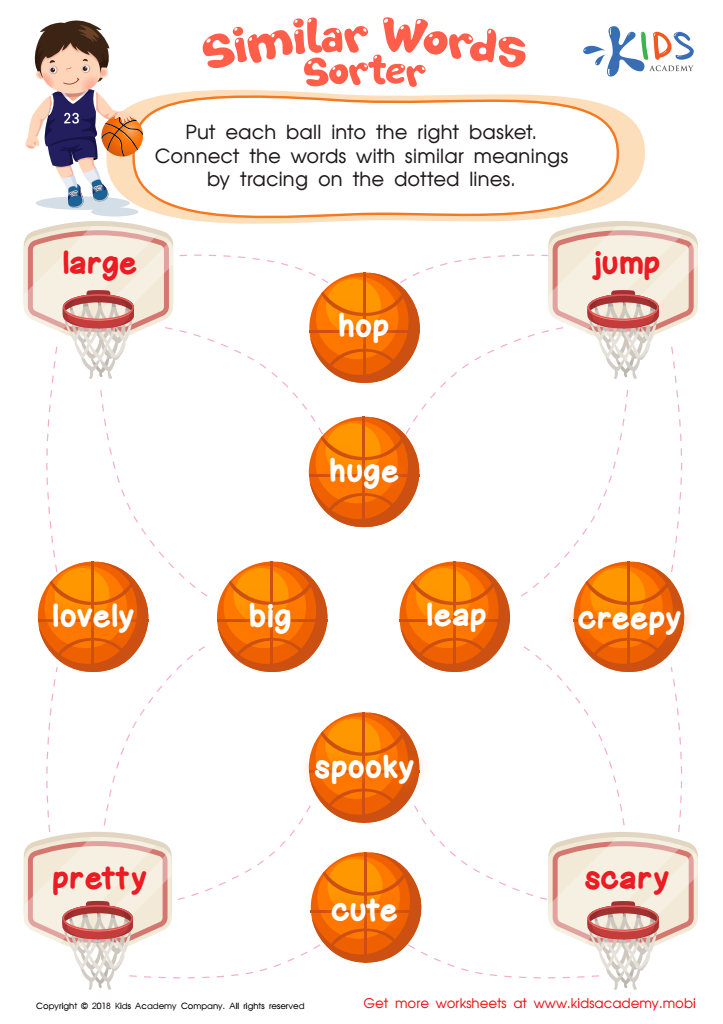
Test your child's knowledge of synonyms by having them name five words for "up"! This tracing sheet is a fun way to do it: your child must trace the dotted lines to put each ball in its right basket. To do so, they must know the synonyms and trace them to the correct baskets.
Similar Words Worksheet
Worksheet
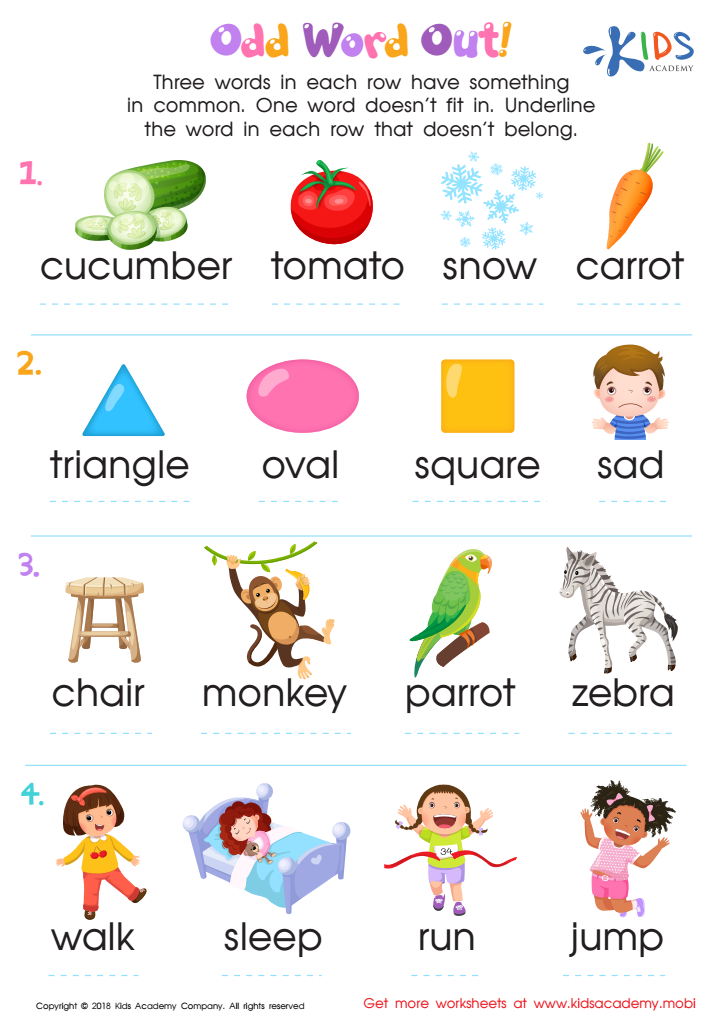
Odd Word Out Worksheet

Odd Word Out Worksheet

Ask your child to name all pictures in each row and see if there's something they share. Then, have them identify the odd one out and underline it. Repeat for all words in the rows to help them understand how to identify words.
Odd Word Out Worksheet
Worksheet
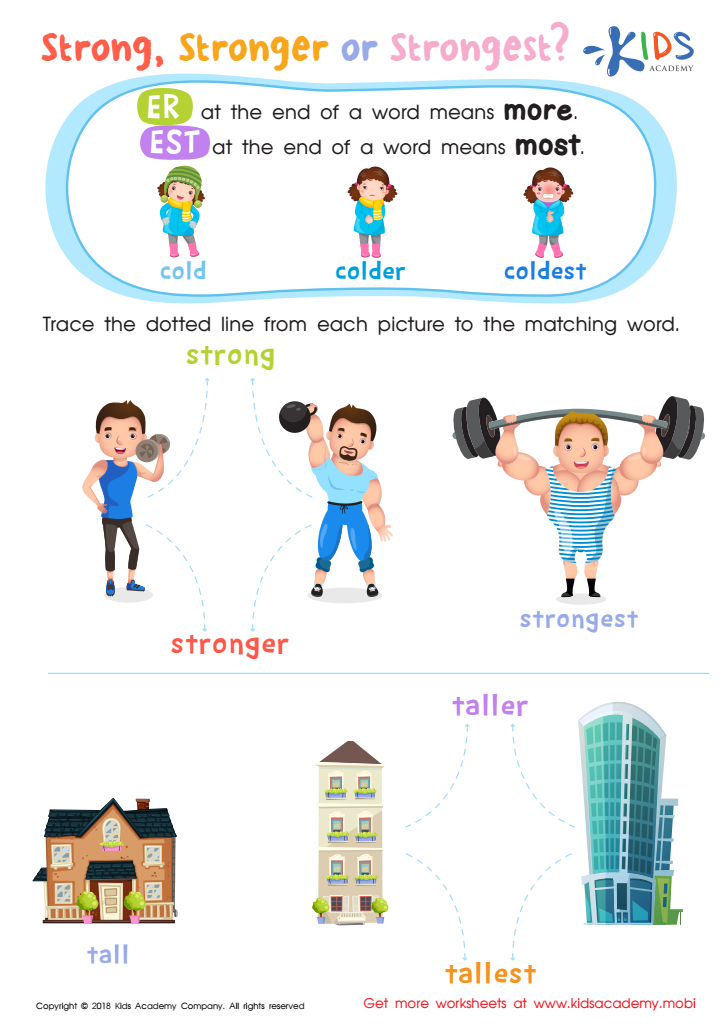
Strong or Stronger? Worksheet

Strong or Stronger? Worksheet

Help your child understand the concept of size gradients with a fun worksheet. Explain to them that adding "-er" to words means "more" and "-est" means "most". Point to the pictures and have your little one trace the dotted line to the corresponding words to learn the concept of highest and lowest.
Strong or Stronger? Worksheet
Worksheet
What's the Meaning? Worksheet

What's the Meaning? Worksheet

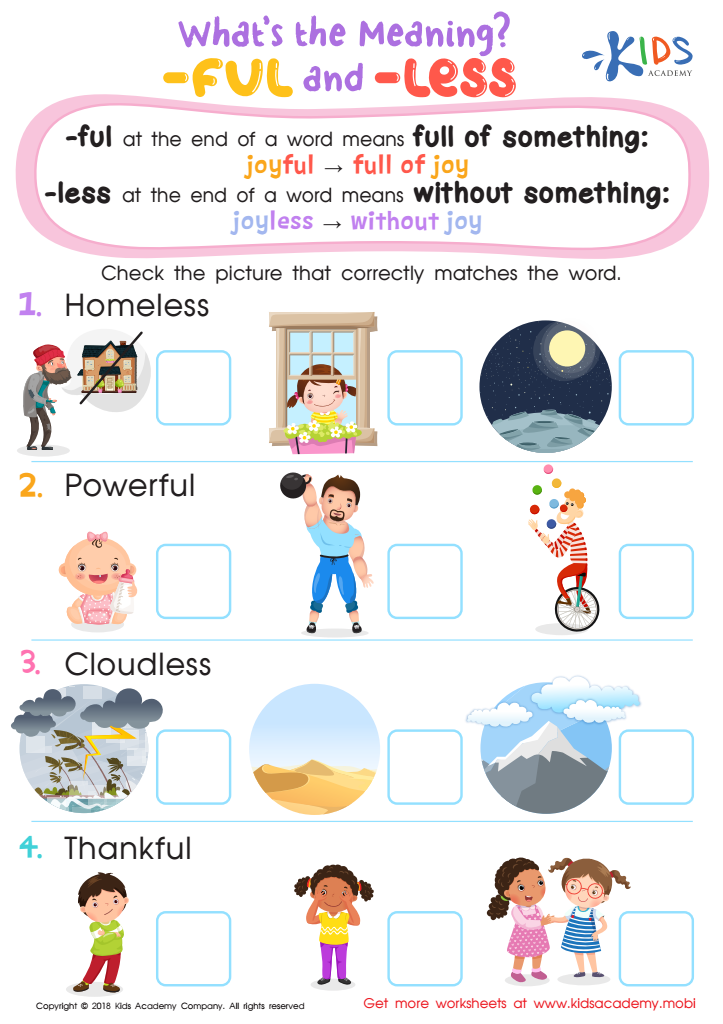
Look with your youngster through this colorful worksheet and match the pictures to the words at the top. These words have different meanings due to either a prefix or suffix being added, such as "ful" or "less".
What's the Meaning? Worksheet
Worksheet
Words with Un– Worksheet

Words with Un– Worksheet

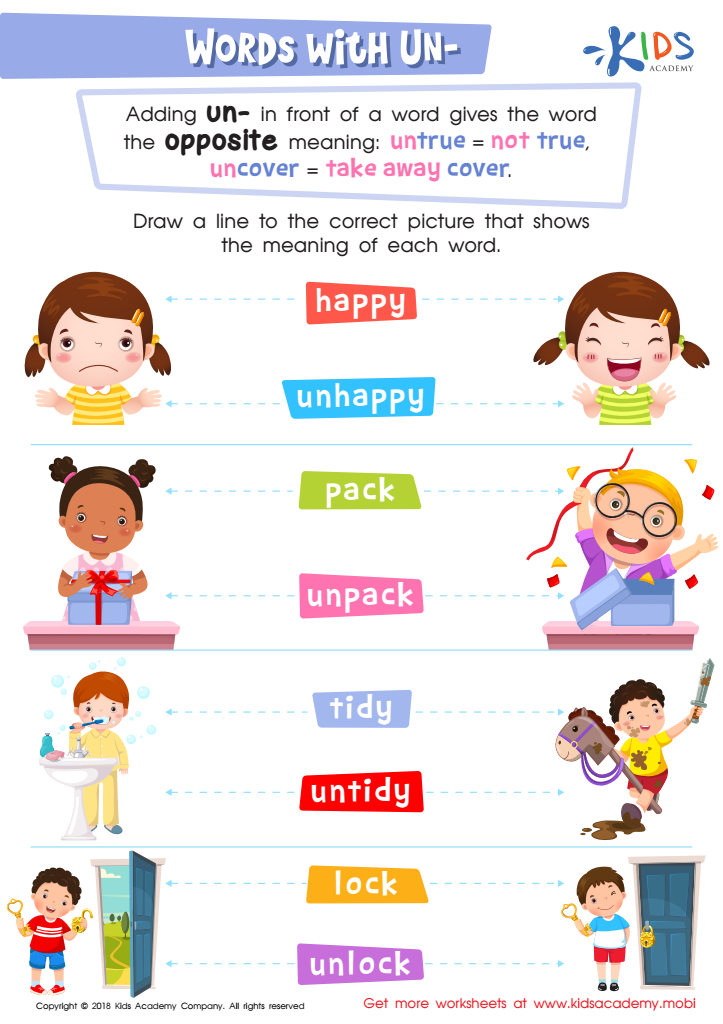
Prefixes can change the meaning of words. Adding "Un-" can give the opposite meaning, like Un-true, Un-happy, and Un-finish. Help your child learn with this worksheet. Draw a line to the picture that shows each word's meaning.
Words with Un– Worksheet
Worksheet
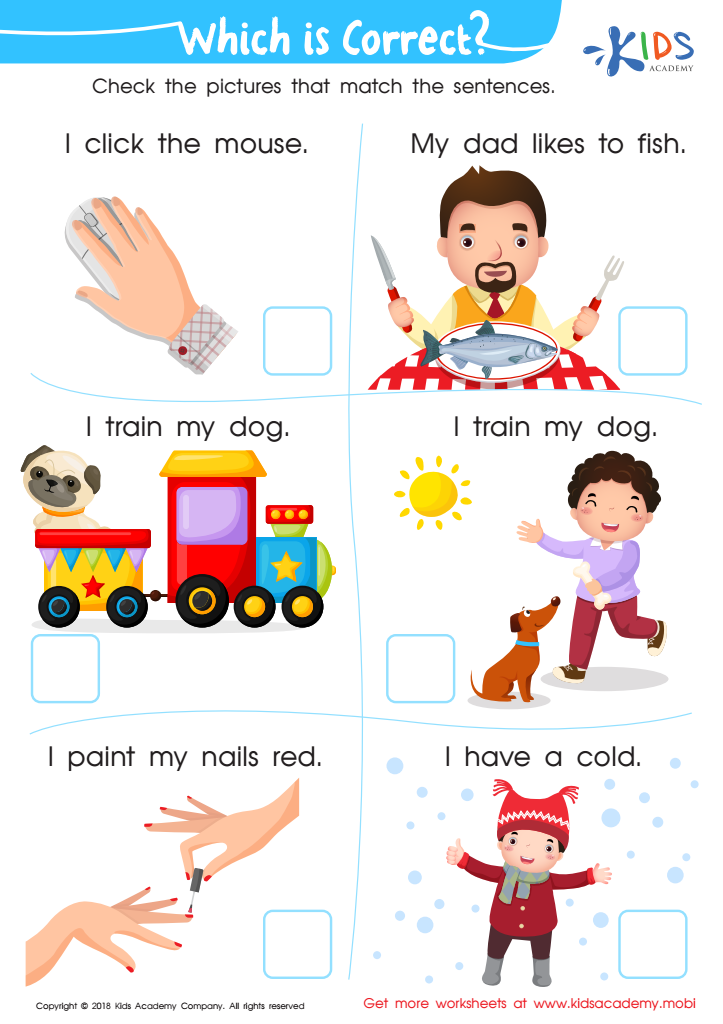
Which Is Correct? Worksheet

Which Is Correct? Worksheet

Go over the exercise with your students. Ask them to read the sentences and explain what they mean. Check the pictures that correspond to the sentences. For example, what does "My dad likes to fish" mean? Test their understanding with the worksheet.
Which Is Correct? Worksheet
Worksheet
Guess the Meaning Worksheet

Guess the Meaning Worksheet

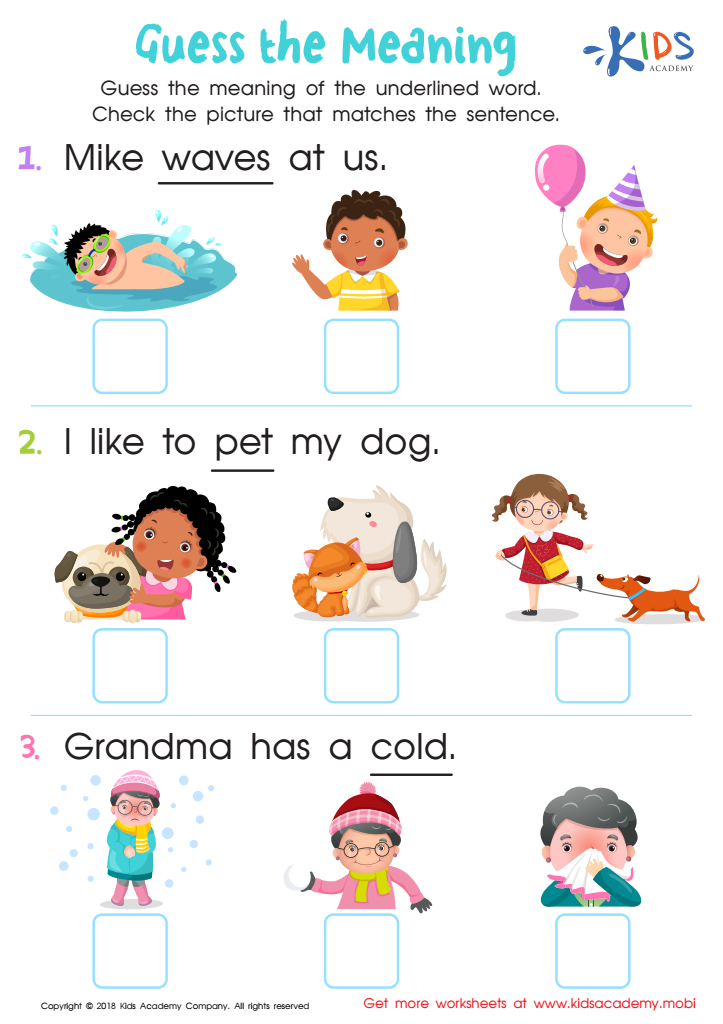
Help your child learn the meanings of words in different contexts by using this colourful, free worksheet. What is the meaning of the underlined words in each sentence? Look at the images and pick the one that accurately describes the word's context.
Guess the Meaning Worksheet
Worksheet
Singular or Plural? Worksheet

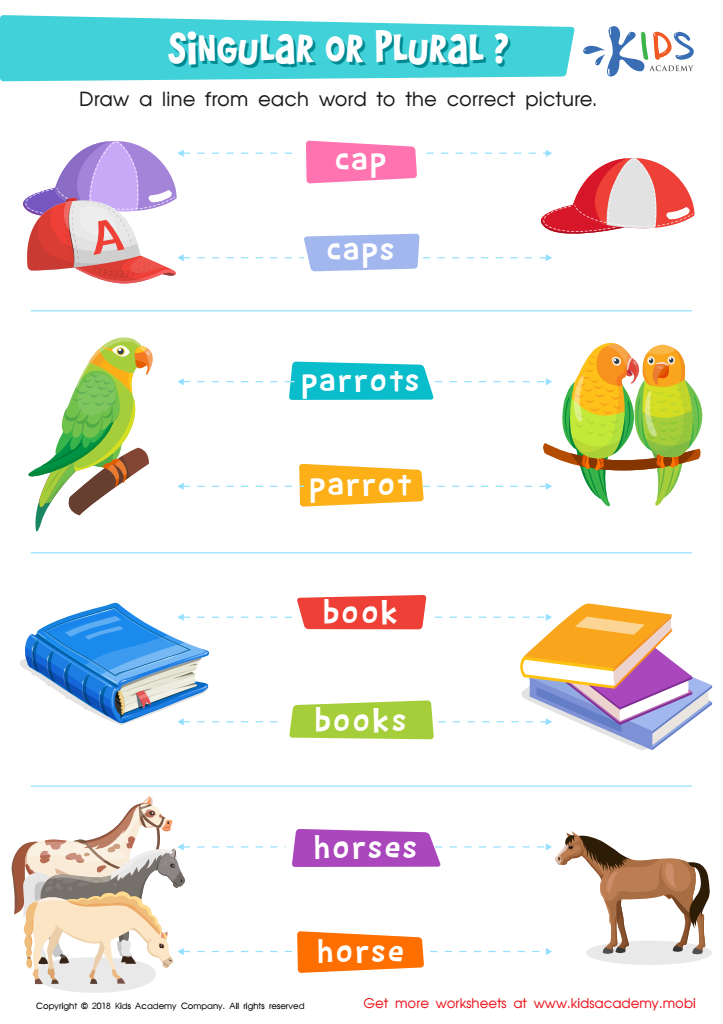
Singular or Plural? Worksheet

Help your child practice recognizing the plural forms of words with this fun tracing worksheet! They'll need to connect each word and its plural form to the correct picture. For example, they'll write "cap" for one cap and "caps" for two. Enjoy this learning activity together! 80 words.
Singular or Plural? Worksheet
Worksheet
Opposites Worksheet
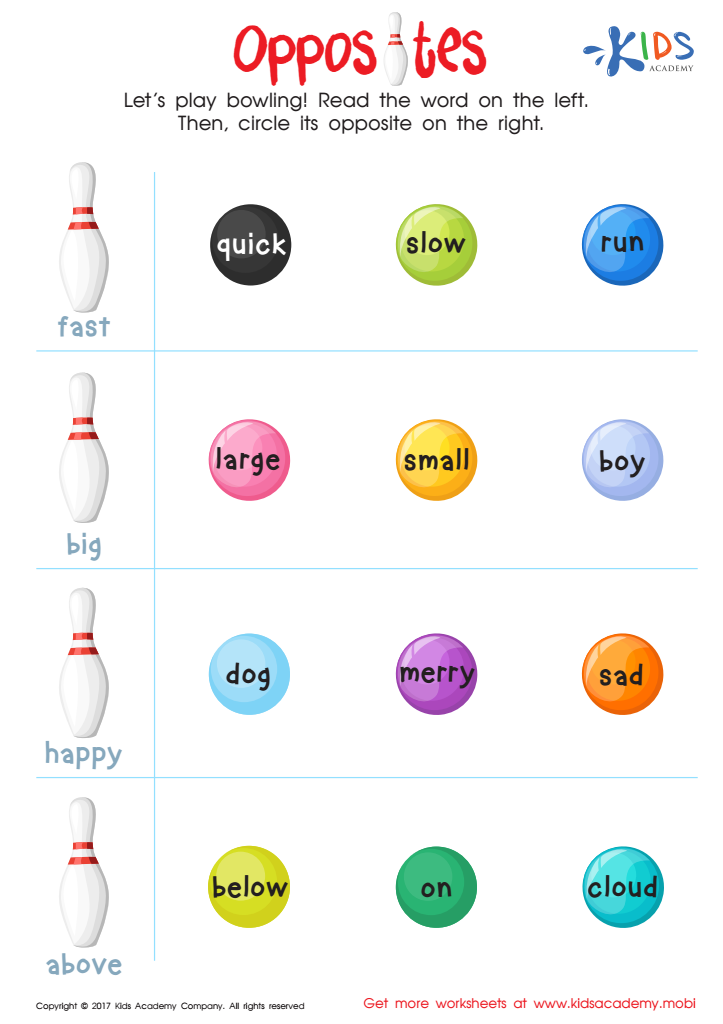
Opposites Worksheet

Opposites Worksheet

Have your students identify and circle the opposites of the words on the left. As a fun bowling-themed exercise, read the words and ask your kids if they know the opposites. Look through the options on the right and see if the answer is there; then, circle the correct answers.
Opposites Worksheet
Worksheet
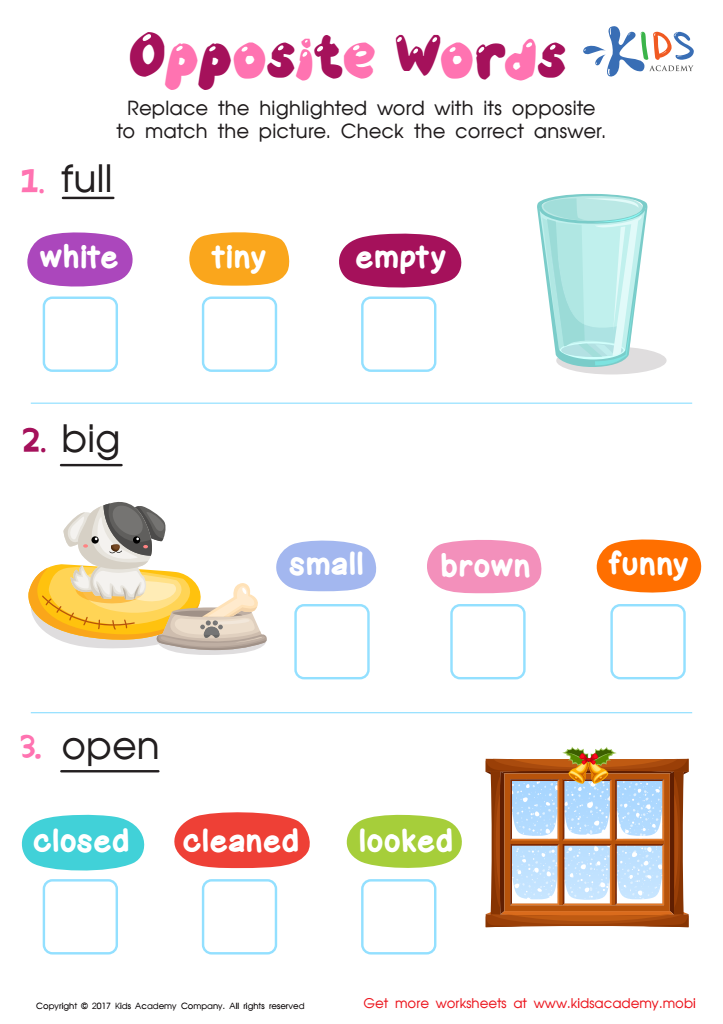
Opposite Words Worksheet

Opposite Words Worksheet

Help your child learn words and opposites. Look through a worksheet with them. Ask if they can read the underlined words. Then, ask which highlighted word is the opposite of the underlined word. The answer should match the picture.
Opposite Words Worksheet
Worksheet
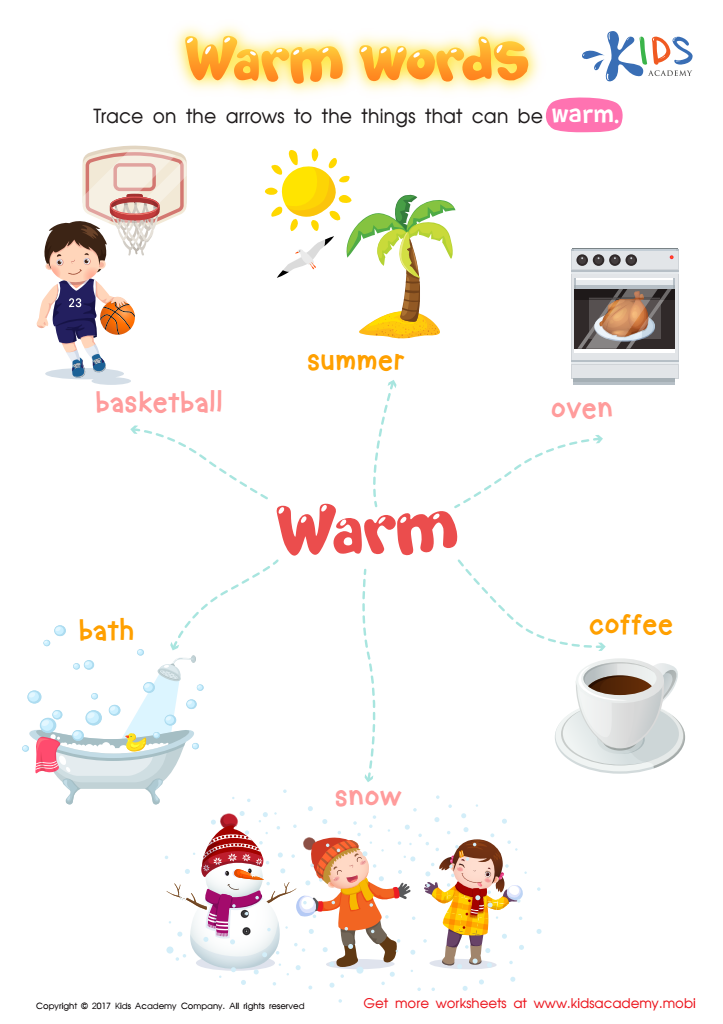
Warm Words Worksheet

Warm Words Worksheet

Learning with tracing sheets is fun! Ask your child to list some things associated with warm temperatures. Then, trace the arrows on the worksheet with them and explore the items that can be warm. Have fun!
Warm Words Worksheet
Worksheet
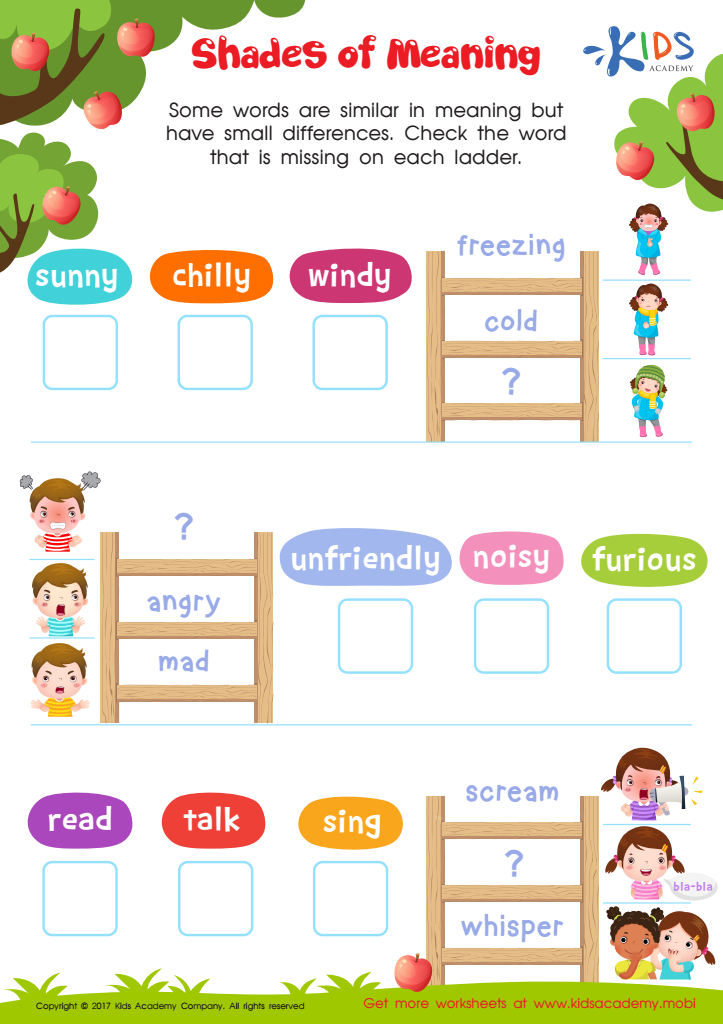
Shades of Meaning Worksheet

Shades of Meaning Worksheet

Your child can practice understanding similar words with this worksheet. They'll need to pick the word from the options that best fits the gap on each ladder, and learn to differentiate between words with similar meanings. For example, there are various terms for 'cold' that your child can learn. Try it out!
Shades of Meaning Worksheet
Worksheet
Words with Multiple Meanings Worksheet

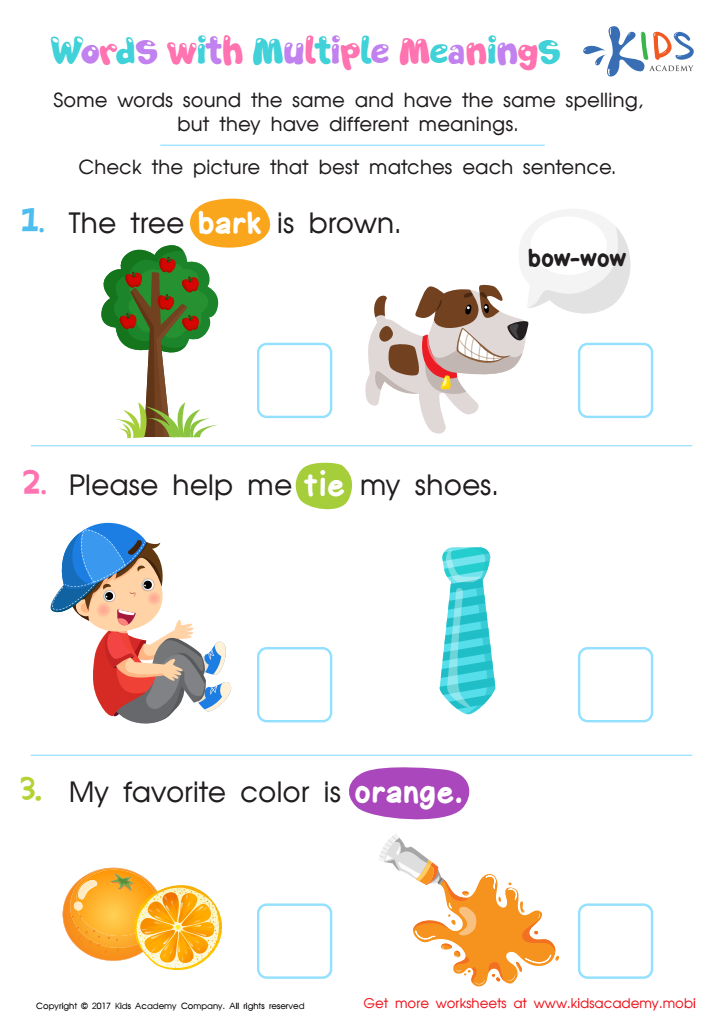
Words with Multiple Meanings Worksheet

Young authors can struggle with homographs – words that sound the same and have different meanings. This PDF worksheet uses pictures to help them easily differentiate homographs and contextualize their use. It's an engaging way to introduce them to homographs, helping them to navigate tricky words when writing.
Words with Multiple Meanings Worksheet
Worksheet
Double Meanings Worksheet
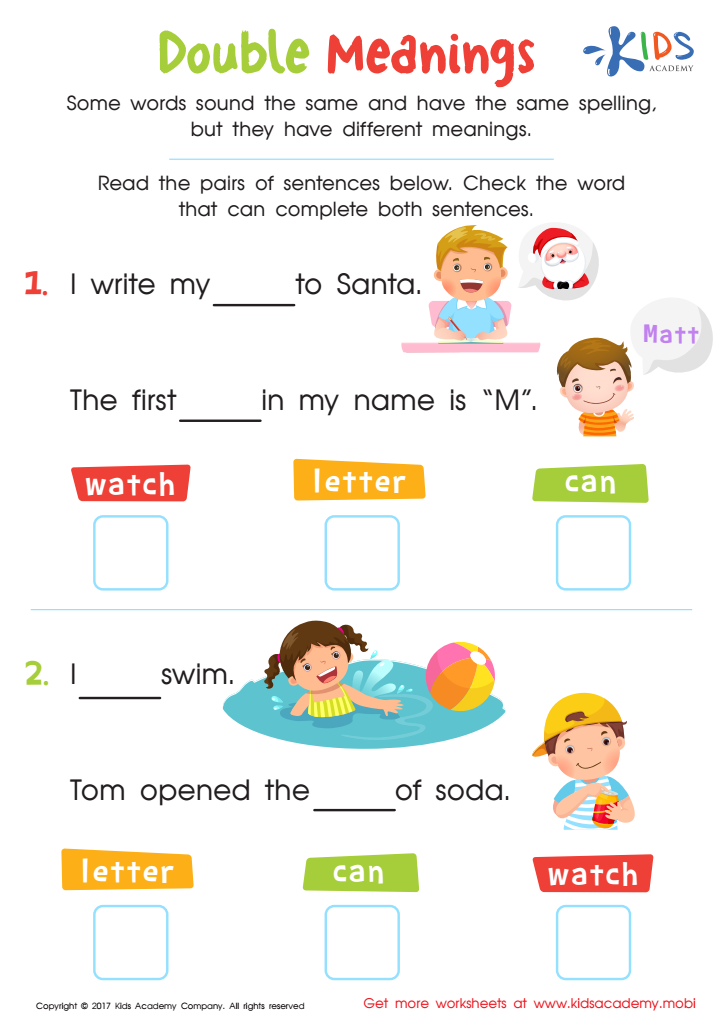
Double Meanings Worksheet

Homographs are words that look and sound the same, but have different meanings. This worksheet uses pictures to help young authors learn to use them correctly. Context and exposure to the words' meanings help them understand the difference. Total: 80 words
Double Meanings Worksheet
Worksheet
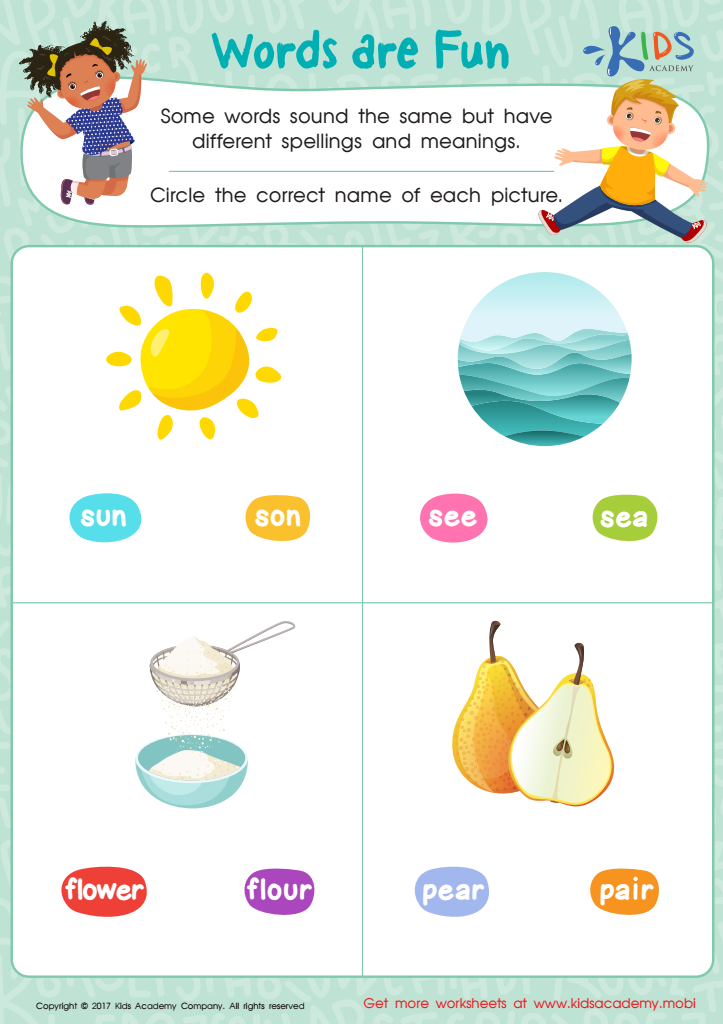
Words Are Fun Worksheet

Words Are Fun Worksheet

Homonyms are words that sound the same but have different meaning and spelling. Young authors may get confused. This PDF worksheet helps them practice by matching the homonyms to pictures. They'll also build fine motor skills, important for legible writing.
Words Are Fun Worksheet
Worksheet
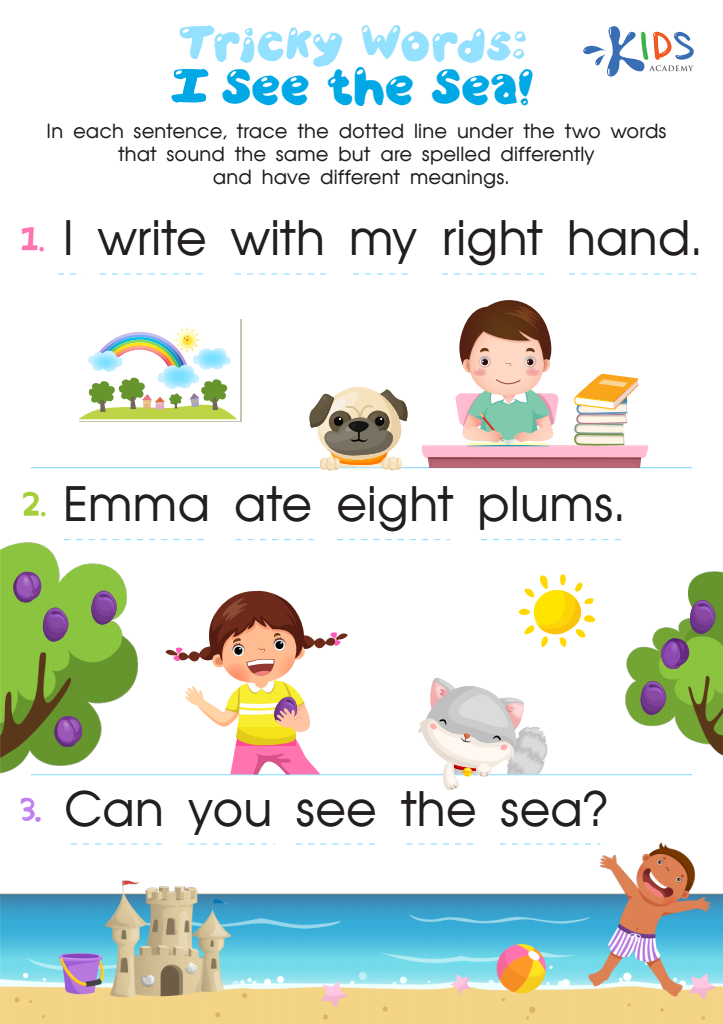
Tricky Words Worksheet

Tricky Words Worksheet

Young authors can find homonyms tricky - this brightly coloured worksheet will help them gain practice. Tracing lines to identify homonyms in easy-to-read sentences will also help improve their fine motor skills, essential for effective writing.
Tricky Words Worksheet
Worksheet
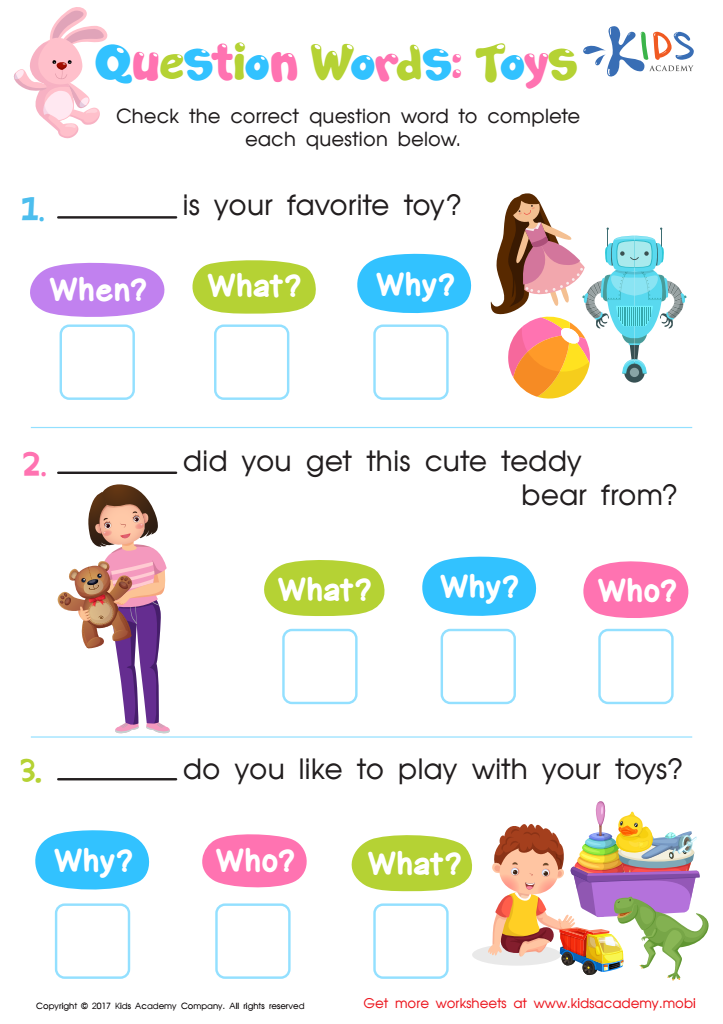
Question Words: Toys Worksheet


Question Words: Toys Worksheet

Let your kids enjoy learning to ask precise questions with this fun worksheet! Read each sentence fragment and look at the word bank, picking the correct word to complete the sentence. Check the box next to the correct word to use. It's that easy and lots of fun!
Question Words: Toys Worksheet
Worksheet


Writing worksheets tailored for ages 6-7 offer numerous benefits that are crucial in the development of young learners’ writing skills. At this formative stage, children are just beginning to understand the structure of sentences, the use of punctuation, and the creative aspect of storytelling. Worksheets on writing serve as an invaluable tool to guide them through these new concepts in an engaging and structured manner.

Firstly, writing worksheets for ages 6-7 are designed to match the cognitive and motor skills of children in this age group. They introduce writing tasks in a fun and accessible way, often incorporating colorful illustrations and themes that ignite the imagination of young minds. This not only makes the learning process enjoyable but also helps in retaining their interest in writing.

Additionally, these worksheets provide a variety of exercises that progressively build the child's writing capabilities. From tracing letters and words to composing simple sentences and stories, each task is aimed at enhancing their vocabulary, grammar, and overall writing proficiency. This step-by-step approach ensures a solid foundation in writing, which is essential for their academic success.

Moreover, writing worksheets for this age group encourage independent learning. Children get the opportunity to express their thoughts and ideas on paper, fostering creativity and confidence in their writing abilities. By practicing regularly, they become more adept at communicating effectively, a skill that is vital throughout their education and beyond.

In conclusion, writing worksheets for ages 6-7 are not just about learning to write; they are about laying the groundwork for effective communication, creative expression, and academic achievement. These resources are indispensable in nurturing young writers, making the journey of learning to write as rewarding as it is educational.