Initial and Final Consonant Blends Worksheets for Ages 6-8
5 filtered results
-
From - To
Discover our engaging Initial and Final Consonant Blends Worksheets designed specifically for children ages 6 to 8. These interactive worksheets provide a fun and effective way to enhance phonemic awareness and improve reading skills. Through a variety of exercises, kids will practice identifying, reading, and using consonant blends at both the beginning and end of words. Our user-friendly format allows children to work at their own pace while honing essential literacy skills. Perfect for classroom activities or at-home learning, these worksheets support early education and set a strong foundation for future reading success. Explore a world of learning today!
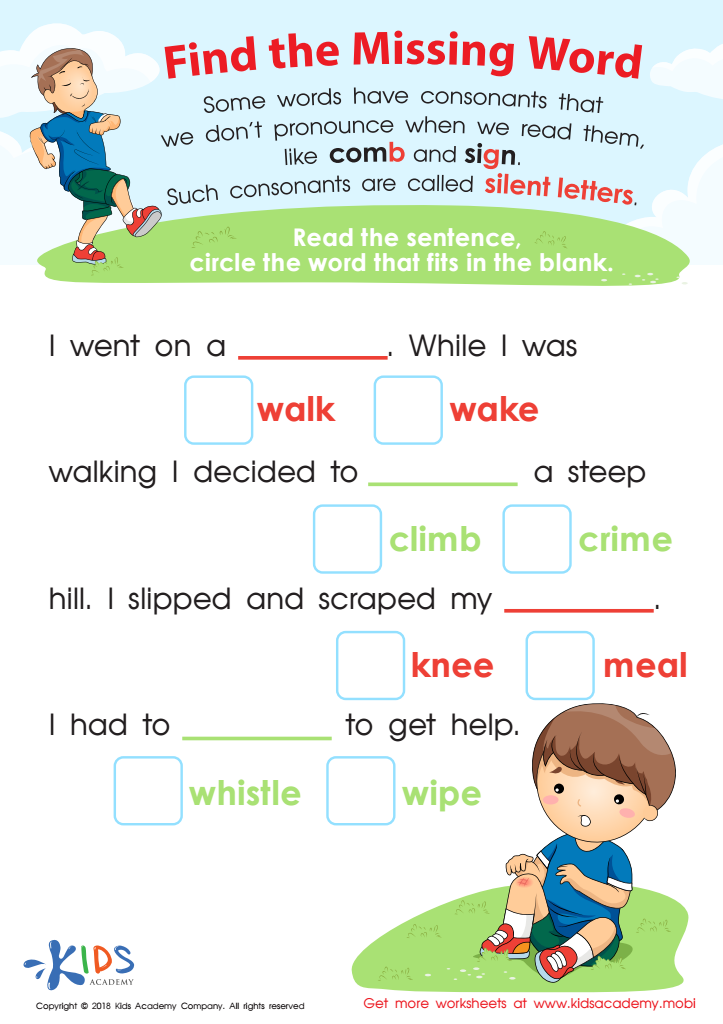
Find The Missing Word Worksheet
 Assign to My Students
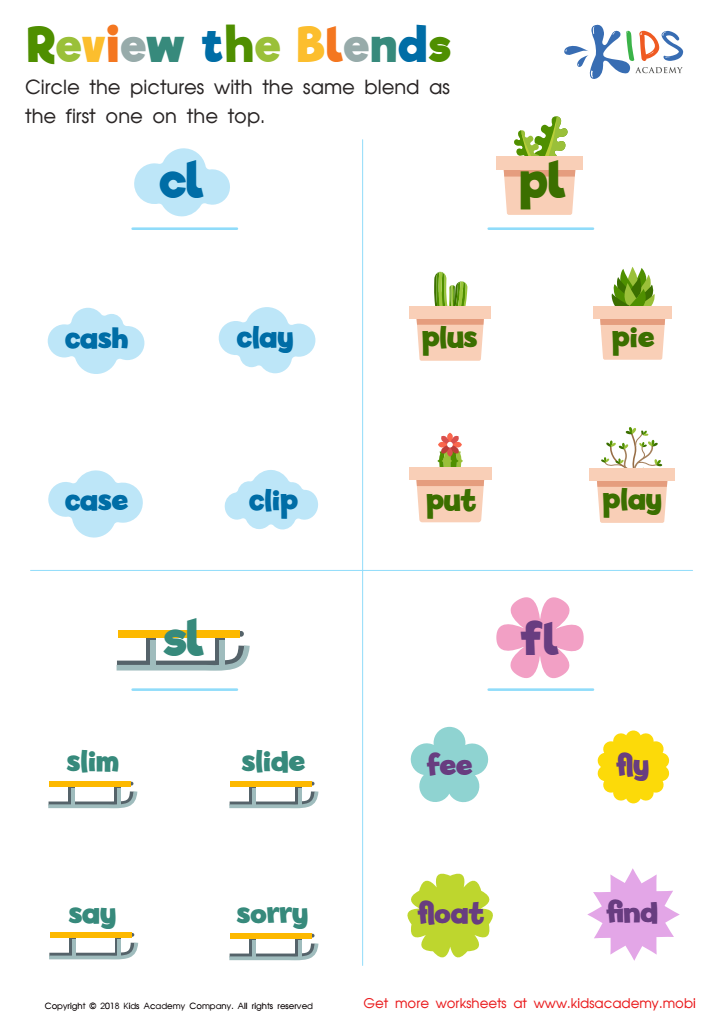
Review the Blends Worksheet
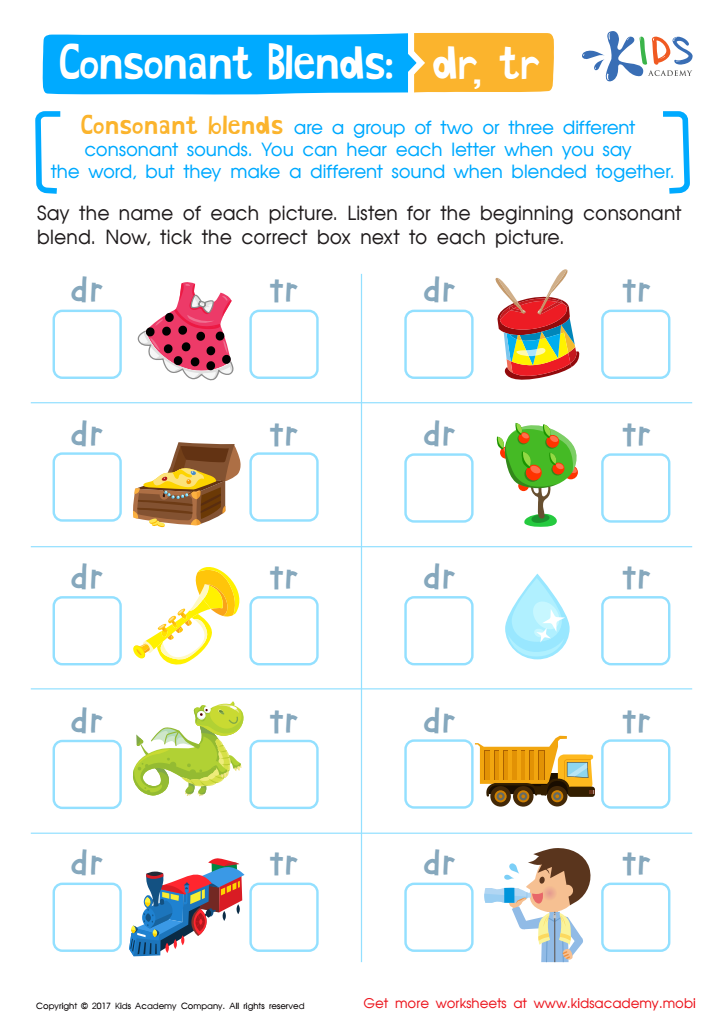
Consonant Blends: "Dr" and "Tr" Printable
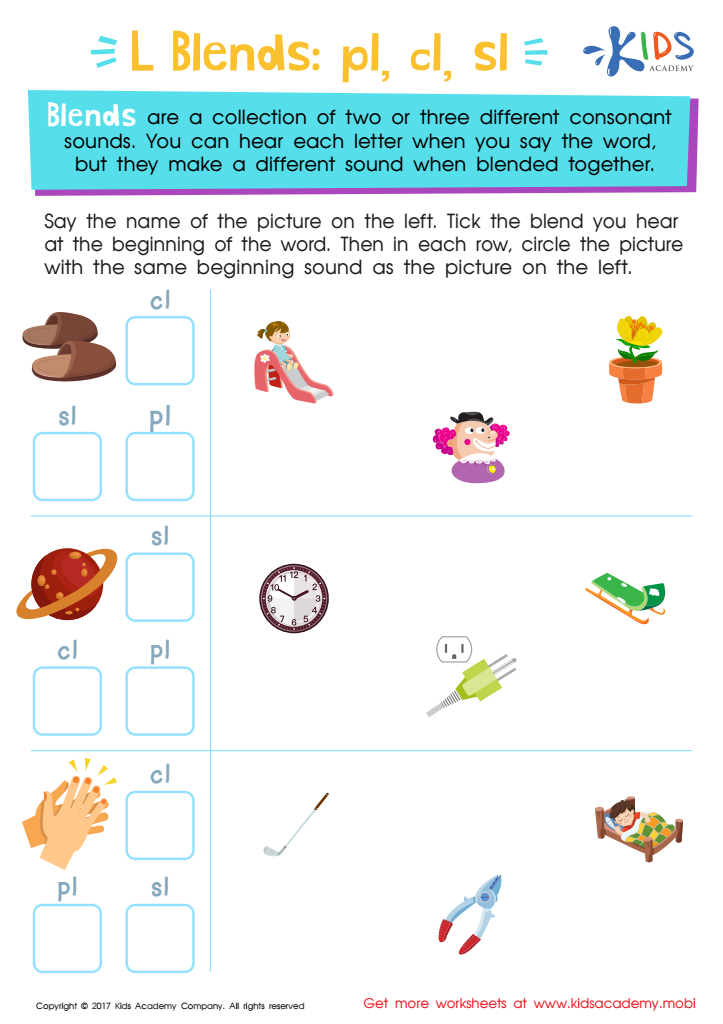
L Blends: "Pl", "Cl" and "Sl" Printable
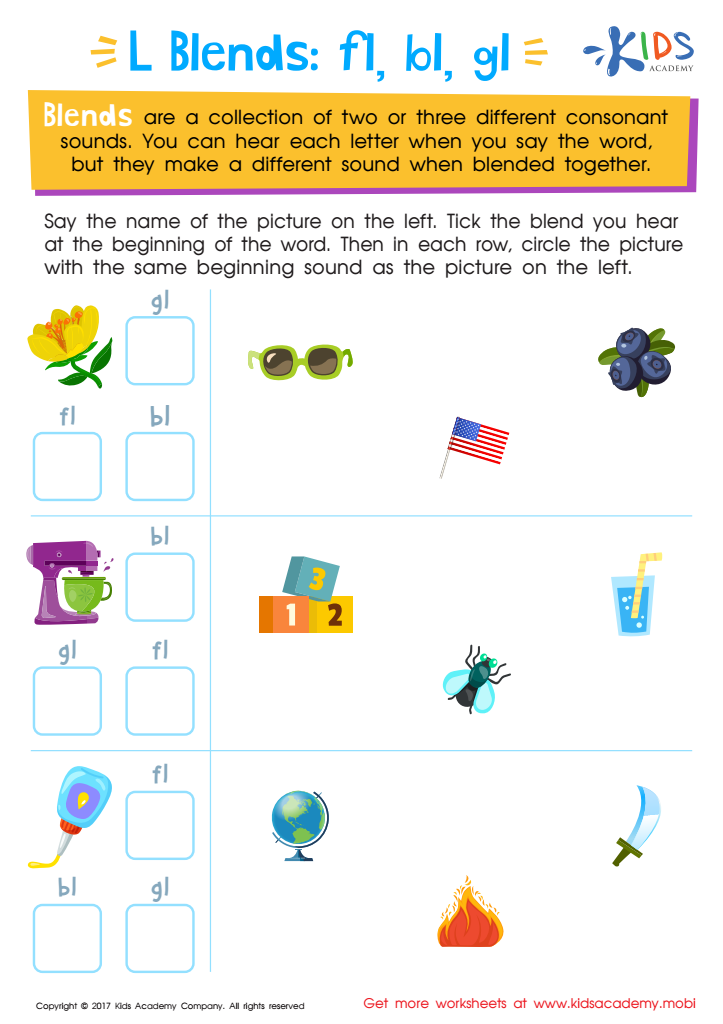
Blending Consonants: "Fl", "Bl" and "Gl" Printable


Initial and final consonant blends are crucial components of early literacy development for children ages 6-8. When parents and teachers focus on these blends, they help students strengthen their reading and writing skills. Initial consonant blends — like "sl" in "slide" or "br" in "brave" — require children to combine sounds smoothly, improving phonemic awareness, which is foundational for decoding words. Mastering these blends enhances a child's ability to sound out unfamiliar words, fostering greater confidence in reading.
Final consonant blends, such as "mp" in "jump" or "nd" in "hand", are equally important. They aid children in recognizing the structure of words, facilitating spelling and writing. This knowledge contributes to fluency, allowing children to read more quickly and with greater comprehension.
Additionally, understanding and practicing these blends can make learning more engaging through rhymes and word games, capturing young learners’ interest. By prioritizing initial and final consonant blends, caregivers equip children with essential language skills that boost their overall literacy development. This foundational knowledge serves as a bridge to more complex reading and writing tasks, ultimately fostering a lifelong love for learning. Thus, teachers and parents should be invested in reinforcing these skills at home and in the classroom.








