Reading comprehension Building Vocabulary Worksheets for Ages 6-8 - Page 2
89 filtered results
Difficulty Level
Grade
Age
-
From - To
Subject
Activity
Standards
Favorites
With answer key
Interactive
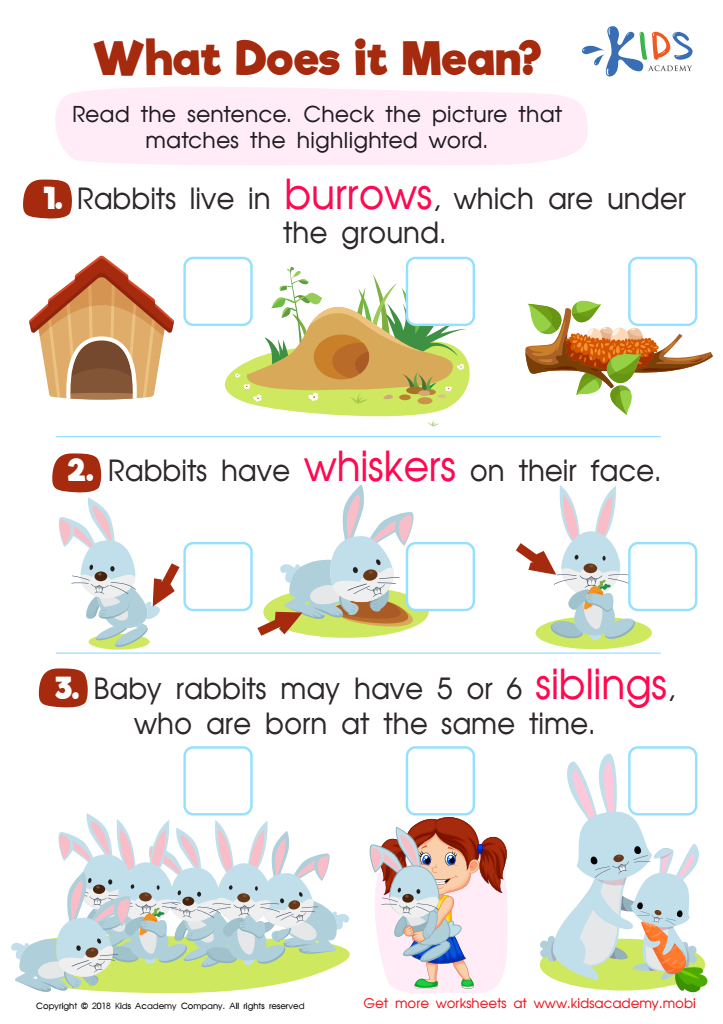
What Does It Mean? Worksheet
Teach your child to use context clues with this engaging Kids Academy worksheet. Read the sentences and find the pink-highlighted word. Use the other words in the sentence to figure out the meaning, then check the box next to the picture that represents it.
 Assign to My Students
What Does It Mean? Worksheet
Worksheet











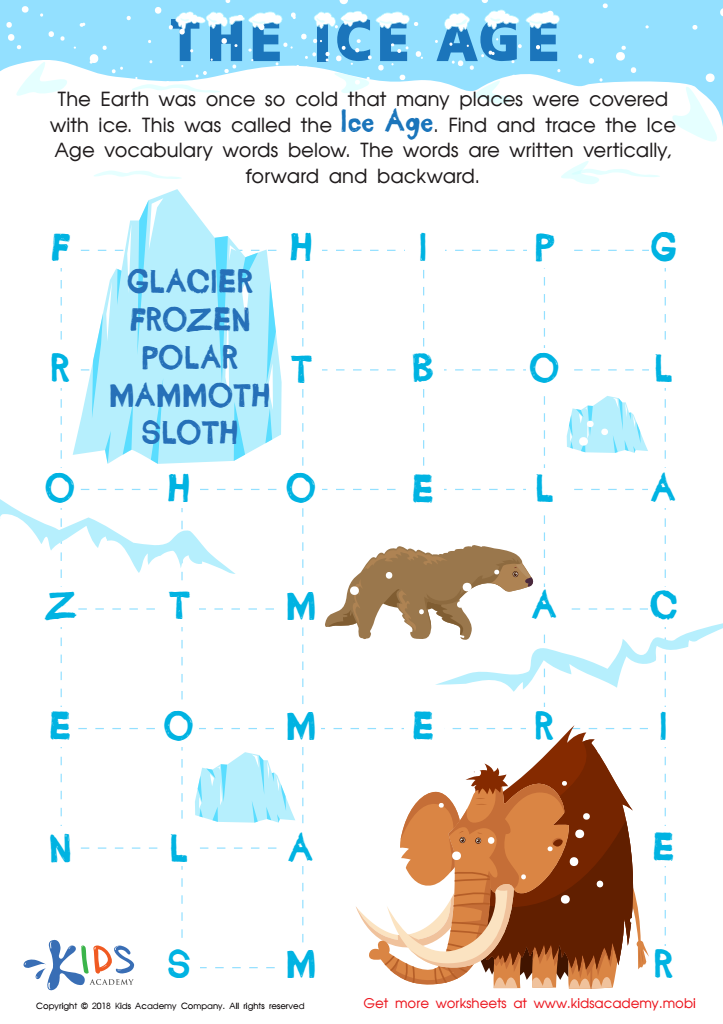
The Ice Age Worksheet
Let your child explore the Ice Age with this fun word search from Kids Academy! They can find words like glacier, frozen, polar, mammoth, and sloth. After finding each, discuss the meaning to help them build a better vocabulary and understanding of ancient history.
The Ice Age Worksheet
Worksheet
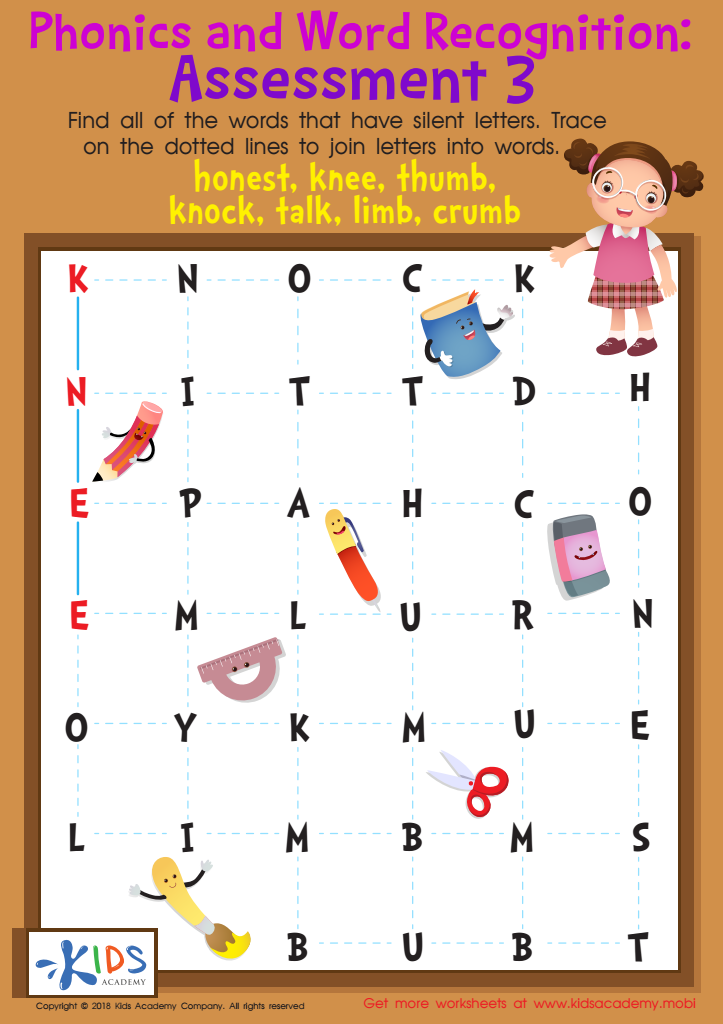
Phonics and Word Recognition: Assessment 3 Worksheet
Silent letters can be tricky for kids learning to read and write. Show them how they work with words like 'knee' and 'dumb'. Then, challenge them to come up with their own. Give them a worksheet with silent letters and trace the lines to join the letters into words.
Phonics and Word Recognition: Assessment 3 Worksheet
Worksheet
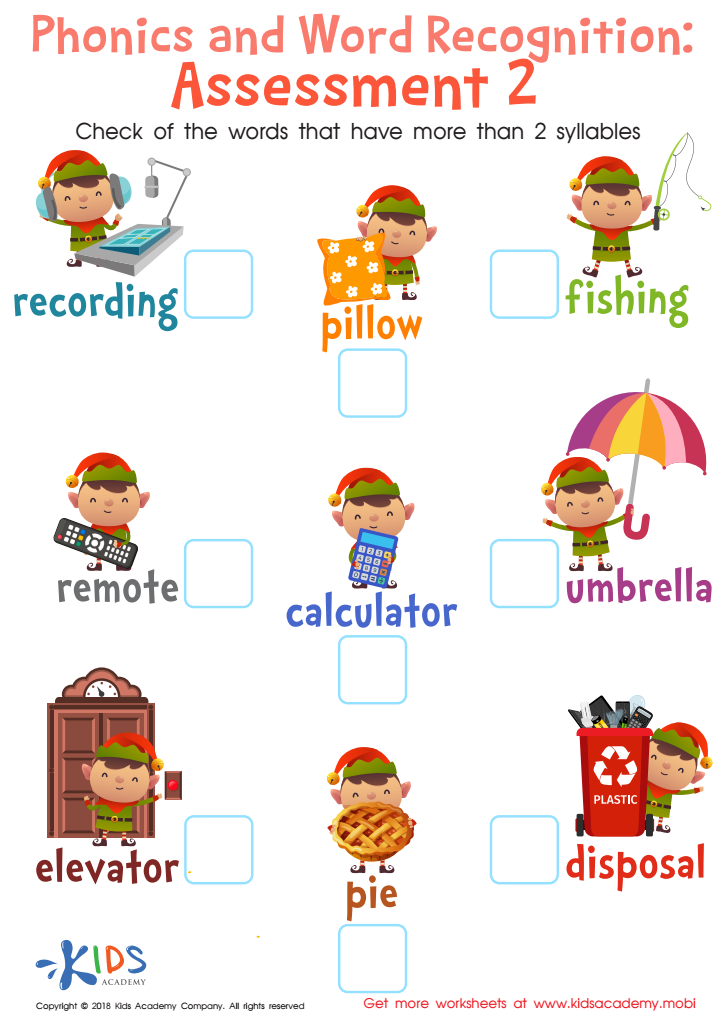
Phonics and Word Recognition: Assessment 2 Worksheet
Help your kids learn proper pronunciation by counting syllables. Most words they'll encounter have 1-3 syllables, making them simple to say. Have them repeat the words in your worksheet after you. Focus on longer words with more than two syllables.
Phonics and Word Recognition: Assessment 2 Worksheet
Worksheet
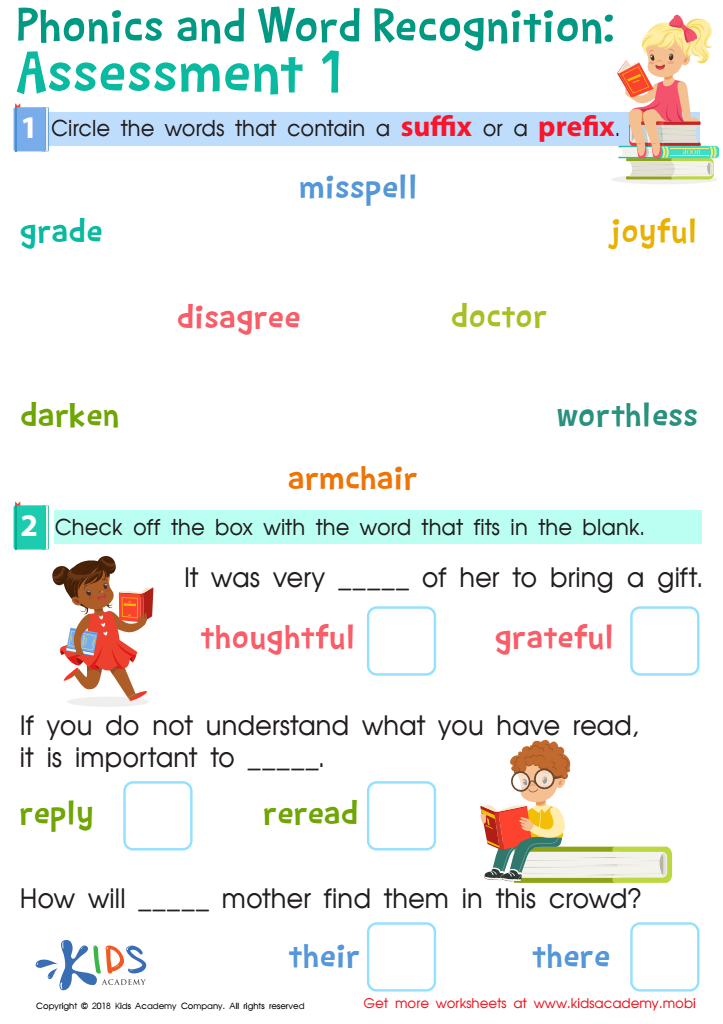
Phonics and Word Recognition: Assessment 1 Worksheet
Explain prefixes (words added to start of another word to give it a new meaning) and suffixes (added to end of word to change its meaning) to your kids with examples like 'unhappy' (prefix) and 'forgetful' (suffix). Now, help your child complete this worksheet, including circling words and checking boxes.
Phonics and Word Recognition: Assessment 1 Worksheet
Worksheet
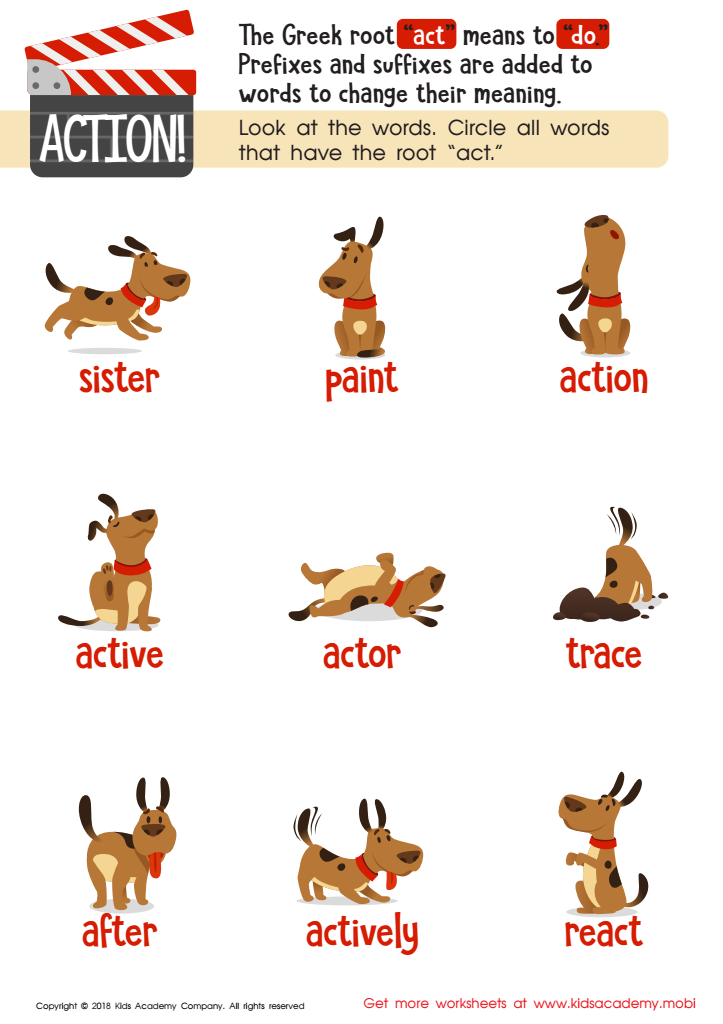
Action! Worksheet
Most English words are borrowed, and prefixes and suffixes are added to change the meaning. A popular prefix is 'act', from the Greek root meaning 'to do'. With your kids, look at the words in this worksheet and circle those with the root 'act'.
Action! Worksheet
Worksheet
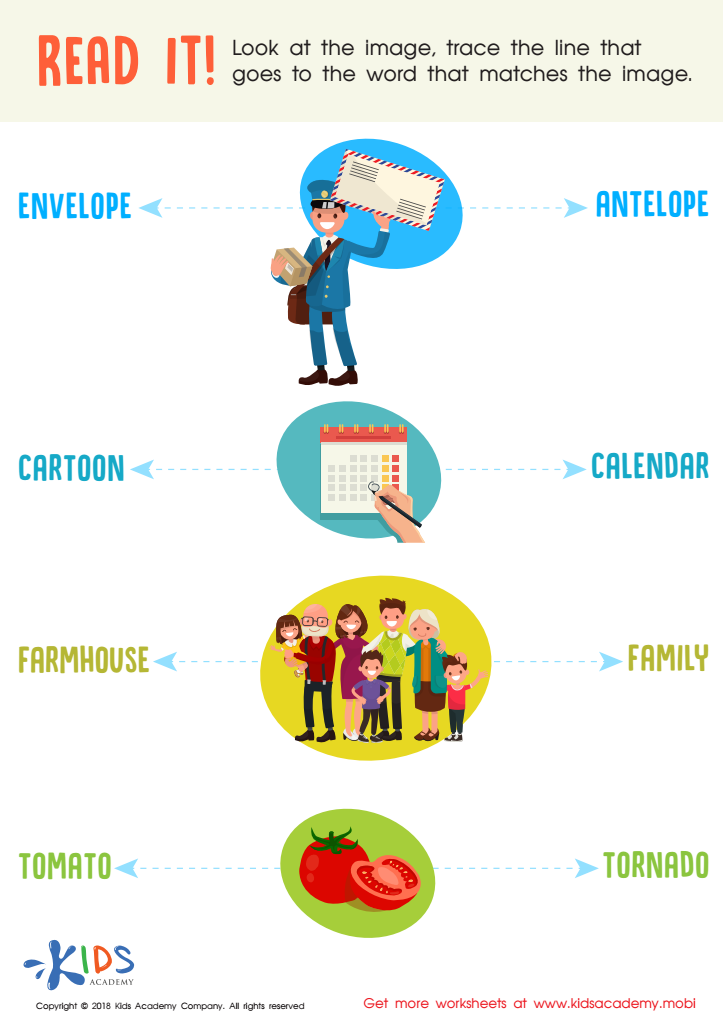
Read It! Worksheet
Point to each image on this worksheet, asking your child what it is. Read the 2 options then help your child trace the line to the correct word. It'll keep them engaged and provide visual stimulation.
Read It! Worksheet
Worksheet
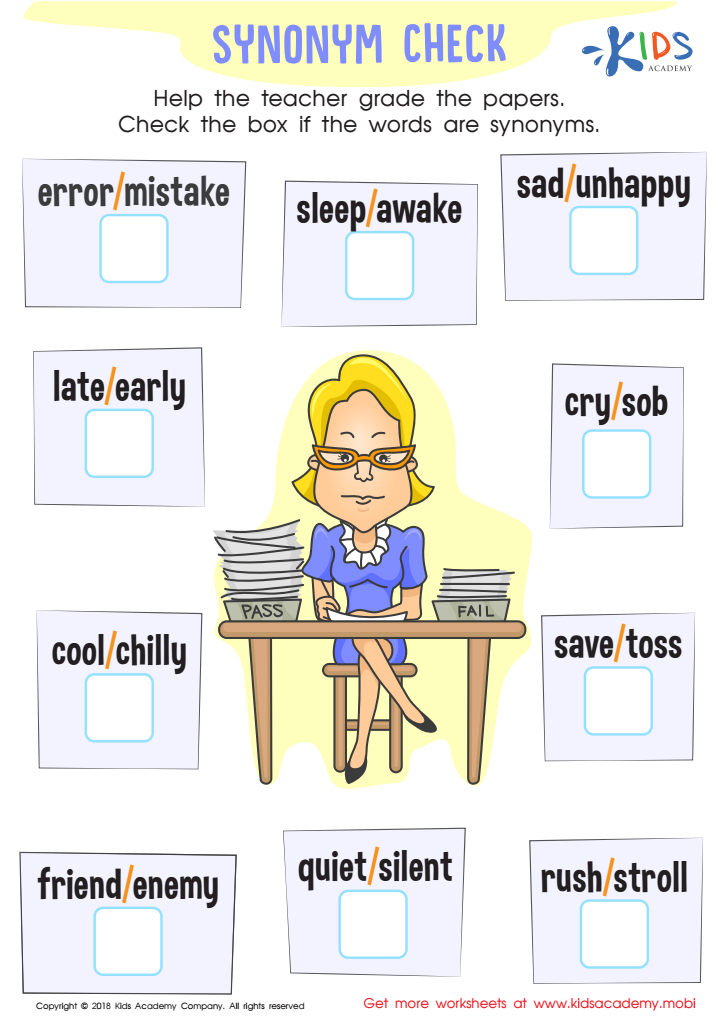
Synonym Check Worksheet
Ask your kids what a synonym is, and listen to their definitions. If needed, explain it's a word that has a similar meaning to another. Give examples, then ask them to do the same. For this worksheet, get them to help grade the papers. Have them check the boxes if the words are synonyms.
Synonym Check Worksheet
Worksheet
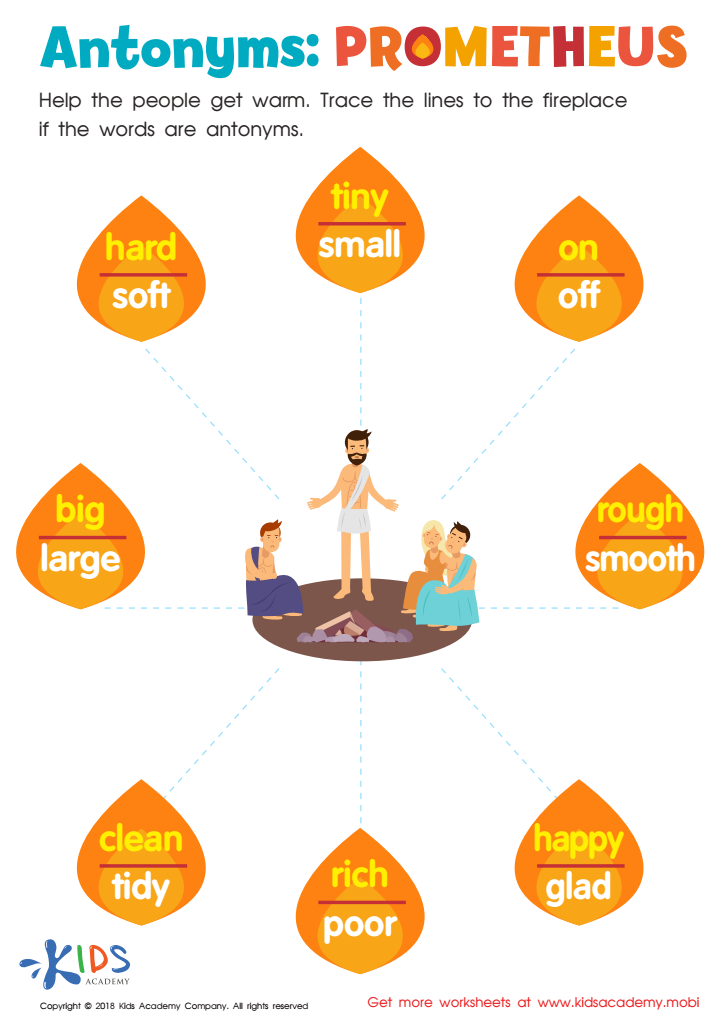
Antonyms: Prometheus Worksheet
Antonyms are words with opposite meanings to another. For example, the antonyms of 'good' are 'bad', 'poor' and 'wicked'. Ask your child to give you antonyms for 'Prometheus', which relates to fire. Invite your kids to trace the lines to the fireplace if the words are antonyms, helping the people in the tracing sheet get warm.
Antonyms: Prometheus Worksheet
Worksheet
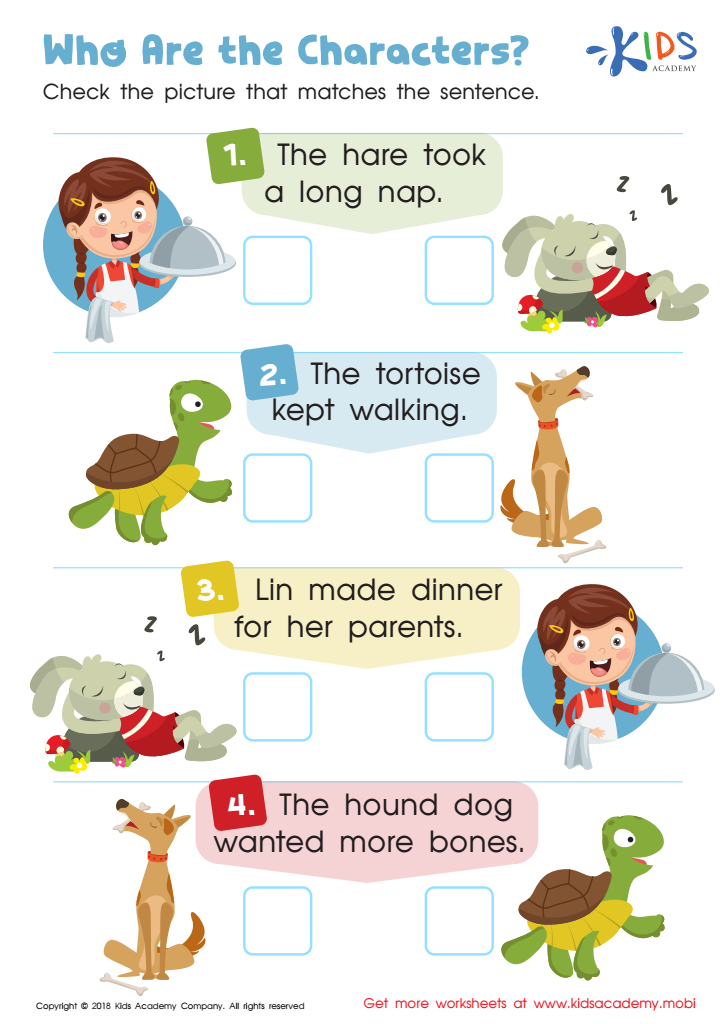
Who Are The Characters Worksheet
This worksheet tests your child's reading skills. Read each sentence out loud with them, then ask which of the two pictures match it. Help them check, then repeat this for the other sentences.
Who Are The Characters Worksheet
Worksheet
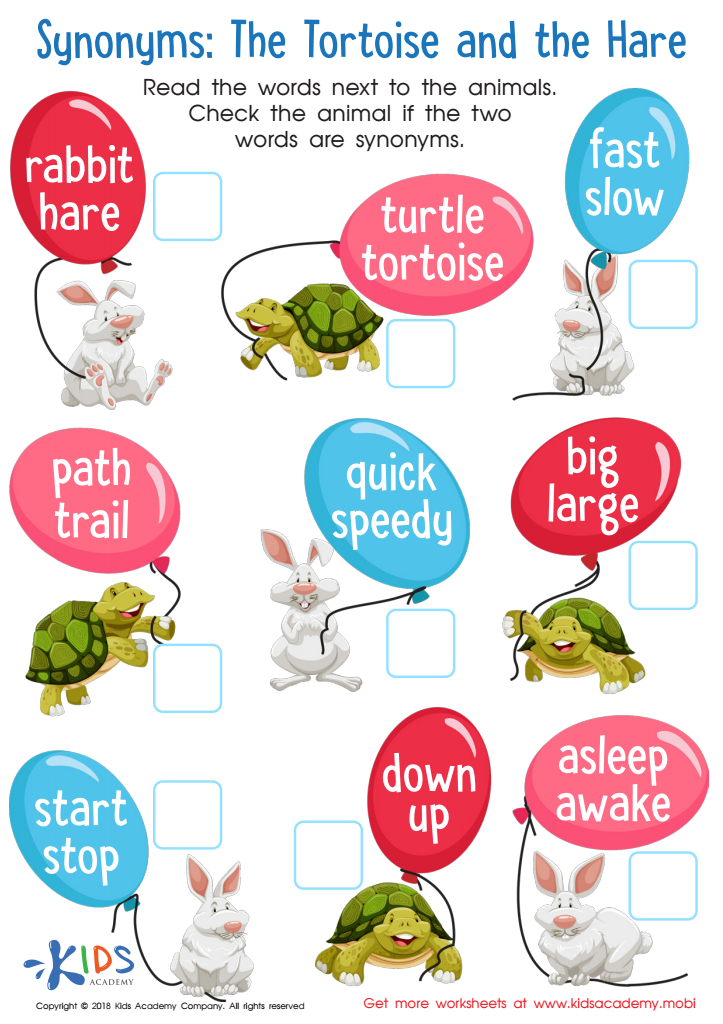
Synonyms: The Tortoise and Hare Worksheet
Help your kids identify words with similar meanings with this worksheet featuring a colourful picture of the Tortoise and the Hare. Show them how to check the boxes of animals with words that have similar meaning, then let them find more on their own. They'll love the challenge and you'll appreciate the educational value.
Synonyms: The Tortoise and Hare Worksheet
Worksheet
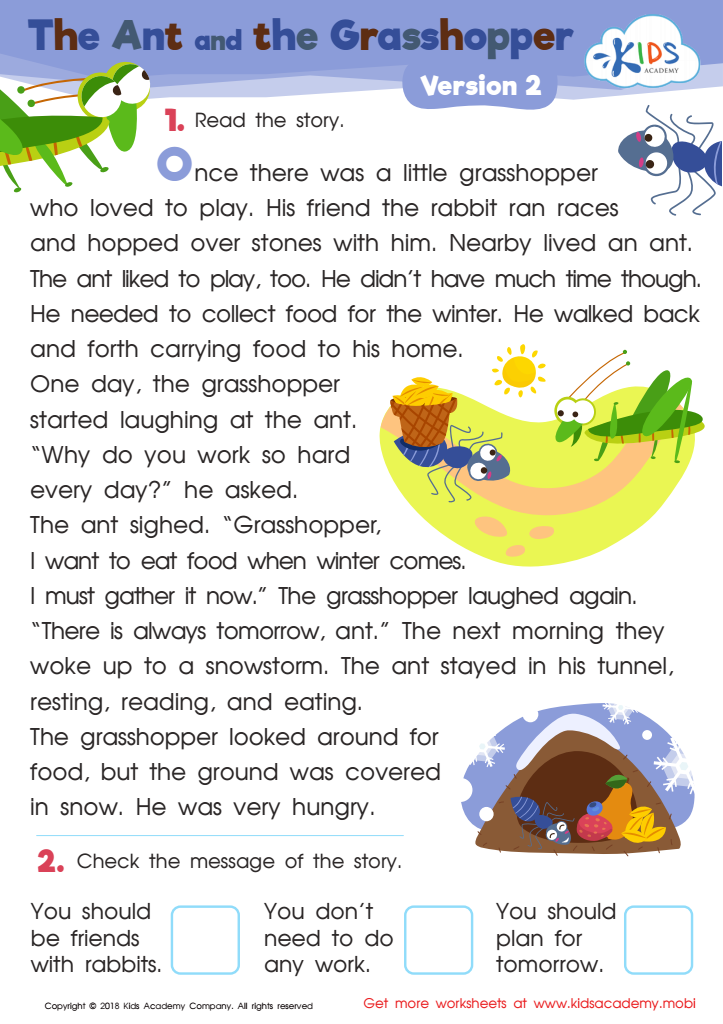
The Ant and The Grasshopper Version 2 Worksheet
Story time is a great way to bond with kids and share a fun story. The Ant and the Grasshopper is a classic with a lesson for everyone. Listen together and then ask your students what the message of the story was. Prompt them with choices from the worksheet and see which one they select. It's a great way to increase their vocabulary and help them learn important lessons.
The Ant and The Grasshopper Version 2 Worksheet
Worksheet
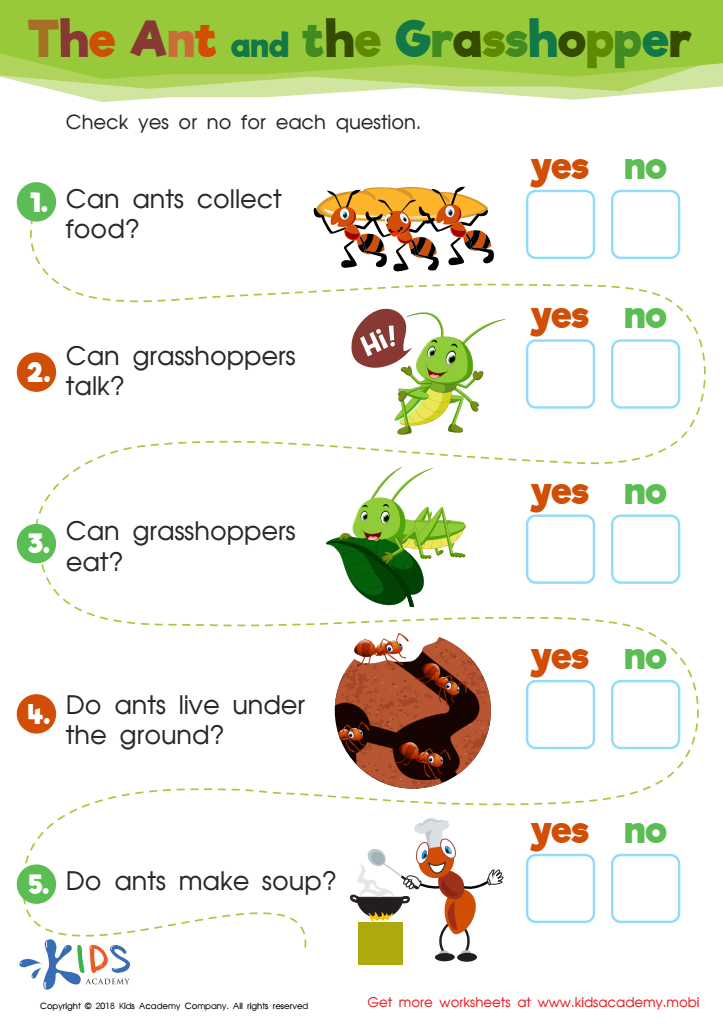
The Ant and The Grasshopper Worksheet
Does your child know about insects? If they're a nature lover or scared of them, use this worksheet to learn more. Read each of the questions and help them fill in the yes or no boxes. This may help them become less scared of insects.
The Ant and The Grasshopper Worksheet
Worksheet
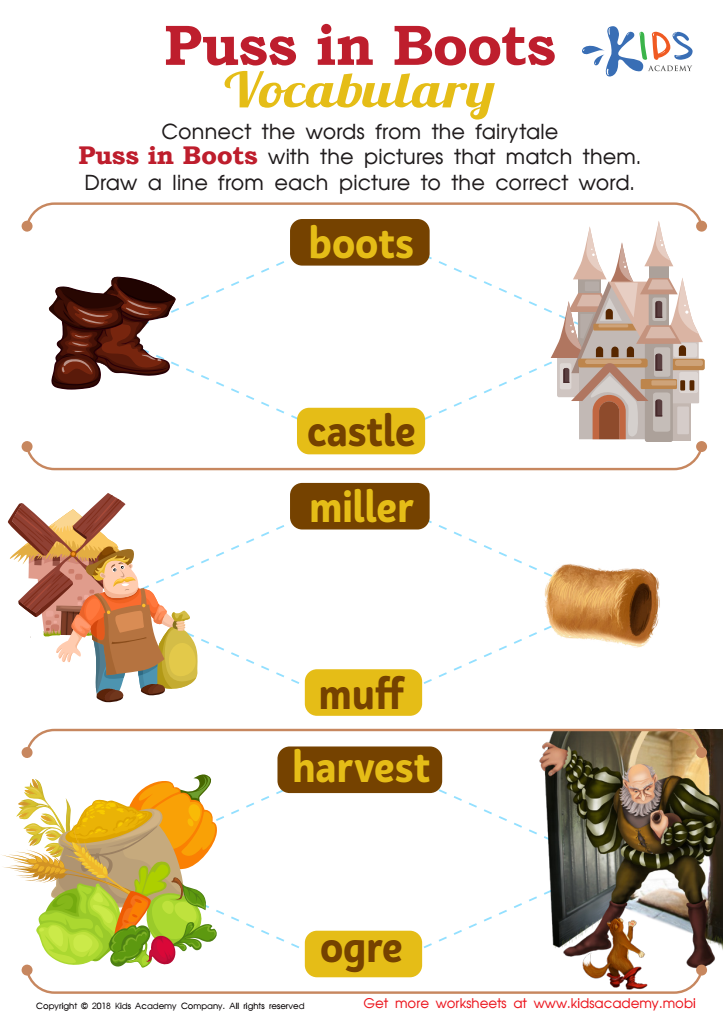
Puss in Boots Vocabulary Worksheet
Let your kids enjoy story-telling while learning at the same time. Help them learn from the fairytale, Puss in Boots, by connecting words from the worksheet with the matching pictures. Ask them to draw a line between each picture and corresponding word to build their vocabulary.
Puss in Boots Vocabulary Worksheet
Worksheet
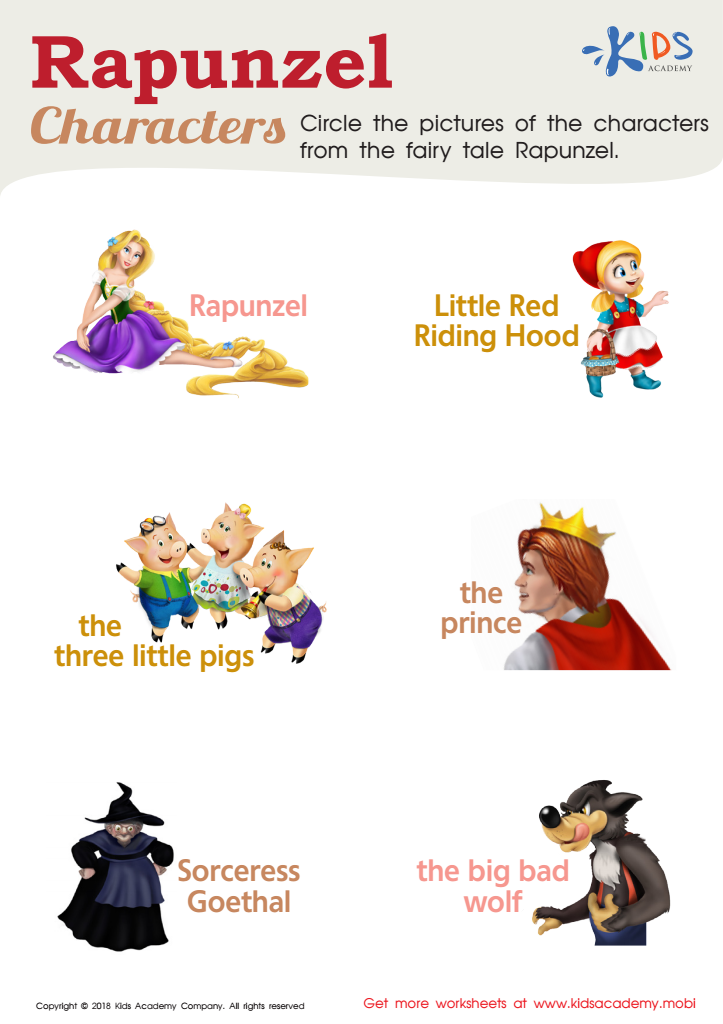
Rapunzel Characters Worksheet
This fun and colourful worksheet is perfect to see what your kids have learned from story time. Test their knowledge with a Rapunzel-themed exercise! Ask them to circle the pictures of the characters from the fairy tale. Helping them to remember the lessons taught in the stories you have read.
Rapunzel Characters Worksheet
Worksheet
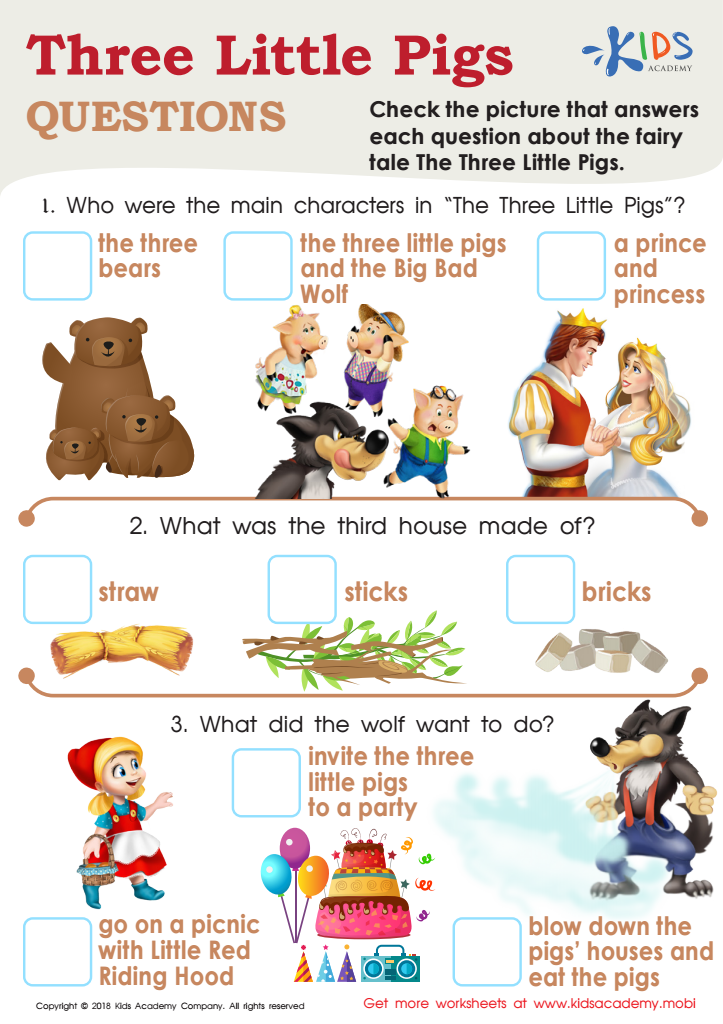
Three Little Pigs Questions Worksheet
Does your kid love bedtime stories? Test their classic fairytale knowledge with this worksheet! If they mention The Three Little Pigs, they're in luck - this pdf has them answering questions based off the classic fairytale. They'll check the picture that answers each question about the story. Is their fairytale knowledge up to scratch?
Three Little Pigs Questions Worksheet
Worksheet
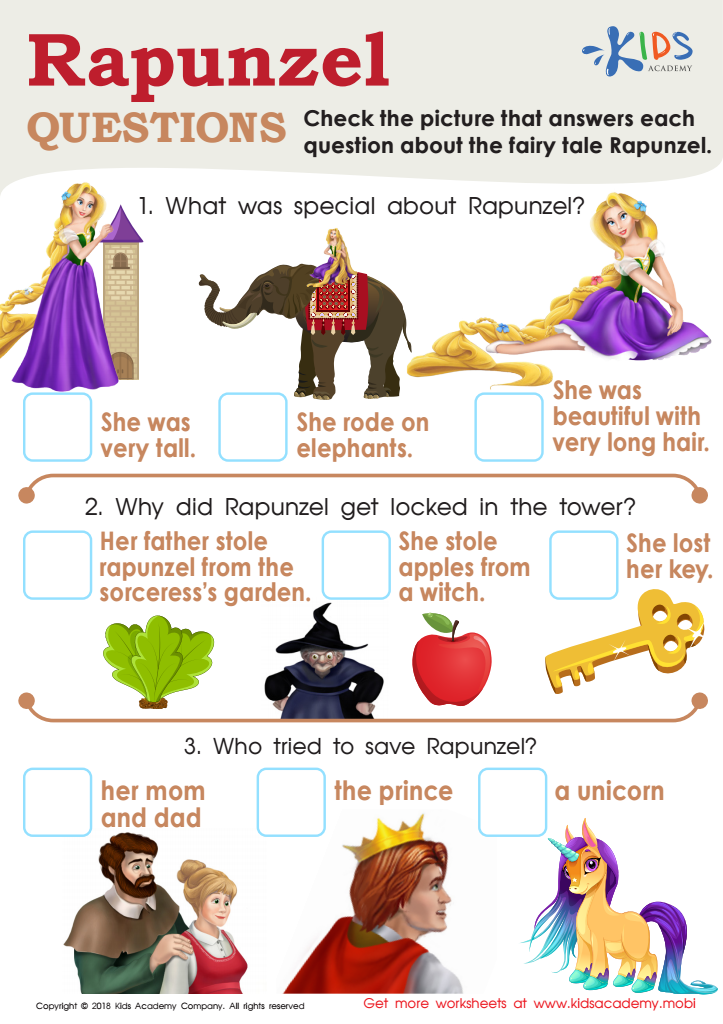
Rapunzel Questions Worksheet
Read the fairy tale 'Rapunzel' to your kids. For those who really enjoyed it, read it twice and ask questions to test their understanding. Then, get them to check the pictures related to the questions to test their comprehension of the story.
Rapunzel Questions Worksheet
Worksheet
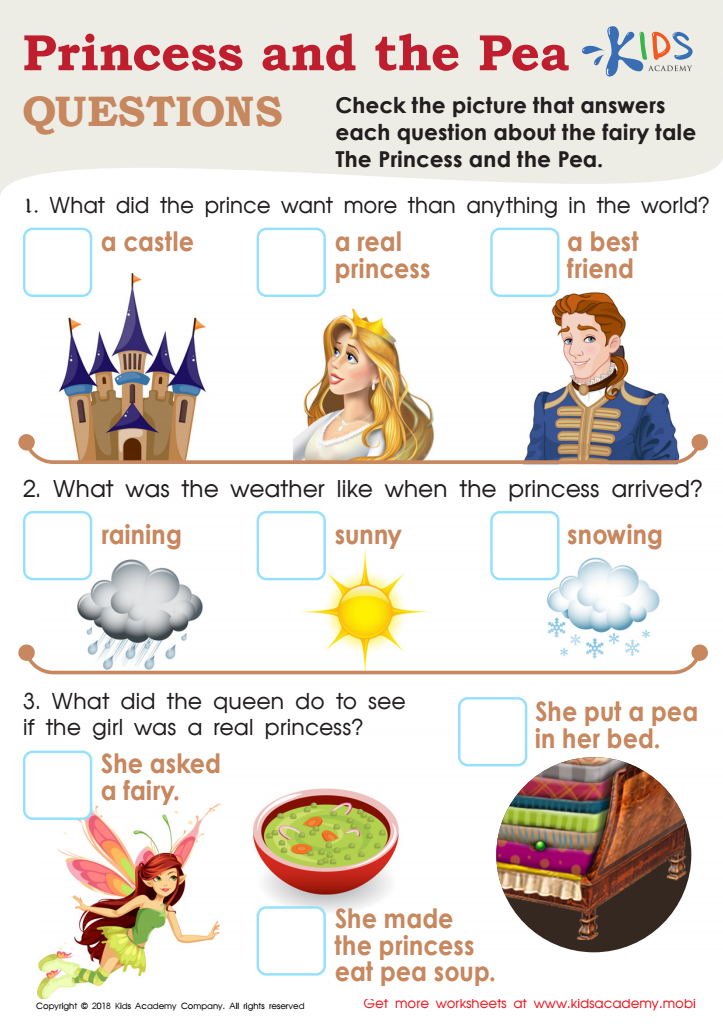
Princess and the Pea Questions Worksheet
Your kid knows The Princess and the Pea inside-out? Test their knowledge with this worksheet. Ask your little one to read the questions and match each one to the picture. It's a fun way to see just how much attention they've paid to their bedtime story.
Princess and the Pea Questions Worksheet
Worksheet
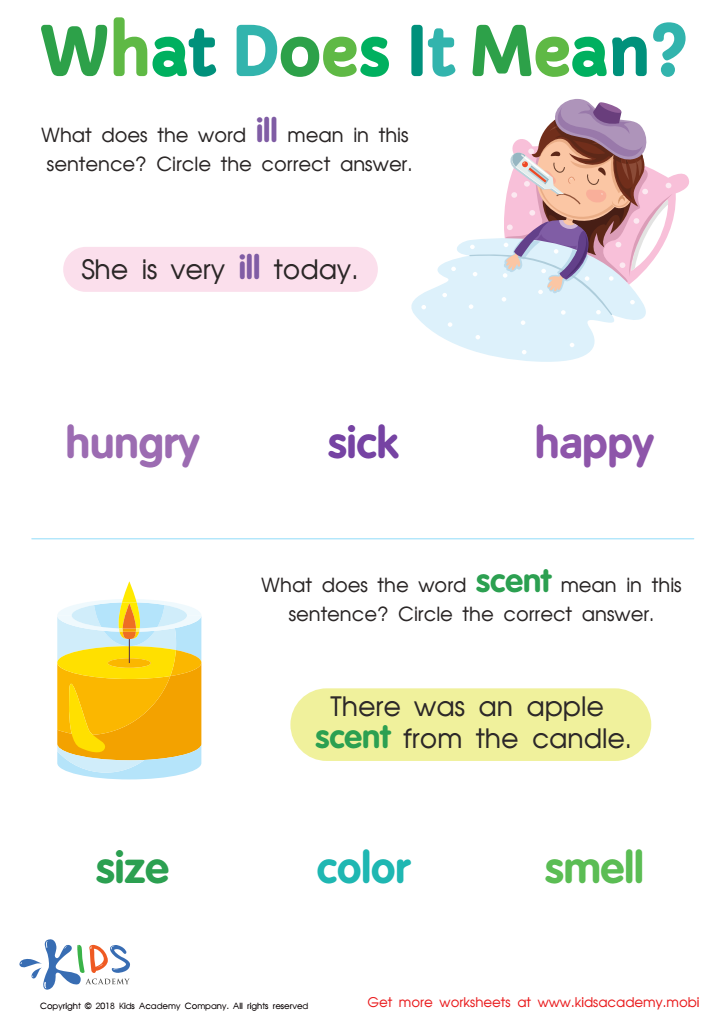
What Does It Mean? Worksheet
Students should know the meaning of words, even when used in different contexts. This worksheet has two sections. In the first, there's a picture on the right side. Ask students the meaning of 'ill' in "she is very ill today". Help them circle the correct answer from the options. The second section follows the same pattern. Make sure students circle the right answer.
What Does It Mean? Worksheet
Worksheet
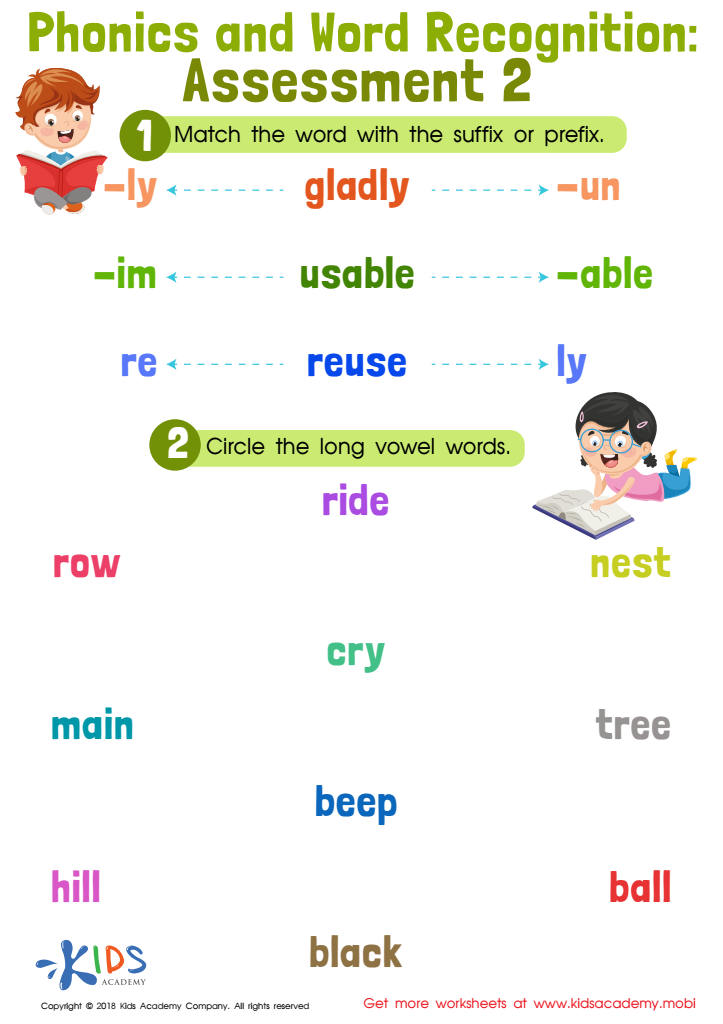
Phonics and Word Recognition: Assessment 2
Give kids common examples of suffixes and prefixes, such as "un-," "unhappy," "ness," "happyness." Ask them to match each word in the word recognition exercise to the correct suffix or prefix. Test phonetic understanding by having them circle the long vowel sounds.
Phonics and Word Recognition: Assessment 2
Worksheet
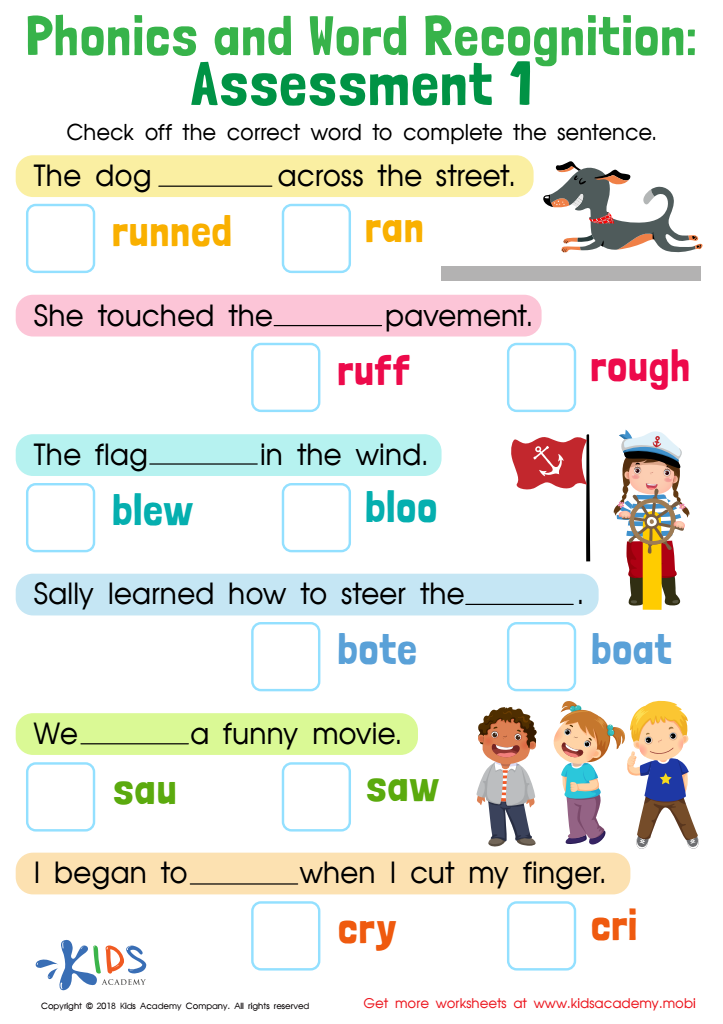
Phonics and Word Recognition: Assessment 1 Worksheet
This worksheet tests phonetics and word recognition. Students should be familiar with past tense verbs. Read incomplete sentences, then read multiple options and help students select the correct one.
Phonics and Word Recognition: Assessment 1 Worksheet
Worksheet
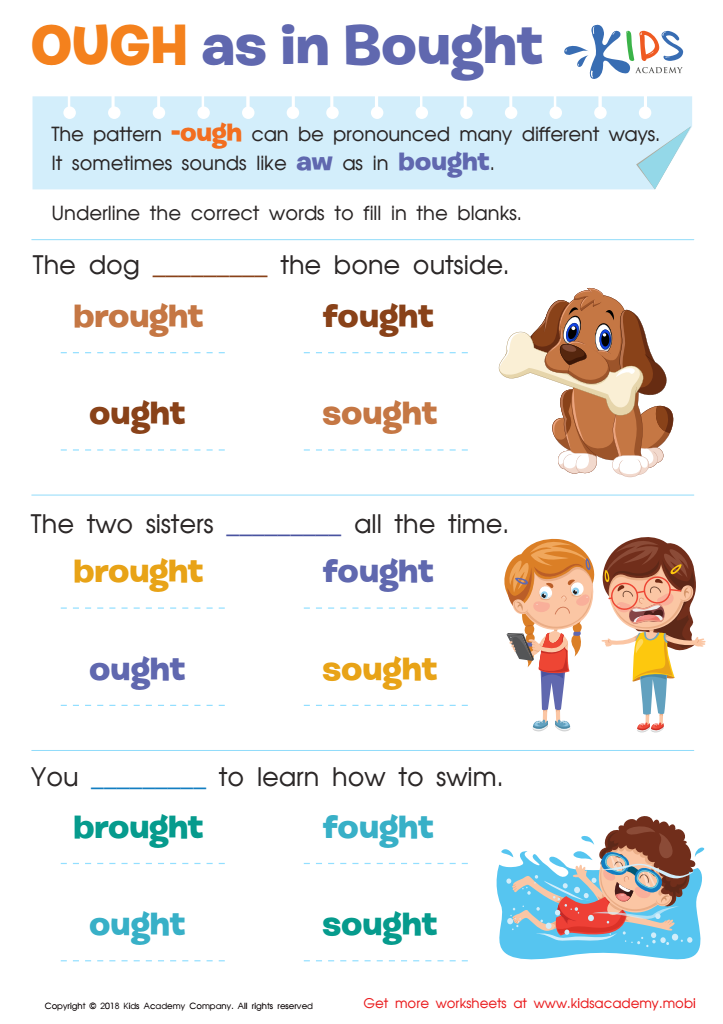
OUGH as in Bought Worksheet
Use this worksheet to teach your child the different pronunciations of -ough. For example, -ough can sound like ‘aw’ in ‘bought’. Ask your child to give more examples and help them underline the correct answers to fill in the blanks.
OUGH as in Bought Worksheet
Worksheet
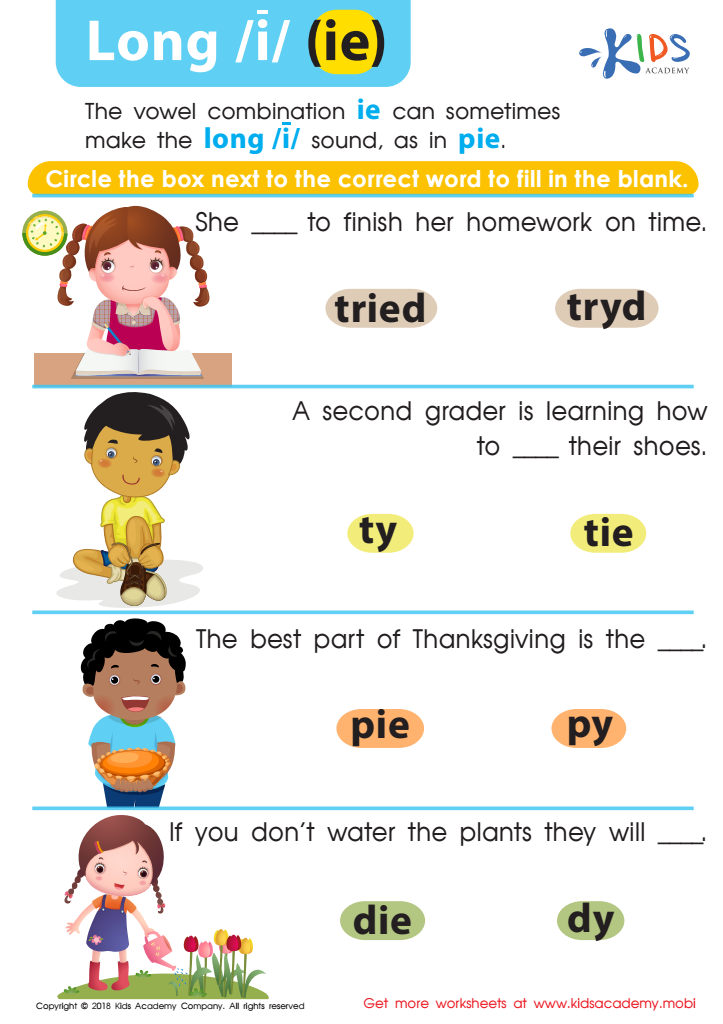
Reading: Long I and IE Worksheet
Have your child list words with the long /i/ sound (eg. 'pie'), and if needed, help them out with some examples. Read each word in the worksheet together and check their answer by having them circle the correct word.
Reading: Long I and IE Worksheet
Worksheet
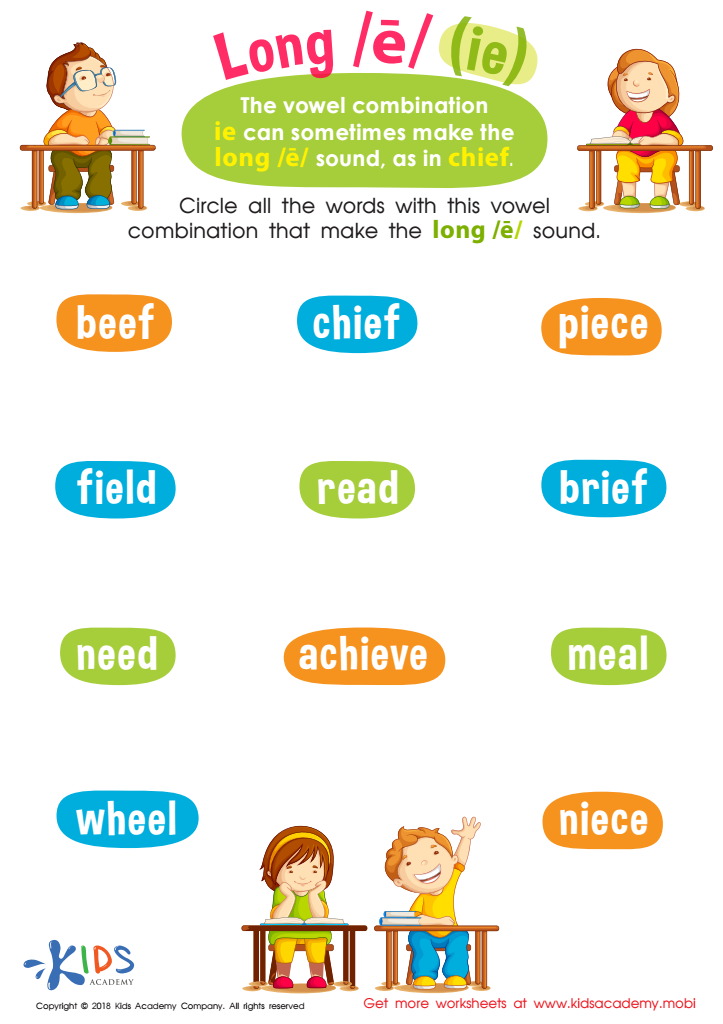
Reading: Long E and IE Worksheet
Ask your child to name some words with the long /e/ sound they hear every day. Then, read aloud all the words in the worksheet with them. Ask them to circle the words containing ie that make this sound.
Reading: Long E and IE Worksheet
Worksheet
Join Kids Academy for Free
Who is primarily going to use this learning content?






.jpg)









