Graphs Worksheets for Ages 6-9 - Page 2
27 filtered results
-
From - To
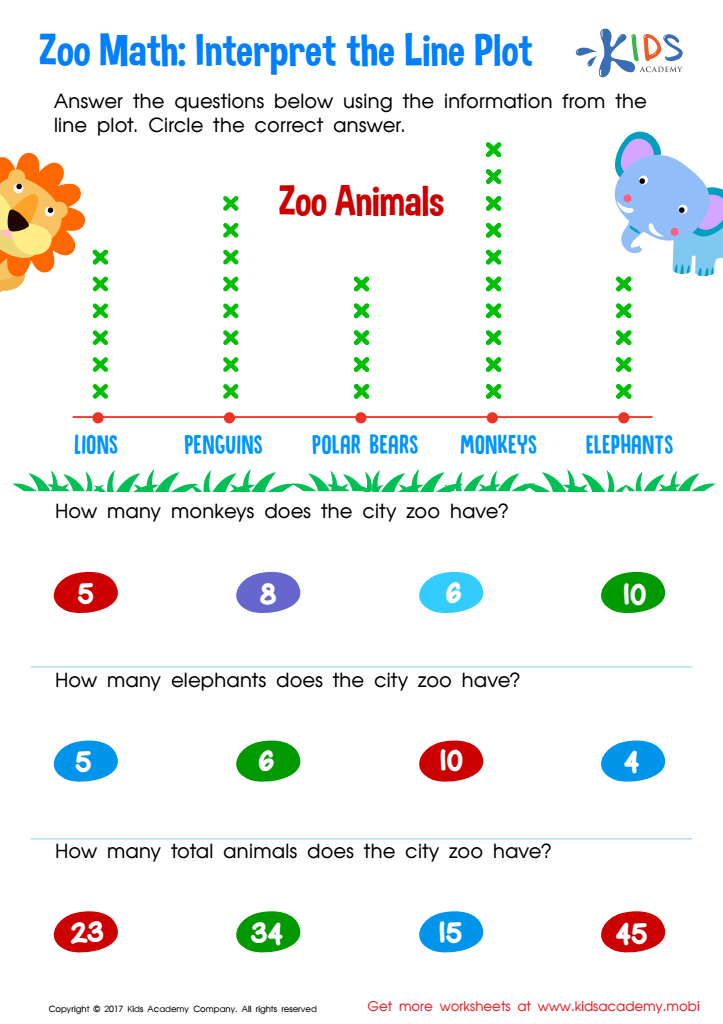
Interpret Line Plot Worksheet
 Assign to My Students
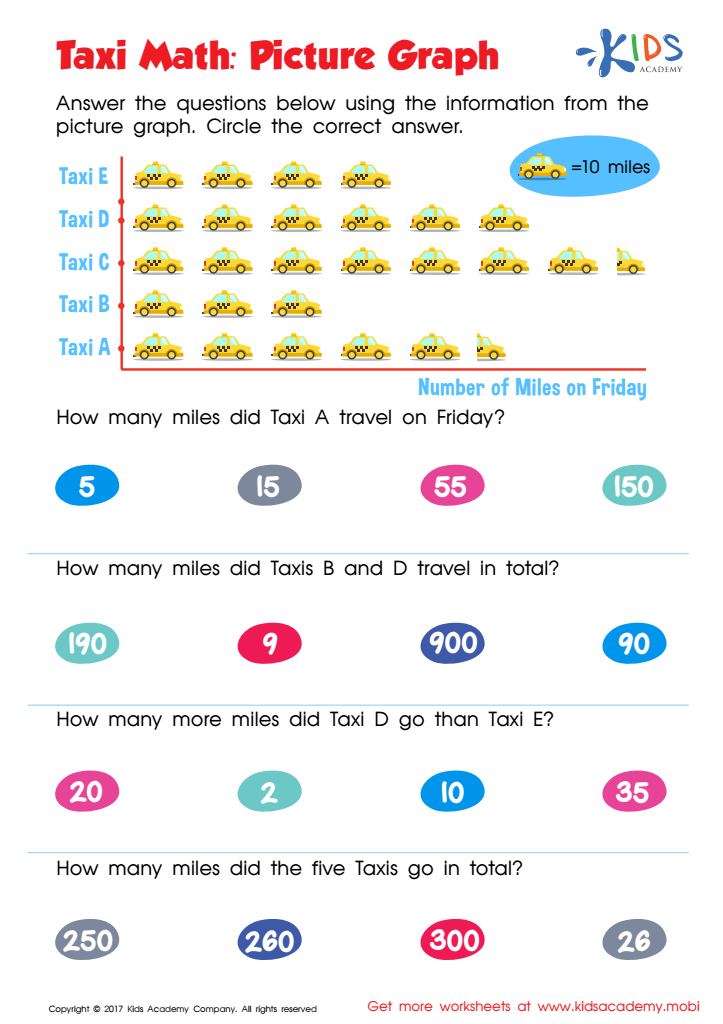
Taxi Math Worksheet
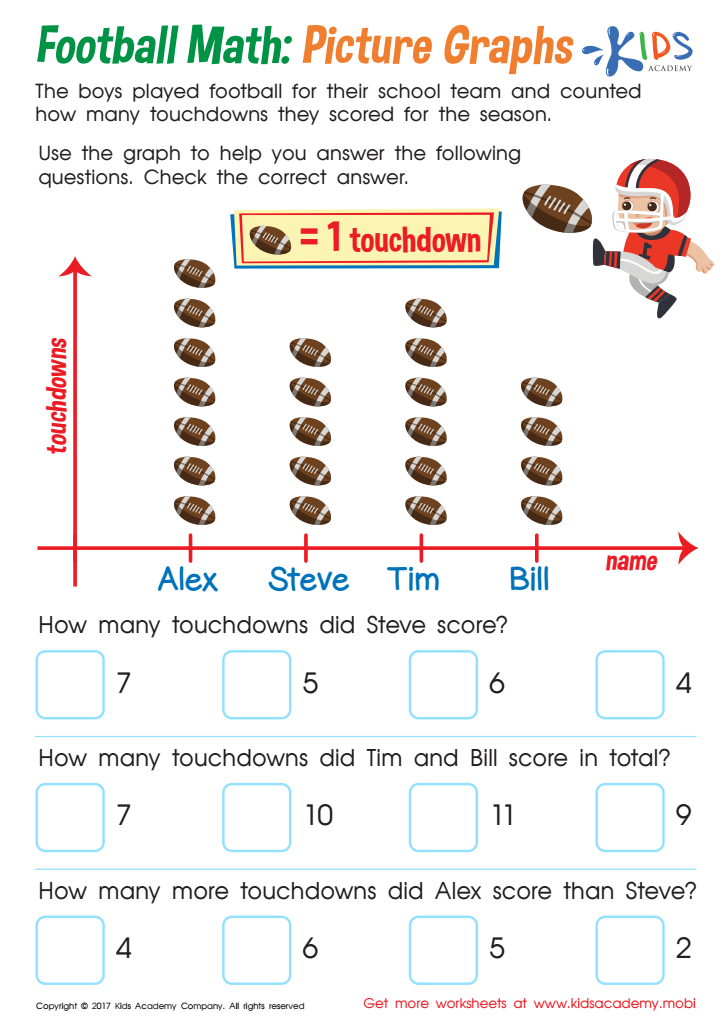
Football Math Worksheet








Graphs are an essential tool for young children, especially those aged 6 to 9, as they begin to develop critical thinking and analytical skills. Parents and teachers should care about incorporating graph learning into their education because it helps children visually understand and interpret data. By engaging with different types of graphs—such as bar graphs, line graphs, and pie charts—children learn to recognize patterns, make comparisons, and analyze information at a fundamental level.
Moreover, understanding graphs lays the groundwork for future mathematical concepts. It fosters essential skills like reading comprehension and information synthesis, as children must extract meaning from visual representations. Engaging with graphs also promotes positive communication and collaboration in classroom settings, as students can share their findings and draw conclusions from data in discussions with peers.
Additionally, awareness of graphs reinforces real-world connections. Children encounter graphs in everyday contexts, from sports scores to weather reports, making it relevant and relatable. Ultimately, by prioritizing graph literacy, parents and teachers can nurture curious, capable learners who possess the tools to navigate and interpret the world around them, paving the way for a solid foundation in mathematics and critical analysis skills.








