
Letter formation ABC Letters Worksheets for Ages 7-9
3 filtered results
Difficulty Level
Grade
Age
-
From - To
Subject
Activity
Standards
Enhance your child's handwriting with our engaging Letter Formation ABC Worksheets, specially crafted for ages 7-9. These worksheets are designed to reinforce proper letter formation while keeping learning fun. Through a variety of activities, young learners can practice both uppercase and lowercase letters, improving their writing skills and boosting their confidence. Ideal for both classroom and home use, our beautifully designed, printable resources ensure children remain interested and motivated. Start your handwriting journey today and watch as your child's penmanship and love for learning flourish. Visit our webpage to download your free worksheets now!
Favorites
With answer key
Interactive
Letter A Tracing Page
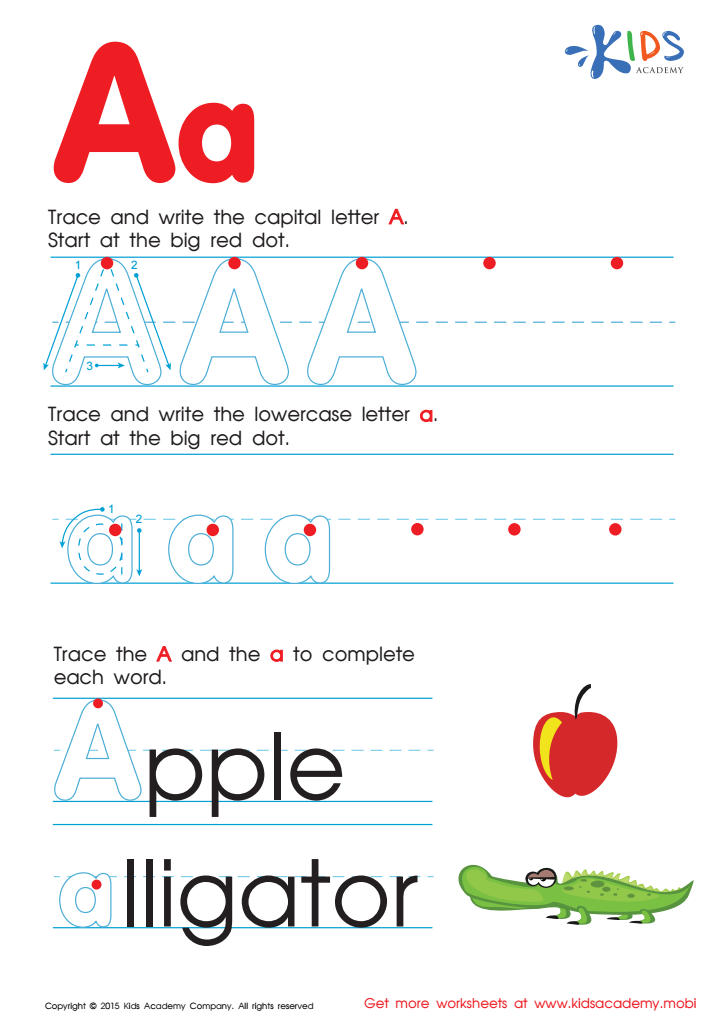
Trace and write the letter "A"! Start with the big red dot, then do the capital and lowercase versions. Then write it again with two words - apple and alligator. Download more tracing worksheets at Kids Academy.
 Assign to My Students
Letter A Tracing Page
Worksheet

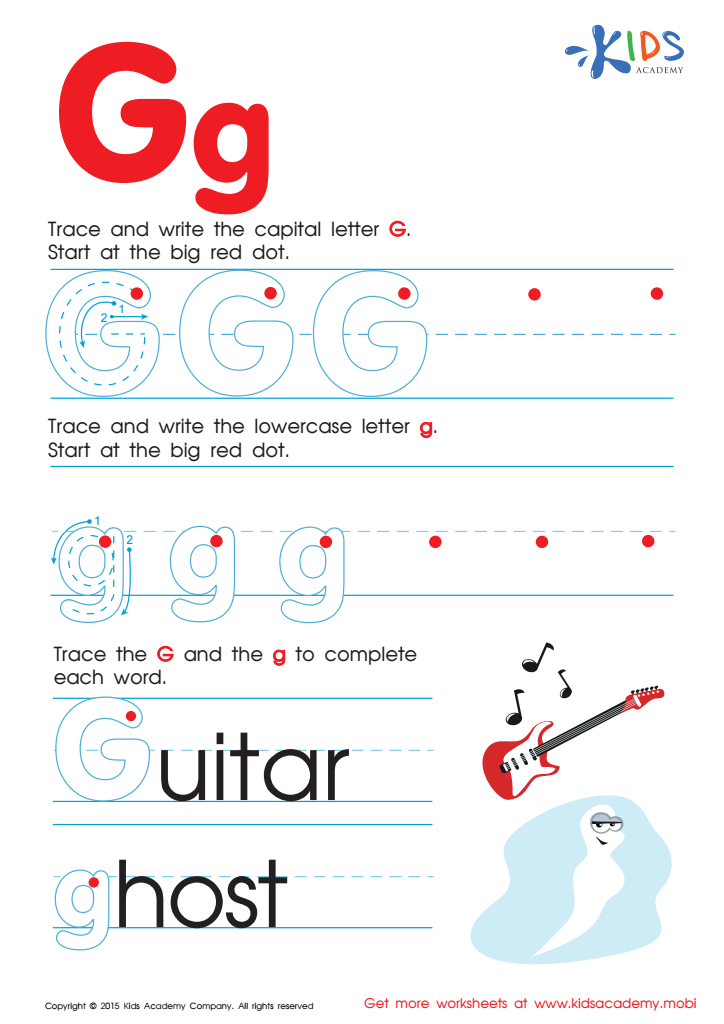
Letter G Tracing Page
Get ready to trace the letter "G" – with a big red spot as the starting point, trace the lines and watch the letter appear. Uppercase and lowercase letters are both easy and fun to write. Give it a go and finish the word "go". Play the guitar and say "hello" to a funny ghost!
Letter G Tracing Page
Worksheet
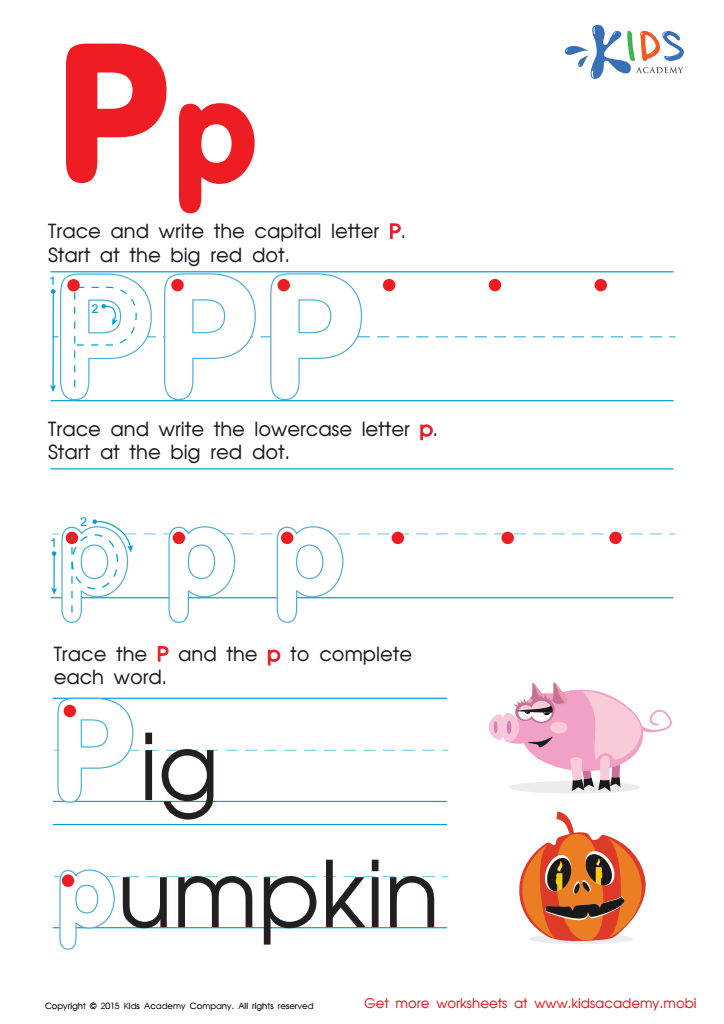
Letter P Tracing Page
Trace the lines from the red dot to learn to write "P"! Then practice this letter with the fun activities: complete the word "Pig" and "Pumpkin". Check out Kids Academy to get more free ABC worksheets.
Letter P Tracing Page
Worksheet
Join Kids Academy for Free
Who is primarily going to use this learning content?






Letter formation is a foundational skill for children ages 7-9, a critical period where they strengthen their reading and writing abilities. Proper letter formation is essential not only for clear and readable handwriting but also for cognitive and motor skills development. When children learn the correct way to form letters, they develop muscle memory, which makes writing fluency and speedier over time. This can lead to greater comfort and proficiency in writing activities from note-taking to crafting stories.
Moreover, well-formed letters help children avoid the frustration that can come with difficult-to-read handwriting. This not only boosts their confidence but also encourages a positive attitude toward writing tasks. Teachers can more easily grade and understand student work, leading to more effective educational feedback. Additionally, good letter formation supports better spelling and reading skills, as children who clearly understand letter structures are better at recognizing and reproducing them accurately in various contexts.
Parents and teachers should focus on strengthening letter formation because early intervention can prevent the development of poor habits that are hard to correct later. Fun, engaging activities like tracing, writing practice, and even digital apps designed for handwriting can make practice enjoyable. Investing time in developing these skills prepares children for academic success and fosters a lifelong appreciation for written communication.







